Riverside Museum
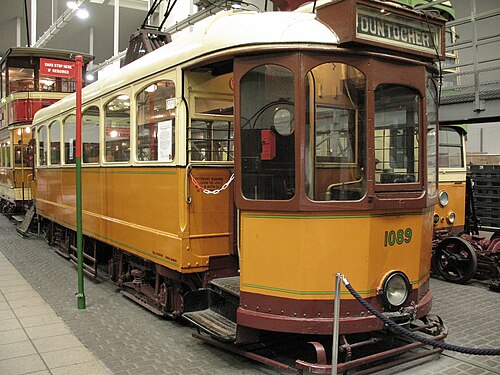
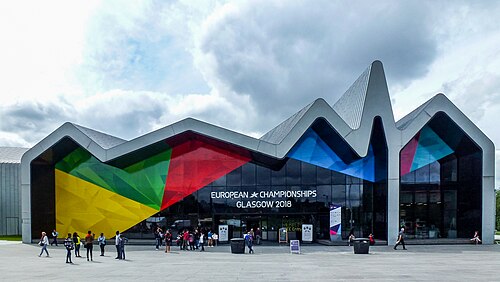
The Riverside Museum is Glasgow's transport and technology museum, standing where the River Kelvin meets the Clyde in Partick, about two miles west of George Square.
- Must see
- Museum
Language · 11 published
City guide · United Kingdom
Glasgow is a compact central city with major visitor districts stretching west along the River Clyde and university corridor. The city centre and Merchant City are walkable, while the West End, Riverside Museum and Southside are better reached by subway, train or bus. Two main railway stations serve different directions. Plan the central core and West End as separate blocks rather than walking every transfer.
Ranked by importance — sitelinks, pageviews and heritage status, not editor preference.
50 places match
Category
Typical visit duration
Interests
The Riverside Museum is Glasgow's transport and technology museum, standing where the River Kelvin meets the Clyde in Partick, about two miles west of George Square.
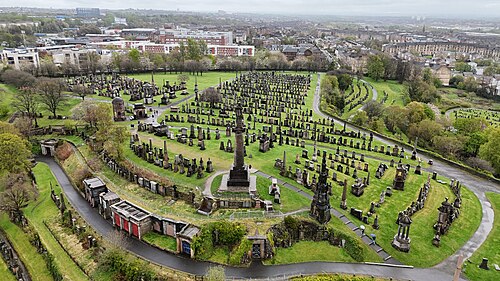
The Glasgow Necropolis is a Victorian cemetery of 37 acres, roughly 15 hectares, on the hill immediately east of Glasgow Cathedral, and it works as a piece of designed landscape rather than as a churchyard.
The Hunterian Art Gallery holds the art collections of the University of Glasgow, and it is one venue of several that together make up The Hunterian, Scotland's oldest public museum.
Pollok Country Park is Glasgow's country park, a large former estate in the city's south-west rather than a formal city-centre garden. Glasgow City Council owns and manages the park.
Glasgow Botanic Gardens is a working botanic garden run by Glasgow City Council in the West End, and the council asks visitors to hold that distinction: many people arrive thinking of it as a park, and the staff would rather…
The People's Palace is a museum and public glasshouse situated in Glasgow Green, the city's oldest park.
The Mackintosh House is a museum in Glasgow dedicated to the life and work of Charles Rennie Mackintosh, the celebrated Scottish architect, designer, and artist.
Provand's Lordship stands as Glasgow's oldest surviving house, a rare medieval building in a city transformed by Victorian and modern development.
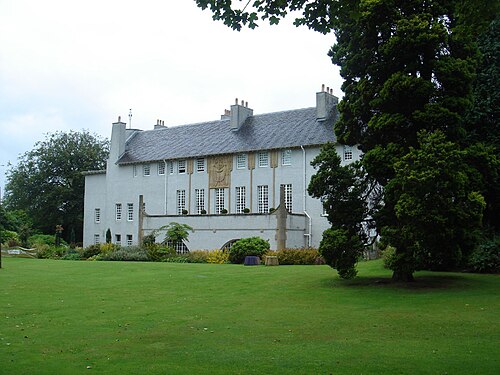
House for an Art Lover is a cultural venue in Glasgow's Bellahouston Park, built from designs by Charles Rennie Mackintosh. Construction was completed in 1996, decades after the 1901 competition entry that originated the concept.
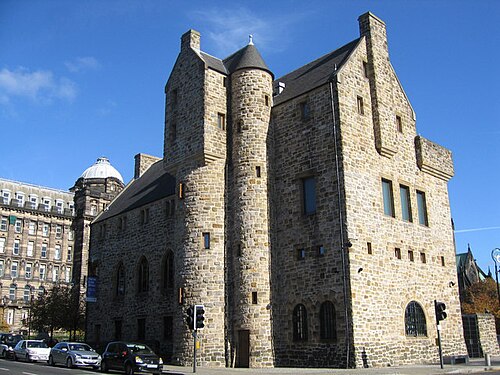
St Mungo Museum of Religious Life and Art is a museum in Glasgow dedicated to the study and display of religious art and artefacts from across the world.
The Hunterian Museum and Art Gallery is Scotland's oldest public museum, founded in 1807 following the will of Dr William Hunter, a pioneering anatomist and collector.
Scotland Street School Museum is a former school building in Glasgow, now operating as a museum. Designed by the renowned architect Charles Rennie Mackintosh, it stands as one of his significant public commissions in the city.
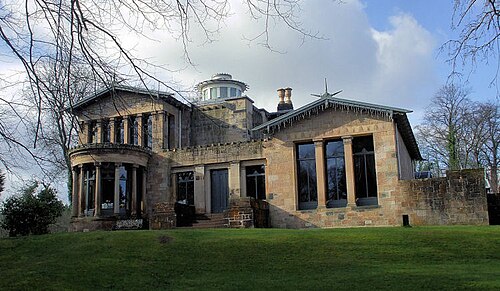
Holmwood House is a historic villa in Glasgow, designed by Alexander 'Greek' Thomson and completed in 1858.
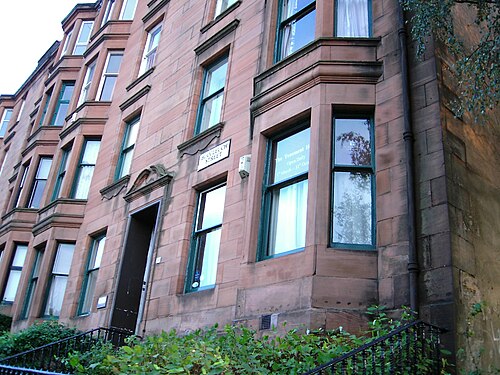
The Tenement House is a preserved historic dwelling in Glasgow that offers insight into tenement living, a defining feature of urban Scottish life.
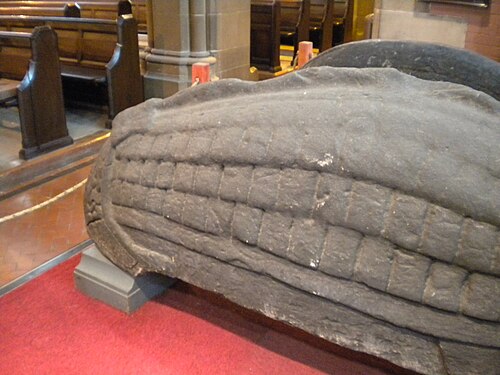
The Govan Stones constitute a significant collection of early medieval carved stones displayed at Govan Old Parish Church in Glasgow.
The National Piping Centre is an institution in Glasgow dedicated to the preservation and promotion of bagpipe music and Scottish piping heritage.
The Scottish Football Museum is a dedicated institution in Glasgow celebrating the history and heritage of football in Scotland. Located within Hampden Park, the national stadium of Scotland, the museum occupies a significant position in the country's sporting landscape.
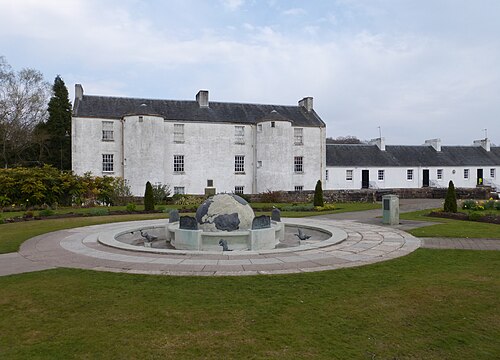
The David Livingstone Centre, locally known as the David Livingstone Museum, commemorates the Scottish missionary and explorer born in Blantyre near Glasgow in 1813. The centre occupies the former textile mill tenement where Livingstone spent his childhood.
The University of Glasgow Hunterian at Kelvin Hall is a museum and collections facility operated by the University of Glasgow. It represents an extension of the Hunterian Museum, which is Scotland's oldest public museum.
Glasgow Museums Resource Centre serves as the primary storage and care facility for Glasgow's civic museum collections.
The Glasgow Police Museum documents the history of the City of Glasgow Police, Britain's first modern municipal police force founded in 1800.
The Royal Highland Fusiliers Museum commemorates the history of the Royal Highland Fusiliers, a Scottish infantry regiment formed in 1959 from the amalgamation of the Royal Scots Fusiliers and the Highland Light Infantry.
Renfrew Museum is a local heritage museum located in Renfrew, a town on the western edge of the Greater Glasgow urban area.
Glasgow Film Theatre is a cinema located in Glasgow, Scotland. It operates as a cultural venue dedicated to film exhibition, showing a programme that includes independent, foreign language, documentary, and classic cinema alongside occasional mainstream releases.
Tollcross Children's Farm is a city farm located in Glasgow, Scotland. It operates as a community-focused attraction where visitors, particularly families with young children, can encounter domestic animals in an accessible urban setting.
Victoria Park Fossil Grove is a geological heritage site located within Victoria Park in Glasgow, Scotland. It preserves the fossilised remains of an ancient forest, dating from approximately 330 million years ago during the Carboniferous period.
Source: OpenStreetMap contributors, Wikidata ·
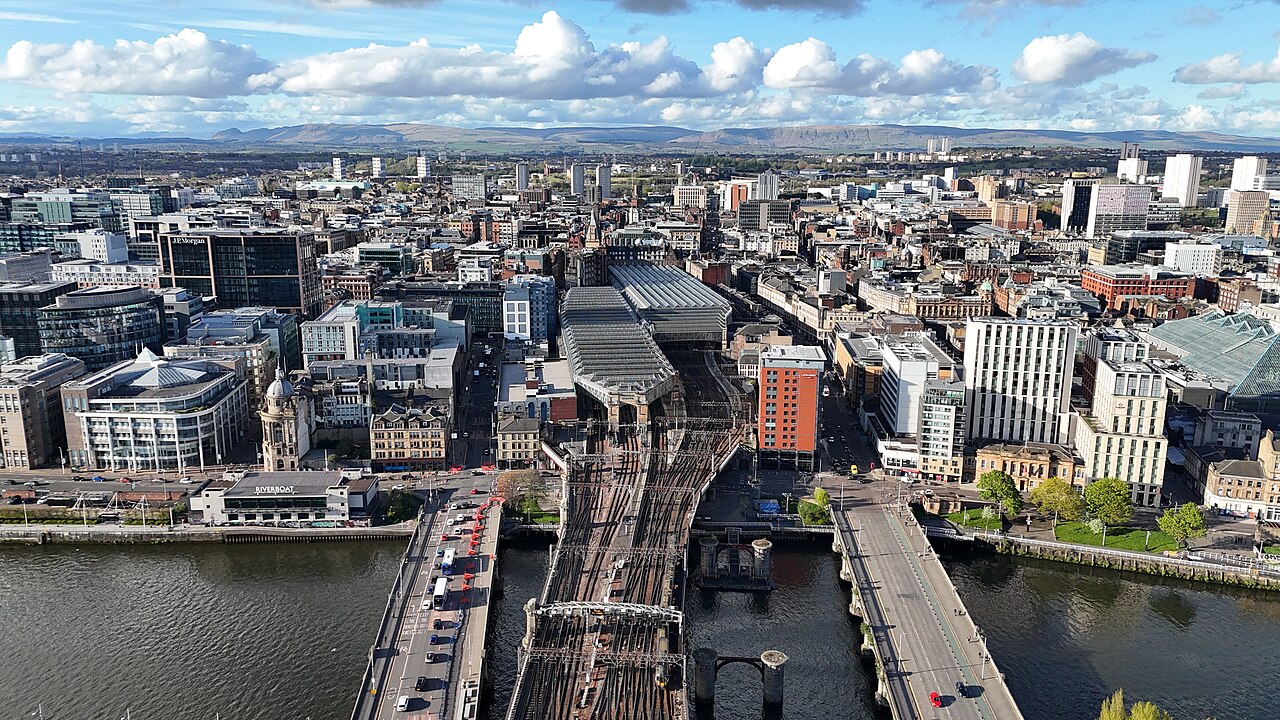
The city centre is a regular street grid between Glasgow Central and Queen Street stations, with Merchant City immediately east. The River Clyde forms the southern edge of the core and leads west toward the SEC and Riverside Museum. The West End clusters around the University of Glasgow, Kelvingrove and Byres Road. South of the river, Pollok Country Park and the Burrell Collection form another distinct outing. The compact Subway loop links the centre, West End and parts of the Southside.
Checked 2026-08-26
Walk through the city centre and Merchant City, then use the Subway, suburban trains or buses for the West End and Southside. Visit Glasgow identifies the Subway as a simple link among the centre, West End and south of the river, while rail reaches a much wider Greater Glasgow area. Central and Queen Street stations are separate but close enough to connect on foot. Check the operator journey planner before combining rail and Subway legs.
Checked 2026-08-26
Two to three days cover the principal districts. Use one day for the city centre and Merchant City, another for the West End, and add a third for the Southside or Clyde waterfront.
May through September provides longer daylight for architecture, parks and river routes. Rain is possible in every season, so museums work well as flexible anchors rather than fixed weather bets.
The city centre and Merchant City are easy to walk. The West End, Southside and farther Clyde attractions are better linked by Subway, train or bus.
The circular Subway links the city centre with the West End and parts of the Southside. It is useful for district-to-district travel but does not replace suburban rail or buses for every attraction.
Glasgow Central mainly serves routes south and west, while Queen Street mainly serves routes north and east. They are separate stations, so confirm the departure point before planning a connection.
Set your days, your pace and the hours you actually want to be out. The planner works around closing days and travel time, and leaves room to eat.