


2 min walk · Şehzadeler
Tomb of Saruhan Bey
- Must see
- Historic monument
Language · 1 published
Historic monument · Şehzadeler, Manisa
Muradiye Külliyesi
| Per person | Free entry |
|---|
Checked 2026-08-24
The Muradiye Külliyesi is the walled compound Sultan Murad III endowed in Manisa, and it is the reason three of the city's sights sit within a few steps of each other.
Mimar Sinan drew the complex and the mosque at its centre went up between 1583 and 1586, replacing a smaller mosque begun on the site in 1571. The buildings around it were not finished until after 1590. A külliye is a foundation rather than a building — the mosque came with a medrese to teach in and an imaret to feed the poor from, all endowed together.
It is the last and the largest of the Ottoman foundations in Manisa, sixty years after the Sultan Mosque and two centuries after the Ulu Camii.
Checked 2026-08-24 · Source
Three buildings, two of which are still doing something.
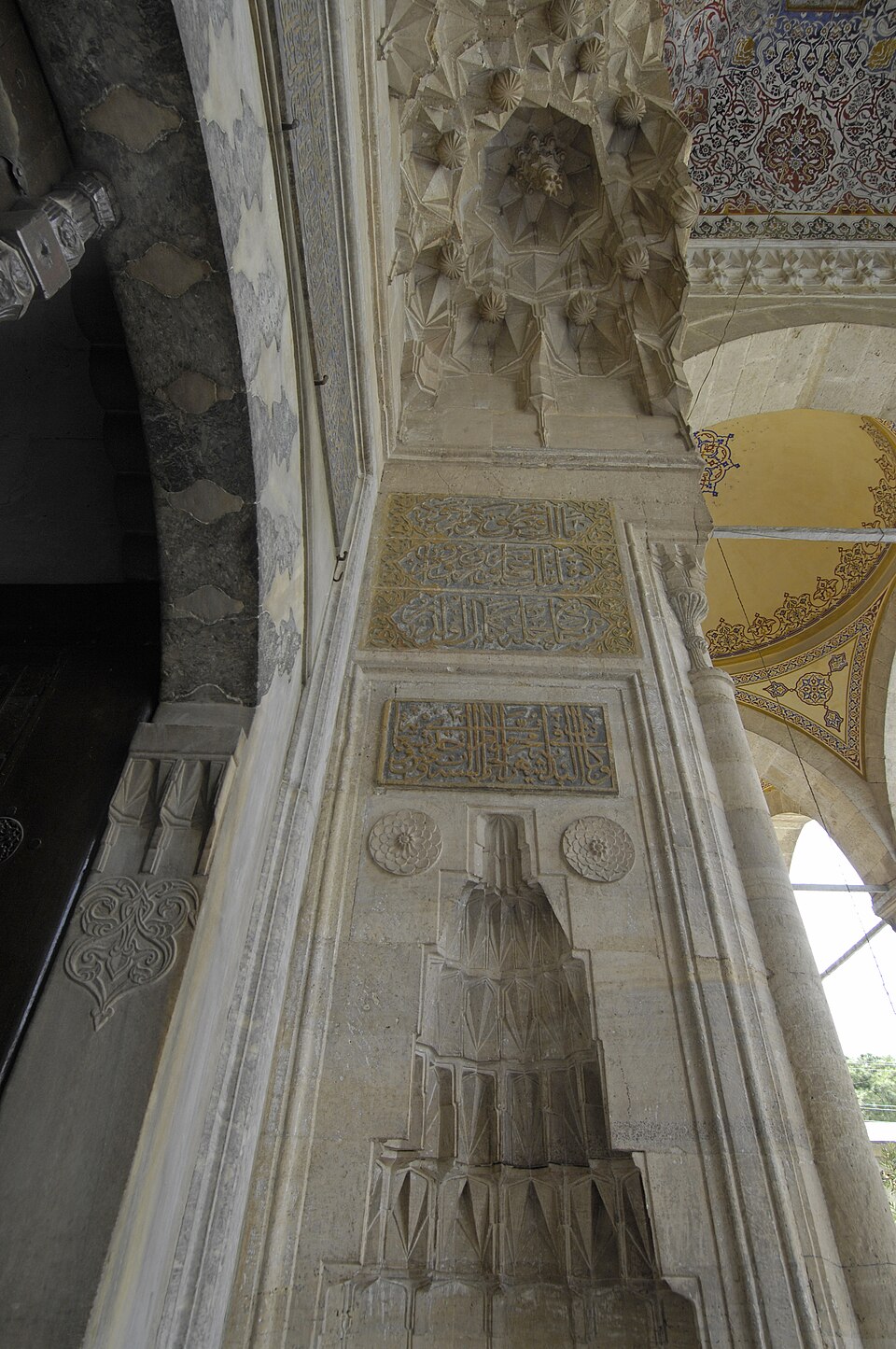
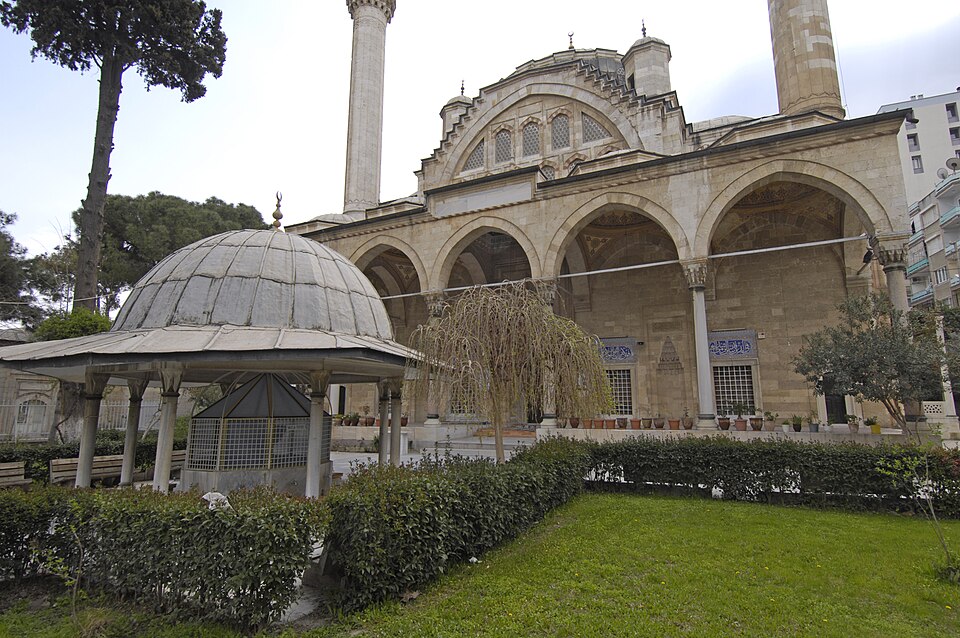
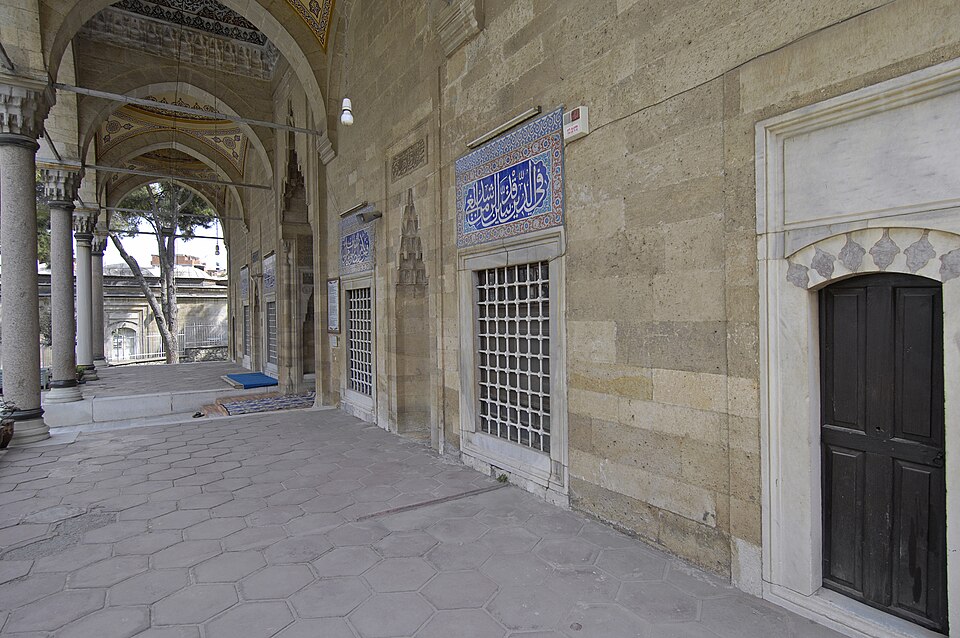
The mosque is the centre: sandstone, a central dome on three half-domes, İznik tile inside, and two single-galleried minarets standing 45 m. The imaret — the charity kitchen — is now the Manisa Museum, which opened there on 29 October 1937 and holds finds from Sardis, Magnesia and the region. The medrese completes the group.
An ethnography collection occupies a further building of the same complex, so the compound carries the archaeology of the province and its domestic life alongside a working mosque.
The whole group is one of the few parts of historic Manisa that survived the city's destruction during the Greek army's retreat in 1922.
Checked 2026-08-24 · Source
Two hours for the compound, which is the honest unit here.
Forty-five minutes in the mosque, an hour in the museum, and the rest walking between them and sitting in the courtyard. Treating the mosque and the museum as separate visits means crossing the same threshold twice for no reason.
Saruhan Bey's tomb of 1345 stands in a park a few minutes west, which turns two hours into two and a half and adds two and a half centuries.
Checked 2026-08-24 · Source
Mid-morning or mid-afternoon, and check that both the mosque and the museum are open before planning the day around the compound.
They keep different hours. The mosque closes to visitors during the five daily prayers and is busiest around Friday noon; the Manisa Museum keeps published hours of 08:30 to 17:30 with tickets sold until 17:00, and lists no weekly closed day.
Spring and autumn suit the walk up the slope. In the last week of March the city's attention is on the Sultan Mosque and the Mesir festival, which leaves the Muradiye quieter than usual.
Checked 2026-08-24 · Source
Mixed, which catches people out. The mosque is free; the museum charges.
The mosque follows the rule every working mosque in Turkey follows: no admission. The Manisa Museum, in the imaret wing, is listed on the Ministry of Culture and Tourism's fee schedule at €3 for foreign visitors; a MüzeKart covers Turkish citizens, and no separate Turkish-lira figure is published on that page.
Turkish state museums are covered by the Museum Pass, which is worth considering if Sardis or Ephesus are also on the route.
No combined ticket for the compound is recorded.
Checked 2026-08-24 · Source
On foot, in Şehzadeler, on the lower slope of Mount Spil.
The compound stands within a few hundred metres of the Sultan Mosque, and the bazaar streets run downhill from both. Nothing in the Ottoman core of Manisa needs transport; town buses cover the rest of the city.
Manisa's own intercity connections — the İzmir Basmane train, road buses, and Adnan Menderes airport — are the same for every sight in this part of town; the Sultan Mosque page carries the timings.
Checked 2026-08-24 · Source
The two openings are the thing to plan around. The mosque and the museum are a few steps apart and keep different hours, so one open door does not mean two.
Inside the mosque, the ordinary dress and prayer-time rules apply — see the Sultan Mosque page for the detail — and they stop at the museum door. The museum runs on its own posted hours and its own conduct, not the mosque's.
The imaret is a sixteenth-century building with stone floors, vaulted rooms and no lift, which matters if steps are a problem.
Manisa sees few foreign visitors and there is no guide economy around the compound. Nobody will approach you offering a tour.
Checked 2026-08-24
The compound gives the one frame that holds the whole foundation: the museum's facade in front, the mosque's dome group behind, and the two 45-metre minarets over both. Take it from the courtyard's far corner.
Sandstone takes late light, so the last hour before sunset is the hour. Inside the mosque the İznik tilework needs a steady hand rather than a flash; inside the museum, photography rules vary by institution and are not published for this one, so ask at the desk.
Mosque photography courtesy is the same as everywhere else in Şehzadeler — keep it to a quiet moment, not a prayer.
Checked 2026-08-24
An endowed foundation rather than a single building. Murad III's complex here came with a mosque, a medrese to teach in and an imaret to feed the poor from, all endowed together between 1583 and 1590.
The mosque, still working; the imaret, which has been the Manisa Museum since 29 October 1937; the medrese; and an ethnography collection in a further building.
The mosque is the centre of the complex. This page covers the compound as a whole — the mosque, the museum in the old imaret, and the buildings around them.
Two hours: forty-five minutes in the mosque, an hour in the museum, and the walk between. Saruhan Bey's tomb a few minutes west adds another half hour.
For the museum, yes; for the mosque, no. The Ministry's fee schedule lists €3 for foreign visitors at the museum and MüzeKart for Turkish citizens; no combined ticket for the compound is recorded.
Yes. Most of historic Manisa was destroyed during the Greek army's retreat from the city in 1922, and this complex is among the few parts that came through.
Loading the interactive map…
The interactive map could not be loaded.
Last updated:
Source: OpenStreetMap contributors, Wikidata ·