


296 min walk · Yunusemre
Yukarı Cami
- Notable
- Place of worship
Language · 1 published
Historic monument · Yunusemre, Manisa
| Monday | 08:00 – 17:00 |
|---|---|
| Tuesday | 08:00 – 17:00 |
| Wednesday | 08:00 – 17:00 |
| Thursday | 08:00 – 17:00 |
| Friday | 08:00 – 17:00 |
| Saturday | 08:00 – 17:00 |
| Sunday | 08:00 – 17:00 |
Checked 2026-08-24 · Source
Aigai is an ancient Greek city on top of Mount Gün, in the Yunt range north of Manisa, near the village of Yuntdağı Köseler. It is the most substantial classical site in Manisa province and almost nobody goes.
The city flourished under the Attalid dynasty in the third and second centuries BC, the kings who ran Pergamon, and stayed inhabited into the Roman period as a settlement and a bishopric in the province of Asia Prima. What survives is not a scatter of foundations: the market hall still stands eleven metres high. Ersin Doğer of Ege University in İzmir has directed the excavation since 2004, and there are plans to rebuild the facade of the market hall from its own fallen stones. Unlike most of Manisa's ancient sites, Aigai is formally listed by the Ministry of Culture and Tourism, with its own posted hours and staffed entrance point on muze.gov.tr.
Checked 2026-08-24 · Source
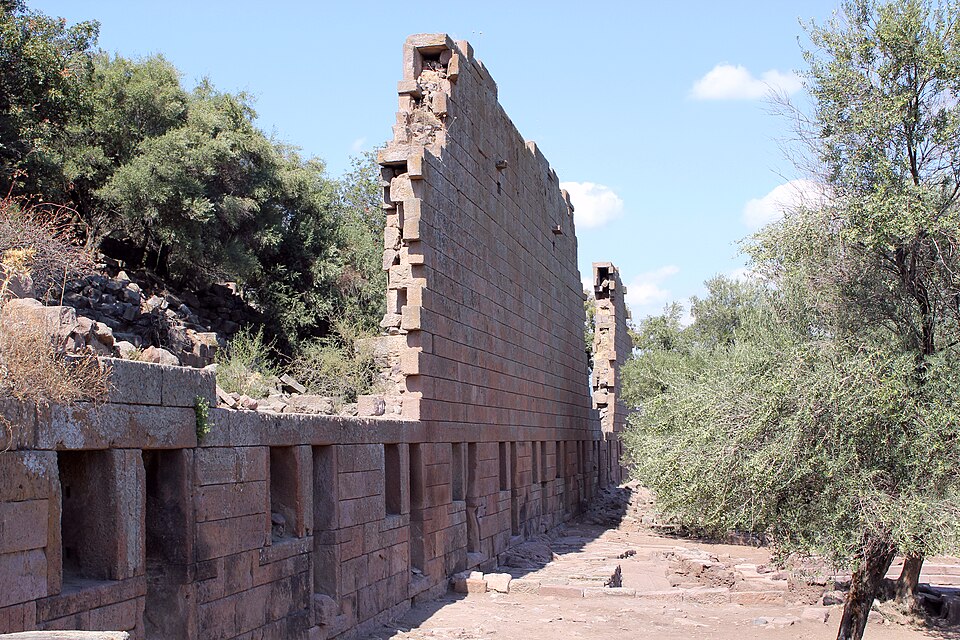
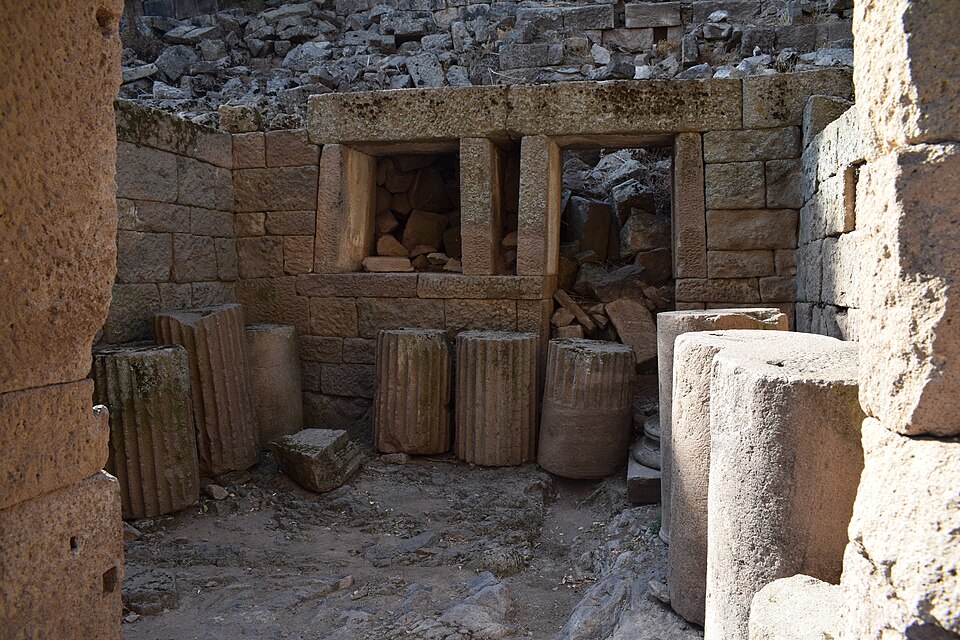
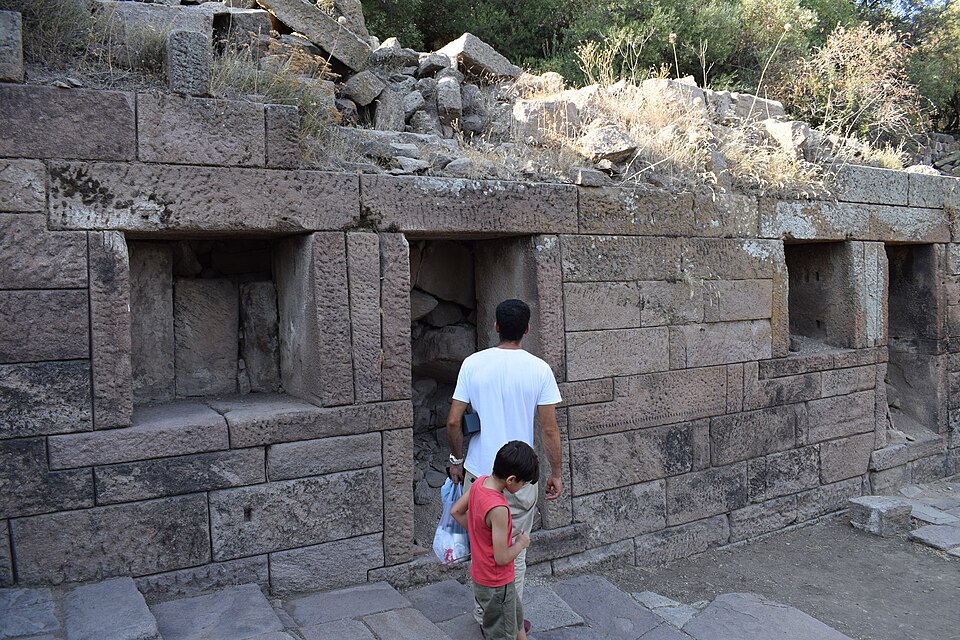
The market hall is the reason to make the drive: three storeys, 82 m long, standing eleven metres — a Hellenistic commercial building of a scale that usually survives only in foundations.
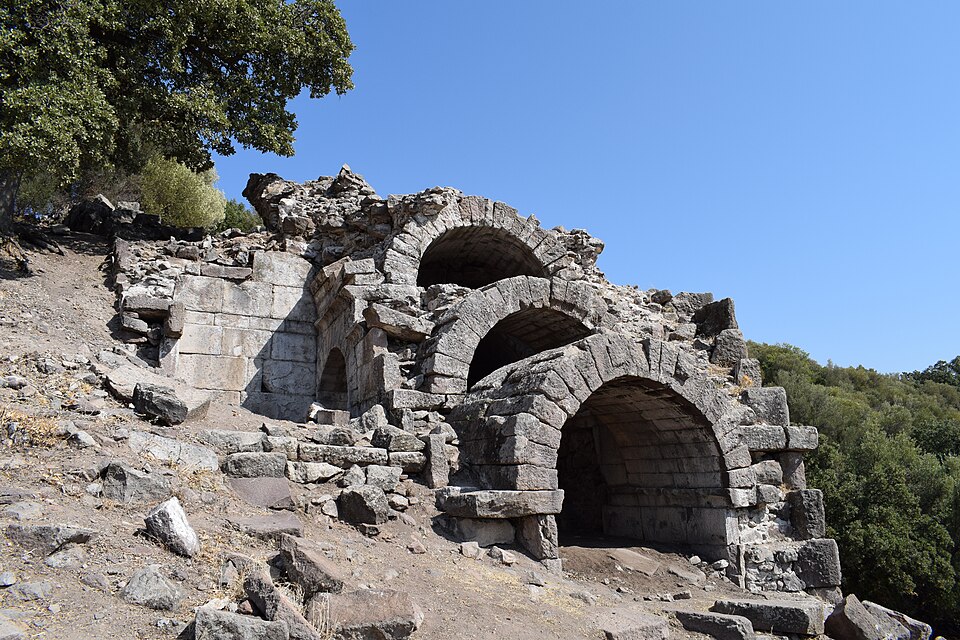
Above it the acropolis is laid out in terraces, and the civic buildings are identifiable: a gymnasium, a bouleuterion where the council met, and an odeon. The foundations of three temples are visible, and the city walls run 1.5 km around the site. Five kilometres east there is an Ionic sanctuary of Apollo, where the cella and some monoliths remain. By 2010 the excavation had also uncovered the access road, the shops and the city's water infrastructure.
Checked 2026-08-24
Two to three hours on the site itself covers the market hall, the acropolis terraces and the civic buildings at a walking pace, matching what recent visitor write-ups describe rather than the forty-five minutes the category default assumes; give the market hall and the terraces above it a good ninety minutes on their own, and the walls, temple foundations and civic buildings another half hour to an hour if the full circuit is walked.
Counting the drive from Manisa, treat Aigai as a half-day outing. The Ionic sanctuary of Apollo five kilometres east is a separate stop and a separate hour; most visitors skip it.
Checked 2026-08-24 · Source
Aigai is open every day from 08:00 to 17:00, with the entrance point closing at 16:30, according to its own muze.gov.tr listing — this is a posted Ministry hour, not a guess, and it corrects an earlier version of this page that treated the site as unstaffed and unhoured.
Spring or autumn, early in the day, is still the better season: the site is exposed on a mountain top with no shade and no shelter, which rules out the middle of an Aegean summer afternoon. April to early June and mid-September to October give walkable temperatures and the clearest air for the view off the acropolis. Winter is not impossible but the approach is a mountain road, and rain turns the site's unsurfaced paths to mud.
Checked 2026-08-24 · Source
Free, for both Turkish and foreign visitors, confirmed on the Ministry's DÖSİMM price list and on the site's own muze.gov.tr page, which lists the entrance as ücretsiz rather than simply omitting a figure.
Free does not mean unstaffed: the site has a posted entrance point that closes at 16:30, half an hour ahead of the 17:00 closing time, so this is a managed Ministry site rather than an open field with no one watching. There is no visitor centre, no guide, no shop and no toilet beyond that entrance point — bring water, and treat the free admission as free of charge, not as an absence of oversight on a protected, active excavation.
Checked 2026-08-24 · Source
By car, north from Manisa into the Yunt mountains, to the village of Yuntdağı Köseler; the site is above the village on Mount Gün.
There is no public transport to Aigai and no practical taxi arrangement — this is a rural mountain road well outside the city, and a hire car is the honest answer. Manisa itself is easy to reach: four trains a day from İzmir Basmane take about 90 minutes, local buses cover the 40 km in about 35 minutes, and İzmir Adnan Menderes airport is roughly 65 km away.
Checked 2026-08-24
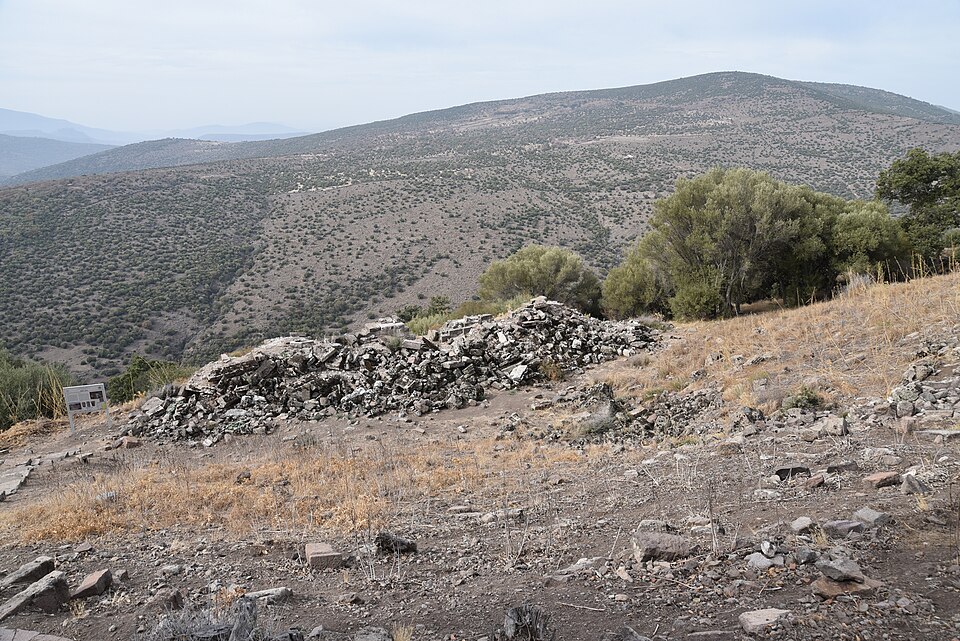
This is a working excavation on a mountain top, run day to day by Ege University's dig team even though the Ministry lists and prices it. Not every corner is fenced or signed for a foreign visitor, so keep to the paths that are clearly walked.
The ground is uneven ancient masonry over a hillside — proper shoes, and care around the market hall, whose upper storeys are eleven metres of standing wall with no barrier. There is no phone signal to depend on beyond the entrance point, so carry water and tell someone where you are going. Excavation is ongoing, so parts of the site may be closed off in season, and nothing should be picked up and taken away — this is a protected archaeological site under Turkish law.
Checked 2026-08-24
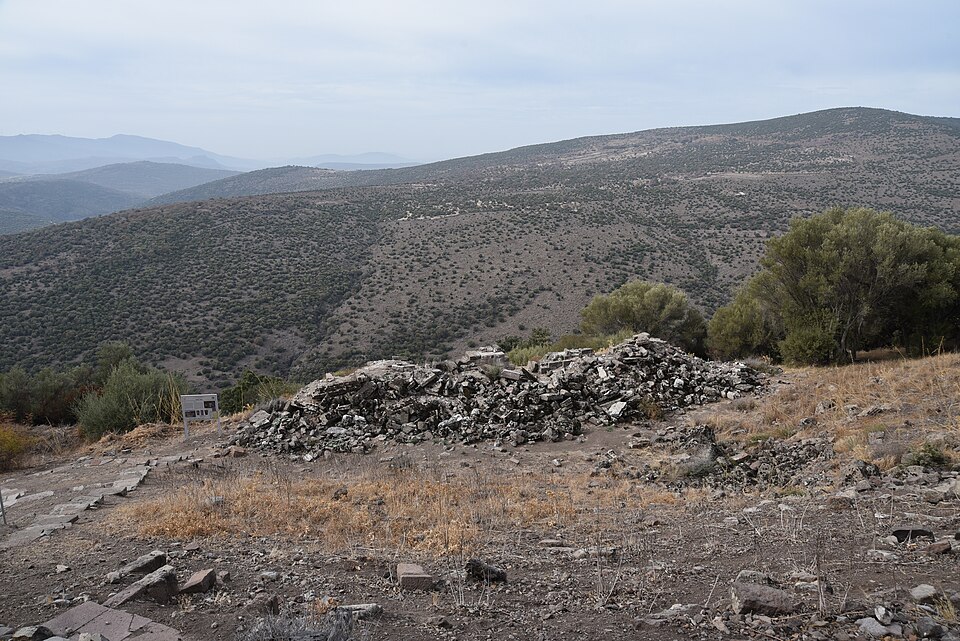
The market hall from below is the photograph: eleven metres of Hellenistic wall against the mountain, with nothing modern in the frame.
Morning light comes across the terraces and works for the acropolis; late afternoon works for the hall's long facade. The middle of the day flattens everything, which is another reason not to arrive at noon. No photography restriction is recorded for the site. Drone use over an active excavation is a separate matter and needs permission from the excavation directorate.
Checked 2026-08-24
Yes, free for both Turkish and foreign visitors, listed as ücretsiz on both the Ministry's muze.gov.tr page for the site and the DÖSİMM price list.
08:00 to 17:00 every day, with the entrance point closing at 16:30, according to the site's own muze.gov.tr listing.
Two to three hours on the site itself for the market hall, the acropolis and the civic buildings, plus the drive from Manisa — treat it as a half-day outing.
Yes. There is no public transport or practical taxi to Yuntdağı Köseler; a hire car is the only realistic way to reach the site above the village.
Yes — it is a Ministry-listed site with a posted entrance point that closes at 16:30, not an open field with no oversight, even though admission carries no charge.
The market hall: three storeys, 82 metres long, standing eleven metres — a scale of Hellenistic commercial building that usually survives only as foundations elsewhere.
Loading the interactive map…
The interactive map could not be loaded.
Last updated:
Source: OpenStreetMap contributors, Wikidata ·