


11 min walk · Salihli
Tumulus of Gyges
- Must see
- Historic monument
Language · 1 published
Historic monument · Salihli, Manisa
Recorded for Tumulus of Alyattes, not for this site as a whole. View Tumulus of Alyattes's guide
Recorded for Tumulus of Gyges, not for this site as a whole. View Tumulus of Gyges's guide
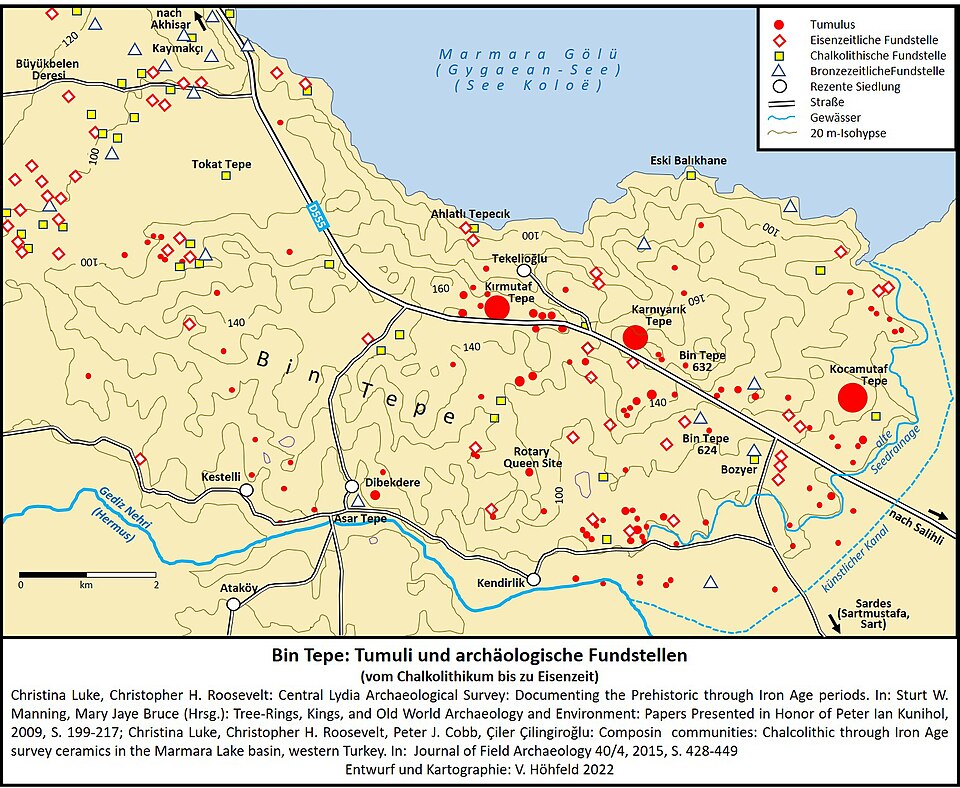
Bin Tepe is the royal burial ground of ancient Lydia, a field of more than a hundred earthen tumuli spread across a low limestone ridge on the southern shore of Marmara Gölü, several kilometres north of Sardis across the Gediz plain. "Bin Tepe" means "thousand mounds" in Turkish, a name that overstates the count but not the impression the field makes.
Together with Sardis, Bin Tepe was inscribed on the UNESCO World Heritage List on 12 July 2025, at the 47th session of the World Heritage Committee in Paris, under criterion (iii), as part of Türkiye's 22nd World Heritage property. The two sites were listed as one property: the capital and the necropolis that served it.
Checked 2026-08-24 · Source
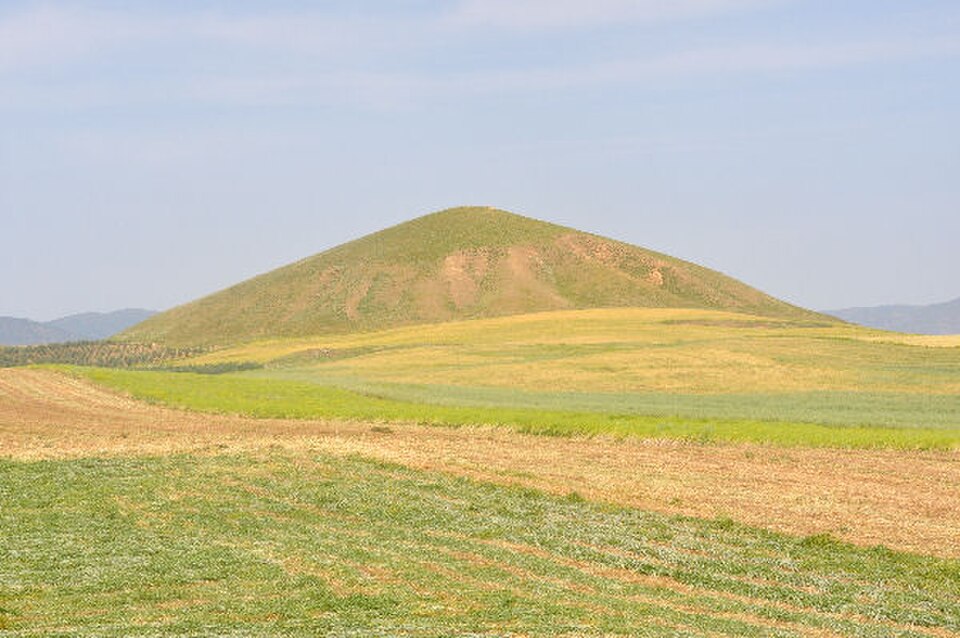
Roughly 115 tumuli survive today, down from at least 149 recorded in the 1940s before ploughing and farm expansion levelled the rest; what remains is still described as the largest tumulus cemetery in Turkey. Most are grass-covered earthen mounds rising directly out of cultivated fields, visible from the road as a run of low green hills rather than as an obviously ancient monument at first glance.
The two largest are the Tumulus of Alyattes, covered on its own guide page, and Karnıyarık Tepe, 230 metres across and 53 metres high, excavated in 1962-1966 and again from 2012, where a buried retaining wall shows the builders tripled the mound's original diameter partway through construction. Modern scholarship no longer assigns firm royal names to most of the smaller tumuli; the traditional attributions attached to several mounds by early travellers do not hold up.
Checked 2026-08-24 · Source
An hour or two, covering a handful of the larger mounds by car with short stops, is realistic for a first visit; there is no single path that loops through the whole necropolis.
Bin Tepe rewards a slower pace than that only for a visitor already interested in Lydian burial architecture specifically, since most individual mounds beyond the largest two or three offer little more than their outline from outside.
Checked 2026-08-24
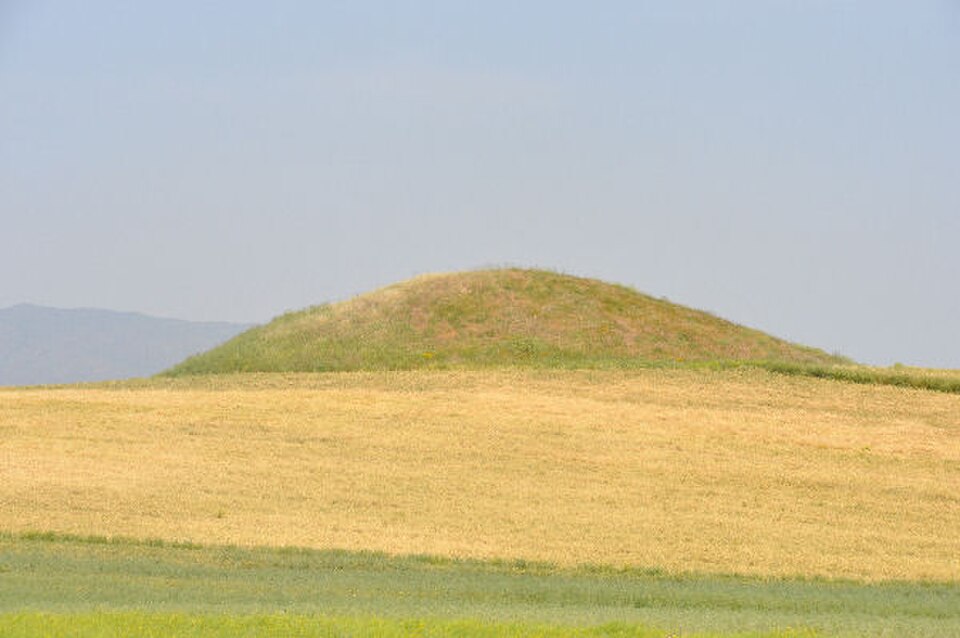
Late afternoon light picks out the mounds' silhouettes against the plain and the lake better than the flat overhead sun of midday. The site is open farmland with no structures and effectively no shade, so the same heat considerations that apply at Sardis apply here, more so, since there is no marble court to break the exposure.
Spring, when the surrounding fields are green rather than dry and dusty, gives the clearest view of the mounds' shape against the landscape.
Checked 2026-08-24
Bin Tepe is not a fenced, ticketed örenyeri the way Sardis is; the tumuli stand in open farmland crossed by local tracks, and no entrance fee applies to viewing them from the surrounding land.
This also means there is no staffed gate, no posted opening hours and no ticket office to confirm access at, unlike Sardis a few kilometres south.
Checked 2026-08-24
Bin Tepe sits several kilometres north of Sart across the Gediz plain, reached by local farm roads rather than a signed tourist route, and there is no public transport link to the necropolis itself.
A car is effectively required. The practical way to see it is to hire a taxi for a half-day out of Salihli, or to drive out after visiting Sardis, since the two sites share the same UNESCO listing but sit kilometres apart with no connecting shuttle or path between them.
Checked 2026-08-24

The mounds stand on and among working farmland, not inside a managed park, so tracks can be rutted, muddy after rain, or blocked by seasonal crops, and a visit depends on what the fields allow that day.
Because there is no gate, no signage network and no staff on site, a visitor is on their own to identify which mound is which; going in with the Tumulus of Alyattes and Karnıyarık Tepe already located on a map is worth more here than at almost any other Manisa site.
Checked 2026-08-24

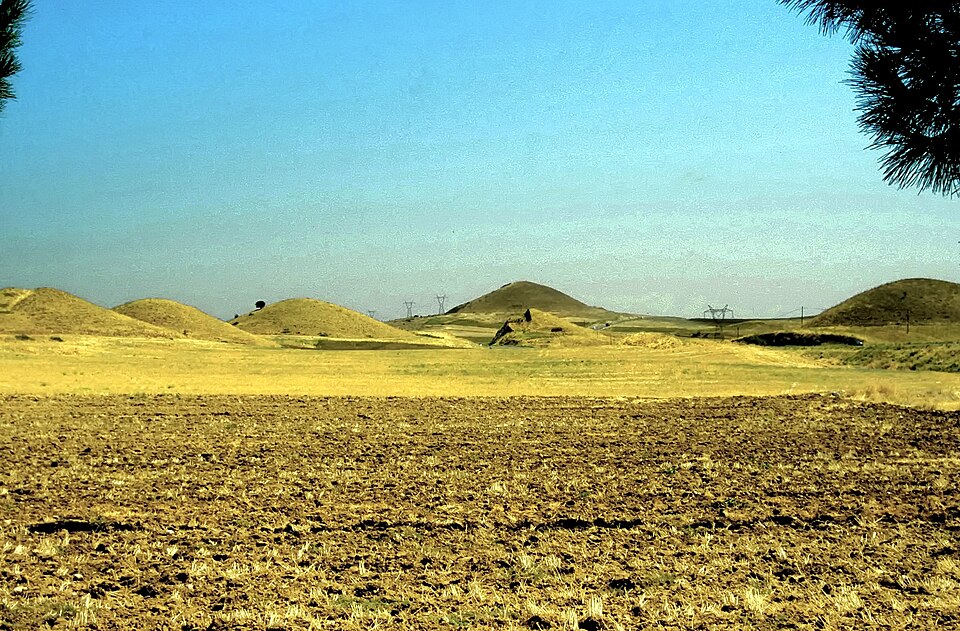
The mounds read best from a middle distance, where several tumuli sit in the same frame against the open plain and the lake beyond; up close, a single grass-covered mound gives little sense of scale without something in the foreground for comparison.
Low, angled light in the early morning or late afternoon brings out the mounds' curvature against the flat farmland far more than the overhead sun does.
Checked 2026-08-24
Bin Tepe is the royal necropolis of ancient Lydia, a field of more than a hundred burial tumuli on a ridge north of Sardis, across the Gediz plain near the southern shore of Marmara Gölü. It served as the burial ground for the Lydian elite, including its largest mound, traditionally associated with King Alyattes.
Yes. On 12 July 2025 UNESCO inscribed "Sardis and the Lydian Tumuli of Bin Tepe" as a single World Heritage property, under criterion (iii), as Türkiye's 22nd site on the List. Bin Tepe is not a separate listing; it was inscribed together with Sardis.
Roughly 115 survive today. At least 149 were recorded in the 1940s before agricultural expansion levelled a number of the smaller mounds.
No. The tumuli stand in open farmland crossed by local tracks rather than inside a fenced, ticketed örenyeri, so there is no entrance fee and no staffed gate.
Karnıyarık Tepe, 230 metres in diameter and 53 metres high, excavated in 1962-1966 and again from 2012. Its occupant has not been identified, though its scale points to a royal or high-elite burial.
Not practically. No public transport reaches the necropolis, and the mounds are spread across farm tracks several kilometres north of Sart; a rented car or a hired taxi from Salihli is the way most visitors reach it.
Loading the interactive map…
The interactive map could not be loaded.
Last updated:
Source: OpenStreetMap contributors, Wikidata ·