
_(14595164770).jpg)


.jpg)
2 min walk · Akhisar
Akhisar Museum
- Must see
- Museum
Language · 1 published
Historic monument · Akhisar, Manisa
Tepemezarı
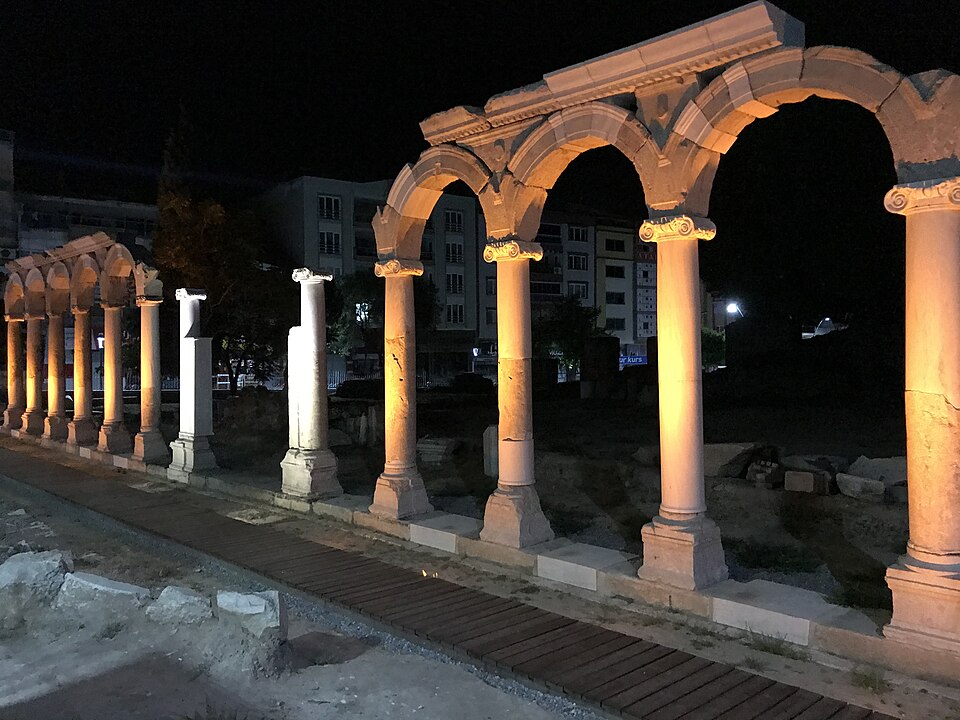
Thyatira is the ancient city underneath part of modern Akhisar, in Manisa province, and one of the seven churches addressed in the Book of Revelation. The settlement runs back to the Early Bronze Age and was refounded around 290 BCE by the Seleucid king Seleucus I Nicator, who gave it its name. It sat on the old border between Lydia and Mysia and passed through Lydian, Hellenistic, Roman and Byzantine hands before the Ottoman period.
Under Rome the city grew wealthy on textile dyeing: inscriptions found at the site record more professional guilds — wool-workers, linen-workers, dyers, potters, bakers, bronze-smiths — than any other city known from Roman Asia. The Christian community addressed in Revelation 2:18-29 grew out of that trading city, and survived, with interruptions, until the region's Orthodox population was deported in 1922; the bishopric itself continues today as the Greek Orthodox Archdiocese of Thyateira and Great Britain, seated in London.
Checked 2026-08-24
The excavated ground, known locally as Tepe Mezarlığı, is a stretch of colonnaded Roman street dated to the 2nd-4th centuries CE, with standing columns and paving stones still in place. Around it lie the foundations of a Byzantine basilica and other Roman-period structures, uncovered in seasons that ran under Yusuf Boysal in 1962, Rüstem Duyuran between 1968 and 1971, and Engin Akdeniz from 2011 onward.
What is visible is a fraction of the ancient city: Thyatira spread far beyond this trench, under streets and buildings of modern Akhisar that will never be dug. Hastane Höyüğü, a separate mound a short walk away, covers an earlier and much longer occupation and is a distinct stop, with different finds and different visiting conditions from the street.
Checked 2026-08-24
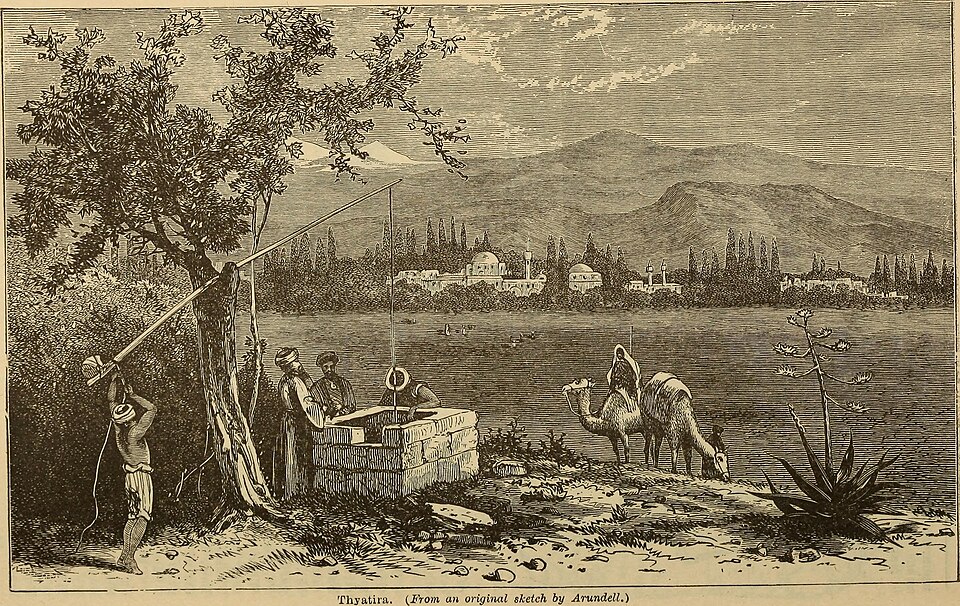
Thirty to forty minutes covers it, not the forty-five minutes the category default assumes. The excavated area is one colonnaded street and a handful of adjoining foundations, small enough to walk end to end and back inside half an hour; there is no on-site museum to extend the visit, since the finds from the dig sit across the street at Akhisar Museum. That judgement follows from the site's own published footprint rather than a specific visitor account, since no source this page checked gives a minute figure for the ruins.
A visitor who wants both the street and the museum's coin and ceramic cases from it should plan close to two hours total, since the two sit a few steps apart and share one ticket.
Checked 2026-08-24
The site has no shade, so early morning or the two hours before sunset are the most comfortable times to walk it once Akhisar's inland summer sets in from June to September. Neither muze.gov.tr nor the Ministry's Kültür Portalı page for Tepe Mezarlığı publishes a separate opening window for the ruins themselves.
Since the DOSİM price list bundles Thyatira's admission with Akhisar Museum's ticket, the museum's own hours — 08:00 to 19:00, ticket window closing 18:45, closed Mondays — are the best available guide to when the site can actually be entered, though that is an inference from the shared ticket rather than a posted hour for the ruins on their own.
Checked 2026-08-24 · Source
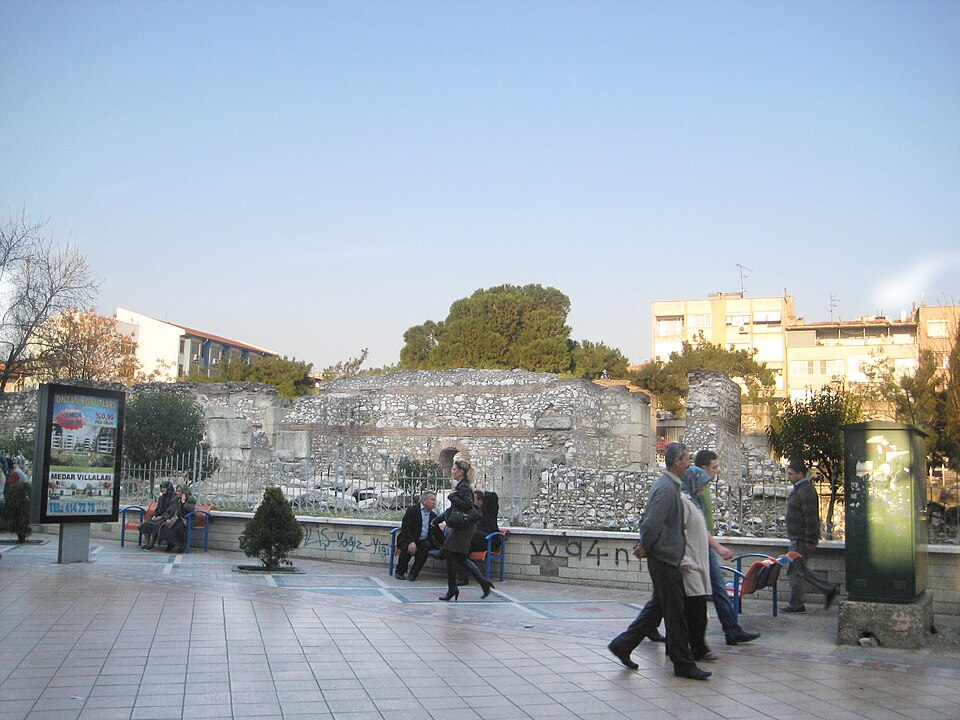
Entry to the excavated street is sold on the same ticket as Akhisar Museum, according to the Ministry's DÖSİMM price list: 3 euros for foreign visitors, and Müzekart admission for Turkish citizens. The two sites face each other in central Akhisar and are administered together as one listing on the Ministry's fee schedule, so there is no separate, lower-priced ticket for the ruins alone.
A visitor arriving at the excavated street rather than the museum building should still expect to buy or show a ticket, even though the ruins themselves have no staffed booth of their own — the museum across the street is where that ticket is issued.
Checked 2026-08-24 · Source
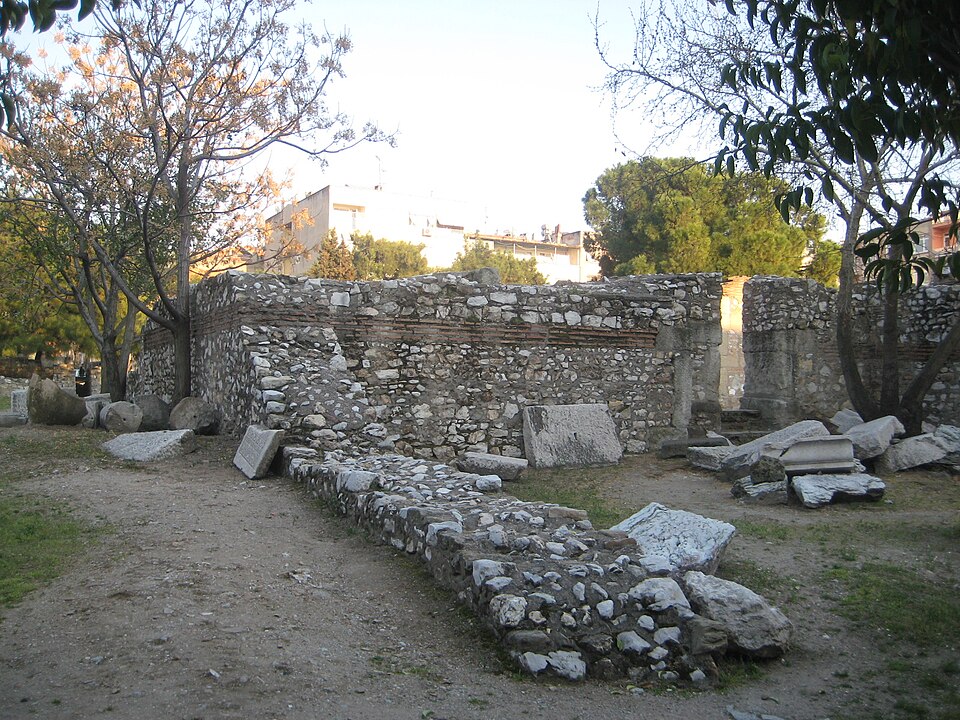
Akhisar sits on the Istanbul-Izmir highway, about 55 km north of Manisa city center. There is no rail or metro connection: the practical options are driving, or an intercity bus from Manisa or Izmir to Akhisar's otogar, followed by a short taxi or dolmuş, since the excavation sits away from the center at Hürriyet mahallesi.
Akhisar Museum, more central and directly across from the ruins, is the better first stop for anyone arriving without a car — it is where the shared ticket is bought, and the ruins themselves have no staffed entrance of their own.
Checked 2026-08-24
The site is recorded as partially destroyed, and excavation is active in seasons when the Manisa Museum team is working the area, so parts of the trench can be fenced or roped off without notice. The ground is uneven stone and packed earth rather than a paved path, so flat, closed shoes matter more than they would at a landscaped site.
There are no facilities on the excavated ground itself — no toilets, no shade, no café — and since the ticket is bought at the museum rather than on site, arriving directly at the ruins without having stopped there first can mean arriving without a ticket in hand.
Checked 2026-08-24
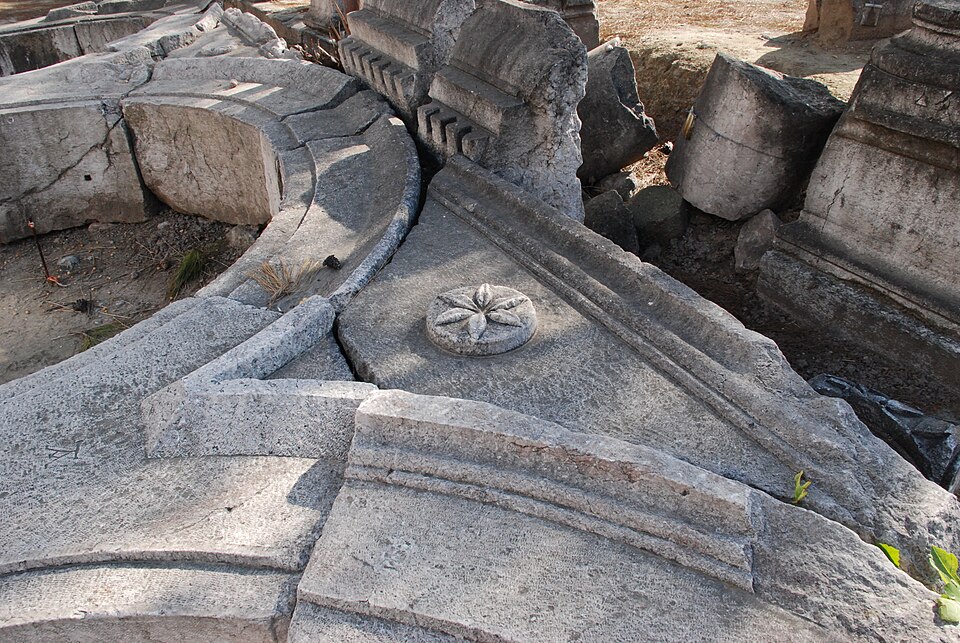
The colonnaded street is the shot most visitors come for, and it reads best in low, raking light — early morning or the hour before sunset — when the standing column bases and paving joints throw shadows that flat midday sun erases. Because the site sits inside working Akhisar rather than on an open hilltop, wider shots tend to catch the modern town in the background; a longer lens compressed on the column line keeps the frame in period.
There is no viewing platform, so the composition depends on walking the length of the excavated street rather than shooting from one fixed spot.
Checked 2026-08-24
No. Thyatira, known locally as Tepe Mezarlığı, is the open excavated street across the road from Akhisar Museum, which holds the coins and ceramics dug up from it; they are two separate stops that share one entrance ticket.
The Ministry's DÖSİMM price list bundles Thyatira's admission with Akhisar Museum: 3 euros for foreign visitors, Müzekart entry for Turkish citizens, sold at the museum across the street.
Thirty to forty minutes covers the colonnaded street and its adjoining foundations; there is no on-site museum to extend the stop.
Thyatira is one of the seven churches addressed directly in the Book of Revelation, 2:18-29, a community that grew out of the Roman city's textile and dyeing trade.
Neither muze.gov.tr nor the Ministry's Kültür Portalı publishes a separate opening window for the excavated street; the museum's 08:00 to 19:00 hours, closed Mondays, are the closest available guide since the two share one ticket.
On its own, the excavated area is small — thirty to forty minutes of walking a single colonnaded street. It is worth the 55 km drive mainly as part of a combined stop with Akhisar Museum, not as a destination by itself.
Loading the interactive map…
The interactive map could not be loaded.
Last updated:
Source: OpenStreetMap contributors, Wikidata ·