


6 min walk
Aspendos
- Must see · Heritage site
- Historic monument
Language · 1 published
Historic monument · Antalya
Su kemeri
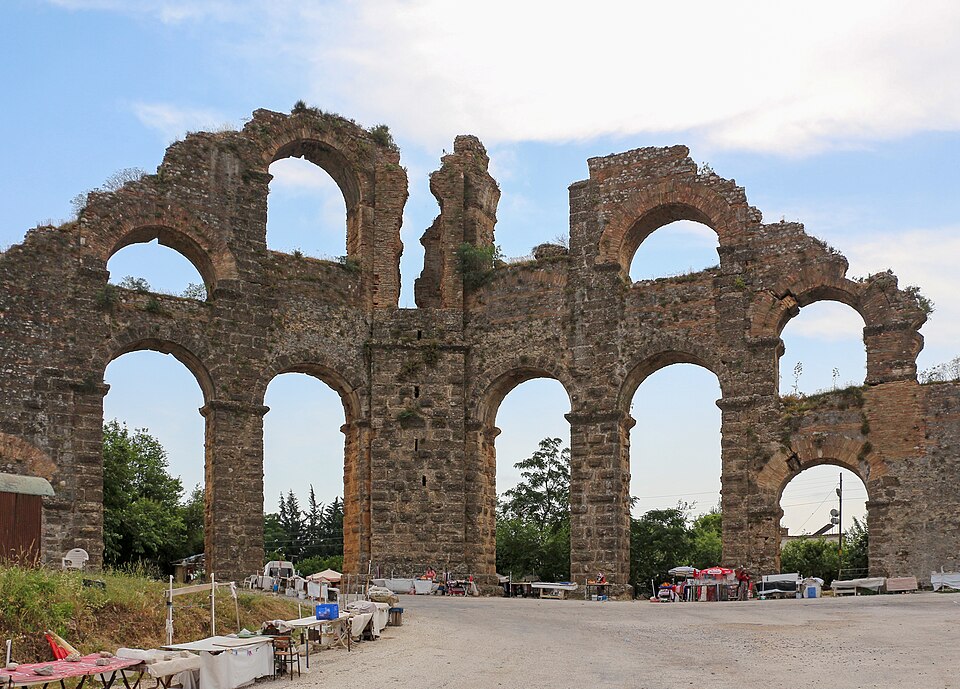
The Aspendos Roman aqueduct, locally known as Su kemeri, stands as an ancient engineering landmark near Antalya. This surviving remnant of Roman infrastructure once formed part of an extensive water-supply network serving the ancient city of Aspendos. The structure demonstrates classical Roman hydraulic engineering through its use of arches and channels to transport water across terrain. Visitors encounter a tangible connection to antiquity in the Antalya region, where such Roman works remain embedded in the landscape. The aqueduct represents one component of a broader archaeological zone that draws historical interest alongside the more famous Aspendos theatre.
Checked 2026-08-26
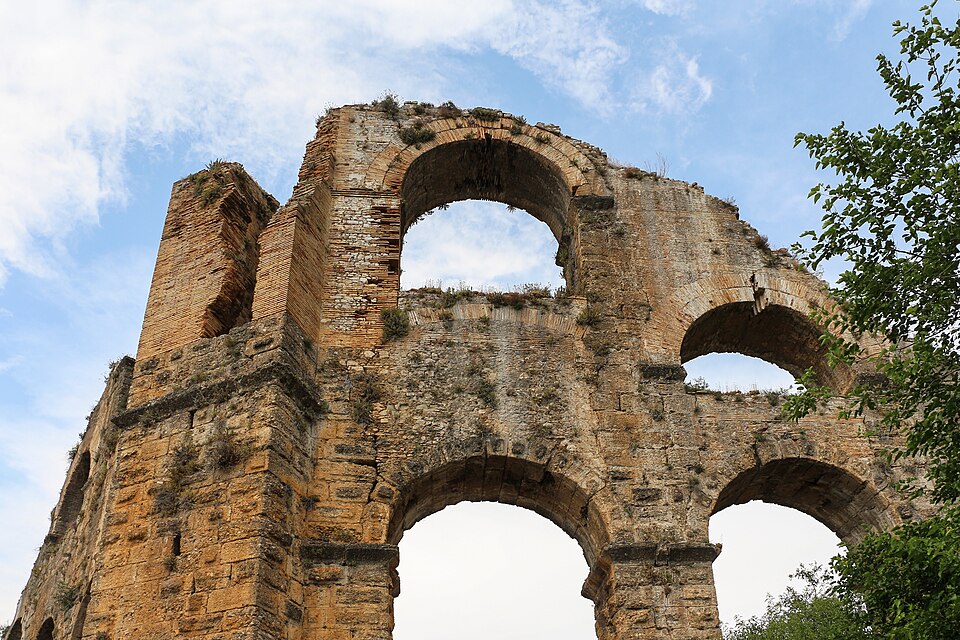
The aqueduct site presents standing stone and brickwork arches in varying states of preservation. Visitors observe the multi-tiered arcade construction typical of Roman water systems, with some sections retaining considerable height. The channel that once carried water may be traceable in preserved upperworks. Surrounding terrain includes scattered ancient remains and rural landscape. There is no enclosed museum building or visitor centre attached specifically to this structure. Interpretive signage or explanatory panels are not recorded. The experience centres on direct encounter with ancient masonry in an open-air setting, requiring self-guided observation and contextual imagination from visitors.
Checked 2026-08-26
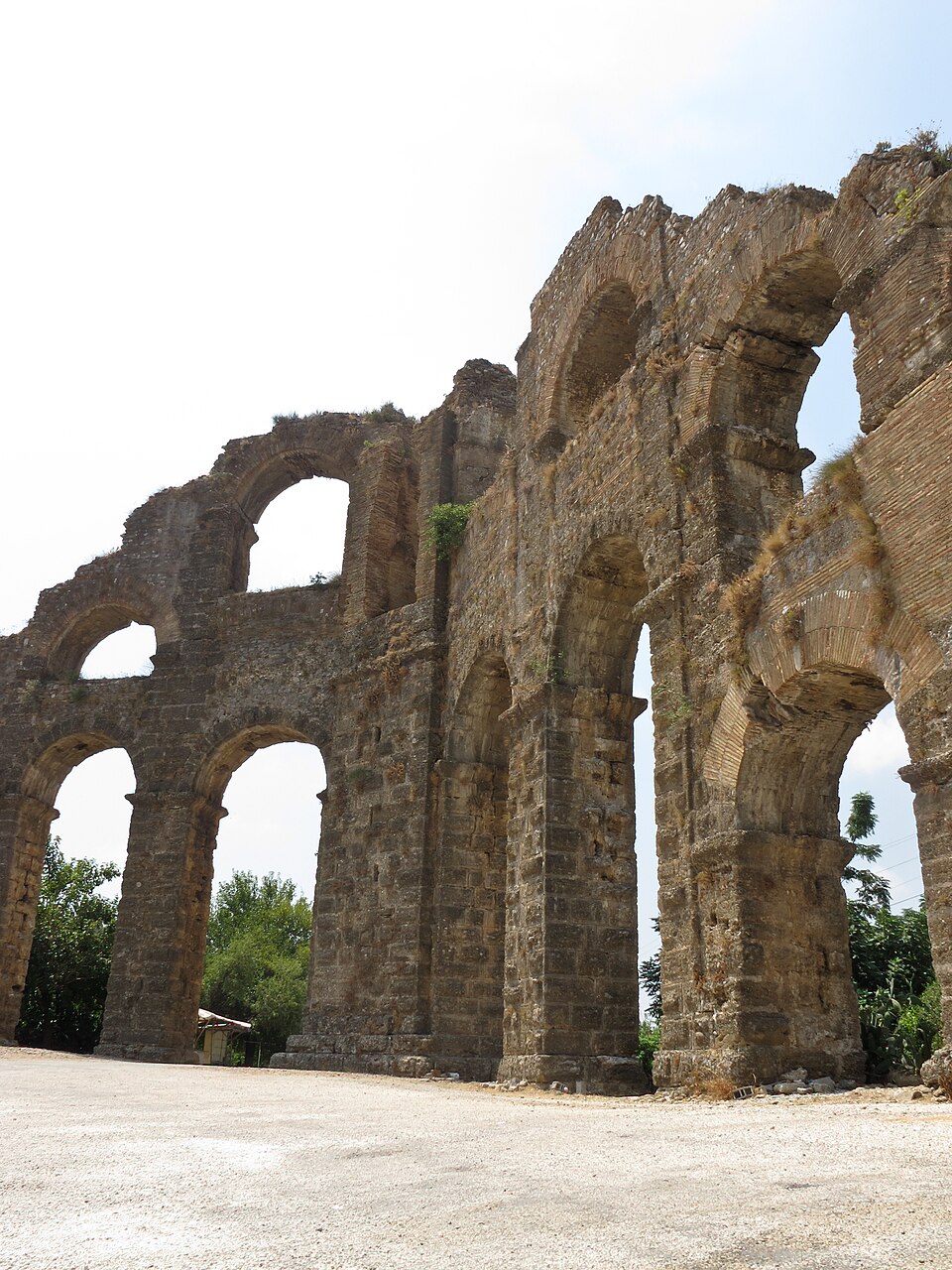
A focused visit to the aqueduct structure alone requires approximately twenty to forty minutes for observation and photography. Those with strong archaeological interest may spend longer examining construction details and attempting to trace the water channel's course. The site combines naturally with visits to nearby Aspendos ancient theatre and other regional antiquities, which would extend the excursion to half a day or more. No guided tours or structured programmes are recorded for this specific monument. Visitors should factor in travel time from Antalya, as the aqueduct lies outside the city centre in a rural location requiring road access.
Checked 2026-08-26
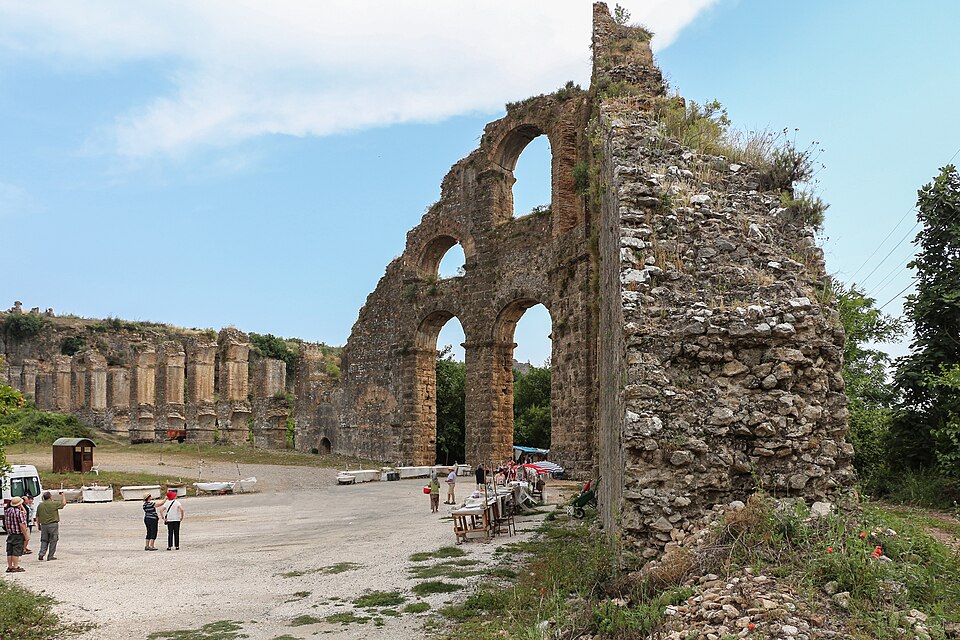
Operator-confirmed hours are Not recorded pending review. The aqueduct stands in open countryside with no recorded gating or controlled access, suggesting potential for visitation at any daylight hour, though this remains unverified. Seasonal considerations apply strongly: summer months in the Antalya region bring intense heat and high sun exposure with minimal shade at the site. Spring and autumn offer more temperate conditions for outdoor exploration. Winter visits remain feasible though rainfall may affect ground conditions. Early morning or late afternoon timing improves lighting for observation and photography regardless of season. Visitors should verify current access conditions before travelling.
Checked 2026-08-26
Operator-confirmed prices are Not recorded pending review. No admission fee structure is documented for this specific aqueduct monument. It may fall within a broader archaeological site ticketing system or remain without charge, but this remains unverified. Visitors should not assume free access and should carry means of payment. The nearby Aspendos theatre operates under established ticketing, though whether this extends to the aqueduct is not recorded. Cash in Turkish lira represents the prudent preparation. Group rates, student concessions, or combined tickets with other sites are not documented. Verify current arrangements through official channels before departure.
Checked 2026-08-26
The aqueduct lies in the Serik district east of central Antalya, accessible via the D400 highway toward Alanya. Public transport options are limited; no dedicated shuttle service is recorded. Visitors typically reach the area by private vehicle, rental car, or organised tour including multiple Aspendos sites. Taxis from Antalya or Serik are possible but costly for independent travellers. Road signage to Aspendos generally directs toward the theatre, with the aqueduct requiring additional local navigation. Parking availability at the aqueduct itself is not recorded. Route planning through mapping services is essential, as rural turning points may be poorly marked for unfamiliar visitors.
Checked 2026-08-26
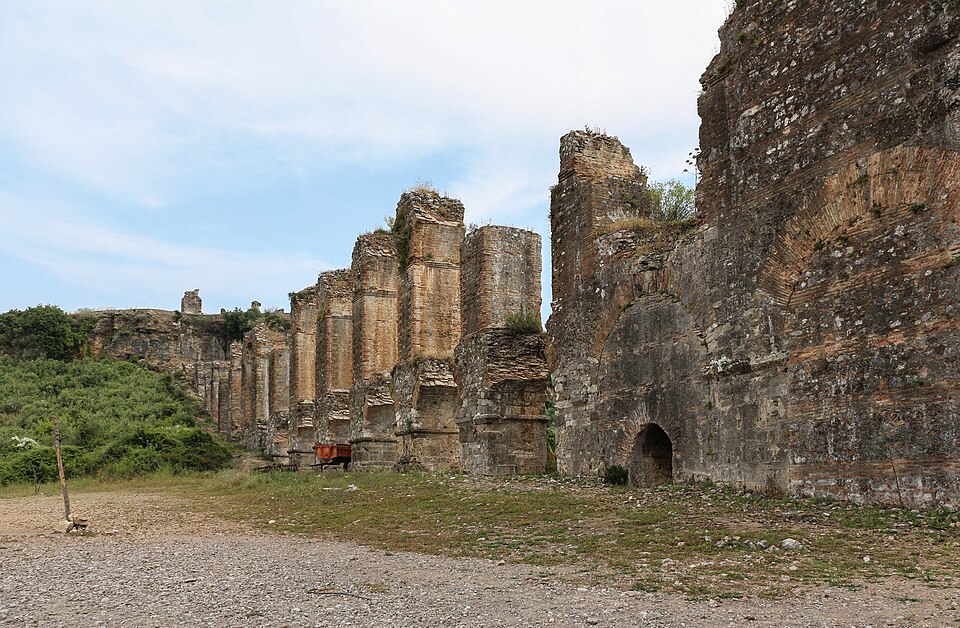
The structure stands without modern safety installations; climbing on ancient masonry risks both personal injury and heritage damage. Uneven ground, loose stonework, and absence of barriers present hazards, particularly for children. No staff presence or emergency services are recorded on site. Summer heat demands water, sun protection, and appropriate timing. Remote location means limited mobile coverage and no nearby facilities for supplies or sanitation. Snakes and insects inhabit rural terrain. Vehicle security in isolated parking areas requires attention. Visitors should inform others of their itinerary. Travel insurance covering remote-area incidents is prudent. Respect for archaeological fabric is legally and ethically obligatory.
Checked 2026-08-26

The aqueduct offers strong photographic subjects through its repeating arch patterns and textural stonework against sky and landscape. Early morning and late afternoon provide directional light emphasising depth and relief. Wide-angle lenses accommodate the structure's height and length; telephoto lenses isolate architectural details and compress arch sequences. The rural setting permits unobstructed viewpoints though foreground elements may be sparse. Drone operation is subject to Turkish aviation regulations and archaeological site restrictions; no specific permissions are recorded. Tripod use appears unproblematic given low visitor density. No flash restrictions are documented. Weathered surfaces and vegetation growth add character; overcast conditions reduce harsh contrast in midday.
Checked 2026-08-26
No. The aqueduct and theatre are separate structures within the broader Aspendos archaeological zone, though they lie in proximity. The theatre receives greater visitor attention and documented infrastructure.
No safe access route is recorded. The structure lacks modern safety features, and climbing risks personal injury and damage to ancient fabric. Observation from ground level is the prudent approach.
No facilities are recorded at this specific monument. Visitors should prepare accordingly, using services in Serik or at the theatre site if available.
No guided service is recorded for the aqueduct. Self-guided visitation with prior research or a general regional guidebook represents the typical approach.
Accessibility features are not recorded. Rural terrain, uneven ground, and absence of pathways suggest significant barriers for mobility-impaired visitors.
The Go Turkiye portal for Antalya provides general destination context. Specific aqueduct information on that platform was not detailed in the supplied source pointer.
Loading the interactive map…
The interactive map could not be loaded.
Last updated:
Source: OpenStreetMap contributors, Wikidata ·