.JPG)
.jpg)
.jpg)
.jpg)
.jpg)
.jpg)
2 min walk
Kaleici Museum
- Must see
- Museum
Language · 1 published
Historic monument · Antalya
Hadrian Kapısı
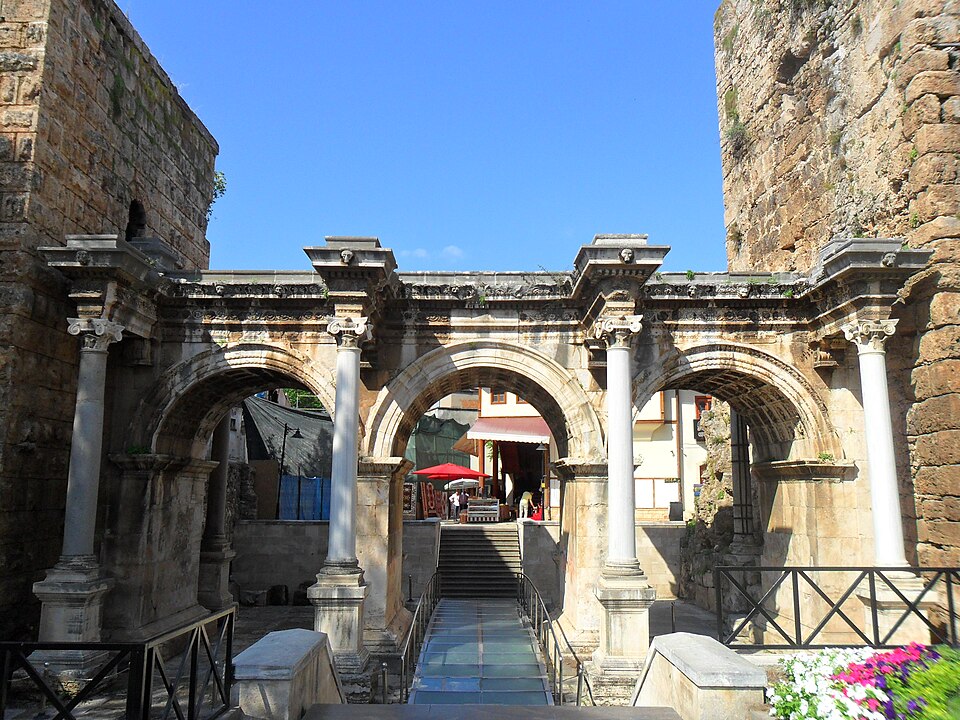
Hadrian's Gate is a triumphal arch in Antalya's Kaleiçi district, built to commemorate the visit of Roman Emperor Hadrian to the city in 130 CE. The structure features three arched gateways with decorative marble columns and intricate reliefs. It stands as one of the most preserved Roman monuments in the region, marking the former boundary between the ancient city and its outskirts. The gate has undergone various restorations over centuries while maintaining its historical character. Hadrian's Gate also earns time in a antalya itinerary because A primary visitor landmark supported by the three required source families and matched exactly to the production city pool. Its value becomes clearer when the stop is compared with the surrounding streets and the other ranked places nearby.
Checked 2026-08-26
The monument consists of three archways formed by four pylons with Corinthian-style columns. Two towers flank the structure, with the southern tower dating from Roman times and the northern tower rebuilt during Seljuk period. The upper sections contain decorative friezes and inscriptions. Visitors can walk through the central and side passages. The surrounding Kaleiçi old town contains narrow streets, Ottoman-era houses, small shops, and restaurants extending from this historical threshold into the ancient city interior.
Checked 2026-08-26

A visit to Hadrian's Gate itself requires approximately fifteen to thirty minutes for observation and photography. Most visitors combine this stop with exploration of the broader Kaleiçi district, extending the total experience to two or three hours. The gate functions primarily as a passage point rather than an enclosed attraction. There are no interior rooms or exhibitions requiring extended time. The surrounding neighborhood rewards wandering, with numerous historical buildings and viewpoints accessible on foot from this central landmark location.
Checked 2026-08-26

Antalya experiences hot Mediterranean summers and mild winters. Spring and autumn months generally offer comfortable temperatures for walking and outdoor photography. Summer visits may be preferable during early morning or evening hours due to heat intensity. The gate remains visible at all hours as an open-air street-level monument. Operator-confirmed hours are Not recorded pending review. No official opening or closing times apply to this public thoroughfare structure. Evening illumination may enhance photographic opportunities though specific lighting schedules are not confirmed.
Checked 2026-08-26
Hadrian's Gate is situated within a public street and accessible without admission charge. No ticketing infrastructure is present at the site. Operator-confirmed prices are Not recorded pending review. Visitors should anticipate no direct costs for viewing or passing through the monument itself. Nearby museums and some historical buildings within Kaleiçi may maintain separate fee structures. Budget-conscious travelers may appreciate this landmark as a cost-free cultural experience, though incidental expenses for food, guided services, or transportation to the district will apply according to individual choices.
Checked 2026-08-26

The gate stands at the intersection of Atatürk Boulevard and the entrance to Kaleiçi old town in central Antalya. Public buses serve the surrounding city center with stops within walking distance. The tram system provides access to nearby stations. Taxis and ride services operate throughout the area. Pedestrian access from downtown accommodations is feasible for those staying centrally. Signage in the Kaleiçi vicinity generally indicates directions toward this prominent landmark. Parking in the immediate old town streets is extremely limited due to narrow historic lanes and pedestrian-priority zones.
Checked 2026-08-26

The structure integrates with active vehicle and pedestrian traffic, requiring awareness when photographing or pausing in archways. Cobblestone surfaces in surrounding streets present slip hazards, particularly when wet. Summer heat demands hydration and sun protection. The area attracts numerous visitors, creating congestion during peak periods. Street vendors and restaurant touts operate in the vicinity with varying degrees of persistence. Visitors should secure belongings against petty theft in crowded conditions. No barriers separate visitors from the ancient stonework, implying personal responsibility for preservation conduct and physical safety near weathered architectural elements.
Checked 2026-08-26
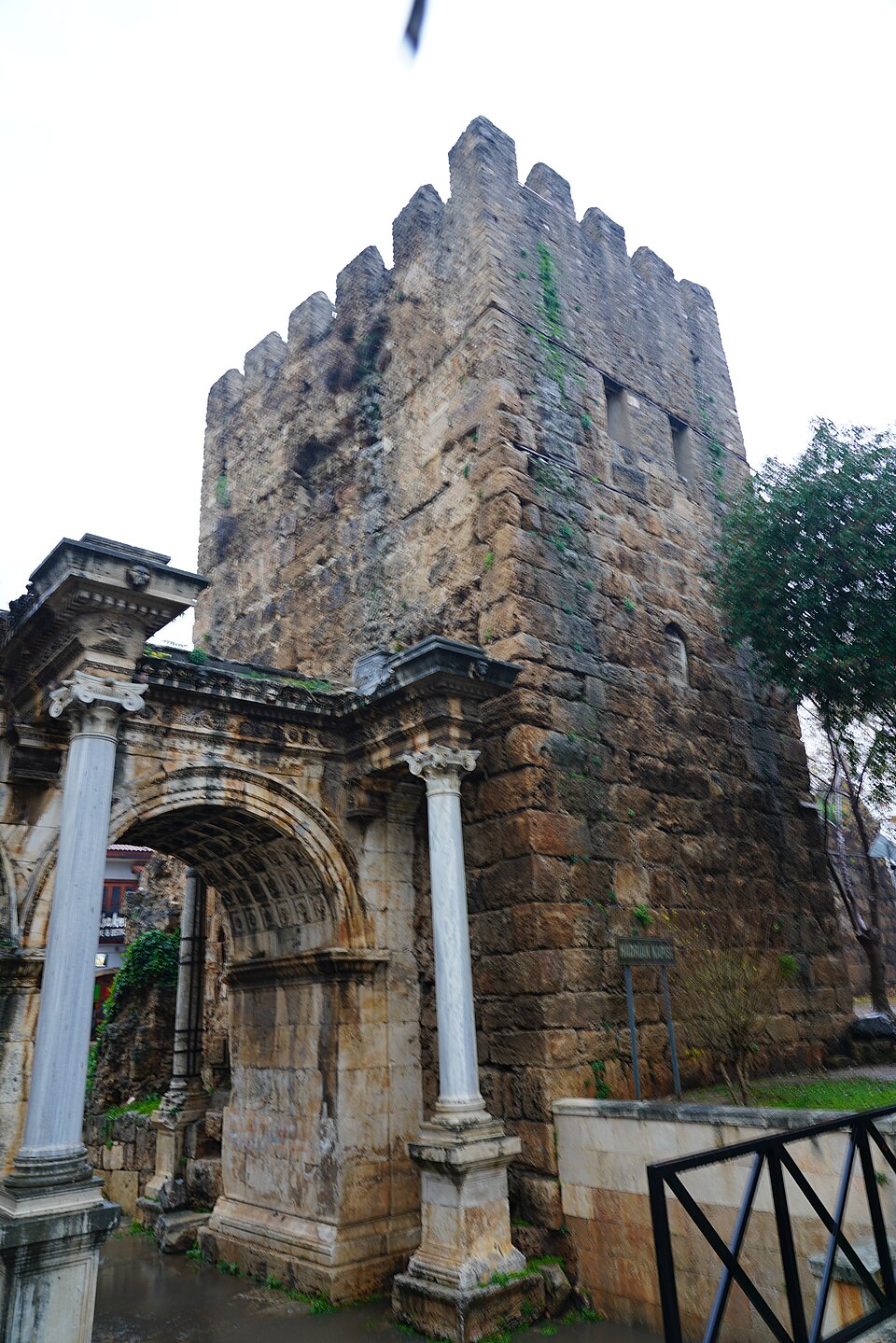
The gate offers strong frontal symmetry for composition, best captured during morning or late afternoon for favorable natural lighting. The contrast between ancient marble and surrounding vegetation creates visual interest. Night photography may benefit from artificial illumination on the structure. Wide-angle lenses accommodate the full height within confined street space. Including human figures provides scale reference against monumental dimensions. The archway frames views into Kaleiçi streets for layered compositions. Tripod use may obstruct pedestrian flow and should be exercised with consideration. No photography restrictions are indicated though respectful conduct at heritage sites remains appropriate.
Checked 2026-08-26
The gate is a public street-level monument without gates or barriers, accessible at all times. No closure days are recorded.
The gate was constructed in 130 CE to commemorate Emperor Hadrian's visit, making it approximately nineteen centuries old.
Yes, the central and side archways function as active pedestrian passages into the Kaleiçi old town district.
No admission fee is required as the monument forms part of a public thoroughfare.
The Kaleiçi old town extends immediately beyond, containing historic streets, shops, restaurants, and other heritage structures.
The ground-level arches permit passage, though surrounding Kaleiçi streets feature uneven cobblestones and inclines that may present difficulties.
Loading the interactive map…
The interactive map could not be loaded.
Last updated:
Source: OpenStreetMap contributors, Wikidata ·