.jpg)
_%E0%B8%A7%E0%B8%B1%E0%B8%94%E0%B8%A3%E0%B8%B2%E0%B8%8A%E0%B8%9B%E0%B8%A3%E0%B8%B0%E0%B8%94%E0%B8%B4%E0%B8%A9%E0%B8%90%E0%B8%AA%E0%B8%96%E0%B8%B4%E0%B8%95%E0%B8%A1%E0%B8%AB%E0%B8%B2%E0%B8%AA%E0%B8%B5%E0%B8%A1%E0%B8%B2%E0%B8%A3%E0%B8%B2%E0%B8%A1%E0%B8%A3%E0%B8%B2%E0%B8%8A%E0%B8%A7%E0%B8%A3%E0%B8%A7%E0%B8%B4%E0%B8%AB%E0%B8%B2%E0%B8%A3_%E0%B9%80%E0%B8%82%E0%B8%95%E0%B8%9E%E0%B8%A3%E0%B8%B0%E0%B8%99%E0%B8%84%E0%B8%A3_%E0%B8%81%E0%B8%A3%E0%B8%B8%E0%B8%87%E0%B9%80%E0%B8%97%E0%B8%9E%E0%B8%A1%E0%B8%AB%E0%B8%B2%E0%B8%99%E0%B8%84%E0%B8%A3_(1).jpg)
_%E0%B8%A7%E0%B8%B1%E0%B8%94%E0%B8%A3%E0%B8%B2%E0%B8%8A%E0%B8%9B%E0%B8%A3%E0%B8%B0%E0%B8%94%E0%B8%B4%E0%B8%A9%E0%B8%90%E0%B8%AA%E0%B8%96%E0%B8%B4%E0%B8%95%E0%B8%A1%E0%B8%AB%E0%B8%B2%E0%B8%AA%E0%B8%B5%E0%B8%A1%E0%B8%B2%E0%B8%A3%E0%B8%B2%E0%B8%A1%E0%B8%A3%E0%B8%B2%E0%B8%8A%E0%B8%A7%E0%B8%A3%E0%B8%A7%E0%B8%B4%E0%B8%AB%E0%B8%B2%E0%B8%A3_%E0%B9%80%E0%B8%82%E0%B8%95%E0%B8%9E%E0%B8%A3%E0%B8%B0%E0%B8%99%E0%B8%84%E0%B8%A3_%E0%B8%81%E0%B8%A3%E0%B8%B8%E0%B8%87%E0%B9%80%E0%B8%97%E0%B8%9E%E0%B8%A1%E0%B8%AB%E0%B8%B2%E0%B8%99%E0%B8%84%E0%B8%A3_(2).jpg)
_%E0%B8%A7%E0%B8%B1%E0%B8%94%E0%B8%A3%E0%B8%B2%E0%B8%8A%E0%B8%9B%E0%B8%A3%E0%B8%B0%E0%B8%94%E0%B8%B4%E0%B8%A9%E0%B8%90%E0%B8%AA%E0%B8%96%E0%B8%B4%E0%B8%95%E0%B8%A1%E0%B8%AB%E0%B8%B2%E0%B8%AA%E0%B8%B5%E0%B8%A1%E0%B8%B2%E0%B8%A3%E0%B8%B2%E0%B8%A1%E0%B8%A3%E0%B8%B2%E0%B8%8A%E0%B8%A7%E0%B8%A3%E0%B8%A7%E0%B8%B4%E0%B8%AB%E0%B8%B2%E0%B8%A3_%E0%B9%80%E0%B8%82%E0%B8%95%E0%B8%9E%E0%B8%A3%E0%B8%B0%E0%B8%99%E0%B8%84%E0%B8%A3_%E0%B8%81%E0%B8%A3%E0%B8%B8%E0%B8%87%E0%B9%80%E0%B8%97%E0%B8%9E%E0%B8%A1%E0%B8%AB%E0%B8%B2%E0%B8%99%E0%B8%84%E0%B8%A3_(4).jpg)
_%E0%B8%A7%E0%B8%B1%E0%B8%94%E0%B8%A3%E0%B8%B2%E0%B8%8A%E0%B8%9B%E0%B8%A3%E0%B8%B0%E0%B8%94%E0%B8%B4%E0%B8%A9%E0%B8%90%E0%B8%AA%E0%B8%96%E0%B8%B4%E0%B8%95%E0%B8%A1%E0%B8%AB%E0%B8%B2%E0%B8%AA%E0%B8%B5%E0%B8%A1%E0%B8%B2%E0%B8%A3%E0%B8%B2%E0%B8%A1%E0%B8%A3%E0%B8%B2%E0%B8%8A%E0%B8%A7%E0%B8%A3%E0%B8%A7%E0%B8%B4%E0%B8%AB%E0%B8%B2%E0%B8%A3_%E0%B9%80%E0%B8%82%E0%B8%95%E0%B8%9E%E0%B8%A3%E0%B8%B0%E0%B8%99%E0%B8%84%E0%B8%A3_%E0%B8%81%E0%B8%A3%E0%B8%B8%E0%B8%87%E0%B9%80%E0%B8%97%E0%B8%9E%E0%B8%A1%E0%B8%AB%E0%B8%B2%E0%B8%99%E0%B8%84%E0%B8%A3_(7).jpg)
_%E0%B8%A7%E0%B8%B1%E0%B8%94%E0%B8%A3%E0%B8%B2%E0%B8%8A%E0%B8%9B%E0%B8%A3%E0%B8%B0%E0%B8%94%E0%B8%B4%E0%B8%A9%E0%B8%90%E0%B8%AA%E0%B8%96%E0%B8%B4%E0%B8%95%E0%B8%A1%E0%B8%AB%E0%B8%B2%E0%B8%AA%E0%B8%B5%E0%B8%A1%E0%B8%B2%E0%B8%A3%E0%B8%B2%E0%B8%A1%E0%B8%A3%E0%B8%B2%E0%B8%8A%E0%B8%A7%E0%B8%A3%E0%B8%A7%E0%B8%B4%E0%B8%AB%E0%B8%B2%E0%B8%A3_%E0%B9%80%E0%B8%82%E0%B8%95%E0%B8%9E%E0%B8%A3%E0%B8%B0%E0%B8%99%E0%B8%84%E0%B8%A3_%E0%B8%81%E0%B8%A3%E0%B8%B8%E0%B8%87%E0%B9%80%E0%B8%97%E0%B8%9E%E0%B8%A1%E0%B8%AB%E0%B8%B2%E0%B8%99%E0%B8%84%E0%B8%A3,Wat_Ratchapradit,Bangkok_(1).jpg)
1 min walk · เขตพระนคร
Saha Chat monument
- High
- Historic monument
Language · 1 published
Historic monument · เขตพระนคร, Bangkok
วัดราชประดิษฐสถิตมหาสีมารามราชวรวิหาร
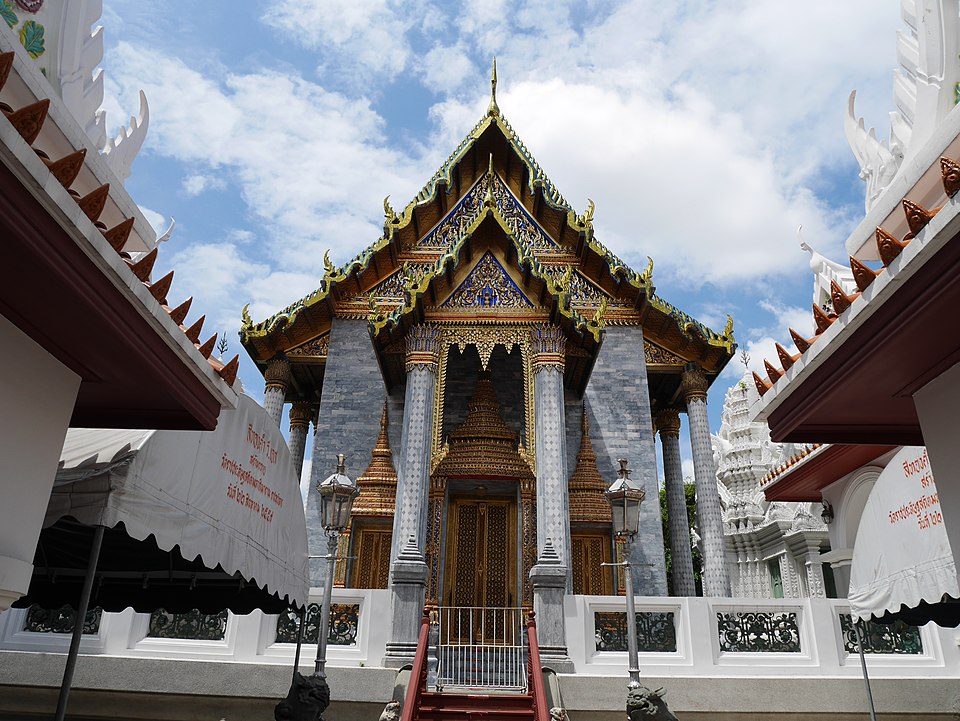
Wat Ratchapradit Sathitmahasimaram is the smallest of Bangkok's first-class royal monasteries, a walled grey-marble compound of 2 rai 2 ngan 98 square wah — about 4,400 square metres — on Saranrom Road in Phra Nakhon, immediately south of Saranrom Park and a short walk east of the Grand Palace. King Mongkut, Rama IV, founded Wat Ratchapradit in 1864 on ground that had been a royal coffee plantation in the previous reign, and construction was finished seven months later. The temple was built to be the first monastery of the Dhammayuttika Nikaya, the reformist order Mongkut had founded during his own twenty-seven years as a monk, and to complete a set of three principal royal monasteries in the capital on the Ayutthaya pattern. It was raised to first-class royal status in 1915. Wat Ratchapradit is the one temple in the old royal quarter that does not glitter: the wihan and the chedi are faced in grey marble rather than gilt stucco and coloured glass, and the compound is so small that it can be crossed in forty paces. Visitors walking between the Grand Palace and Wat Pho pass its gate constantly without noticing it.
Checked 2026-08-25 · Source
The single dominant building is the Phra Wihan Luang, which serves as both vihara and ordination hall — an economy the small site forced. Its exterior is clad in grey marble tiles and its gable carries a golden royal crown on a blue glass ground, the personal emblem of King Mongkut. Inside stands Phra Phuttha Sihing Patimakon, a replica of the revered Phra Phuttha Sihing image, with King Mongkut's ashes interred beneath it. The wall paintings, added in the reign of Rama V, run through the royal ceremonies of the twelve months, and one panel is unlike any other mural in Bangkok: it shows King Mongkut observing the total solar eclipse of 18 August 1868, the expedition that cost him his life. Behind the wihan stands the Phra Pasana Chedi, a Sri Lankan-form stupa also faced in grey marble with marble lattice work. Two small pavilions flank the terrace: the Ho Trai to the east, the scripture repository, painted with the Buddha's birth and his parinirvana; and the Ho Phra Chom to the west, holding a life-size gilt bronze statue of King Mongkut and decorated with Brahma faces. A story attached to the foundation holds that the soft ground was consolidated with earthenware garlic jars collected as the admission to a public performance of Thai dance staged on the site.
Checked 2026-08-25 · Source
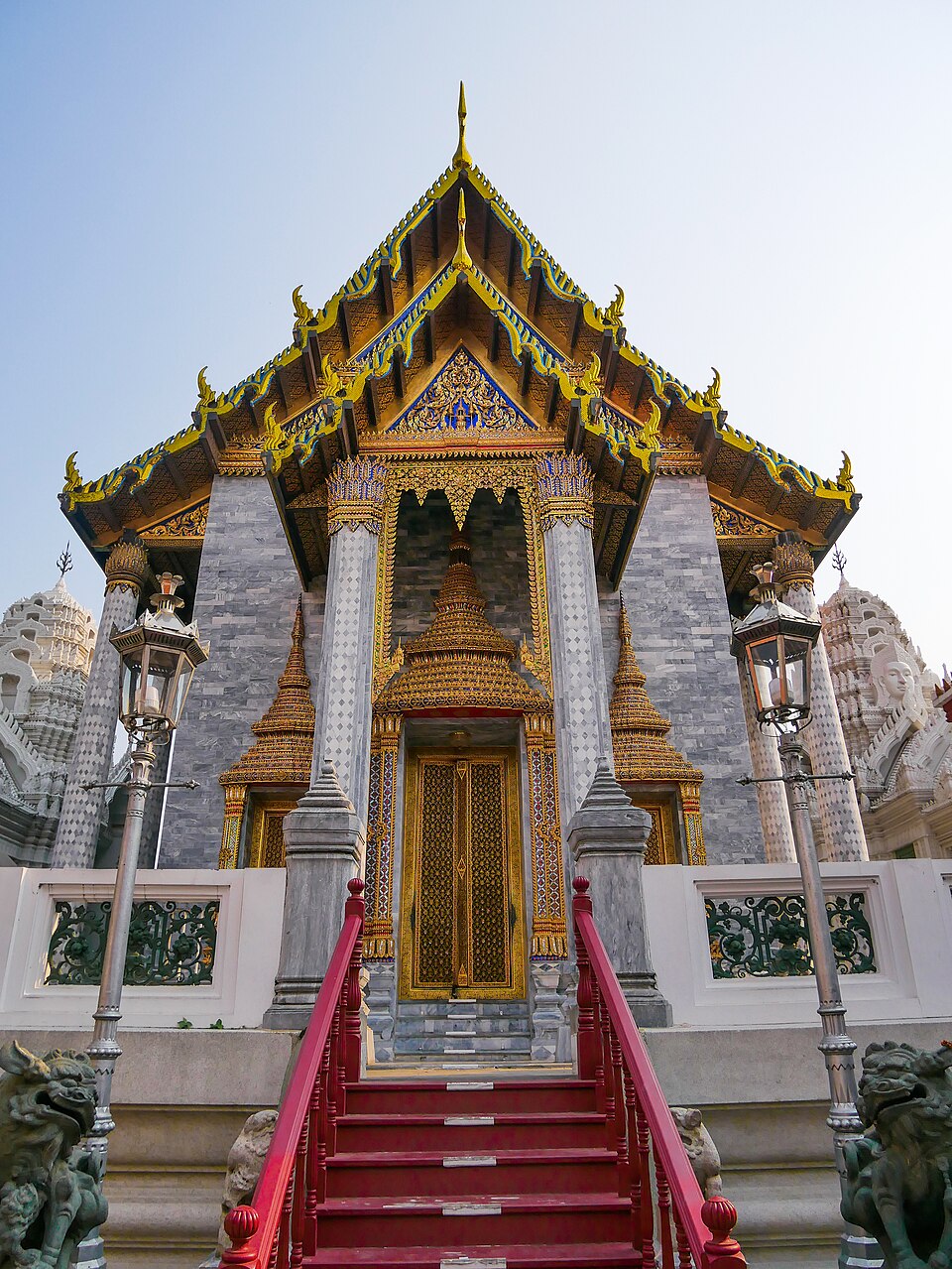
Allow thirty minutes. Wat Ratchapradit is roughly 4,400 square metres in total and has one interior worth entering, so the visit is genuinely short: ten minutes on the marble terrace and the chedi, fifteen inside the Phra Wihan Luang working along the twelve-month murals until the eclipse panel is found, and a few minutes at the two side pavilions. Anyone reading the murals scene by scene, or waiting for the light to move off the grey marble, can spend an hour without repeating anything. Thirty minutes is the figure recorded for this page and it assumes the wihan is unlocked; if it is not, the compound itself takes ten.
Checked 2026-08-25
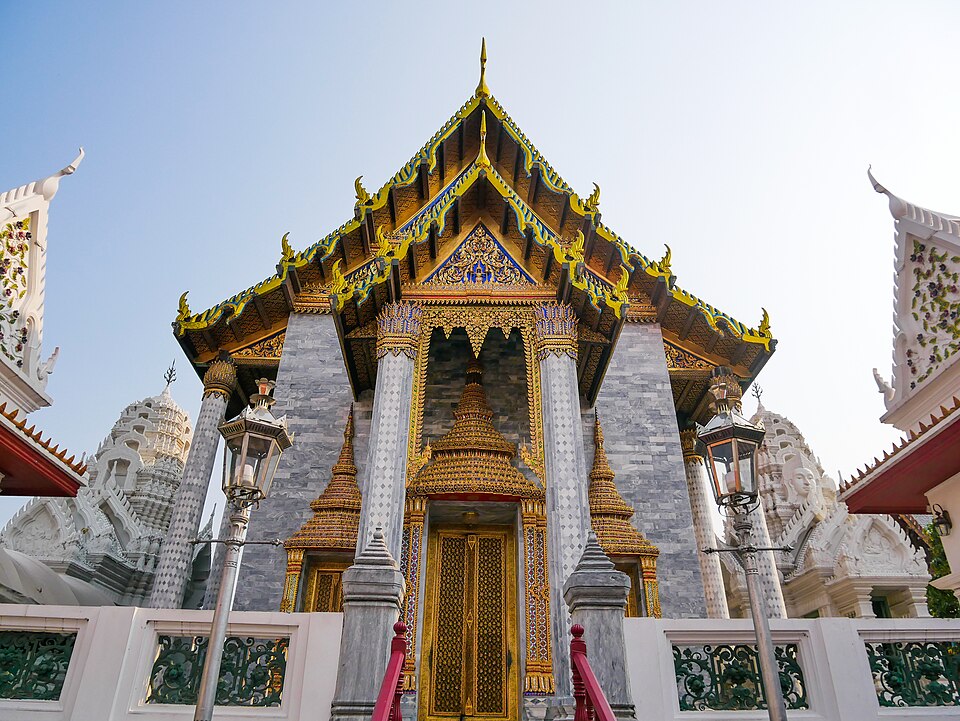
Come in the first two hours after sunrise. Grey marble is a flat, low-contrast surface that goes dead under a high sun and reads beautifully under a low one, and the compound is small enough that at midday there is nowhere in it to stand out of the heat. Wat Ratchapradit also has the useful property of never being busy: the crowds that fill the Grand Palace and Wat Pho a few hundred metres away do not come here, so the hour that is worst elsewhere is merely quiet here. On Buddhist holy days and during royal ceremonies the compound is in use by the community it belongs to, which is worth seeing but is not a time to wander through the wihan with a camera. Bangkok's afternoon storms in the rainy months arrive fast, and the compound has almost no covered shelter.
Checked 2026-08-25
No admission is recorded for Wat Ratchapradit and no opening hours are recorded, because the fee is not stated by any source the operator controls. The temple publishes no website of its own; OpenStreetMap holds neither a website tag nor an opening_hours tag for the compound; and the Thai and English encyclopaedia entries that describe the buildings carry no visiting information. Thai royal monasteries of this class are normally entered without a charge, but that expectation has not been confirmed here by anything the temple itself publishes, so this page records nothing rather than guessing a number. Treat the wihan as open when a monk or a layperson at the door says it is open, and carry small notes if a donation box is the only thing on offer.
Checked 2026-08-25
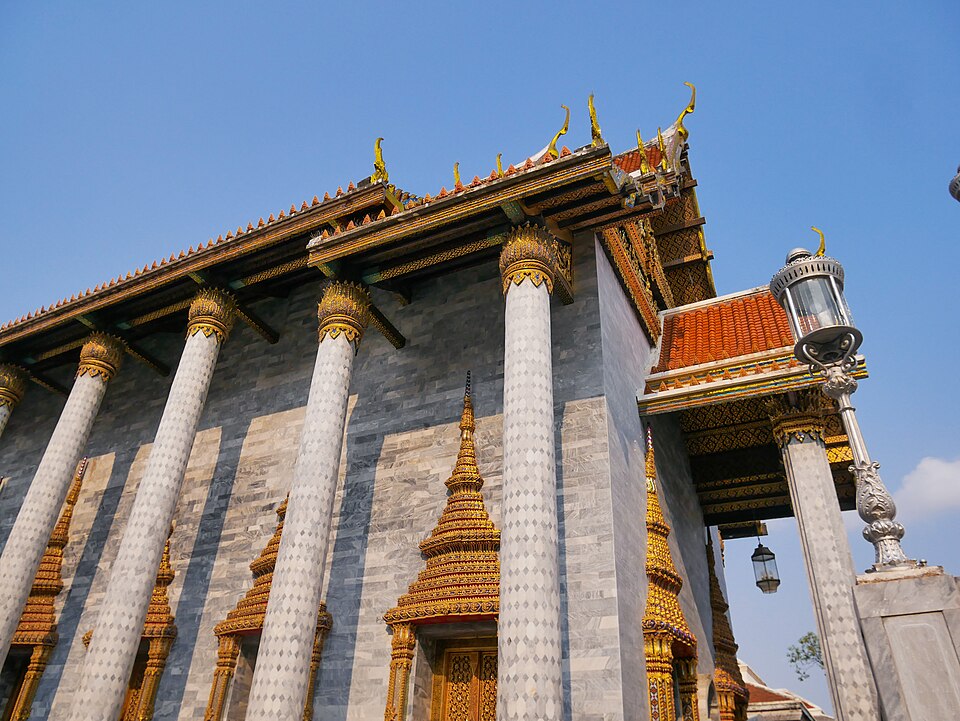
Wat Ratchapradit stands at 2 Saranrom Road, Phra Borom Maha Ratchawang subdistrict, Phra Nakhon District, Bangkok 10200 — the block bounded by Saranrom Park to the north and Rachini Road to the west. The nearest rail is the MRT Blue Line at Sanam Chai station, whose exits sit beside Museum Siam, leaving a walk of a few hundred metres north past Wat Pho. From the river, the Chao Phraya boat pier at Tha Tien lands within the same walking distance to the west. Anyone already inside the Grand Palace complex simply leaves by the eastern side, crosses Sanam Chai Road and enters Saranrom Park, and the temple wall is on the park's southern edge. There is no dedicated car park and the surrounding lanes are one-way and heavily policed.
Checked 2026-08-25 · Source
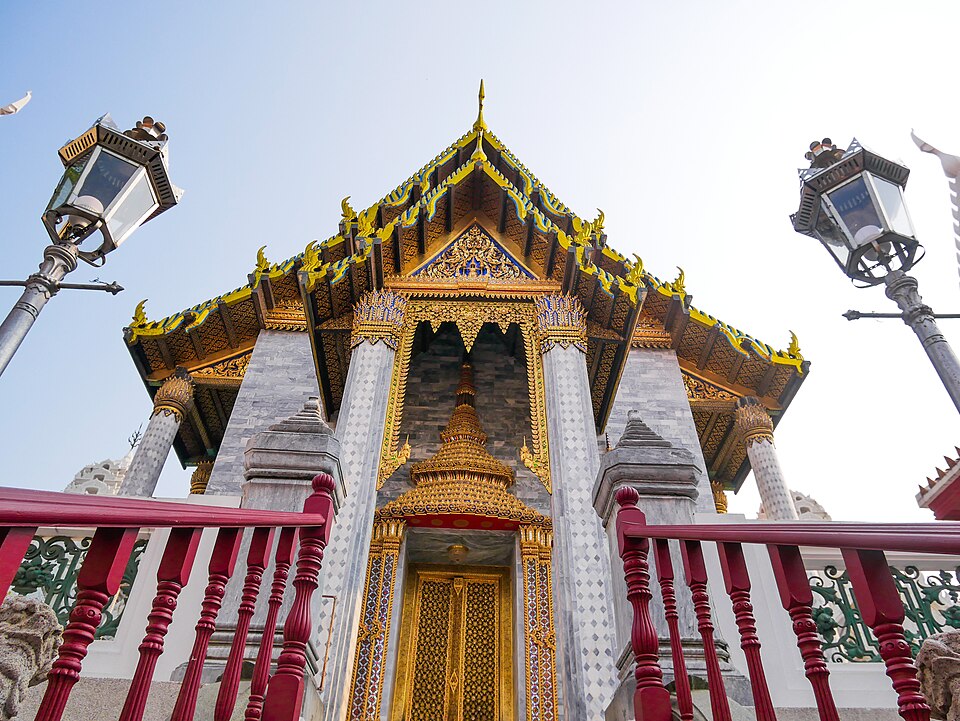
The first trap is assuming the place is shut. Wat Ratchapradit is a small working monastery, its gates are often half closed and there is no ticket desk, no queue and nobody outside to tell a visitor what to do; the compound is nevertheless normally accessible on foot and the correct move is to walk in quietly rather than turn away. Because no opening hours are published, a visit at an arbitrary afternoon hour can find the Phra Wihan Luang locked. Dress as for any Thai temple: shoulders and knees covered, shoes removed before entering the wihan, and no sitting with the soles of the feet pointed at the Buddha image. The compound is a Dhammayut monastery with resident monks, so a conversation or a phone call carries across it. Do not photograph monks without asking first. The temple sits inside the old royal district, where photographing military and palace personnel is unwelcome, and the statue of King Mongkut in the Ho Phra Chom is treated as a royal image, not an exhibit — behave in front of it as the Thai visitors do.
Checked 2026-08-25
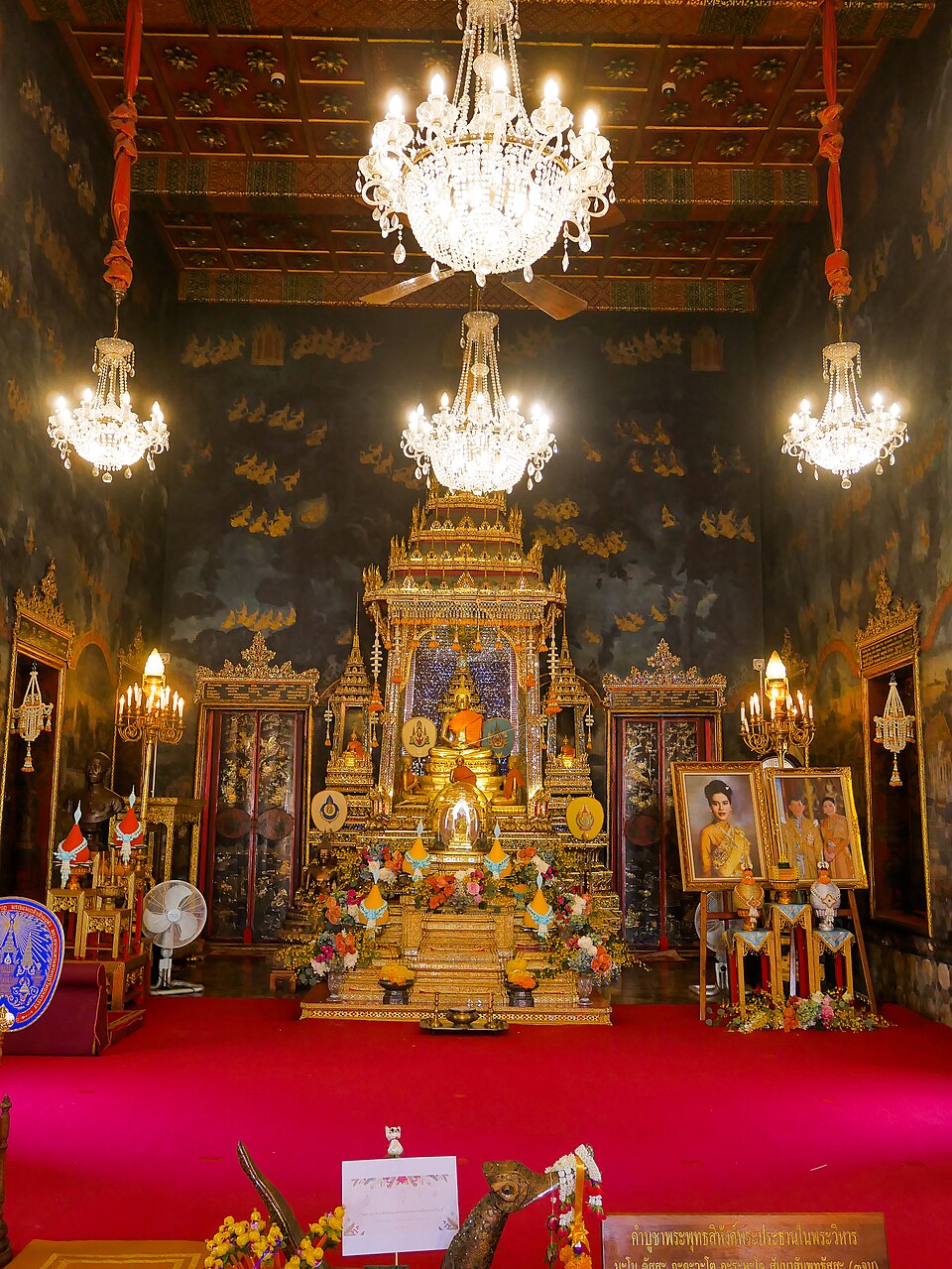
Wat Ratchapradit is a difficult subject and a rewarding one. The grey marble that makes it distinctive gives a camera almost nothing at noon and everything at a low sun angle, when the raking light picks up the marble lattice on the Phra Pasana Chedi and the joints between the tiles on the wihan. The gable is the frame worth finding: the gold crown on blue glass against the flat grey wall is the single image that could not be taken at any other temple in Bangkok. Inside, the twelve-month murals and the eclipse panel are dim and were painted for a room without electric light; use a high sensitivity and a braced camera rather than a flash, which is both harmful to the pigments and, in a working ordination hall, rude. The compound is too narrow for a wide view of the whole ensemble from within, so the standing shot of the chedi and the wihan together has to be taken from the northern corner near the gate.
Checked 2026-08-25
No admission is recorded for Wat Ratchapradit. The temple publishes no website, OpenStreetMap carries no website or opening-hours tag for it, and no operator source states a fee, so this page records nothing rather than repeating a figure from an aggregator.
The temple's opening hours are not recorded here. Nothing published by the monastery states them, and OpenStreetMap holds no opening_hours tag for the compound. Plan on a morning visit and accept that the Phra Wihan Luang may be locked at some hours.
King Mongkut had the wihan and the Phra Pasana Chedi faced in grey marble tiles rather than the gilt stucco and coloured glass used on most Bangkok royal temples. It is the reason the compound looks austere beside the Grand Palace a few hundred metres away.
One panel of the twelve-month royal ceremony murals, painted in the reign of Rama V, shows King Mongkut observing the total solar eclipse of 18 August 1868. It is the detail that most repays going inside the Phra Wihan Luang.
Thirty minutes. The compound covers about 4,400 square metres and has one interior, so the visit is short by design; reading the murals slowly stretches it to an hour.
The temple is at 2 Saranrom Road in Phra Nakhon. Take the MRT Blue Line to Sanam Chai and walk north past Wat Pho, or arrive by Chao Phraya boat at Tha Tien. From the Grand Palace, cross Sanam Chai Road into Saranrom Park and the wall is on the park's southern edge.
Loading the interactive map…
The interactive map could not be loaded.
Last updated:
Source: OpenStreetMap contributors, Wikidata ·