_-_img_05.jpg)
_%E0%B8%A7%E0%B8%B1%E0%B8%94%E0%B8%A3%E0%B8%B2%E0%B8%8A%E0%B8%9A%E0%B8%9E%E0%B8%B4%E0%B8%98%E0%B8%AA%E0%B8%96%E0%B8%B4%E0%B8%95%E0%B8%A1%E0%B8%AB%E0%B8%B2%E0%B8%AA%E0%B8%B5%E0%B8%A1%E0%B8%B2%E0%B8%A3%E0%B8%B2%E0%B8%A1%E0%B8%A3%E0%B8%B2%E0%B8%8A%E0%B8%A7%E0%B8%A3%E0%B8%A7%E0%B8%B4%E0%B8%AB%E0%B8%B2%E0%B8%A3_%E0%B9%80%E0%B8%82%E0%B8%95%E0%B8%9E%E0%B8%A3%E0%B8%B0%E0%B8%99%E0%B8%84%E0%B8%A3_%E0%B8%81%E0%B8%A3%E0%B8%B8%E0%B8%87%E0%B9%80%E0%B8%97%E0%B8%9E%E0%B8%A1%E0%B8%AB%E0%B8%B2%E0%B8%99%E0%B8%84%E0%B8%A3_(20).jpg)
_%E0%B8%A7%E0%B8%B1%E0%B8%94%E0%B8%A3%E0%B8%B2%E0%B8%8A%E0%B8%9A%E0%B8%9E%E0%B8%B4%E0%B8%98%E0%B8%AA%E0%B8%96%E0%B8%B4%E0%B8%95%E0%B8%A1%E0%B8%AB%E0%B8%B2%E0%B8%AA%E0%B8%B5%E0%B8%A1%E0%B8%B2%E0%B8%A3%E0%B8%B2%E0%B8%A1%E0%B8%A3%E0%B8%B2%E0%B8%8A%E0%B8%A7%E0%B8%A3%E0%B8%A7%E0%B8%B4%E0%B8%AB%E0%B8%B2%E0%B8%A3_%E0%B9%80%E0%B8%82%E0%B8%95%E0%B8%9E%E0%B8%A3%E0%B8%B0%E0%B8%99%E0%B8%84%E0%B8%A3_%E0%B8%81%E0%B8%A3%E0%B8%B8%E0%B8%87%E0%B9%80%E0%B8%97%E0%B8%9E%E0%B8%A1%E0%B8%AB%E0%B8%B2%E0%B8%99%E0%B8%84%E0%B8%A3_(23).jpg)
_%E0%B8%A7%E0%B8%B1%E0%B8%94%E0%B8%A3%E0%B8%B2%E0%B8%8A%E0%B8%9A%E0%B8%9E%E0%B8%B4%E0%B8%98%E0%B8%AA%E0%B8%96%E0%B8%B4%E0%B8%95%E0%B8%A1%E0%B8%AB%E0%B8%B2%E0%B8%AA%E0%B8%B5%E0%B8%A1%E0%B8%B2%E0%B8%A3%E0%B8%B2%E0%B8%A1%E0%B8%A3%E0%B8%B2%E0%B8%8A%E0%B8%A7%E0%B8%A3%E0%B8%A7%E0%B8%B4%E0%B8%AB%E0%B8%B2%E0%B8%A3_%E0%B9%80%E0%B8%82%E0%B8%95%E0%B8%9E%E0%B8%A3%E0%B8%B0%E0%B8%99%E0%B8%84%E0%B8%A3_%E0%B8%81%E0%B8%A3%E0%B8%B8%E0%B8%87%E0%B9%80%E0%B8%97%E0%B8%9E%E0%B8%A1%E0%B8%AB%E0%B8%B2%E0%B8%99%E0%B8%84%E0%B8%A3_(24).jpg)
.jpg)
.jpg)
1 min walk · เขตพระนคร
Wat Ratchabophit
- Must see · Heritage site
- Historic monument
Language · 1 published
Historic monument · เขตพระนคร, Bangkok
สุสานหลวง วัดราชบพิธสถิตมหาสีมารามราชวรวิหาร
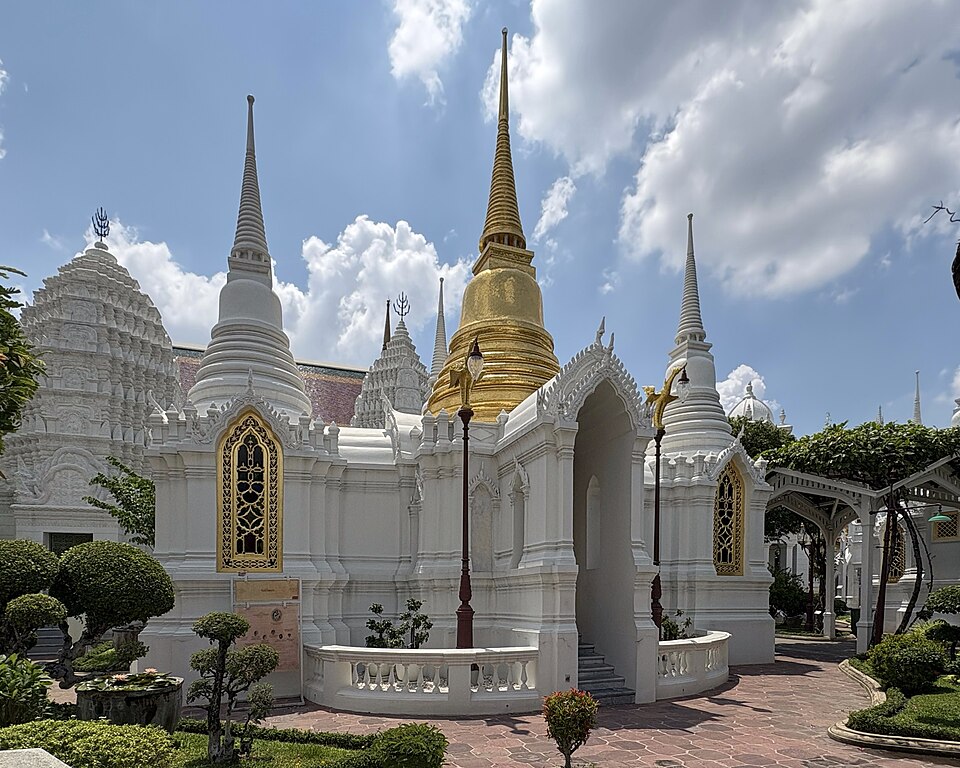
The Royal Cemetery at Wat Ratchabophit Sathitmahasimaram is a walled garden of thirty-four monuments on Atsadang Road beside the old city moat, holding the ashes and remains of the consorts and children of King Chulalongkorn. It stands outside the temple's mahasima boundary wall, on the western side, which is why it reads as a separate place rather than as part of the temple grounds. The king had it built because he wished the people closest to him — his queens, his consorts, and his sons and daughters — to be together after death. The rule that shaped it is a domestic one rather than a dynastic one: a monument was normally raised for a mother so that her children could be laid with her, or at least in her house, and a child who died before the mother was given a monument first. Prince Phuthares Thamrongsak was put in charge of building it; when he died in 1897 Phra Ong Chao Ninlawan took the work over.
Checked 2026-08-25 · Source
Thirty-four monuments stand in a planted garden of frangipani and shrubs, and no two neighbouring ones agree on a style: there are Thai chedis, prangs, Thai-form viharas, Khmer work in the Lopburi prang manner, and Gothic. The four gilded chedis are the principal group, named in sequence from north to south. Sunanthanusawari is a square building with twelve-cornered redenting and a porch on each face, its stupa finial faced in gold mosaic and its four doors gilded wood inlaid with coloured glass; it holds the ashes of Queen Sunandha Kumariratana, who died on 31 May 1880 at the age of twenty, and of Princess Kannabhorn Bejaratana, who died the same day aged three. Rangsi Wattana is a four-porched building with connecting passages, a large gold-mosaic stupa at the centre and three smaller white ones; it holds the children of Queen Savang Vadhana and the Mahidol line, among them Crown Prince Maha Vajirunhis, Prince Mahidol Adulyadej, Princess Srinagarindra the Princess Mother, and Princess Galyani Vadhana, who died in 2008. Saovabha Praditsathan, similar in plan with a stained-glass-like gilded door, holds Queen Saovabha Phongsri's children and members of the Chakrabongse and Chudadhuj lines, including Princess Bejaratana, who died in 2011. Sukhumala Narumit holds Princess Sukhumala Marasri and the Boriphat line. Away from the four, there is a Lopburi-style three-spired prang for the Yugala line, a monument to Princess Dara Rasmi, a Gothic monument for Chao Chom Manda Sae, its floor and stairs in marble on a base built up like a mountain, and the Little Vihara, a single-storey European building with tiled roof and coloured-glass windows.
Checked 2026-08-25 · Source
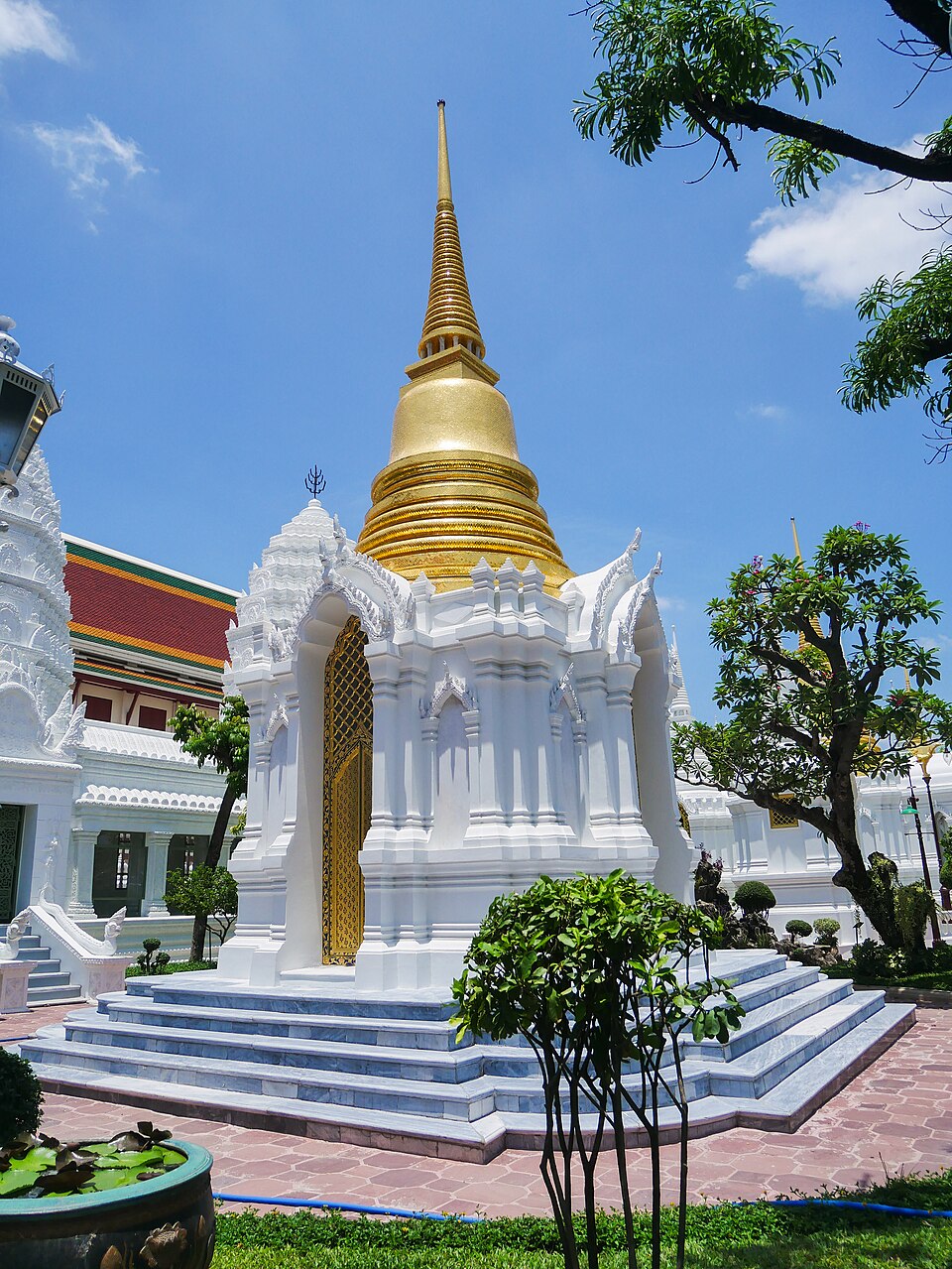
Forty minutes. The cemetery is one enclosure and can be walked through in ten, but that misses the point of it: the interest is in reading one monument against the next, and the four gold chedis repay standing in front of each long enough to see how differently the same brief was answered. Anyone who wants to work out who is in which chedi will use an hour, because the family relationships are the substance of the place and are not laid out for a visitor. Combine it with the temple next door rather than treating it as a destination on its own — Wat Ratchabophit's own interior is a separate visit of a similar length, and the two together make a coherent morning rather than two errands.
Checked 2026-08-25
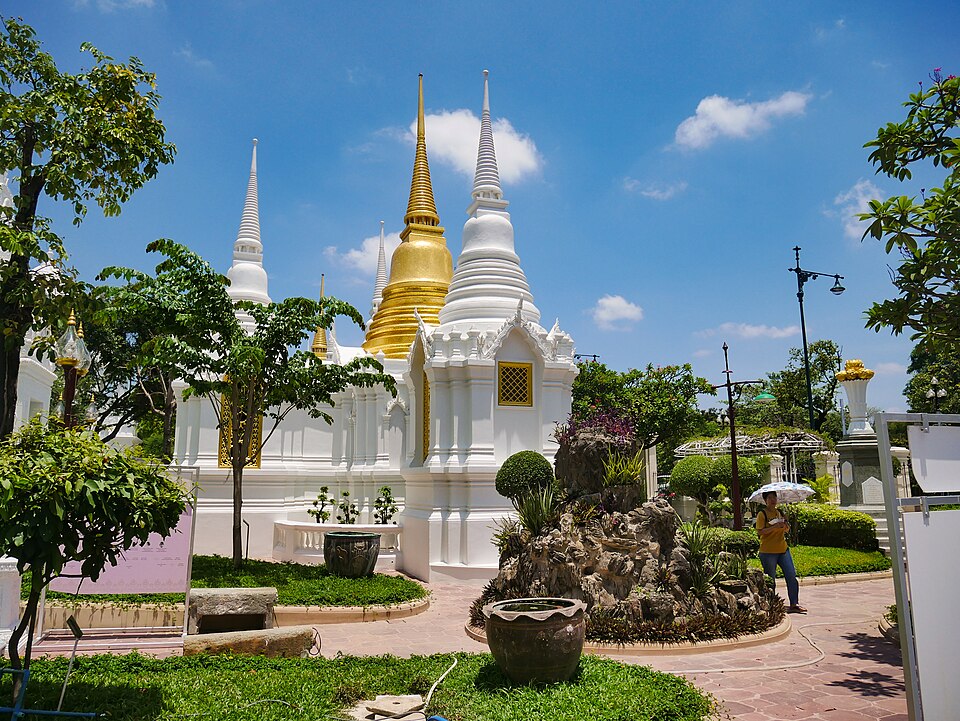
Early. The cemetery is a garden with hard surfaces and little deep shade, and the gilded mosaic on the chedis throws heat and glare back at anyone standing in front of it between eleven and three. The first hours after sunrise give raking light on the gold and the coloured glass, and the frangipani smells strongest before the day heats up. This is a memorial ground rather than a festival site, so there is no season to aim for and no ceremony a visitor should plan around; the calendar that matters is the personal one of the families whose relatives are here, and a group tending a monument is a private occasion that a visitor should walk past rather than into. In the wet season the paved paths hold water and the mosaic surfaces become slick.
Checked 2026-08-25
No admission price has been recorded for the Royal Cemetery, and none is claimed here. Wat Ratchabophit publishes no website of its own — the temple's only stated online presence is a social media page, which is not a source this guide will read a price or an hour from — and the Thai Wikipedia article on the cemetery, which is otherwise detailed down to the contents of each monument, states no visiting hours and no charge. The Department of Religious Affairs register was checked and could not be reached. So for this site admission is not stated, and hours are not recorded either; the practical position is that access follows the temple's own daily rhythm and is best confirmed at the temple on the day.
Checked 2026-08-25
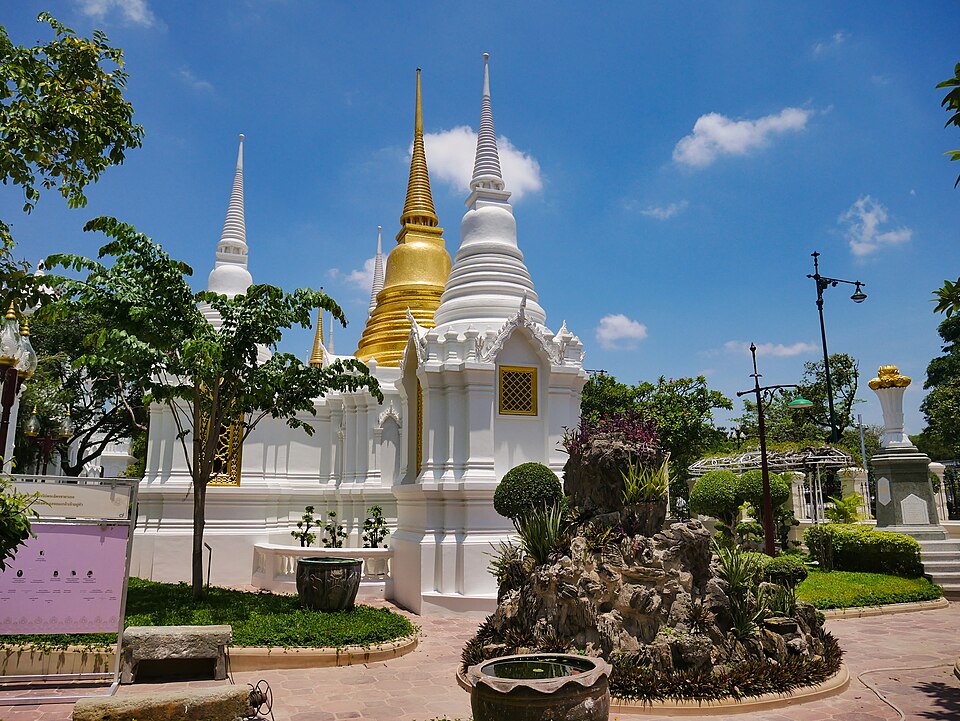
The cemetery lies on Atsadang Road along the bank of Khlong Khu Mueang Doem, the old city moat, on the western side of Wat Ratchabophit and outside the temple's boundary wall — so a visitor walking around the temple looking for it inside the walls will not find it. The approach that makes sense is on foot through Rattanakosin: Saranrom Park is a few minutes west across the moat, the Grand Palace beyond that, and Wat Pho a short walk south. Anyone arriving by road should aim for the temple on Fueang Nakhon Road and then follow the wall around to Atsadang. The moat-side frontage is the one that photographs, and it is also the quieter side to arrive from.
Checked 2026-08-25 · Source
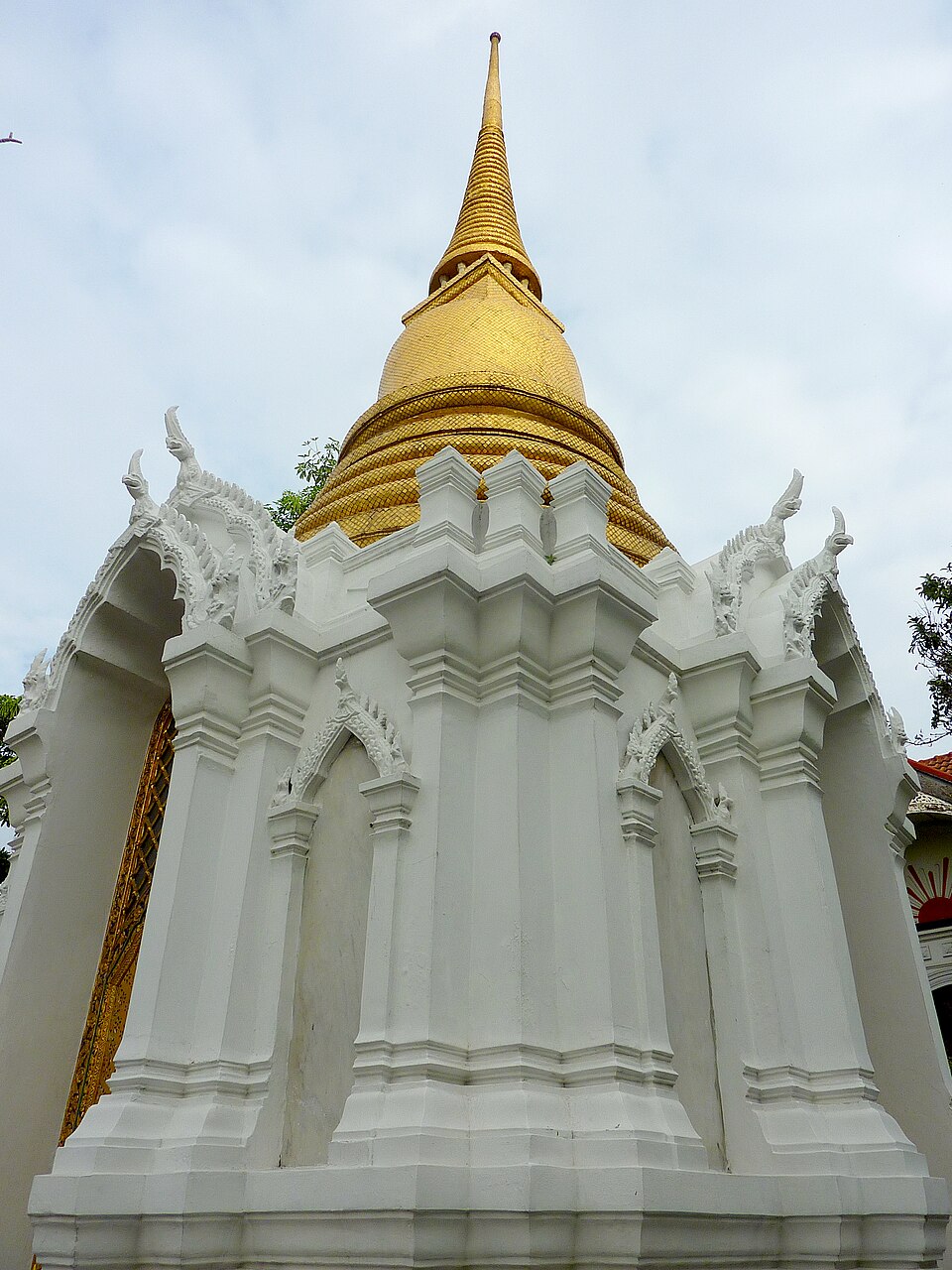
This is a burial ground for a royal family and the conduct expected is that of a cemetery, not that of a temple courtyard. People come here to tend particular monuments; give them distance, keep voices down, and do not sit or lean on the monuments or their bases. Dress as for a temple — covered shoulders and knees — because the cemetery adjoins Wat Ratchabophit and most visitors arrive through it. Do not touch the gilded mosaic surfaces; the gold is applied and the finish is the maintenance burden of a fund set up to keep the cemetery in good order for later generations to see. Nothing here is captioned for foreign visitors, so a visitor who arrives without knowing who Queen Sunandha or Princess Galyani Vadhana were will see thirty-four handsome objects and take away very little — read first. Practically: no hours are published, so a closed gate is a possibility rather than a surprise, and the tiled and mosaic surfaces are slippery in rain.
Checked 2026-08-25
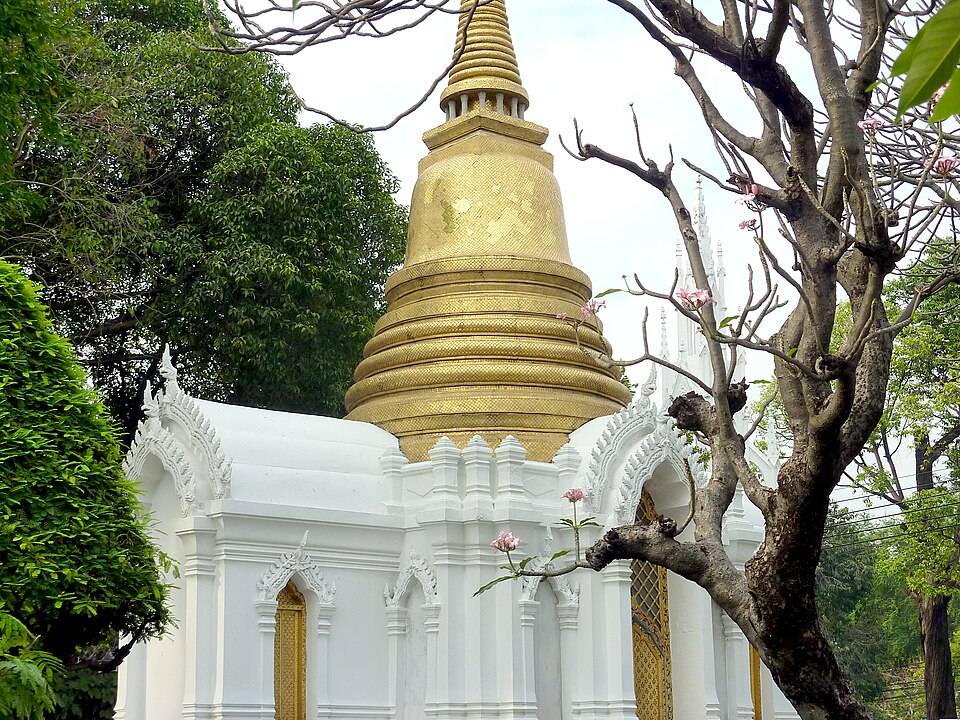
The subject that separates this place from every other monument in Rattanakosin is contrast between neighbours, so the frames that work are the ones holding two styles at once — a gold chedi against the Gothic monument, or a Lopburi prang against the European lines of the Little Vihara. Shoot those from the corners of the enclosure rather than from the middle of a path. Gold mosaic is a hard surface to expose: under direct midday sun it clips, and the fix is to come early and let low light rake across it, which also picks up the redented twelve-cornered plan of Sunanthanusawari. The gilded doors inlaid with coloured glass are close subjects, best in open shade. Restraint matters more than technique here — the monuments hold human remains and people visit them to mourn, so no posing in front of a chedi, no tripods planted in front of a family, and if someone is tending a monument, photograph something else.
Checked 2026-08-25
King Chulalongkorn had it built so that the people closest to him — his queens, his consorts and his sons and daughters — would be together after death. Prince Phuthares Thamrongsak was appointed to superintend the construction, and after his death in 1897 Phra Ong Chao Ninlawan continued the work.
Thirty-four. They stand in a garden of frangipani and shrubs and take several forms — Thai chedis, prangs, Thai-style viharas, Khmer work in the Lopburi prang manner, and Gothic. A fund was established to maintain the cemetery so that later generations can continue to visit it.
Named from north to south they are Sunanthanusawari, for Queen Sunandha Kumariratana; Rangsi Wattana, for the children of Queen Savang Vadhana and the Mahidol line; Saovabha Praditsathan, for the children of Queen Saovabha Phongsri; and Sukhumala Narumit, for Princess Sukhumala Marasri and the Boriphat line.
The ashes of Princess Srinagarindra, the Princess Mother, and of Princess Galyani Vadhana, who died on 2 January 2008, are both in Rangsi Wattana, along with those of Prince Mahidol Adulyadej, the founder of the Mahidol line, and Crown Prince Maha Vajirunhis.
No. Wat Ratchabophit publishes no website of its own, and the detailed Thai Wikipedia article on the cemetery gives neither hours nor a charge, so admission is not stated and no opening hours are recorded on this page. Confirm access at the temple on the day.
It is outside the temple's mahasima boundary wall on the western side, on Atsadang Road beside Khlong Khu Mueang Doem, the old city moat. Visitors looking for it inside the temple walls will not find it; follow the wall round to the moat frontage.
Loading the interactive map…
The interactive map could not be loaded.
Last updated:
Source: OpenStreetMap contributors, Wikidata ·