_-_img_04.jpg)
_%E0%B8%A7%E0%B8%B1%E0%B8%94%E0%B8%A3%E0%B8%B2%E0%B8%8A%E0%B8%9A%E0%B8%9E%E0%B8%B4%E0%B8%98%E0%B8%AA%E0%B8%96%E0%B8%B4%E0%B8%95%E0%B8%A1%E0%B8%AB%E0%B8%B2%E0%B8%AA%E0%B8%B5%E0%B8%A1%E0%B8%B2%E0%B8%A3%E0%B8%B2%E0%B8%A1%E0%B8%A3%E0%B8%B2%E0%B8%8A%E0%B8%A7%E0%B8%A3%E0%B8%A7%E0%B8%B4%E0%B8%AB%E0%B8%B2%E0%B8%A3_%E0%B9%80%E0%B8%82%E0%B8%95%E0%B8%9E%E0%B8%A3%E0%B8%B0%E0%B8%99%E0%B8%84%E0%B8%A3_%E0%B8%81%E0%B8%A3%E0%B8%B8%E0%B8%87%E0%B9%80%E0%B8%97%E0%B8%9E%E0%B8%A1%E0%B8%AB%E0%B8%B2%E0%B8%99%E0%B8%84%E0%B8%A3_(1).jpg)
_%E0%B8%A7%E0%B8%B1%E0%B8%94%E0%B8%A3%E0%B8%B2%E0%B8%8A%E0%B8%9A%E0%B8%9E%E0%B8%B4%E0%B8%98%E0%B8%AA%E0%B8%96%E0%B8%B4%E0%B8%95%E0%B8%A1%E0%B8%AB%E0%B8%B2%E0%B8%AA%E0%B8%B5%E0%B8%A1%E0%B8%B2%E0%B8%A3%E0%B8%B2%E0%B8%A1%E0%B8%A3%E0%B8%B2%E0%B8%8A%E0%B8%A7%E0%B8%A3%E0%B8%A7%E0%B8%B4%E0%B8%AB%E0%B8%B2%E0%B8%A3_%E0%B9%80%E0%B8%82%E0%B8%95%E0%B8%9E%E0%B8%A3%E0%B8%B0%E0%B8%99%E0%B8%84%E0%B8%A3_%E0%B8%81%E0%B8%A3%E0%B8%B8%E0%B8%87%E0%B9%80%E0%B8%97%E0%B8%9E%E0%B8%A1%E0%B8%AB%E0%B8%B2%E0%B8%99%E0%B8%84%E0%B8%A3_(10).jpg)
_%E0%B8%A7%E0%B8%B1%E0%B8%94%E0%B8%A3%E0%B8%B2%E0%B8%8A%E0%B8%9A%E0%B8%9E%E0%B8%B4%E0%B8%98%E0%B8%AA%E0%B8%96%E0%B8%B4%E0%B8%95%E0%B8%A1%E0%B8%AB%E0%B8%B2%E0%B8%AA%E0%B8%B5%E0%B8%A1%E0%B8%B2%E0%B8%A3%E0%B8%B2%E0%B8%A1%E0%B8%A3%E0%B8%B2%E0%B8%8A%E0%B8%A7%E0%B8%A3%E0%B8%A7%E0%B8%B4%E0%B8%AB%E0%B8%B2%E0%B8%A3_%E0%B9%80%E0%B8%82%E0%B8%95%E0%B8%9E%E0%B8%A3%E0%B8%B0%E0%B8%99%E0%B8%84%E0%B8%A3_%E0%B8%81%E0%B8%A3%E0%B8%B8%E0%B8%87%E0%B9%80%E0%B8%97%E0%B8%9E%E0%B8%A1%E0%B8%AB%E0%B8%B2%E0%B8%99%E0%B8%84%E0%B8%A3_(11).jpg)
_%E0%B8%A7%E0%B8%B1%E0%B8%94%E0%B8%A3%E0%B8%B2%E0%B8%8A%E0%B8%9A%E0%B8%9E%E0%B8%B4%E0%B8%98%E0%B8%AA%E0%B8%96%E0%B8%B4%E0%B8%95%E0%B8%A1%E0%B8%AB%E0%B8%B2%E0%B8%AA%E0%B8%B5%E0%B8%A1%E0%B8%B2%E0%B8%A3%E0%B8%B2%E0%B8%A1%E0%B8%A3%E0%B8%B2%E0%B8%8A%E0%B8%A7%E0%B8%A3%E0%B8%A7%E0%B8%B4%E0%B8%AB%E0%B8%B2%E0%B8%A3_%E0%B9%80%E0%B8%82%E0%B8%95%E0%B8%9E%E0%B8%A3%E0%B8%B0%E0%B8%99%E0%B8%84%E0%B8%A3_%E0%B8%81%E0%B8%A3%E0%B8%B8%E0%B8%87%E0%B9%80%E0%B8%97%E0%B8%9E%E0%B8%A1%E0%B8%AB%E0%B8%B2%E0%B8%99%E0%B8%84%E0%B8%A3_(12).jpg)
_%E0%B8%A7%E0%B8%B1%E0%B8%94%E0%B8%A3%E0%B8%B2%E0%B8%8A%E0%B8%9A%E0%B8%9E%E0%B8%B4%E0%B8%98%E0%B8%AA%E0%B8%96%E0%B8%B4%E0%B8%95%E0%B8%A1%E0%B8%AB%E0%B8%B2%E0%B8%AA%E0%B8%B5%E0%B8%A1%E0%B8%B2%E0%B8%A3%E0%B8%B2%E0%B8%A1%E0%B8%A3%E0%B8%B2%E0%B8%8A%E0%B8%A7%E0%B8%A3%E0%B8%A7%E0%B8%B4%E0%B8%AB%E0%B8%B2%E0%B8%A3_%E0%B9%80%E0%B8%82%E0%B8%95%E0%B8%9E%E0%B8%A3%E0%B8%B0%E0%B8%99%E0%B8%84%E0%B8%A3_%E0%B8%81%E0%B8%A3%E0%B8%B8%E0%B8%87%E0%B9%80%E0%B8%97%E0%B8%9E%E0%B8%A1%E0%B8%AB%E0%B8%B2%E0%B8%99%E0%B8%84%E0%B8%A3_(2).jpg)
1 min walk · เขตพระนคร
Wat Ratchabophit Royal Cemetery
- Must see
- Historic monument
Language · 1 published
Historic monument · เขตพระนคร, Bangkok
วัดราชบพิธสถิตมหาสีมารามราชวรวิหาร

| Monday | 06:00 – 18:00 |
|---|---|
| Tuesday | 06:00 – 18:00 |
| Wednesday | 06:00 – 18:00 |
| Thursday | 06:00 – 18:00 |
| Friday | 06:00 – 18:00 |
| Saturday | 06:00 – 18:00 |
| Sunday | 06:00 – 18:00 |
Parsed from OpenStreetMap opening hours on 2026-08-25.
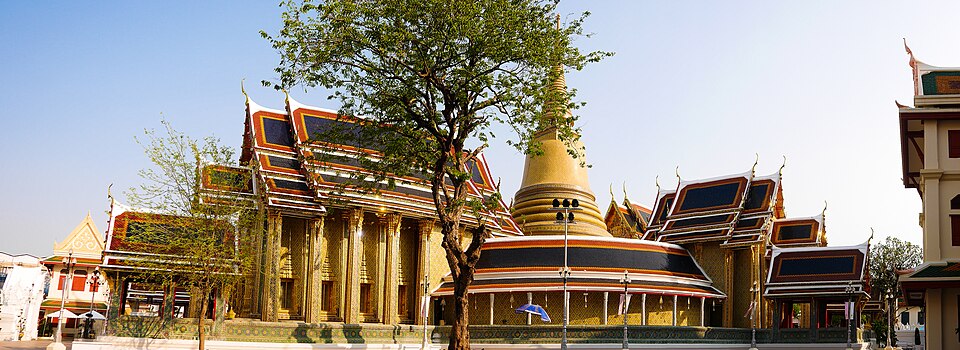
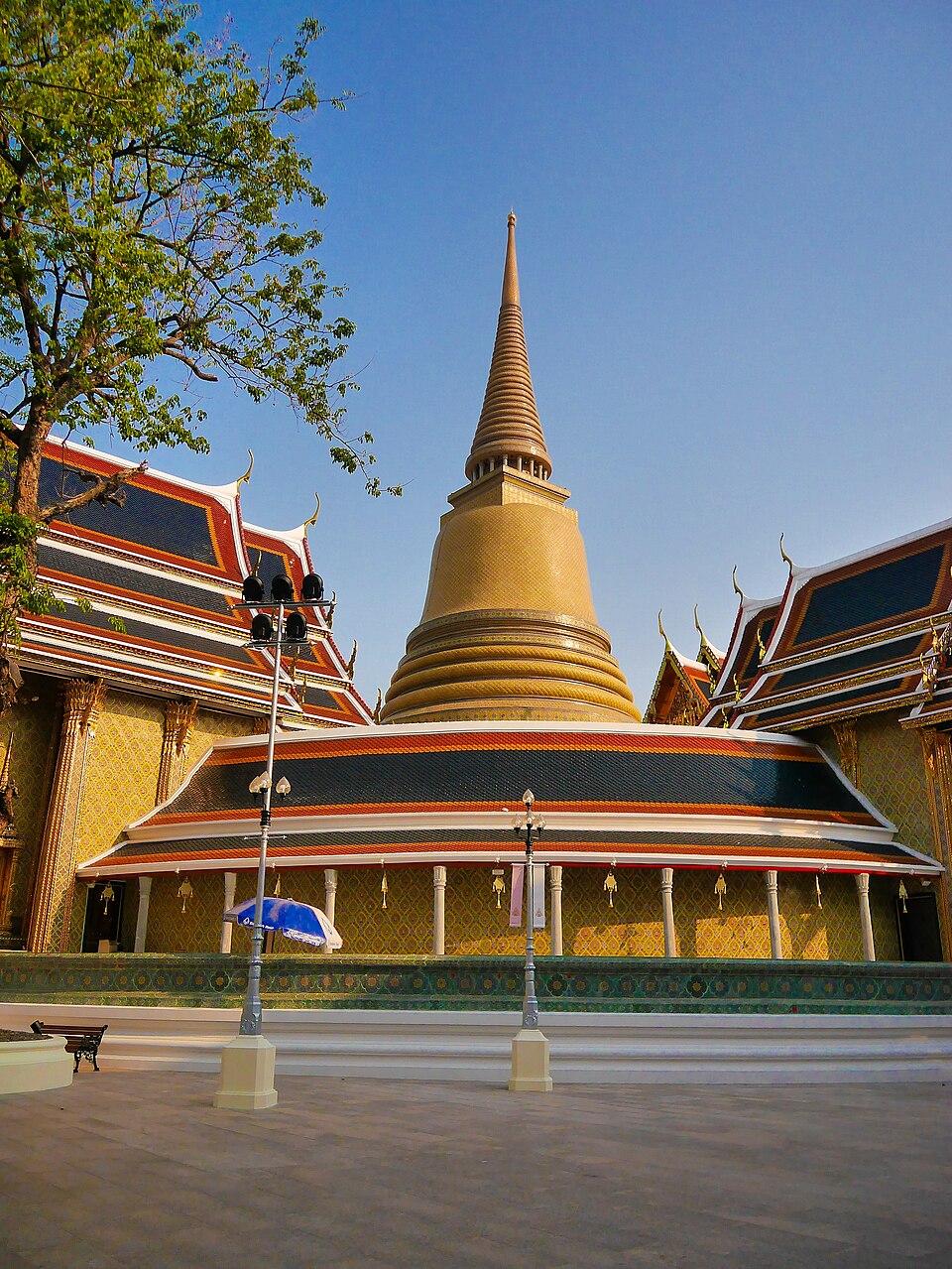
Wat Ratchabophit Sathit Maha Simaram is Rama V's own foundation of 1869 and the most formally peculiar of Bangkok's royal temples, which is exactly why it is worth seeing after the canonical ones rather than before them. Its plan is unlike any other in the city: instead of a courtyard, a circular cloister encloses a Sri Lankan-style chedi 43 metres high, and the wihan and the ubosot are joined to opposite sides of that ring, so the whole complex turns around the stupa. The surfaces are stranger still. Outside, the buildings are faced in Benjarong ceramic tile, the five-colour enamelware normally seen on bowls rather than walls, and the doors carry mother-of-pearl inlay; inside, the ubosot abandons Thai convention altogether for gilded Italianate work in a European idiom, so a visitor passes from a Thai exterior to a Western interior in one step. Beside the temple lies the Chakri royal cemetery. It is a working royal monastery and the seat of the Supreme Patriarch, not a museum.
Checked 2026-08-25 · Source
Three things, in this order. The circular cloister is the first and the one that has to be walked rather than looked at: the ring runs continuously around the base of the 43-metre chedi, so the building is understood only by making the circuit and feeling the plan close on itself. The second is the ubosot interior, which is the surprise of the visit — vaulted, gilded and Italianate, closer to a European chapel than to a Thai ordination hall, with the mother-of-pearl door panels read from the inside as well as the outside. The third is the Sunan Luang, the Chakri royal cemetery immediately beside the temple, a walled garden of memorials in mixed idioms — Thai chedis alongside monuments in Gothic and classical dress — built for members of Rama V's family. It is a cemetery in active status rather than a ruin. Take the exterior tilework slowly on the way between them; the Benjarong facing is the detail most visitors walk past because it reads as pattern from three metres and only resolves close up.
Checked 2026-08-25 · Source

Forty-five minutes is the working figure, and it splits roughly into fifteen minutes for the cloister circuit and the chedi, fifteen inside the ubosot — which deserves more time than its size suggests, because the shift of idiom takes a moment to register — and fifteen for the royal cemetery next door and the exterior tilework. Nothing about visit duration is published by the temple, which has no readable operator channel at all, so this is editorial judgement. A visitor who is templed out after the Grand Palace and Wat Pho should still give it the full three quarters of an hour, because the interest here is formal rather than devotional and it needs looking at rather than ticking off.
Checked 2026-08-25
November to February, Bangkok's cool dry season; the temple publishes nothing seasonal because it publishes nothing at all. For the hour, aim at about 07:00. This is a working royal temple and the seat of the Supreme Patriarch, so the early morning is when it is most itself — merit-making and chanting rather than sightseeing — and it is also the window before the Grand Palace crowd, half a kilometre west, spills east into these streets. The cloister is roofed and shaded, but the courtyard surfaces and the cemetery are open, and by midday both are hot and flat-lit. None of this is an operator statement; the hour is judgement.
Checked 2026-08-25
No admission fee is published, and nothing readable from the operator says entry is free either, so no figure has been recorded — and that applies to the royal cemetery beside the temple as well. The reason is worth stating: this temple has no website, and its only operator-run channel is a Facebook page that returns an error to every unauthenticated request, so there is no source to read a price from. In practice a Bangkok royal monastery of this kind is entered without a ticket window and maintained by donation; carry small notes and use the donation boxes. If a fee is asked at the cemetery gate, it cannot be checked against anything published in advance.
Checked 2026-08-25

The temple stands on Fueang Nakhon Road in Phra Nakhon, roughly half a kilometre from MRT Sam Yot, which is the cleanest arrival — the Blue Line avoids the traffic that makes taxis unpredictable in the old town. On foot it is a short walk from Wat Pho and from the Grand Palace, and it sits close enough to the Giant Swing and City Hall to be threaded into a walking loop of the old town without a vehicle. No car is needed and parking in these lanes is poor. The most useful way to place it in a day is as the eastern end of a Rattanakosin walk that starts at the river, because arriving here after the big two provides the contrast that makes the circular plan legible.
Checked 2026-08-25
Start with the dress and conduct rules, which this page carries in full for the temples on this list. Shoulders and knees must be covered, for men as well as women; a shawl or long trousers, not a sarong improvised at the gate. Shoes come off before entering the ubosot and the wihan and are left at the step. Once inside, never point the soles of the feet at a Buddha image — sit with the legs folded back — do not turn your back on the principal image for a photograph, and keep the voice down or silent if chanting is in progress. A woman should not hand anything directly to a monk but place it down for him to take. Hats and sunglasses come off inside. Second, the hours question: the 06:00 to 18:00 daily times on this page come from OpenStreetMap, not from the temple, which publishes nothing the web can read; they are plausible for a Bangkok wat but unconfirmed, so do not plan a tight schedule around either end of them. Third, this is the seat of the Supreme Patriarch and a functioning royal monastery, so ceremonies close buildings without notice. Fourth, treat the royal cemetery as a cemetery: quiet, no climbing, no picnicking, no posed photography on the monuments.
Checked 2026-08-25 · Source

The subject here is surface and curve, and both need close work. The Benjarong tile facing only becomes what it is inside a metre, so the most distinctive images from this temple are tight frames of the enamel and of the mother-of-pearl door panels, not the wide establishing shot every royal temple yields. The circular cloister is the hardest and most rewarding wide frame in the compound — shoot along the curve so that the ring bends out of the frame, which is the only way a photograph conveys the plan. Inside the ubosot the light is low and gilded and the interior reads warm; expose for the gold and brace rather than raise a flash. Morning sun makes the chedi's finish work; midday flattens it. Photography inside a hall is at the community's discretion, no policy is published, and a ceremony in progress is not to be photographed at all — as with monks, ask first and accept no for an answer.
Checked 2026-08-25
The times shown here — 06:00 to 18:00 daily — come from OpenStreetMap, not from the temple. Wat Ratchabophit has no website, and its only operator-run channel, a Facebook page, returns an error to every unauthenticated request, so no operator source could be read. The hours are plausible for a Bangkok royal monastery but unconfirmed, so avoid planning a tight schedule around either end of them.
No fee is published, and nothing published says entry is free either, so no figure has been recorded — including for the royal cemetery beside the temple. There is no readable operator source at all. In practice this is a working royal monastery maintained by donation; carry small notes for the donation boxes.
Shoulders and knees covered, for men as well as women, with real clothing rather than a sarong improvised at the gate. Shoes off before entering the ubosot and the wihan. Inside, never point the soles of the feet at a Buddha image, keep quiet or silent during chanting, remove hats and sunglasses, and — for women — place an offering down for a monk rather than handing it over. The same rules apply at the other working monasteries on this list.
Its plan and its surfaces. A circular cloister encloses a 43-metre Sri Lankan-style chedi, with the wihan and the ubosot attached to opposite sides of the ring, so the complex turns around the stupa instead of framing a courtyard. The exterior is faced in Benjarong ceramic tile with mother-of-pearl doors, while the ubosot interior is gilded Italianate work in a European idiom. It is a formal anomaly, best seen after the canonical temples rather than before them.
No access rule, opening time or fee is published for the Sunan Luang royal cemetery, because the temple publishes nothing readable at all — so this page records none. Treat it as part of a working religious compound: enter quietly if it is open, keep to the paths, and do not pose for photographs on the monuments. Chakri family members are buried there.
MRT Sam Yot, roughly half a kilometre away on the Blue Line, which is the most reliable arrival because it avoids old-town traffic. The temple is also an easy walk from Wat Pho and the Grand Palace, and close to the Giant Swing, so it fits the eastern end of a Rattanakosin walking loop. No car is needed.
Loading the interactive map…
The interactive map could not be loaded.
Last updated:
Source: OpenStreetMap contributors, Wikidata ·