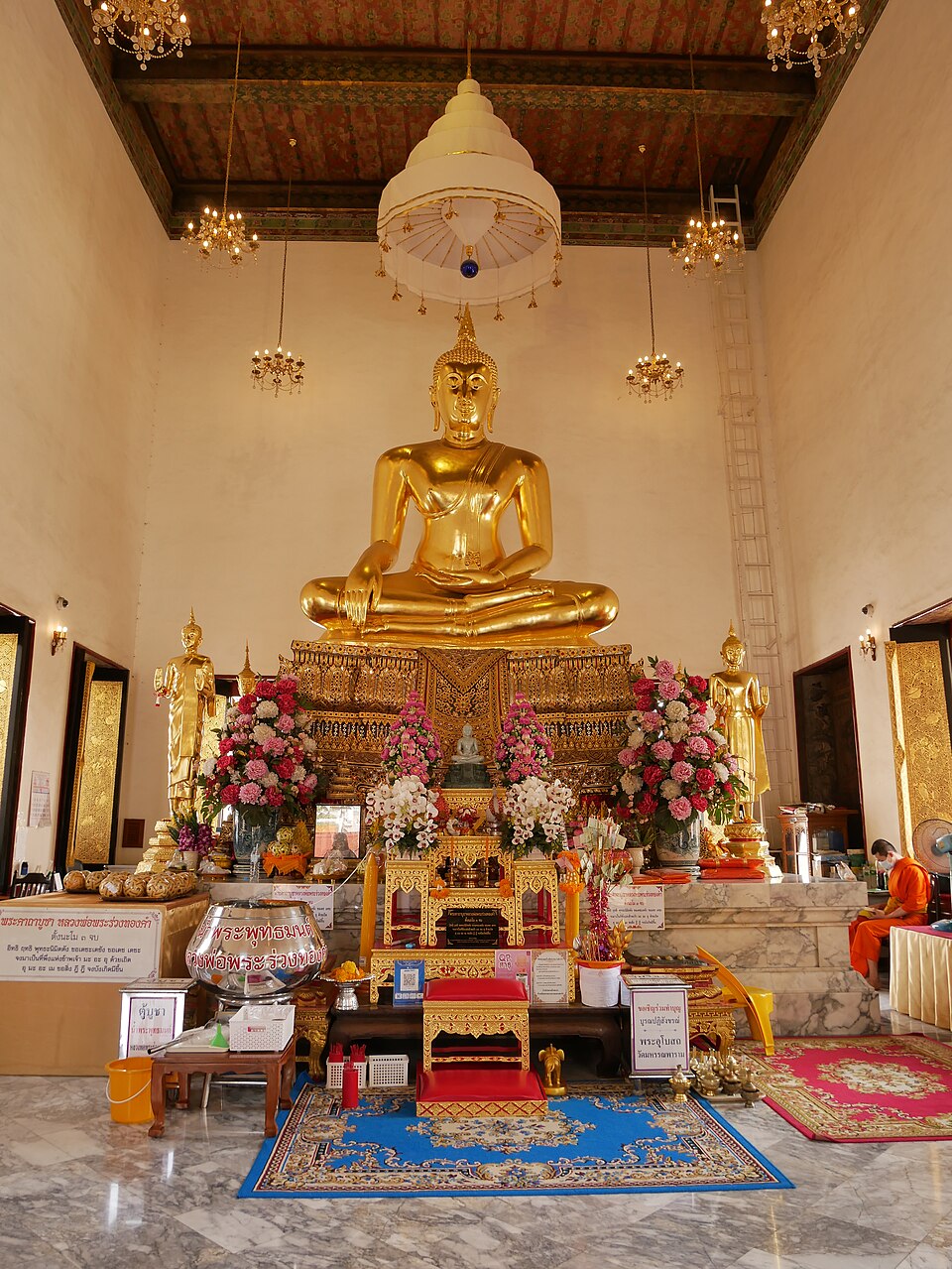
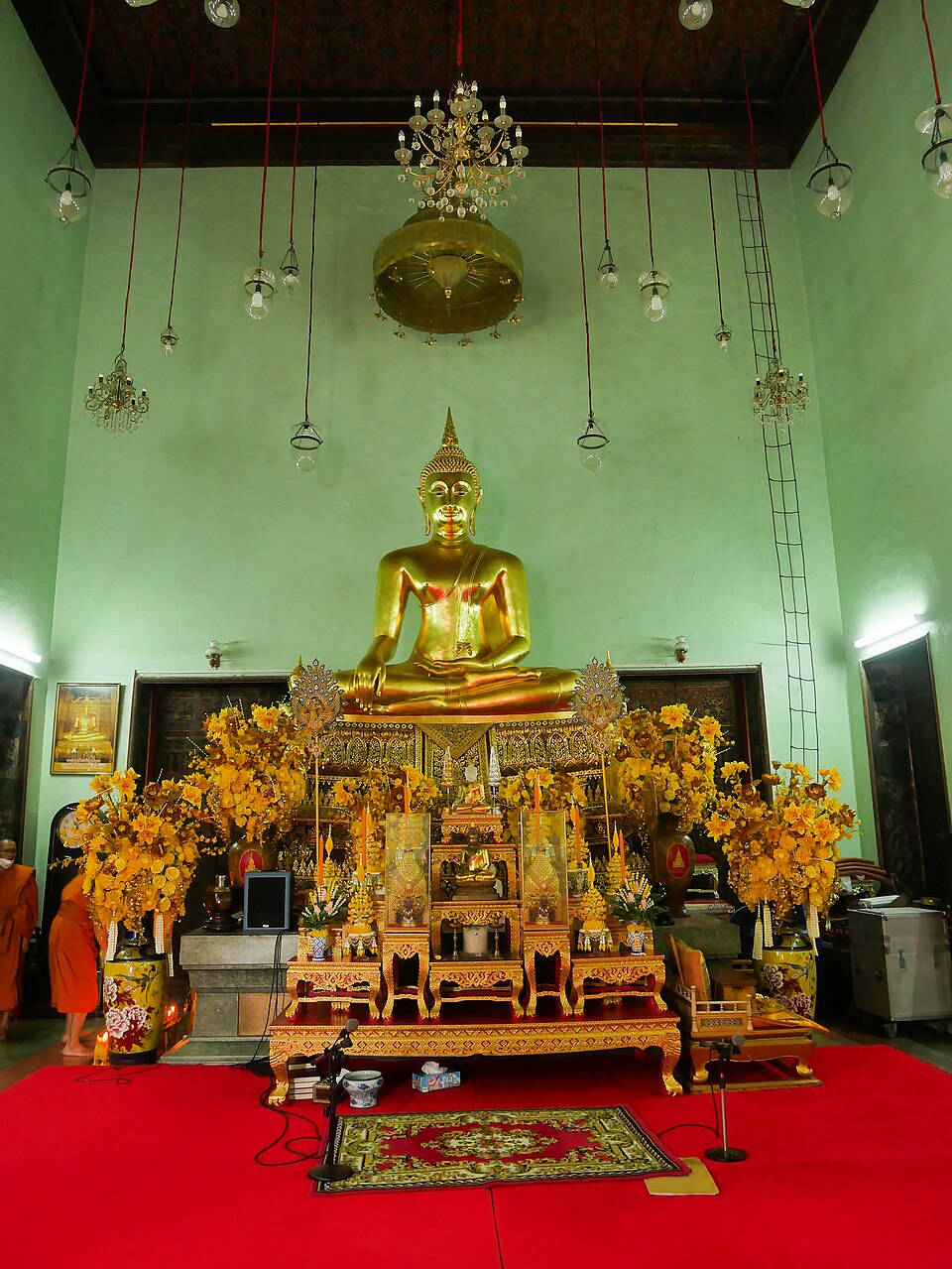
Wat Mahannapharam Worawihan is a third-class royal monastery on the eastern side of Tanao Road in Sao Ching Cha subdistrict, Phra Nakhon, a few minutes from the Giant Swing in the oldest part of Bangkok. It was begun in the reign of King Rama III by his son Krom Muen Udom Rattanarangsi, born Prince Annop, and completed in the reign of King Rama IV, who gave the temple the name it carries. The Fine Arts Department registered it as a historic site on 22 November 1949. Two things give the temple its standing. Its wihan holds Luang Pho Phra Ruang, a Sukhothai-period image brought down from the north; and in 1884 the first government school for commoners in Thailand opened in its grounds, which is why a primary school still occupies part of the site today.
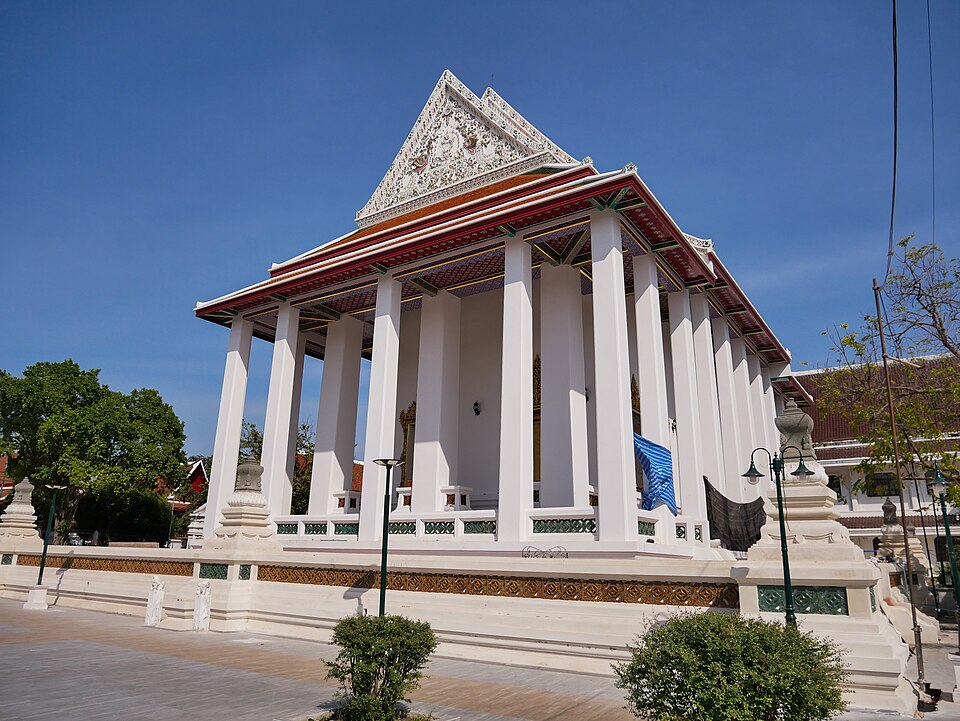
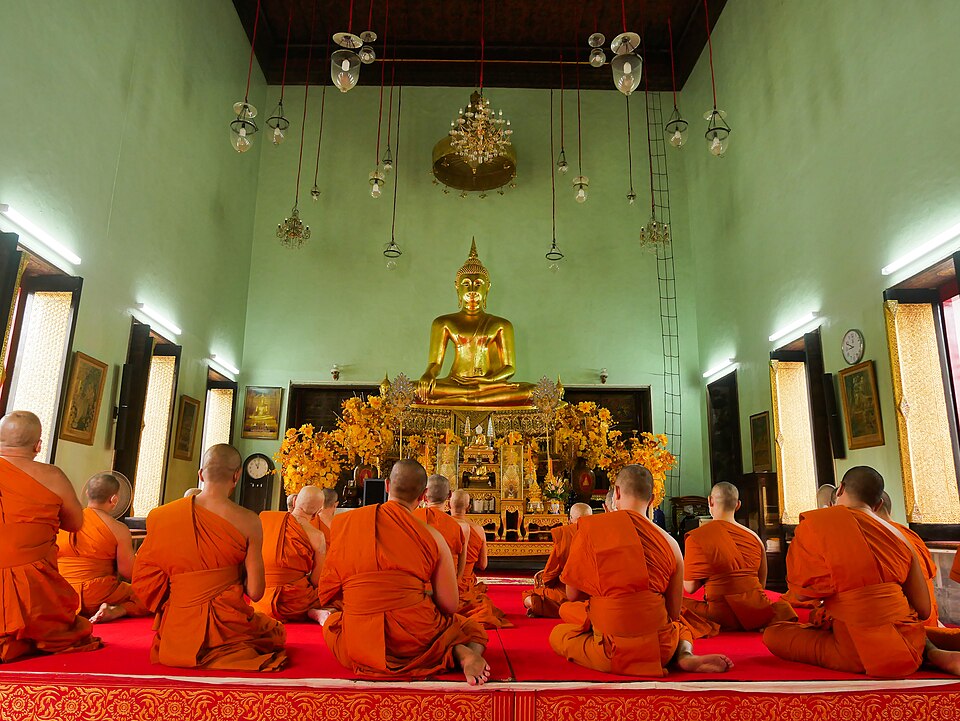
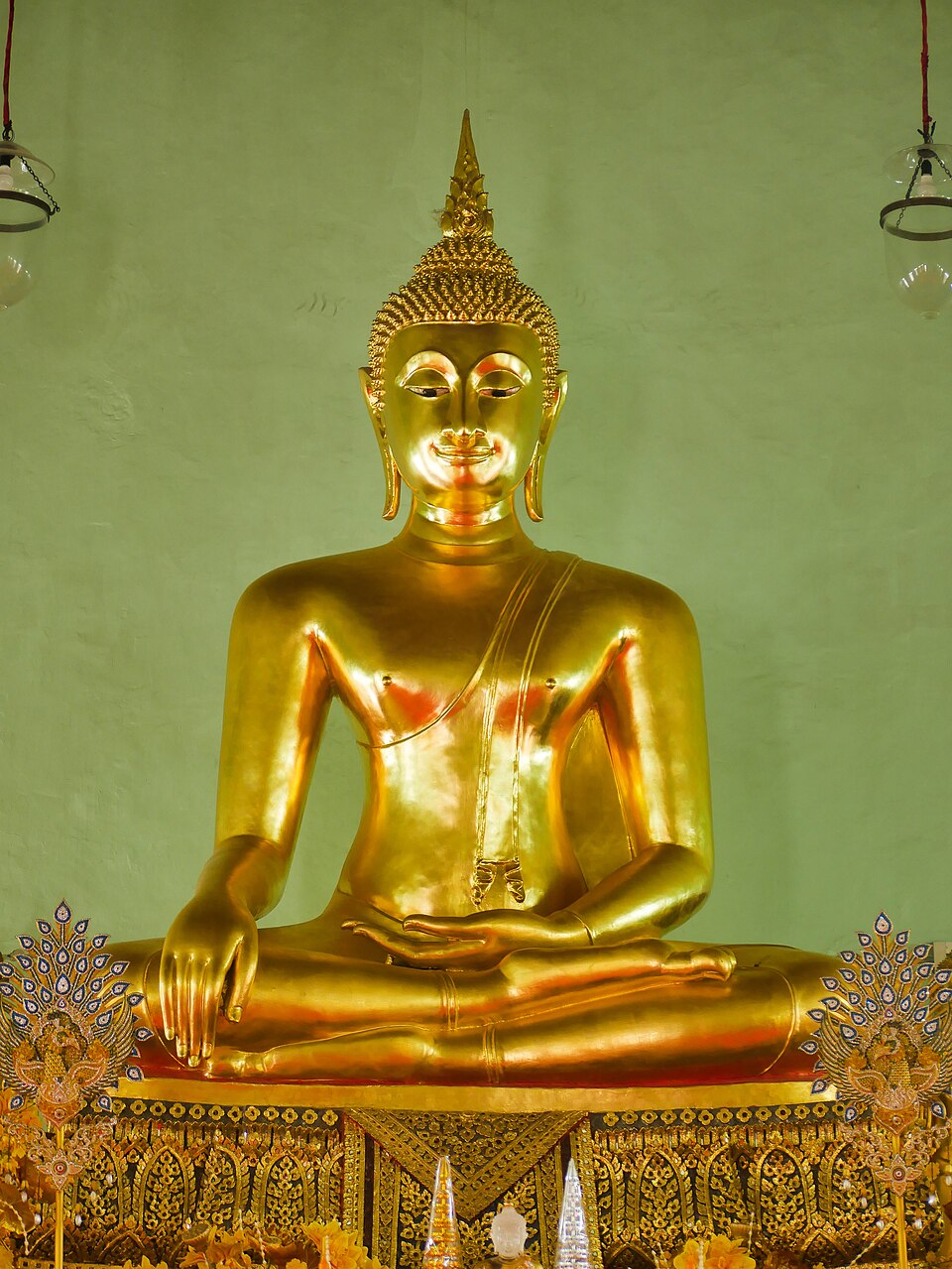
The temple is built in the plain manner King Rama III preferred, and the tell is on the roof: the ordination hall has no chofa or other traditional finials at its gable ends, the Chinese-influenced choice that marks the reign's royal taste and separates these buildings from the spiky silhouettes elsewhere in Phra Nakhon. Inside the ordination hall stands a stucco Buddha image in the Ayutthaya manner. The wihan beside it was built to the same size and the same design as the ordination hall, which is unusual in itself, and it exists to house Luang Pho Phra Ruang. The result is a pair of matched halls, low and unornamented, arranged around a courtyard that carries none of the crowding of the larger temples nearby. A chedi stands behind the ordination hall, added under King Rama IV.
Allow 30 minutes at Wat Mahannapharam. The grounds are small, the two halls are the whole of the architecture, and the visit stands or falls on whether the wihan holding Luang Pho Phra Ruang happens to be open. Fifteen minutes covers a walk around the exterior and the courtyard; the other fifteen go on the image itself, which rewards standing in front of rather than glancing at. Visitors working through Rattanakosin can slot the temple between the Giant Swing and Democracy Monument without disturbing the shape of the day, and should treat anything longer as a matter of interest in the school's history rather than in the buildings.
Morning is the answer for the same reasons it is at every temple in Phra Nakhon: the heat, and the better chance of finding a hall open while merit-making is still going on. There is a second consideration here that other temples do not have. Wat Mahannapharam School, which operates today as a Bangkok city school teaching kindergarten to grade six, still occupies part of the temple grounds, so term-time mornings and the end of the school day bring children, parents and traffic into the same gateways a visitor uses. Weekends and school holidays give a quieter site. Nothing about the temple requires a particular season, and the interior is shaded whenever it is open.
No admission charge and no opening hours were recorded for Wat Mahannapharam, because no operator published either. What was checked: a search for a website belonging to the temple, which found only the website of Wat Mahannapharam School in the grounds and that site covers the school rather than the temple; and the Thai Wikipedia article on the temple, which carries its history and its registration but no visiting information. Thai royal temples of this size are ordinarily free to enter and rely on a donation box, but no price and no hours are asserted here on that basis. Arrive in daylight and expect to find the courtyard open and the halls opened at the discretion of the monks.
Wat Mahannapharam is at 261/4 Tanao Road, Sao Ching Cha subdistrict, Phra Nakhon district, Bangkok 10200, on the eastern side of the road. Tanao Road runs north from the Giant Swing and Wat Suthat towards Democracy Monument and the Khao San area, and the temple sits between the two, set back behind a wall with its gate on the street; walking from either landmark is the usual approach and the whole stretch is flat. Taxis and tuk-tuks know Sao Ching Cha and Democracy Monument far better than they know this temple, so name the landmark and walk the last part. There is no visitor car park and the surrounding lanes are narrow and one-way in places.
The main risk is a wasted trip: no hours are published for Wat Mahannapharam, and a visitor can arrive to find the wihan holding Luang Pho Phra Ruang closed, with only the courtyard and the exteriors to look at. Treat the image as a bonus rather than as the reason for the journey, or pair the temple with Wat Suthat so the walk is not wasted either way. A working primary school shares the grounds, which sets its own rules: stay out of the school buildings and playground, and do not photograph children. Dress as for any royal temple, with shoulders and knees covered and shoes removed at the threshold of a hall, keep your feet pointed away from any Buddha image when sitting, and keep voices low, since this is a quiet temple used by its neighbourhood rather than a monument used by tour groups.
The subject that makes this temple worth a frame is the roofline. Because the ordination hall carries no finials, its gable ends read as clean triangles against the sky, and shooting from the courtyard corner with a slight upward angle shows the difference from the ornamented roofs a visitor will have photographed elsewhere in Phra Nakhon that morning. The matched pair of halls, identical in size and design, is best taken from the side so both are in the frame together. Inside the wihan, if it is open, Luang Pho Phra Ruang sits in low light against a dark ground: brace the camera, use a slow shutter and leave the flash off, both because it flattens a gilded surface and because it is intrusive in a hall where people are making merit. Morning light comes over Tanao Road and lands on the fronts of the buildings.
Checked 2026-08-25
Common questions
What is Luang Pho Phra Ruang at Wat Mahannapharam?
Luang Pho Phra Ruang, or Phra Ruang Thong Kham, is a Sukhothai-period Buddha image that originally stood at Wat Khok Singkharam in Si Satchanalai district, Sukhothai province. It was brought to Wat Mahannapharam after the temple's founding as an act of merit by Krom Muen Udom Rattanarangsi, arriving about three months after the temple's first consecration. The image is of gold metal at 60 percent purity, measures roughly 1.97 metres across and about 2.54 metres tall including the halo, and is joined at nine points secured with pins.
Who founded Wat Mahannapharam and when?
The temple was begun in the reign of King Rama III by his son Krom Muen Udom Rattanarangsi, born Prince Annop, and finished in the reign of King Rama IV, who bestowed the name Wat Mahannapharam. The Fine Arts Department registered it as a historic site on 22 November 1949.
Why is Wat Mahannapharam connected to the first school in Thailand?
In 1884 King Chulalongkorn authorised his younger brother, Prince Ditsawarakuman, to open a royal school for the children of commoners, and it was housed in the temple's assembly hall to save state funds and to follow the Thai tradition of children studying at a temple. It is regarded as the first government primary school in Thailand, because education until then had largely served royalty and officials' families. Rumours spread at the time that pupils would be conscripted, and the king issued a proclamation denying it.
Is there an entrance fee at Wat Mahannapharam, and what are the opening hours?
Neither was recorded, because the temple publishes no website and no operator-published hours or price could be found. The Thai Wikipedia article carries the temple's history but no visiting information. Arrive in daylight and expect the halls to be opened at the monks' discretion.
Why does the ordination hall at Wat Mahannapharam look plainer than other Bangkok temples?
Because it was built in the taste of King Rama III's reign, which drew on Chinese models and left off the traditional roof finials at the gable ends. The wihan beside it repeats the same size and design, so the pair reads as deliberately restrained next to the ornamented temples nearby.
Is Wat Mahannapharam worth a special trip?
It is better treated as a short stop on a Rattanakosin walk than as a destination. Thirty minutes covers it, the site is small, and with no published hours the wihan holding Luang Pho Phra Ruang may be closed when you arrive. Pairing it with the Giant Swing and Wat Suthat, a few minutes away, makes the walk worthwhile regardless.
Nothing non-essential is set before you choose, in regions where consent is required. If you decline, ads still appear but they are non-personalised, and analytics is switched off entirely.


_%E0%B8%A7%E0%B8%B1%E0%B8%94%E0%B8%A1%E0%B8%AB%E0%B8%A3%E0%B8%A3%E0%B8%93%E0%B8%9E%E0%B8%B2%E0%B8%A3%E0%B8%B2%E0%B8%A1%E0%B8%A7%E0%B8%A3%E0%B8%A7%E0%B8%B4%E0%B8%AB%E0%B8%B2%E0%B8%A3_%E0%B9%80%E0%B8%82%E0%B8%95%E0%B8%9E%E0%B8%A3%E0%B8%B0%E0%B8%99%E0%B8%84%E0%B8%A3_%E0%B8%81%E0%B8%A3%E0%B8%B8%E0%B8%87%E0%B9%80%E0%B8%97%E0%B8%9E%E0%B8%A1%E0%B8%AB%E0%B8%B2%E0%B8%99%E0%B8%84%E0%B8%A3_Wat_Mahannapharam,Bangkok_(1).jpg)
_%E0%B8%A7%E0%B8%B1%E0%B8%94%E0%B8%A1%E0%B8%AB%E0%B8%A3%E0%B8%A3%E0%B8%93%E0%B8%9E%E0%B8%B2%E0%B8%A3%E0%B8%B2%E0%B8%A1%E0%B8%A7%E0%B8%A3%E0%B8%A7%E0%B8%B4%E0%B8%AB%E0%B8%B2%E0%B8%A3_%E0%B9%80%E0%B8%82%E0%B8%95%E0%B8%9E%E0%B8%A3%E0%B8%B0%E0%B8%99%E0%B8%84%E0%B8%A3_%E0%B8%81%E0%B8%A3%E0%B8%B8%E0%B8%87%E0%B9%80%E0%B8%97%E0%B8%9E%E0%B8%A1%E0%B8%AB%E0%B8%B2%E0%B8%99%E0%B8%84%E0%B8%A3_Wat_Mahannapharam,Bangkok_(10).jpg)
_%E0%B8%A7%E0%B8%B1%E0%B8%94%E0%B8%A1%E0%B8%AB%E0%B8%A3%E0%B8%A3%E0%B8%93%E0%B8%9E%E0%B8%B2%E0%B8%A3%E0%B8%B2%E0%B8%A1%E0%B8%A7%E0%B8%A3%E0%B8%A7%E0%B8%B4%E0%B8%AB%E0%B8%B2%E0%B8%A3_%E0%B9%80%E0%B8%82%E0%B8%95%E0%B8%9E%E0%B8%A3%E0%B8%B0%E0%B8%99%E0%B8%84%E0%B8%A3_%E0%B8%81%E0%B8%A3%E0%B8%B8%E0%B8%87%E0%B9%80%E0%B8%97%E0%B8%9E%E0%B8%A1%E0%B8%AB%E0%B8%B2%E0%B8%99%E0%B8%84%E0%B8%A3_Wat_Mahannapharam,Bangkok_(11).jpg)
_%E0%B8%A7%E0%B8%B1%E0%B8%94%E0%B8%A1%E0%B8%AB%E0%B8%A3%E0%B8%A3%E0%B8%93%E0%B8%9E%E0%B8%B2%E0%B8%A3%E0%B8%B2%E0%B8%A1%E0%B8%A7%E0%B8%A3%E0%B8%A7%E0%B8%B4%E0%B8%AB%E0%B8%B2%E0%B8%A3_%E0%B9%80%E0%B8%82%E0%B8%95%E0%B8%9E%E0%B8%A3%E0%B8%B0%E0%B8%99%E0%B8%84%E0%B8%A3_%E0%B8%81%E0%B8%A3%E0%B8%B8%E0%B8%87%E0%B9%80%E0%B8%97%E0%B8%9E%E0%B8%A1%E0%B8%AB%E0%B8%B2%E0%B8%99%E0%B8%84%E0%B8%A3_Wat_Mahannapharam,Bangkok_(12).jpg)
_%E0%B8%A7%E0%B8%B1%E0%B8%94%E0%B8%A1%E0%B8%AB%E0%B8%A3%E0%B8%A3%E0%B8%93%E0%B8%9E%E0%B8%B2%E0%B8%A3%E0%B8%B2%E0%B8%A1%E0%B8%A7%E0%B8%A3%E0%B8%A7%E0%B8%B4%E0%B8%AB%E0%B8%B2%E0%B8%A3_%E0%B9%80%E0%B8%82%E0%B8%95%E0%B8%9E%E0%B8%A3%E0%B8%B0%E0%B8%99%E0%B8%84%E0%B8%A3_%E0%B8%81%E0%B8%A3%E0%B8%B8%E0%B8%87%E0%B9%80%E0%B8%97%E0%B8%9E%E0%B8%A1%E0%B8%AB%E0%B8%B2%E0%B8%99%E0%B8%84%E0%B8%A3_Wat_Mahannapharam,Bangkok_(13).jpg)