Smart Self-Managed Tours

City guide · South Africa

Johannesburg

A photograph of Johannesburg
Photograph · Mark Hillary · CC BY 2.0

Johannesburg is a large, decentralised city whose major visitor sites are separated by substantial road distances. The historic centre, Constitution Hill and Braamfontein form one urban cluster; Soweto is a distinct southwestern route; Rosebank and Sandton form northern hubs. A practical itinerary groups places geographically and arranges transport before departure instead of treating the city as a walkable chain of landmarks.

Reviewed by Elena Voss · SSMTour Travel Editor

Practical information

Language spoken
12 official languages; English is widely used in visitor services
National practical orientation; regional and minority languages may also be used
Dialling code
+27
International calling code; local area and mobile prefixes still apply
Currency
South African rand (ZAR)
Use the official local currency; card acceptance varies by place
Emergency number
112 from mobile · 10111 police · 10177 ambulance
Use only for an emergency; tourist assistance may use a separate number
Plug type
Type M and N · 230 V
Check that chargers support the recorded voltage before using an adapter
Tap water
Not recorded
Water conditions and restrictions vary by municipality

Turn this list into a plan

Set your days, your pace and the hours you actually want to be out. The planner works around closing days and travel time, and leaves room to eat.

Plan Johannesburg

Planning a visit

Suggested stay
Not recorded
Getting around
Gautrain, bus, shuttle and car
  1. January: viable with meaningful trade-offs
  2. February: viable with meaningful trade-offs
  3. March: good time to visit
  4. April: good time to visit
  5. May: best time to visit
  6. June: good time to visit
  7. July: good time to visit
  8. August: best time to visit
  9. September: best time to visit — current month
  10. October: good time to visit
  11. November: viable with meaningful trade-offs
  12. December: viable with meaningful trade-offs
  • Best time
  • Good time
  • Viable with trade-offs
  • Difficult conditions

Sources

Top things to see

Ranked by importance — sitelinks, pageviews and heritage status, not editor preference.

Filter the list

6 places match

Category

Typical visit duration

Interests

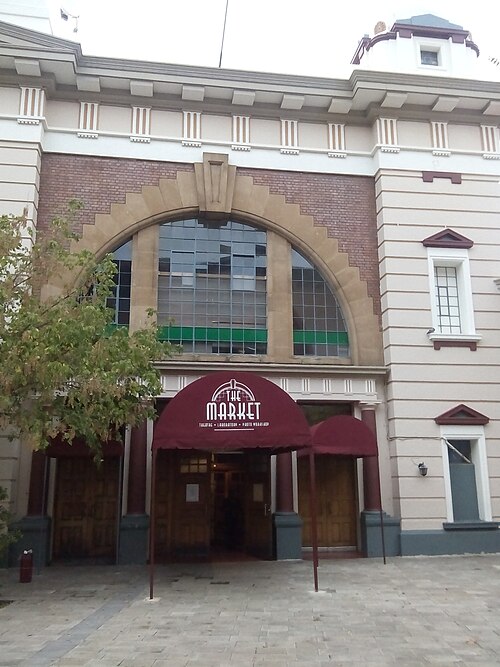
  1. Newtown Cultural Precinct Newtown Cultural Precinct
    02 1 hour

    Newtown Cultural Precinct

    Newtown

    Newtown Cultural Precinct is a revitalised former market and industrial district in central Johannesburg. The area has been transformed into a cultural hub that concentrates several significant institutions within walkable proximity.

    • Must see
    • Art and culture venue
  2. Standard Bank Gallery
    03 1 hour

    Standard Bank Gallery

    Standard Bank Gallery is a central Johannesburg exhibition venue presenting visual art with support from Standard Bank.

    • Must see
    • Art and culture venue
  3. Everard Read Gallery
    04 1 hour

    Everard Read Gallery

    Everard Read Gallery is a commercial contemporary-art gallery in Rosebank, Johannesburg. The gallery is known as South Africa’s oldest commercial art gallery and presents work by established and emerging artists.

    • Must see
    • Art and culture venue
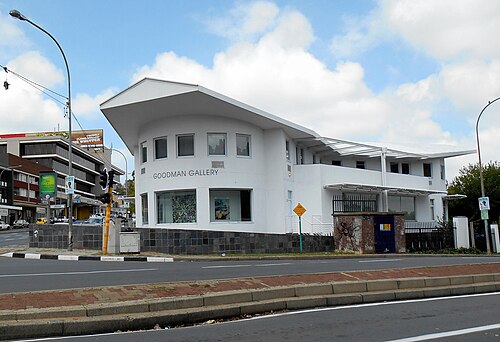
  4. Goodman Gallery Goodman Gallery
    05 1 hour

    Goodman Gallery

    Goodman Gallery Johannesburg is an influential contemporary-art gallery with a major role in South African and African art discourse.

    • Must see
    • Art and culture venue
  5. Soweto Theatre
    06 1 hour

    Soweto Theatre

    Soweto Theatre is a contemporary performing-arts venue and architectural landmark in Jabulani, Soweto, Johannesburg. It brings theatre, music and dance into a purpose-built cultural setting within one of the city’s historically important communities.

    • Must see
    • Art and culture venue

Source: OpenStreetMap contributors, Wikidata ·

How the city is laid out

The central business district contains mining-era architecture, museums and regenerated precincts, with Braamfontein and Constitution Hill immediately north. Rosebank and Sandton are separate northern centres linked by Gautrain. Soweto lies southwest and contains Vilakazi Street, Mandela House and the Hector Pieterson precinct. The Apartheid Museum and Gold Reef City sit south of the centre, while the Cradle of Humankind is a regional excursion beyond the urban core.

Checked 2026-08-26

Getting around

Use Gautrain for the airport, Sandton, Rosebank and selected regional connections, then combine buses, registered shuttles, ride-hailing or a rental car elsewhere. Joburg Tourism lists Gautrain, buses, car rental and tour operators as practical options. Walking is useful inside a defined precinct, but distances between precincts are too large for a citywide walking plan, and transfers should be arranged with the return journey in mind.

Checked 2026-08-26

Common questions

How many days should I plan for Johannesburg?

No fixed stay length is recorded. Build separate blocks for the central precincts, Soweto, the southern museum cluster and the northern Rosebank or Sandton corridor.

Is Johannesburg a walkable sightseeing city?

Only within individual precincts. The principal visitor areas are widely separated, so a citywide itinerary needs rail, bus, shuttle, ride-hailing or car transfers.

Which Johannesburg sights belong in one route?

Constitution Hill and Braamfontein combine naturally. Mandela House and the Hector Pieterson precinct form a Soweto route, while the Apartheid Museum and Gold Reef City make a southern cluster.

Where is Gautrain most useful for visitors?

Gautrain is useful for travel between the airport, Sandton, Rosebank and its other served stations. Many museums and heritage areas still require a road connection.

Should transport be arranged before outer-district visits?

Yes. Confirm both outward and return journeys when a destination lies outside the Gautrain corridor or involves several separated stops.