
2 min walk
Santa Caterina a Magnanapoli
- Must see · Heritage site
- Historic monument
Language · 11 published
Historic monument · Rome
Mercati di Traiano

| Monday | 09:30 – 19:30 |
|---|---|
| Tuesday | 09:30 – 19:30 |
| Wednesday | 09:30 – 19:30 |
| Thursday | 09:30 – 19:30 |
| Friday | 09:30 – 19:30 |
| Saturday | 09:30 – 19:30 |
| Sunday | 09:30 – 19:30 |
Checked 2026-08-31 · Source
Read from the OpenStreetMap access tags; anything not listed has no tag recorded.
Set the group type to family in the planner and the day window contracts to about three quarters of a solo day.
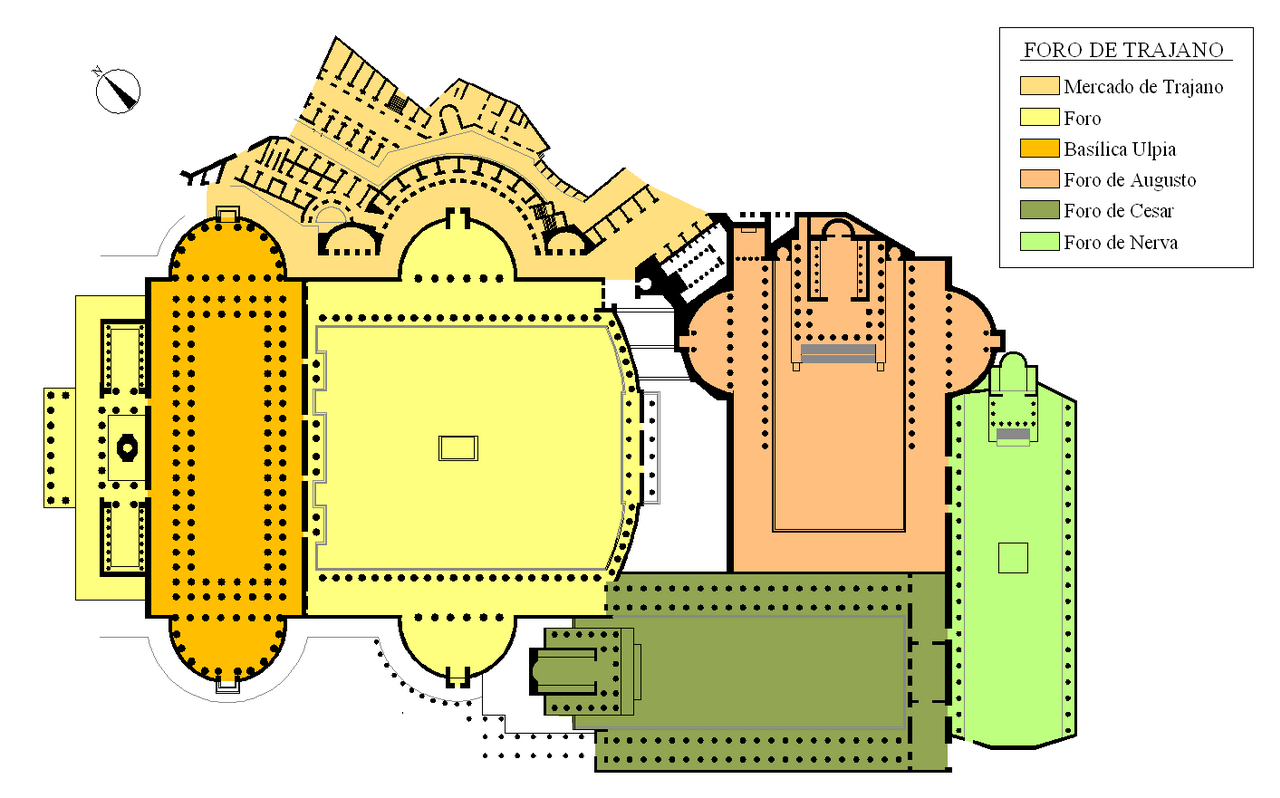
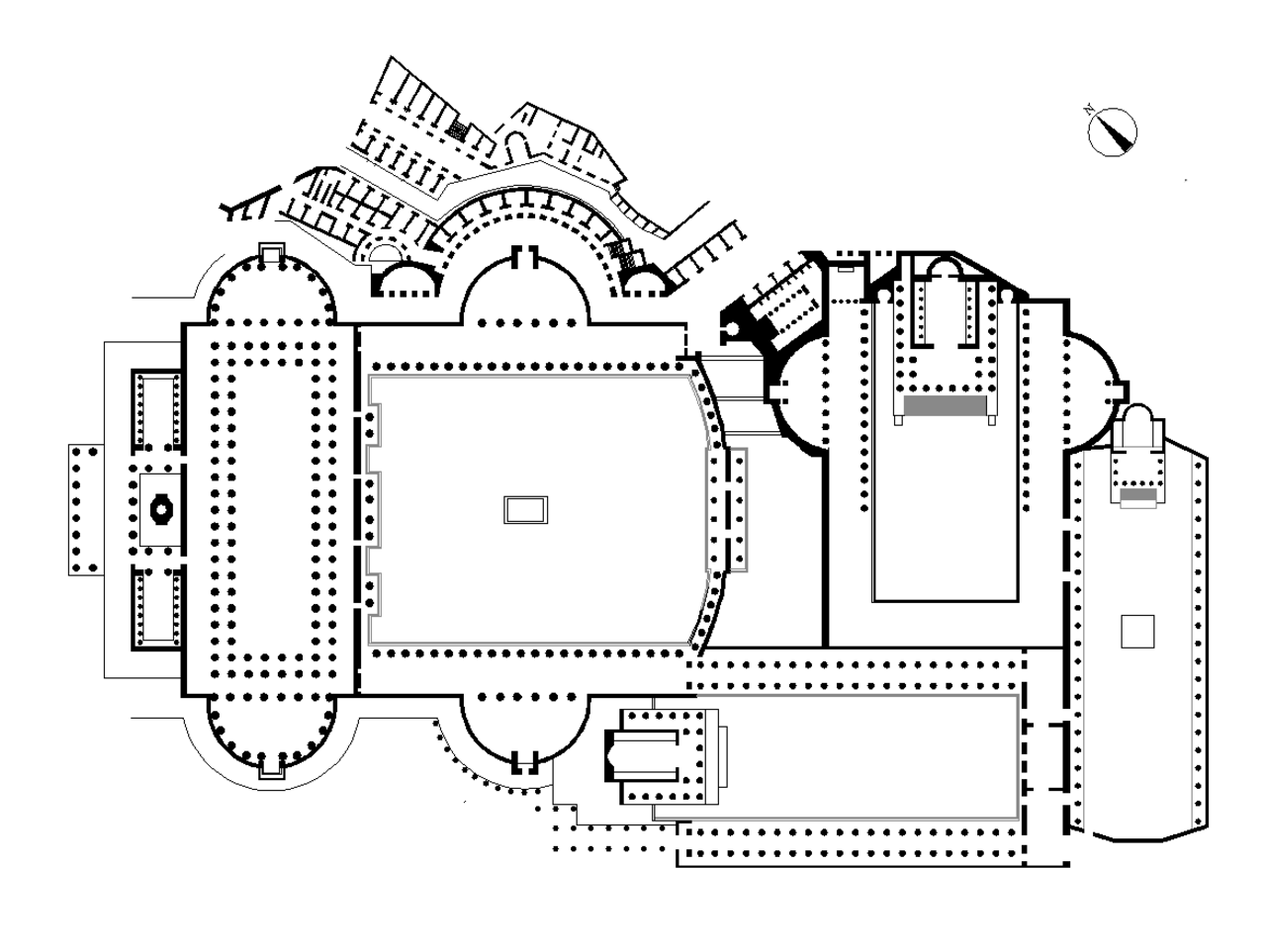
Trajan's Market, known locally as Mercati di Traiano, constitutes an extensive complex of ruins in Rome traditionally associated with commercial and administrative functions. The structure forms part of the broader Forum of Trajan archaeological zone. Its multi-level brick-faced concrete construction represents a significant surviving example of Imperial Roman architecture. The site occupies a slope adjacent to the Quirinal Hill. Modern scholarly interpretation continues to refine understanding of its original purposes, which likely included varied civic and retail activities rather than functioning as a single unified market in the contemporary sense.
Checked 2026-08-26
The complex comprises multiple levels of vaulted halls and corridors carved into the hillside. Visitors encounter remains of tabernae, small rooms that may have served shops or offices. The Great Hall represents a prominent interior space with notable architectural features. Archaeological materials recovered from the site are displayed in the Museo dei Fori Imperiali, which occupies portions of the structure. The museum presents sculptural fragments, architectural elements, and interpretive materials relating to the Imperial Fora. The physical fabric demonstrates sophisticated Roman engineering techniques including concrete construction and terracing systems adapted to challenging topography.
Checked 2026-08-26
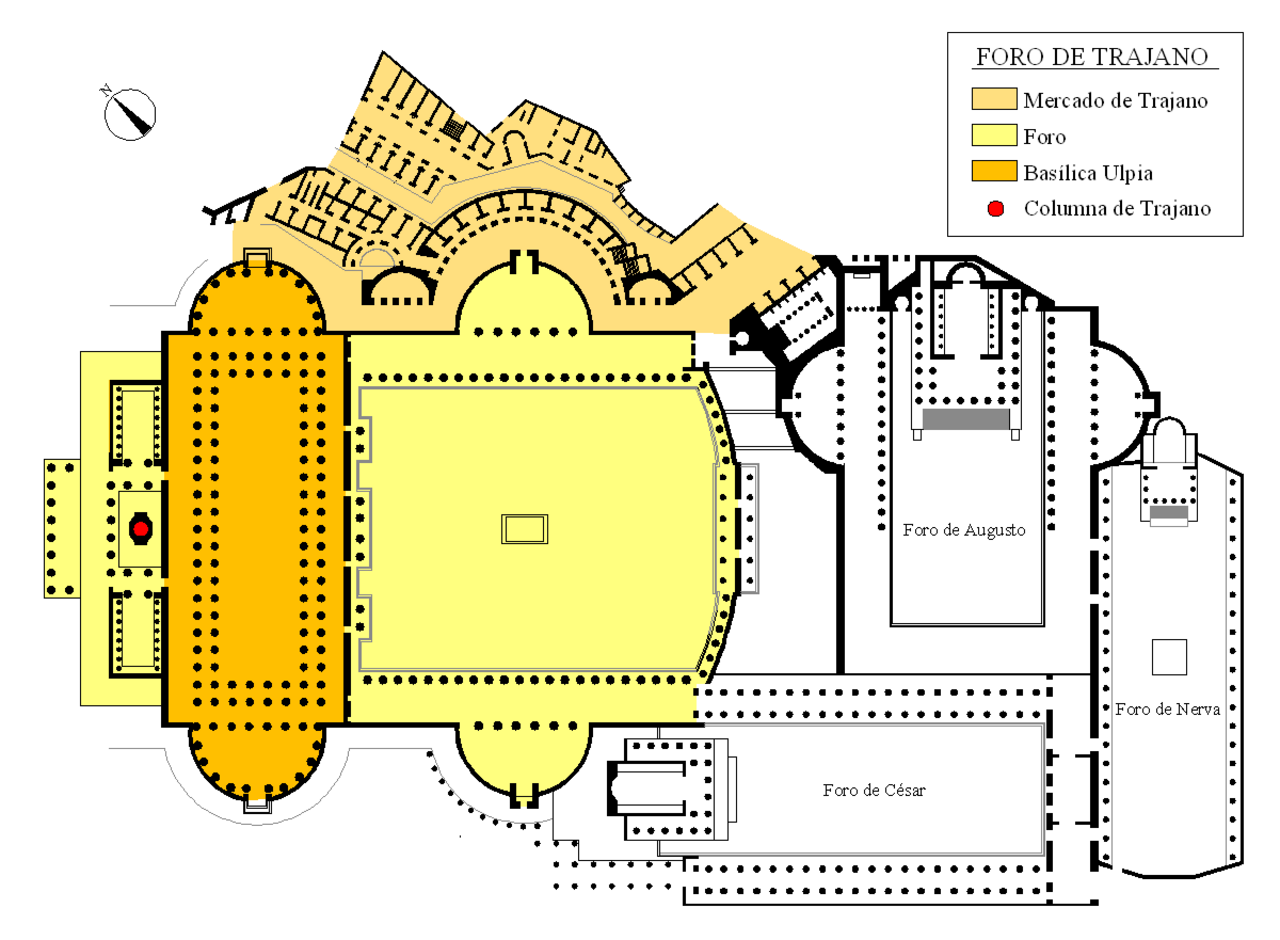
A thorough visit encompassing both the archaeological remains and museum collections typically requires approximately ninety minutes to two hours. This duration allows for progression through the multi-level circuit of ancient spaces and examination of displayed materials. Visitors with focused interests in ancient Roman commerce or Trajanic architecture may extend their stay. Those with limited time or mobility constraints can experience principal features in roughly forty-five minutes. The vertical character of the site, with stairs connecting levels, influences pacing. Individual reading speed and photographic interest substantially affect total duration.
Checked 2026-08-26
Visitors should consult official sources before planning attendance. The partially covered nature of certain spaces provides some shelter from direct sun and precipitation, though substantial portions remain exposed to weather conditions. Rome experiences peak tourist visitation during summer months, potentially affecting comfort and circulation at popular archaeological sites. Early morning arrival generally offers reduced crowding at major attractions. Seasonal variation in daylight hours affects visibility of architectural details and photographic conditions. Evening closure times, if applicable, would constrain late-day visits. Check the operator's own site for the travel date before relying on a schedule or fare.
Checked 2026-08-26
The site may operate under combined ticketing arrangements with adjacent Imperial Fora archaeological areas or require separate admission. Visitors should verify current fee structures through official channels prior to arrival. Potential categories of reduced or complimentary admission for designated visitor groups, including European Union youth or seniors, are common at Italian state museums but require confirmation. Online advance purchase options, if available, may offer queue reduction benefits. Audio guide or guided tour supplements, where offered, would constitute additional expenditures. Check the operator's own site for the travel date before relying on a schedule or fare.
Checked 2026-08-26
The complex occupies a central location in Rome's historic core, proximate to the Colosseum and Roman Forum archaeological zone. Metro station Colosseo on Line B provides nearby underground rail access. Multiple bus routes serve the surrounding area. Walking approaches from central accommodations in the historic center are feasible for many visitors, though the terrain involves elevation changes. The precise entrance location and accessibility provisions for visitors with mobility limitations should be confirmed through official sources. Signage from major nearby monuments generally directs foot traffic toward the Imperial Fora zone.
Checked 2026-08-26
The ancient structure presents uneven walking surfaces throughout, with original Roman paving and modern protective interventions creating trip hazards. Staircases between levels are numerous and may lack modern handrails consistent with contemporary standards. Partial roofing leaves substantial areas exposed to weather; appropriate footwear and sun protection are advisable. The vertical site configuration may challenge visitors with mobility limitations, cardiac conditions, or balance concerns. Crowding at narrow passages can occur during peak visitation. Low light conditions in certain vaulted interior spaces reduce visibility. Visitors should maintain awareness of architectural protrusions and level changes.
Checked 2026-08-26

The multi-level structure offers varied perspectives on Roman architectural engineering and the surrounding urban fabric. Interior vaulted spaces present challenging lighting conditions requiring appropriate camera settings or stabilization. The juxtaposition of ancient construction with modern cityscape visible from upper levels provides contextual photographic opportunities. Restrictions on commercial photography, tripod use, or flash application should be verified with site staff. The museum component may impose specific limitations on documentation of displayed artifacts. Morning and late afternoon exterior illumination enhances textural qualities of the ancient brick and travertine surfaces. Overcast conditions may improve exposure balance in partially covered areas.
Checked 2026-08-26
The traditional identification as a market requires nuanced interpretation. Modern scholarship suggests the complex likely served multiple administrative, commercial, and possibly ceremonial functions rather than operating as a unified retail facility analogous to contemporary shopping structures.
Ticketing arrangements between adjacent archaeological sites vary and may change. Visitors should verify whether current policies permit combined or separate access to the Imperial Fora zone, which includes Trajan's Market, through official sources.
The multi-level ancient structure with original stairs and uneven surfaces presents inherent accessibility challenges. Specific provisions for visitors with mobility limitations, including potential alternative routes or lift installations, should be confirmed directly with site operators.
Availability of staff-led or audio-guided tours, languages offered, and scheduling are subject to operational decisions. Visitors seeking interpretive assistance should consult official channels for current programming and reservation requirements.
Both monuments formed components of the Forum of Trajan complex, constructed under the emperor Trajan. The column and market complex occupied adjacent positions within this monumental architectural program, though they served distinct commemorative and functional purposes.
Archaeological materials recovered from the complex and adjacent Imperial Fora are displayed in the Museo dei Fori Imperiali within the structure. The scope and rotation of exhibited items are determined by curatorial and conservation policies.
Loading the interactive map…
The interactive map could not be loaded.
Last updated:
Source: OpenStreetMap contributors, Wikidata ·


