Smart Self-Managed Tours

City guide · Italy

Milan

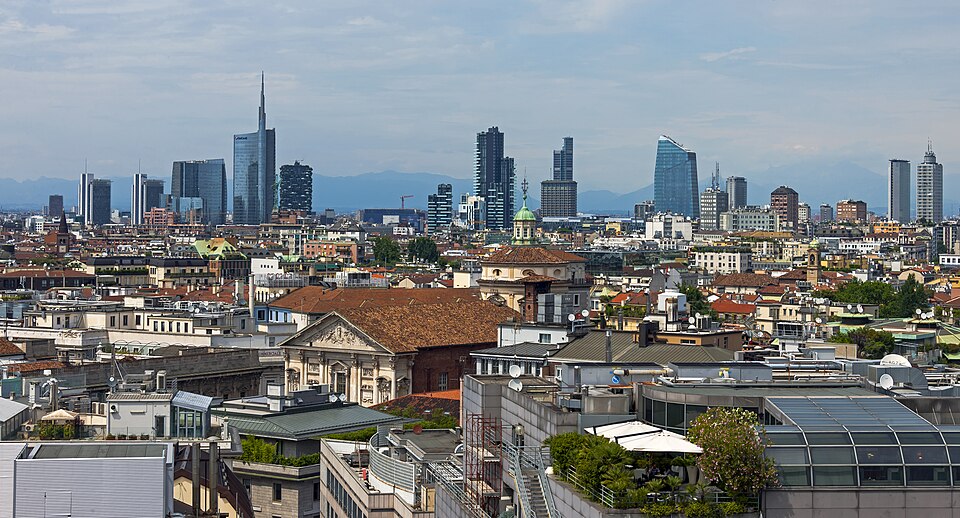
A photograph of Milan
Photograph · Daniel Case · CC BY-SA 3.0

Milan is organised around a compact historic centre, with the Duomo, Galleria Vittorio Emanuele II and La Scala close enough to combine on foot. Brera lies immediately north, the Navigli canals sit to the southwest, and the modern Porta Nuova district rises around Garibaldi station. Longer journeys connect the centre with Santa Maria delle Grazie, San Siro and outer design districts.

Practical information

Language spoken
Italian
National practical orientation; regional and minority languages may also be used
Dialling code
+39
International calling code; local area and mobile prefixes still apply
Currency
Euro (EUR)
Use the official local currency; card acceptance varies by place
Emergency number
112
Use only for an emergency; tourist assistance may use a separate number
Plug type
Type C, F and L · 230 V
Check that chargers support the recorded voltage before using an adapter
Tap water
Not recorded
No verified nationwide visitor statement was recorded

Planning a visit

Suggested stay
Not recorded
Getting around
Walk, metro, tram and bus
  1. January: seasonal closure recorded
  2. February: seasonal closure recorded
  3. March: seasonal closure recorded
  4. April: no seasonality data recorded
  5. May: no seasonality data recorded
  6. June: no seasonality data recorded
  7. July: no seasonality data recorded
  8. August: no seasonality data recorded — this month
  9. September: no seasonality data recorded
  10. October: seasonal closure recorded
  11. November: seasonal closure recorded
  12. December: seasonal closure recorded

Top things to see

Ranked by importance — sitelinks, pageviews and heritage status, not editor preference.

  1. Santa Maria delle Grazie
    02 45 min

    Santa Maria delle Grazie

    Santa Maria delle Grazie is a Dominican convent church in central Milan, designated a UNESCO World Heritage Site jointly with Leonardo da Vinci's Last Supper housed within its refectory.

    • Must see
    • Historic monument
  2. monumental cemetery of Milan
    03 45 min

    monumental cemetery of Milan

    The Cimitero Monumentale is a major cemetery in Milan, Italy. Established in 1866, it serves as both an active burial ground and an open-air museum of sculpture and architecture.

    • Must see
    • Historic monument
  3. Galleria Vittorio Emanuele II
    04 30 min

    Galleria Vittorio Emanuele II

    The Galleria Vittorio Emanuele II is a covered street, not a building a visitor enters and leaves.

    • Must see
    • Historic monument
  4. Arch of Peace
    05 45 min

    Arch of Peace

    The Arco della Pace is a neoclassical triumphal arch in Milan, standing at the edge of Parco Sempione near the historic centre.

    • Must see
    • Historic monument
  5. HangarBicocca
    06 45 min

    HangarBicocca

    Pirelli HangarBicocca is a contemporary art foundation housed in a former industrial complex in Milan's Bicocca district.

    • Must see
    • Historic monument
  6. Royal Villa of Milan
    07 45 min

    Royal Villa of Milan

    The Royal Villa of Milan, known locally as Villa Reale, stands as a significant historic estate in Milan. This distinguished property reflects aristocratic heritage and architectural importance within the city's cultural landscape.

    • Must see
    • Historic monument
  7. Palazzo della Ragione
    08 45 min

    Palazzo della Ragione

    Palazzo della Ragione is a historic civic building in central Milan, located in the Piazza dei Mercanti near the Duomo. Dating to the thirteenth century, it served as the city's broletto, housing courts of justice and public administration.

    • Must see
    • Historic monument
  8. Castle of Macconago
    10 45 min

    Castle of Macconago

    The Castello di Macconago is a historic castle located in the Milan area. This fortified structure represents part of the region's architectural heritage, with origins reflecting the historical development of defensive and noble residences in Lombardy.

    • Must see
    • Historic monument

Source: OpenStreetMap contributors, Wikidata ·

How the city is laid out

Use the Duomo as the central reference point. The fashion quadrilateral and Brera are north of it, Castello Sforzesco and Parco Sempione are west, and the Navigli and Porta Ticinese districts are south and southwest. Milano Centrale is northeast of the old centre, while Porta Garibaldi serves the Porta Nuova business district. Grouping sights by these zones avoids repeated cross-city travel.

Checked 2026-08-26

Getting around

Walk inside the historic centre and use ATM metro, tram and bus services for longer moves. Milan has five metro lines, while surface routes connect neighbourhoods beyond the rail corridors. Contactless bank cards and mobile devices can be used on ATM services, and the system calculates the applicable fare. Check the operator map before travelling to outer sites or changing fare zones.

Checked 2026-08-26

Common questions

How many days should I spend in Milan?

A fixed stay length is not recorded. Build the visit around the historic centre, Brera and the castle, then add Navigli, Porta Nuova or an outer attraction as time allows.

Can I explore central Milan on foot?

Yes. The Duomo, Galleria Vittorio Emanuele II, La Scala, Brera and Castello Sforzesco form a practical walking core, although the metro is useful for crossing between wider districts.

What public transport serves Milan?

ATM operates the city's metro, tram, bus and trolleybus network. Use rail for cross-city movement and surface services where the metro does not directly reach the destination.

Can I pay contactless on Milan public transport?

Yes. ATM accepts supported contactless cards and mobile devices on its services and calculates the applicable fare, provided the same payment method is used throughout the journey.

Which Milan areas should be planned separately?

Treat Navigli, Porta Nuova, San Siro and other outer districts as separate clusters. They sit beyond the compact Duomo-Brera-castle core and usually require a dedicated transit leg.

Turn this list into a plan

Set your days, your pace and the hours you actually want to be out. The planner works around closing days and travel time, and leaves room to eat.

Plan Milan