
2 min walk
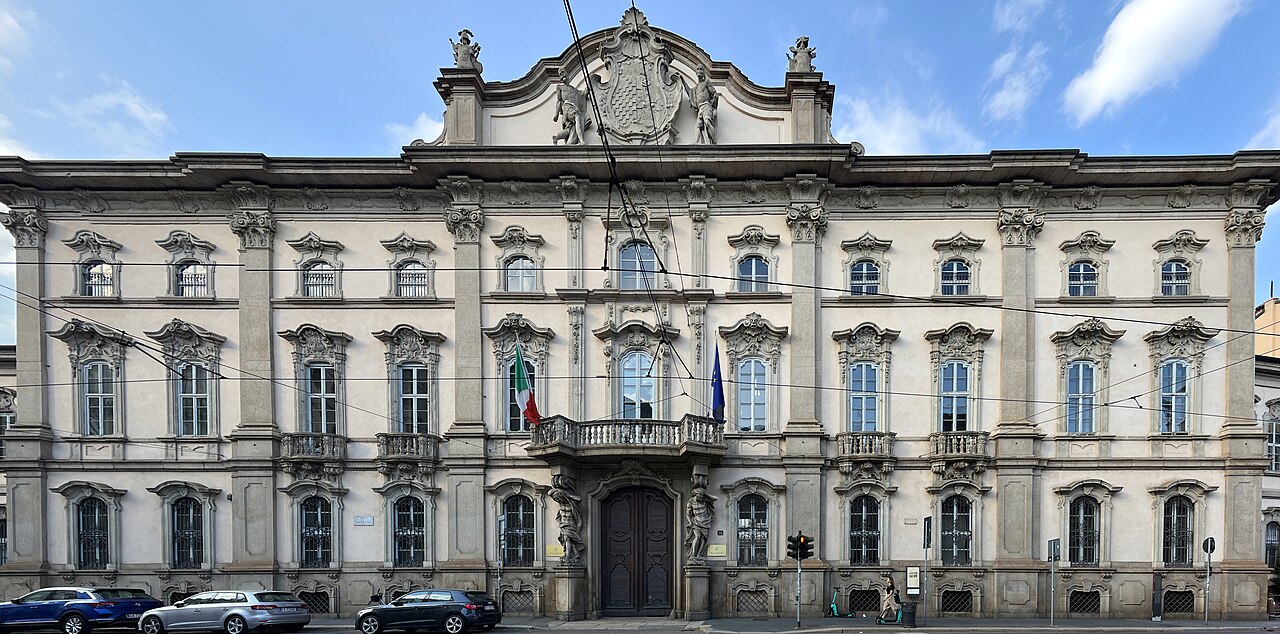
Palazzo Litta
- Must see · Heritage site
- Historic monument
Language · 11 published
Place of worship · Milan
Reviewed by Elena Voss · SSMTour Travel Editor
| Monday | Closed |
|---|---|
| Tuesday | 10:00 – 17:30 |
| Wednesday | 10:00 – 17:30 |
| Thursday | 10:00 – 17:30 |
| Friday | 10:00 – 17:30 |
| Saturday | 10:00 – 17:30 |
| Sunday | 10:00 – 17:30 |
Parsed from OpenStreetMap opening hours on 2026-08-26.
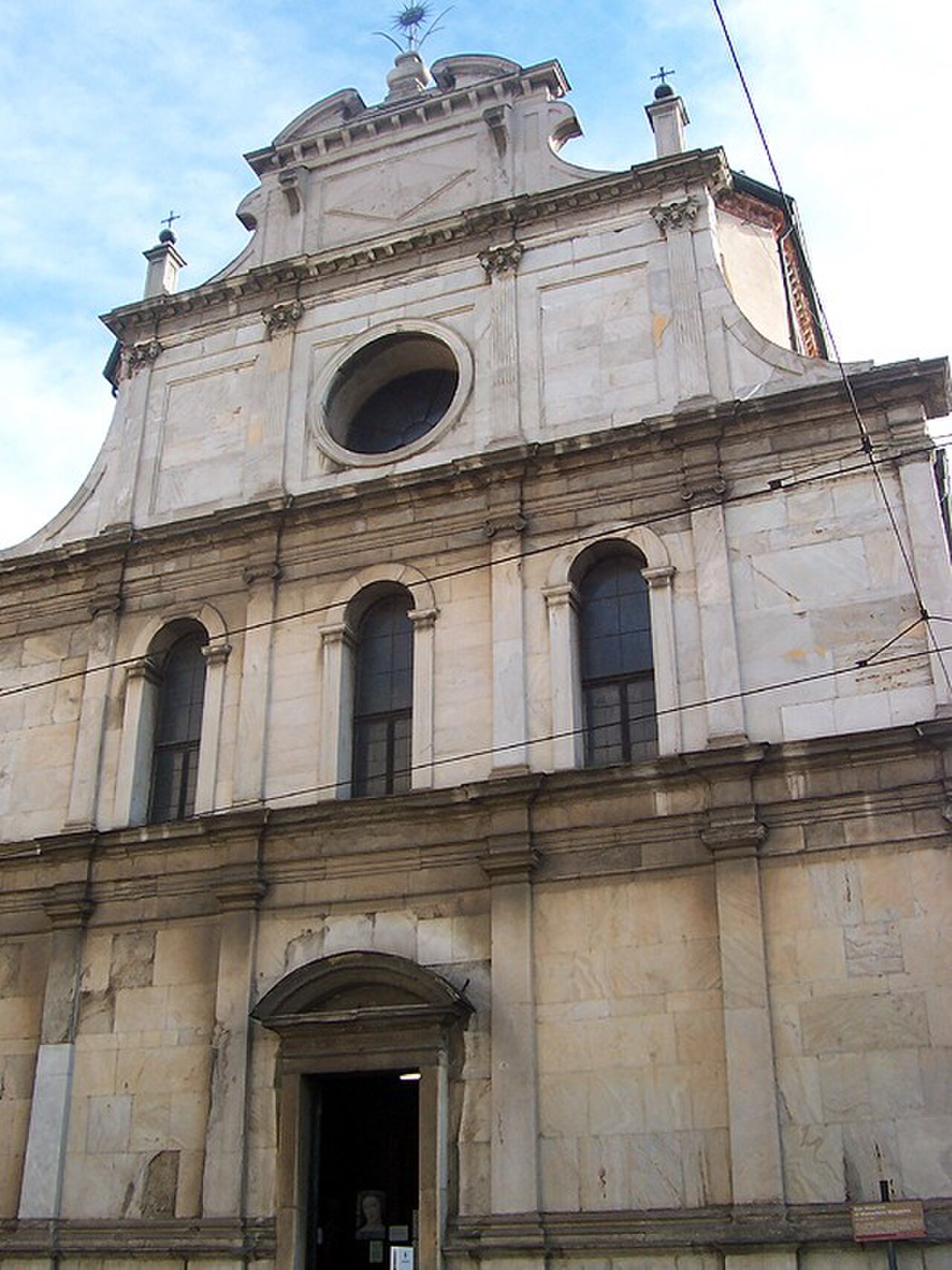
San Maurizio al Monastero Maggiore is a historic church complex in central Milan, originally constructed as part of a Benedictine convent. The building dates to the sixteenth century and occupies a significant place in Milanese religious architecture. It adjoins the archaeological museum housed in the former monastery. The church is often called the Sistine Chapel of Milan due to its extensive interior fresco decoration. It represents an important site for understanding Counter-Reformation artistic patronage in Lombardy.
Checked 2026-08-26
The interior contains extensive fresco cycles covering walls and ceilings throughout multiple chapels and spaces. Artists including Bernardino Luini and his sons executed the principal decorative programs. The church is divided into two main areas: a public section and the former nuns choir. The choir contains particularly dense painted decoration. The overall effect creates a unified environment where architecture and painting merge. The quality and completeness of the surviving sixteenth-century painted scheme distinguishes this monument from other Milanese churches.
Checked 2026-08-26
A focused visit to observe the painted interiors requires approximately thirty to forty-five minutes. Visitors with strong interest in Renaissance fresco technique or Lombard painting may extend their stay to sixty minutes. The compact scale of the building prevents lengthy circulation. Combining this church with the adjacent archaeological museum would extend the total visit substantially. Most visitors treat this as a concise stop within a broader Milan itinerary rather than a destination requiring half a day.
Checked 2026-08-26
Visitors should consult official sources before planning. The church interior depends on natural and artificial lighting conditions that affect visibility of the frescoes. Morning light entering windows may illuminate certain painted areas differently than afternoon conditions. Seasonal variations in Milan daylight hours will influence the visual experience. Weekday visits potentially offer quieter conditions than weekends. Checking current access arrangements remains essential given possible liturgical use or special closures. A flexible visit lets travellers connect San Maurizio al Monastero Maggiore with the rest of the day without treating one room, viewpoint or photograph as the whole experience. The useful pace depends on personal interest and conditions on arrival. Check the operator's own site for the travel date before relying on a schedule or fare.
Checked 2026-08-26
The church has historically operated with free admission or donation-based entry, though policies may have changed. Visitors should verify current arrangements through official Milan tourism channels. Any required tickets would likely be modest given the church's scale and typical ecclesiastical access models. Combination arrangements with the adjacent archaeological museum may exist but are not confirmed. Budget-conscious travelers should not assume free entry without verification. San Maurizio al Monastero Maggiore also earns time in a milan itinerary because A visitor-relevant POI matched exactly to the production city pool; stored identity, local name and coordinates were copied without approximation. Its value becomes clearer when the stop is compared with the surrounding streets and the other ranked places nearby. Check the operator's own site for the travel date before relying on a schedule or fare.
Checked 2026-08-26
The church occupies a central Milan location accessible by metropolitan transit. The nearest metro stations serve multiple lines connecting to major city points. Walking from the Duomo area takes approximately fifteen to twenty minutes through dense historic fabric. Tram lines operate nearby on Corso Magenta. The precise entrance requires attention as the church sits within a larger complex. Street-level signage indicates the access point. Central Milan traffic restrictions affect private vehicle access; public transit or walking proves more reliable.
Checked 2026-08-26
The divided church plan separates public and former monastic zones; visitors should observe all routing instructions. Interior surfaces are ancient and vulnerable; touching walls or frescoes causes irreversible damage. Photography policies may restrict equipment or flash use without explicit notice. The space may close unexpectedly for religious services or private events despite general opening hours. Quiet behavior respects any devotional use. Floor levels may vary between sections. Bag size restrictions could apply given narrow passages. The strongest visit keeps attention on what is distinctive here while leaving room for the next stop. That approach makes San Maurizio al Monastero Maggiore useful in both a focused first visit and a slower return to the city.
Checked 2026-08-26
Interior photography conditions present challenges due to mixed lighting across painted surfaces. Wide-angle lenses help capture ceiling schemes though distortion affects architectural accuracy. Higher ISO settings compensate for limited illumination but introduce noise. Tripods likely face restrictions in confined spaces. The rich color saturation of well-preserved frescoes rewards careful exposure adjustment. Specific areas may be photographically restricted without posted notice. Visitors should observe staff guidance. The visual density of decoration rewards patient composition rather than rapid capture.
Checked 2026-08-26
No. They occupy adjacent buildings within the former monastery complex but remain distinct institutions. The church preserves its religious function and painted interiors. The museum occupies separate spaces with different access arrangements.
The principal decorative campaigns date to the sixteenth century with Bernardino Luini and workshop as primary executors. Subsequent interventions and conservation treatments have occurred. The overall ensemble retains strong period character.
Current liturgical use is not confirmed. The building primarily functions as a heritage monument. Visitors seeking active worship should verify mass schedules through official diocesan channels rather than tourism sources.
Historic church buildings often present level changes, narrow passages, and uneven flooring. Specific accessibility provisions are not recorded. Direct inquiry before visiting is prudent for mobility-impaired travelers.
Both offer significant Renaissance painting in Milan but differ fundamentally. The Last Supper is a single mural requiring reserved entry. San Maurizio offers extensive fresco cycles across multiple spaces with different access patterns. Each merits separate consideration.
Guided interpretation enhances understanding of the complex iconographic programs. However, competent visitors can appreciate the visual impact independently. Audio guides or printed materials may supplement personal observation. No specific recommendation is recorded.
Loading the interactive map…
The interactive map could not be loaded.
Last updated:
Source: OpenStreetMap contributors, Wikidata ·