


3 min walk
Milan Antiquarium
- Must see
- Museum
Language · 1 published
Historic monument · Milan
Basilica di San Lorenzo Maggiore

| Monday | 08:00 – 18:30 |
|---|---|
| Tuesday | 08:00 – 18:30 |
| Wednesday | 08:00 – 18:30 |
| Thursday | 08:00 – 18:30 |
| Friday | 08:00 – 18:30 |
| Saturday | 08:00 – 18:30 |
| Sunday | 09:00 – 19:00 |
Parsed from OpenStreetMap opening hours on 2026-08-26.
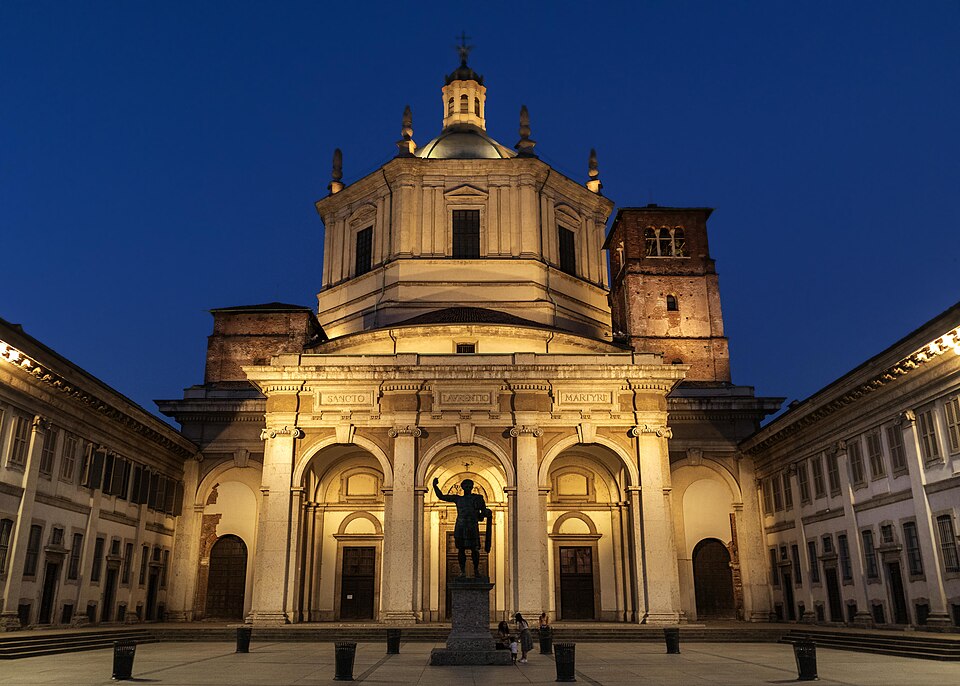
The Basilica of San Lorenzo, locally named Basilica di San Lorenzo Maggiore, stands as one of Milan's most ancient churches. Founded in the fourth century and rebuilt across subsequent eras, it represents a significant layering of early Christian, Romanesque, and later architectural interventions. Its distinctive circular or polygonal form reflects late antique martyrium traditions. The structure occupies a prominent position near the city's Roman-era center, bearing witness to Milan's evolution from imperial capital to medieval commune. Visitors encounter a building whose fabric documents nearly seventeen centuries of continuous religious use and architectural adaptation, making it essential for understanding Milan's urban and ecclesiastical development.
Checked 2026-08-26
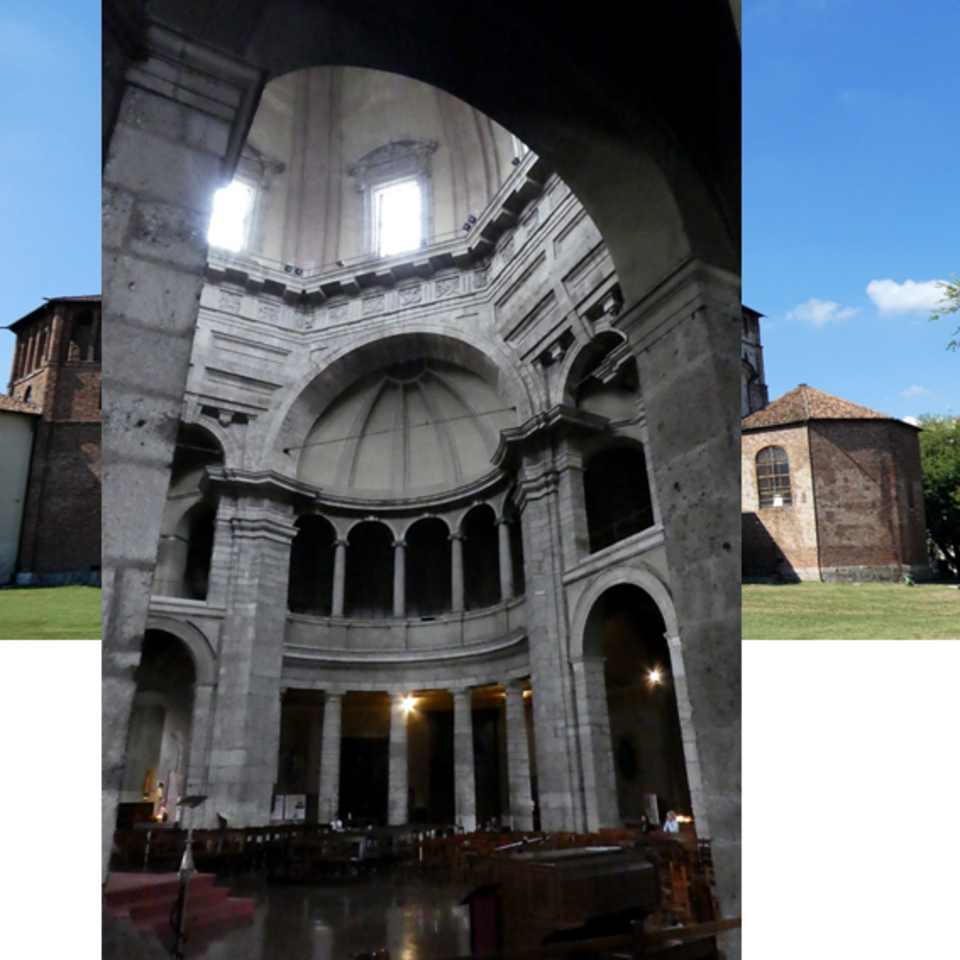
The interior preserves substantial early Christian and medieval fabric alongside Baroque and later additions. Notable elements include ancient columns and capitals reused from Roman buildings, reflecting common late antique practice. The church contains chapels and altars accumulated across centuries of devotional use. Archaeological investigations have revealed subterranean structures and remains predating the present building, offering evidence of Milan's Roman and early Christian phases. Mosaics, frescoes, and sculptural works from various periods contribute to the visual ensemble. The overall impression conveys accumulated history rather than unified design, rewarding visitors who examine details closely and appreciate archaeological complexity over aesthetic coherence.
Checked 2026-08-26

A thorough visit requires approximately forty-five to sixty minutes for the main church interior, with additional time warranted for those examining architectural details, reused ancient elements, and devotional artworks. Visitors with particular interest in early Christian architecture or Milan's Roman legacy may extend their stay to ninety minutes. The subterranean archaeological areas, when accessible, demand extra time and careful movement. Casual visitors passing through the central spaces may complete a basic circuit in twenty to thirty minutes. The absence of extensive decorative programs in some zones means attention shifts toward structural history and material evidence rather than prolonged contemplation of individual masterpieces.
Checked 2026-08-26
Operator-confirmed hours are Not recorded pending review. Visitors should consult official sources or contact the basilica directly before planning their arrival. The church functions as an active place of worship, meaning religious services may restrict tourist access or require respectful behavior during visits. Seasonal variations in opening schedules are common for Italian ecclesiastical properties. Morning hours typically offer better natural illumination for examining interior architectural details and ancient stonework. Midday periods may coincide with local worship or closure customs. Advance verification prevents disappointment, particularly for travelers with limited time in Milan or specific interest in the archaeological zones beneath the church.
Checked 2026-08-26
Operator-confirmed prices are Not recorded pending review. Many historic churches in Milan maintain free entry for worship and general visitation, though donations are customary and appreciated. Special exhibitions, archaeological areas, or guided tours may involve separate charges where implemented. Visitors should carry modest cash for donation boxes and any ancillary fees. The absence of confirmed pricing information necessitates direct inquiry before visiting. Group arrangements or academic visits may require advance coordination with basilica administration. Budget-conscious travelers should not assume free access to all areas without verification, particularly for restricted zones requiring supervision or specialized opening procedures.
Checked 2026-08-26
The basilica occupies a central position in Milan's historic core, accessible via the city's integrated public transport network. The nearest Metro stations serve the area, with walking connections through streets characteristic of the old city fabric. Tram and bus routes pass nearby, though precise line numbers and stop names require current verification from ATM, Milan's transport authority. Pedestrian approaches from the Duomo or other central landmarks involve manageable distances through commercially active streets. Cyclists find bike-sharing stations in the vicinity. Drivers should anticipate restricted traffic zones typical of Italian historic centers and seek parking at peripheral facilities rather than immediate adjacency.
Checked 2026-08-26

The surrounding neighborhood combines commercial activity with urban challenges common to major city centers. Visitors should exercise standard precautions regarding personal belongings in crowded passages approaching the church. The building's age and archaeological character present uneven surfaces, dim lighting in certain zones, and steps without modern handrails. Appropriate footwear supports safe movement, particularly if subterranean areas are accessible. Active worship means visitors must maintain respectful silence, dress modestly covering shoulders and knees, and refrain from photography during services. Restoration work may obscure some architectural elements or limit access to specific chapels without advance notification. Accessibility for mobility-impaired visitors appears constrained by historic fabric.
Checked 2026-08-26

Photography policies for the Basilica of San Lorenzo Maggiore are Not recorded. Italian churches typically permit non-flash photography for personal use while prohibiting commercial or professional imaging without authorization. Tripods, selfie sticks, and auxiliary lighting generally face restrictions due to space constraints and conservation concerns. Visitors should observe posted regulations or seek guidance from attendants upon entry. Flash photography risks damage to sensitive pigments and disturbs worshippers. Video recording may encounter stricter limitations than still photography. Respect for ongoing religious activities takes precedence over image capture; service times require complete cessation of photographic activity regardless of general permissions. Social media publication of interior images should acknowledge the sacred character of the space.
Checked 2026-08-26
Yes. The local name Basilica di San Lorenzo Maggiore identifies the same structure referenced as Basilica of San Lorenzo in English contexts.
The basilica incorporates reused Roman columns and capitals. Archaeological investigations have revealed subterranean remains predating the present church, though current access status is Not recorded.
Access to subterranean zones is Not recorded. Visitors should inquire directly with basilica administration regarding current availability and any special requirements.
Operator-confirmed prices are Not recorded pending review. Many Milan churches operate on donation basis, though verification before visiting is essential.
The original foundation dates to the fourth century, with successive rebuildings across nearly seventeen centuries. The present structure represents accumulated layers rather than a single construction phase.
Yes. The central location places it within walking distance of other historic landmarks, though precise distances and walking times are Not recorded.
Loading the interactive map…
The interactive map could not be loaded.
Last updated:
Source: OpenStreetMap contributors, Wikidata ·