

.jpg)
2 min walk
Cloister of the Scalzo
- Notable · Heritage site
- Museum
Language · 1 published
Museum · Florence
Museo di San Marco
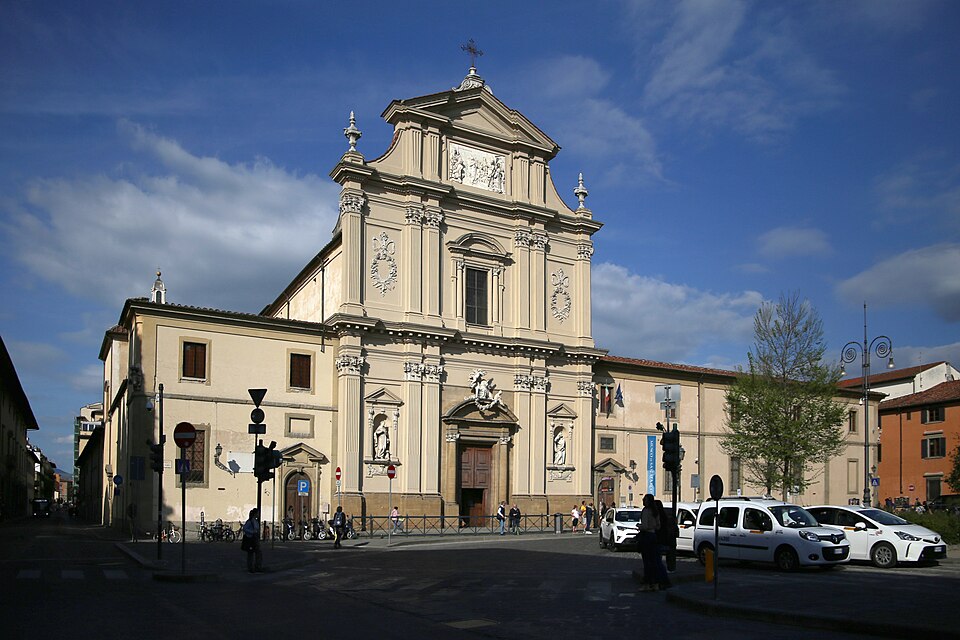
The Museum of San Marco occupies a former Dominican convent in central Florence, Italy. The complex holds significant importance for its architectural history and its association with prominent figures of the Italian Renaissance. The building itself represents an important example of convent design from its period. The site functions as a museum preserving both its religious heritage and its artistic collections. Visitors encounter spaces that served multiple functions within monastic life, now adapted for public access and interpretation. The museum is administered as part of Florence's cultural heritage network.
Checked 2026-08-26
The museum's collections center on frescoes by Fra Angelico, the Early Renaissance painter who was himself a Dominican friar. These include works in the former monks' cells and other convent spaces. The library, designed by Michelozzo, represents an important example of Renaissance library architecture. The museum also preserves areas associated with Girolamo Savonarola, the controversial preacher who served as prior. Decorative schemes and architectural features throughout illustrate the integration of artistic program with monastic function. The ensemble offers insight into how religious communities employed art for contemplative purposes.
Checked 2026-08-26
Most visitors allocate between one and two hours for exploration of the museum's principal spaces. The route encompasses multiple floors and numerous individual cells with fresco decoration. Those with particular interest in Fra Angelico's work or in Renaissance monastic architecture may wish to extend their visit. The compact nature of the former convent facilitates relatively efficient circulation compared to larger museum complexes. Peak visitation periods may slow progress through narrower corridors and smaller chambers. Planning for approximately ninety minutes allows reasonable engagement with major features without excessive haste.
Checked 2026-08-26

Operator-confirmed hours are Not recorded pending review. Visitors should consult official sources before planning their arrival. The museum's interior spaces, being largely enclosed within historic architecture, offer relatively consistent environmental conditions regardless of season. Morning visits typically afford quieter conditions at many Florence cultural sites. The museum's scale makes it suitable for inclusion within broader itineraries exploring the northern portion of the historic center. Advance verification of operational status remains advisable, as Italian museums may modify schedules seasonally or for special circumstances without extensive advance publicity.
Checked 2026-08-26
Operator-confirmed prices are Not recorded pending review. Visitors should consult official sources for current admission fees and any applicable concession categories. Italian state museums often participate in coordinated ticketing systems or offer combined access arrangements, though specific affiliations for this site are not confirmed in available sources. Some visitor categories may qualify for reduced or complimentary entry under Italian cultural heritage regulations. Payment methods and advance booking possibilities should be verified directly. Budgeting for standard museum admission rates in Florence provides reasonable planning guidance pending confirmation.
Checked 2026-08-26
The museum occupies a location in Florence's historic center north of the Duomo complex. Walking from the cathedral area requires approximately ten to fifteen minutes through characteristic urban fabric. The site lies within the limited-traffic zone, making private vehicle access impractical for most visitors. Public transit connections serve the periphery of the historic center, with walking completion of the journey. Bicycle and scooter rental options exist in Florence though center navigation demands caution. Signage in the historic center assists orientation, though mapping applications provide additional confidence for visitors unfamiliar with local street patterns.
Checked 2026-08-26

The historic building presents accessibility constraints typical of adapted convent architecture. Staircases connect floors and may challenge mobility-impaired visitors. Narrow passages and modest cell dimensions create bottlenecks when multiple visitors converge. Climate control in historic structures may prove limited during temperature extremes. Security provisions including bag inspection may apply. Respectful conduct remains appropriate given the site's religious origins and funerary associations. Photography policies should be verified on arrival as restrictions may apply to specific spaces or works. Personal belongings require attention in confined viewing areas.
Checked 2026-08-26
Photography policies within the museum should be verified at entry as conditions may vary by space or collection area. Italian museums increasingly permit non-flash photography for personal use, though specific restrictions often apply to individual works or loan exhibitions. Tripods, selfie sticks, and supplementary lighting equipment typically face prohibition. The quality of available light in historic interiors may challenge unassisted capture. Frescoes in individual cells present particular compositional constraints due to confined spaces and protective barriers. Visitors prioritizing photography should plan accordingly and respect any staff directives regarding specific prohibitions.
Checked 2026-08-26
The museum occupies the former convent complex adjacent to the functioning church. The church itself remains a separate religious building with its own access arrangements.
Fra Angelico was a Dominican friar who created extensive fresco decoration for the convent. His association with the site represents a significant factor in its historical importance.
Areas associated with Girolamo Savonarola, who served as prior of the convent, form part of the museum's historical presentation.
Admission procedures including any reservation requirements should be verified through official channels prior to visiting, as policies may vary.
Facility provisions for visitor belongings should be confirmed on arrival, as historic museum buildings often have limited storage infrastructure.
Tour offerings and scheduling should be verified through official museum communications, as service availability may vary seasonally.
Loading the interactive map…
The interactive map could not be loaded.
Last updated:
Source: OpenStreetMap contributors, Wikidata ·