

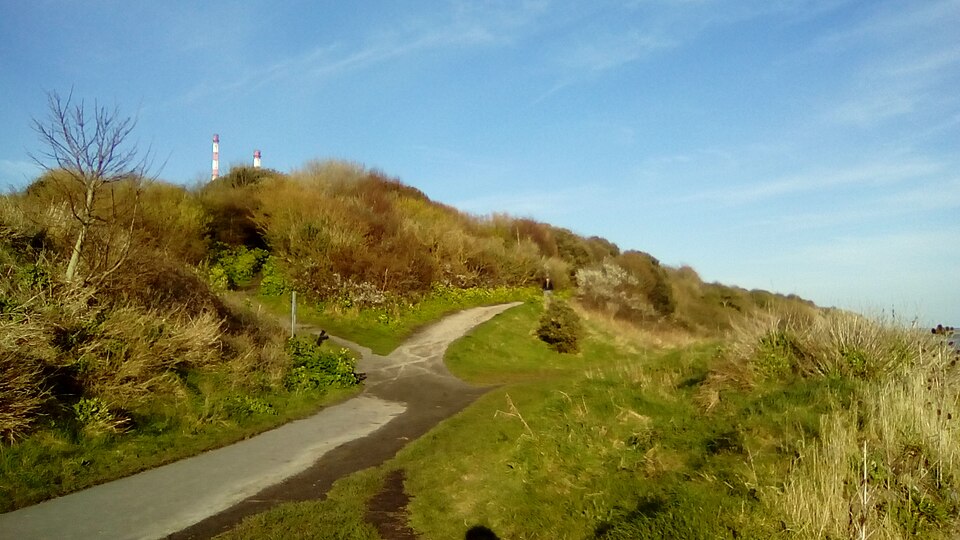
40 min walk
Irishtown Nature Park
- High
- Nature site
Language · 11 published
Nature site · Dublin
Booterstown Marsh

Booterstown Marsh is a salt marsh nature reserve located in Booterstown, a coastal suburb of Dublin, Ireland. It sits alongside the DART railway line and the coast road between Blackrock and Booterstown. The marsh represents one of the few remaining salt marsh habitats on Dublin's south coast, providing an important ecological niche in an otherwise urbanised environment. The area functions as a significant wetland habitat for various species and serves as a point of interest for visitors interested in natural heritage and birdwatching along the Dublin coastline.
Checked 2026-08-26
The marsh comprises tidal salt marsh vegetation and mudflats that support diverse wildlife. It attracts various bird species, making it relevant for birdwatchers and naturalists. The habitat includes typical salt marsh flora adapted to saline conditions. Visitors can observe the interaction between tidal waters and the marsh ecosystem. The immediate surroundings include the coastal walkway, the DART railway embankment, and views across Dublin Bay. The area lacks formal visitor infrastructure such as hides, boardwalks, or information panels, presenting a relatively unmanaged natural setting for those seeking an authentic coastal wetland experience in an urban context.
Checked 2026-08-26
A visit to Booterstown Marsh typically requires between thirty minutes and one hour for casual observation from the perimeter paths. Dedicated birdwatchers or those with specific ecological interest may spend longer periods, particularly during tidal changes when wildlife activity increases. The marsh itself has no designated trails or internal access routes, so circulation is limited to external vantage points. Combining the visit with a walk along the coastal promenade toward Blackrock or Booterstown village extends the duration. The compact nature of the site means it often serves as a brief stop rather than a primary destination for extended exploration.
Checked 2026-08-26
Booterstown Marsh can be viewed year-round from adjacent public paths, with wildlife sightings varying by season. Migratory bird periods may offer enhanced observation opportunities. Weather conditions along the Dublin coast can be changeable, with wind and rain common, so appropriate clothing is advisable. Operator-confirmed hours are Not recorded pending review. The marsh is subject to tidal patterns, meaning water levels and accessibility of mudflats fluctuate throughout the day. Dawn and dusk periods typically coincide with increased bird activity. Visitors should consult local tide tables if specific ecological conditions are desired for their visit.
Checked 2026-08-26
Access to Booterstown Marsh and its surrounding coastal paths is free of charge as a publicly accessible area. There are no entry gates, ticket booths, or admission controls. Operator-confirmed prices are Not recorded pending review. Visitors do not require permits for observation from public rights of way. The site has no commercial operation or visitor centre generating revenue. Parking in surrounding areas may be subject to standard on-street or municipal charges unrelated to the marsh itself. Public transport via DART incurs normal fares. No concessions, family tickets, or booking systems apply to this unstructured natural site.
Checked 2026-08-26

Booterstown Marsh is accessible via Booterstown DART station, with the marsh visible immediately beside the northbound platform and trackside. Several Dublin Bus routes serve the coastal road, with stops near the marsh. On-street parking is available in surrounding residential areas with appropriate restrictions. The site lies on the N11 coastal route, walkable from Blackrock to the north and Booterstown village centre to the south. Cyclists can use the coastal cycle path. The marsh has no dedicated car park or formal entrance. Access is informal from the public footpath running parallel to the railway and coast road.
Checked 2026-08-26
The marsh edge has no barriers separating visitors from tidal channels and soft mud, presenting potential hazards, particularly for children. The adjacent DART railway is active and fenced, but trespassing on tracks is dangerous and illegal. Tidal conditions can change rapidly, isolating areas of mudflat. Weather exposure is significant with limited shelter along the coastal path. Path surfaces may be uneven or slippery. There are no emergency facilities, toilets, or drinking water sources at the site. Visitors should exercise standard coastal safety awareness. Mobile phone coverage is generally adequate. The area is unstaffed with no ranger presence or formal supervision.
Checked 2026-08-26
Photography at Booterstown Marsh is unrestricted from public areas. The flat terrain and open aspect allow clear sightlines across the marsh and Dublin Bay. The railway embankment and DART trains provide contextual elements for landscape compositions. Bird photography requires appropriate telephoto lenses given the distance to wildlife across the mudflats. Lighting conditions vary significantly with Irish coastal weather, offering dramatic skies and changing atmospheric conditions. Sunrise and sunset positions relative to the bay create backlit or sidelit opportunities. No tripods or equipment restrictions are enforced. Drone operation would require standard Irish aviation authority compliance and consideration of railway proximity.
Checked 2026-08-26
No, access is free from surrounding public paths.
There are no designated internal trails; viewing is from perimeter paths only.
Various bird species use the salt marsh habitat, with sightings varying by season and tide.
No, the marsh has no visitor facilities; amenities are available in nearby Booterstown or Blackrock.
The adjacent coastal path is level, but the marsh has no formal infrastructure or viewing platforms.
Specific ownership and management details are Not recorded pending review.
Loading the interactive map…
The interactive map could not be loaded.
Last updated:
Source: OpenStreetMap contributors, Wikidata ·