.jpg)

.jpg)


1 min walk
Chester Beatty Library
- Must see
- Museum
Language · 1 published
Historic monument · Dublin
Closed today, Thursday. The next opening is not recorded — the planner will not place a stop here on a Thursday.
Plan around it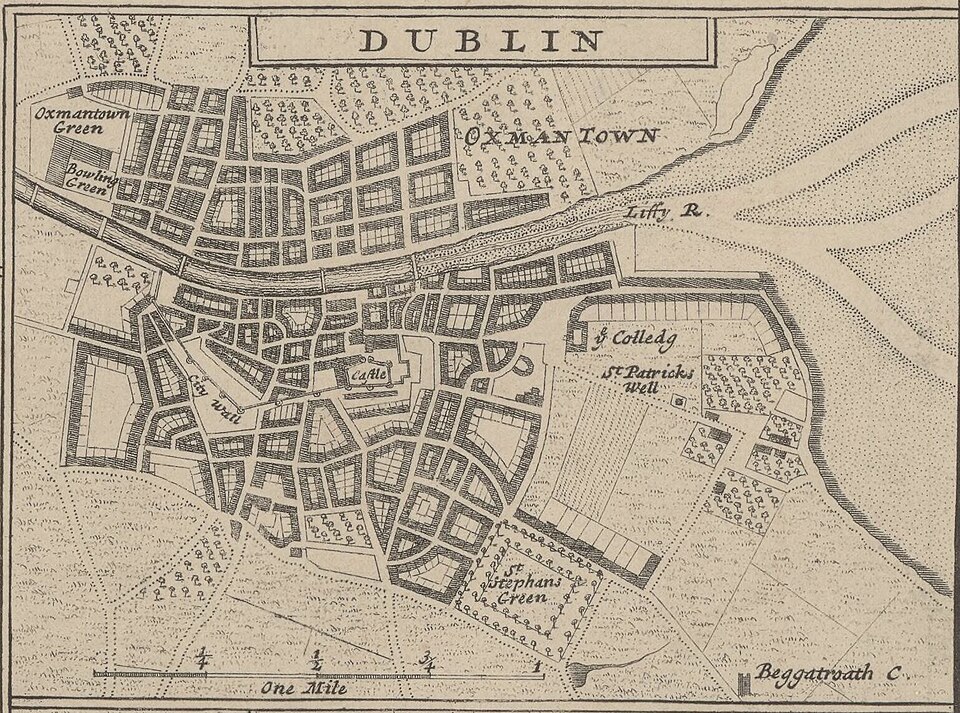
| Monday | Closed |
|---|---|
| Tuesday | Closed |
| Wednesday | Closed |
| Thursday | Closed |
| Friday | Closed |
| Saturday | Closed |
| Sunday | Closed |
Checked 2026-08-26 · Source
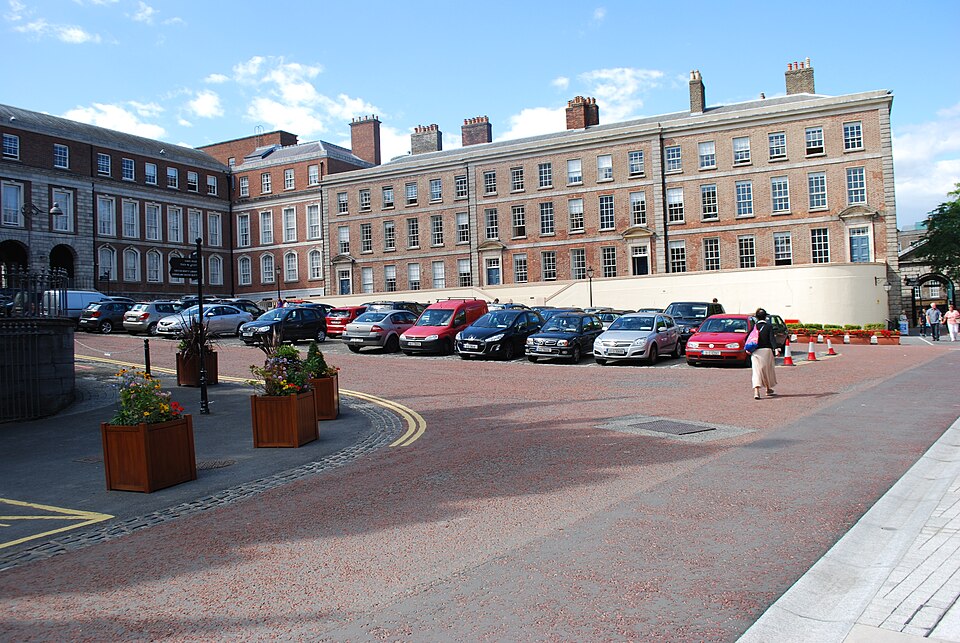
Dublin Castle occupies a walled block off Dame Street in the middle of the city, and it is not the moated fortress the name promises. What stands there now is a government complex: two courtyards, a Georgian range of state rooms, a Gothic Revival chapel, a walled garden, and one medieval tower left over from the building that burned.
The Office of Public Works, which runs the site, dates the first castle to the reign of King John, developed as a medieval fortress with four corner towers linked by high curtain walls around a large central enclosure. It went up on raised ground that a Viking settlement had already occupied, roughly where the Upper Castle Yard is today. From 1204 until 1922 it was the seat of English and then British rule in Ireland, serving as the residence of the monarch's Irish representative, the Viceroy, and as the administrative and ceremonial centre of the country. It was also, at various times, a military fortress, a prison, a treasury and a courts complex.
A fire in April 1684 destroyed much of the medieval fabric, and the castle a visitor walks through was rebuilt across the seventeenth, eighteenth, nineteenth and twentieth centuries. On 16 January 1922 the last Viceroy handed the place over to Michael Collins and the government of the Irish Free State. It has been Irish state property ever since.
Checked 2026-08-26 · Source
The visit is the State Apartments, which fill the south range of the Upper Courtyard and were the residential and public quarters of the viceregal court.
The route starts on the Grand Staircase of 1749, the first imperial staircase of its kind in Dublin, and runs along the State Corridor of 1758 towards the Privy Council Chamber where the 1922 handover took place. Off it lie the set pieces. The Throne Room was created in 1788 as the chamber in which the Viceroy received guests on the monarch's behalf; the throne itself was made for George IV's visit in 1821, and six mythological paintings by Gaetano Gandolfi, dated 1767, sit over the doors. The State Drawing Room of 1838 holds a late portrait by Van Dyck. The circular Gothic Room of 1775 is the earliest Gothic Revival interior in an Irish state building. St Patrick's Hall, the old ballroom, carries Vincenzo Waldré's painted ceiling begun in 1788 and the banners of the Knights of St Patrick, and has staged every presidential inauguration since 1938.
Two places are guided-tour only: the Chapel Royal, Francis Johnston's Gothic Revival chapel opened on Christmas Day 1814, and the Viking Excavation in the undercroft, where a stone-covered Viking defence bank survives inside the Powder Tower alongside the medieval curtain wall and a postern gate.
Checked 2026-08-26 · Source
The operator publishes its own figures, which is unusual and worth taking at face value. Dublin Castle states an average length of visit of one hour for the guided tour and thirty minutes for the self-guided one.
Those are the times inside the State Apartments and they are honest, but they are not the time a visit takes. The guided hour is the version to plan for, because it is the only way to see the Chapel Royal and the Viking Excavation, and because thirty minutes through the state rooms is a walk rather than a look. Add the queue at the ticket desk in the State Apartments, add the free lockers where backpacks have to be left, and add the Castle Gardens behind the range, which take fifteen or twenty minutes and are the part most visitors skip.
Ninety minutes on site covers the guided tour, the gardens and a look at the two courtyards without hurrying. Two hours is right if an exhibition is running in the State Apartments Galleries or the Coach House Gallery in the gardens, since both are included in the ticket. The courtyards themselves are a through-route rather than a destination and take five minutes.
Tours run from 10.00 to 16.30 daily, so a late-afternoon arrival buys the self-guided visit only.
Checked 2026-08-26 · Source
The first thing to check is whether the castle is open at all. As of 26 August 2026 it is not: Dublin Castle states that the campus is closed to the public until January 2027 to accommodate Ireland's hosting of the Presidency of the Council of the European Union, with more than a hundred conferences, dinners and receptions taking place in the buildings. Heritage Ireland gives the same closure as 5 May to 31 December 2026. Group bookings for 2027 are being taken by email now.
When it reopens, the published pattern is straightforward. The castle opens every day of the year including public holidays, 09.45 to 17.45, with last admission at 17.15, and closes only on 25, 26 and 27 December and 1 January. There is no weekly closing day and no midday break.
Within a day, early is better. Tours run from 10.00, guided tickets are sold only at the desk on the day, and the desk is quietest in the first hour. The Castle Gardens are the exception and reward the opposite instinct: the operator notes they fill with Dubliners on sunny summer afternoons, which is when the lawn is at its best rather than its emptiest.
A working government building closes rooms at short notice; the operator says so plainly and advertises what it can in advance.
Checked 2026-08-26 · Source

Two tickets are sold and the difference matters. A self-guided ticket admits the holder to the State Apartments at their own pace plus any exhibition on site. A guided ticket adds the Viking Excavation and the Chapel Royal, which cannot be entered any other way.
The published tariff is €8.00 adult, €6.00 senior over sixty, €6.00 student over eighteen, €4.00 child aged twelve to seventeen, free under twelve, and €20.00 for a family of two adults and three children on the self-guided ticket. The guided tour costs €12.00 adult, €10.00 senior, €10.00 student, €6.00 child aged twelve to seventeen, free under twelve, and €30.00 family.
Only self-guided tickets can be bought online; guided tickets are sold on site at the ticket desk in the State Apartments and nowhere else. The site's own pages disagree on the online window, the tickets page saying fifteen days in advance and the FAQ saying fourteen. A limited number of same-day tickets is held back for the desk.
An OPW Heritage Card or a Go City Dublin Pass does not skip the queue: staff check the card and issue a ticket. The Go City pass covers a self-guided visit, and a holder wanting the guided tour pays a €3 upgrade. School visits are free with advance booking, and groups need to book ahead.
Checked 2026-08-26 · Source

No car. Dublin Castle states that there is no visitor parking on site, and it sits inside the city-centre one-way system where driving is a penalty rather than a convenience. The nearest public car parks the operator names are Q-Park Christchurch and Park Rite Drury Street, both a short walk away, and either costs more than the ticket for an afternoon.
Walking is the intended approach. Heritage Ireland places the entrance off Dame Street, behind City Hall, about five minutes on foot from Trinity College and on the natural line towards Christ Church Cathedral. St Patrick's Cathedral is a similar walk south.
Buses stop on Dame Street, Lord Edward Street and George's Street: the operator lists the 9, 13, 15, 16, 27, 40, 49, 54a, 56a, 65, 68, 68a, 77a, 122, 123, 140, 150 and 151. The Luas tram does not reach the gate; the closest stops are St Stephen's Green on the Green Line and Jervis on the Red Line, each roughly ten minutes away on foot.
The postal address is Dame Street, Dublin 2, D02 XN27, and the visitor telephone number is 01 645 8813. Note that the Heritage Ireland page carries car, bus and train directions for a site in County Tipperary; they are not Dublin Castle's.
Checked 2026-08-26 · Source
This is a working government building, and the operator warns that security, access to individual rooms and opening arrangements can change at short notice. A room shut for a state function is not a fault in the ticket. Check the site before travelling, and check the closure dates: nothing is open at all until January 2027.
The Medieval Tower, the oldest surviving structure on the site with walls up to 4.8 metres thick, is closed to the public pending restoration. It can be seen from outside and not entered.
Bags go in free lockers before the State Apartments, to protect delicate objects along the corridors, so valuables should come out first. Prams and buggies are not allowed in the museum rooms and are stored for the duration.
Accessibility needs care because the operator's own pages do not agree. Both say the State Apartments are universally accessible, with a lift to the first-floor museum rooms, and both say the Viking Excavation is reached by stairs only and cannot be visited by wheelchair. On the Chapel Royal the homepage says universally accessible and the FAQ says partly accessible; ask on arrival rather than assuming. The Coach House Gallery and the gardens are accessible.
The Upper Courtyard has uneven surfaces and the operator advises caution crossing it. Wear something with a sole.
Checked 2026-08-26 · Source
Photography and video for personal use are permitted throughout Dublin Castle. Two restrictions apply and both are enforced: flash must be switched off inside the State Apartments because the collection is light sensitive, and selfie sticks are not allowed inside any building. Drones are banned outright on health and safety grounds, and commercial shoots or filming need written permission from the events office in advance.
The flash rule is the one that shapes the visit. The state rooms are lit for conservation rather than for cameras, and the Throne Room, the Wedgwood Room and the Gothic Room are dim. A phone will manage them handheld only if it is braced against a door frame or a window reveal; a camera wants a fast lens and a raised sensitivity rather than a tripod, which the tour pace does not allow anyway. St Patrick's Hall is the easiest interior, being large and bright, and its painted ceiling is the shot worth planning for.
Outside, the Upper Castle Yard reads best in the late afternoon when the sun comes over the west range and lights the Georgian facades rather than backlighting them. The Chapel Royal's exterior carving takes soft overcast light better than sun. The Castle Gardens, with the serpent patterns cut into the Dubh Linn lawn, need height or a wide lens to make sense.
Checked 2026-08-26 · Source
No. Dublin Castle states that the campus is closed to the public until January 2027 in order to accommodate Ireland's hosting of the Presidency of the Council of the European Union, during which more than a hundred conferences, meetings, dinners and receptions are held in the buildings. Heritage Ireland records the same closure as running from 5 May to 31 December 2026. Enquiries about group bookings for 2027 are already being taken by email. Anyone planning a Dublin itinerary before January 2027 should treat the castle as unavailable rather than as a possible stop, and check the operator's own site before travelling.
When open, Dublin Castle operates every day of the year including public holidays, from 09.45 to 17.45, with last admission at 17.15. There is no weekly closing day and no midday break. The only annual closures are 25, 26 and 27 December and 1 January. Guided tours run on a narrower window, from 10.00 to 16.30 daily, so an arrival after half past four buys a self-guided visit of the State Apartments and nothing more. These are the hours the operator published before the current closure and are the ones expected to resume in January 2027.
The self-guided ticket to the State Apartments is €8.00 for an adult, €6.00 for a senior over sixty or a student over eighteen, €4.00 for a child aged twelve to seventeen, free under twelve, and €20.00 for a family of two adults and three children. The guided tour is €12.00 adult, €10.00 senior or student, €6.00 for a child of twelve to seventeen, free under twelve, and €30.00 family. School visits are free with advance booking. A Go City Dublin Pass covers the self-guided visit; upgrading to the guided tour costs €3.
The operator publishes an average length of visit of one hour for the guided tour and thirty minutes for the self-guided one. Those figures cover the State Apartments alone. Ninety minutes is a more realistic figure for the whole site, allowing for the queue at the ticket desk, the free lockers where bags must be left, the two courtyards and the Castle Gardens behind the range. Allow two hours if an exhibition is running in the State Apartments Galleries or the Coach House Gallery, since both are included in either ticket and neither is quick.
For most visitors yes, and not because of the guiding. The Chapel Royal and the Viking Excavation can only be entered as part of a guided tour; a self-guided ticket does not admit anyone to either. The chapel is Francis Johnston's Gothic Revival interior of 1814, and the excavation preserves a section of Viking Dublin's defensive bank inside the thirteenth-century Powder Tower along with the medieval curtain wall and a postern gate. Four euro separates the two adult tickets. The catch is that guided tickets cannot be bought online at all — only at the ticket desk in the State Apartments on the day.
No. The operator states there is no visitor parking at Dublin Castle and names Q-Park Christchurch and Park Rite Drury Street as the nearest public car parks. A car is unnecessary in any case: the entrance is off Dame Street behind City Hall, about five minutes on foot from Trinity College, and buses including the 9, 13, 15, 16, 27, 40, 49, 65, 68, 77a, 122, 123, 140, 150 and 151 stop on Dame Street, Lord Edward Street and George's Street. The nearest Luas stops are St Stephen's Green on the Green Line and Jervis on the Red Line.
Loading the interactive map…
The interactive map could not be loaded.
Last updated:
Source: OpenStreetMap contributors, Wikidata ·