


35 min walk
Agung Rai Museum of Art
- Must see
- Museum
Language · 11 published
Historic monument · Denpasar
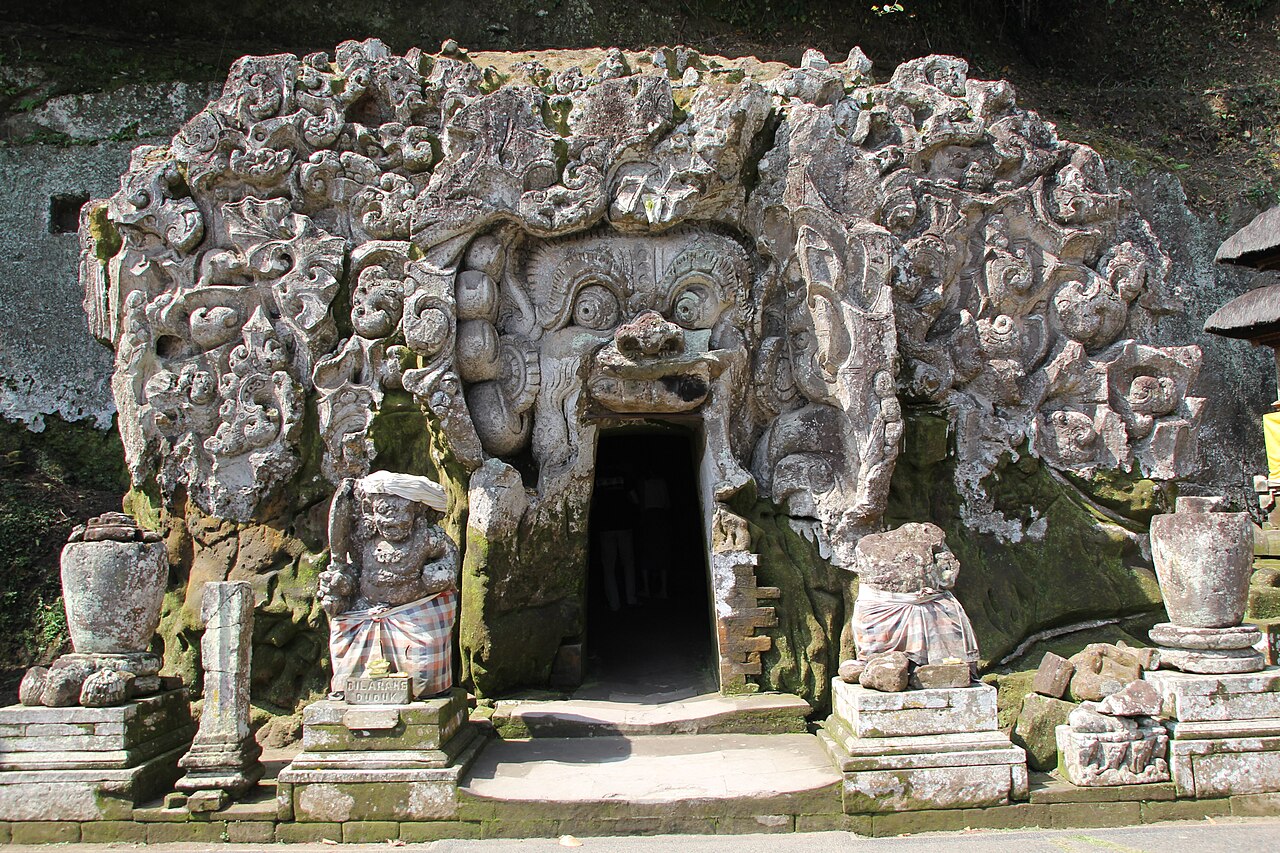
Goa Gajah, also known as the Elephant Cave, is an archaeological site of significant historical importance located near Ubud in the Gianyar Regency area, commonly associated with greater Denpasar visits. The site dates to at least the 9th century and features a cave entrance carved with menacing faces, thought to ward off evil spirits. It was listed as a tentative UNESCO World Heritage Site. The complex includes Hindu and Buddhist elements, reflecting Indonesia's religious transitions over centuries of cultural development.
Checked 2026-08-26
The main attraction is the cave itself, with its demon-shaped entrance. Inside are T-shaped niches that may have served meditation purposes. Outside lies a bathing pool with carved stone figures holding water spouts, discovered in the 1950s. The surrounding area contains stone fragments, a Buddhist stupa site, and various carved relics. The complex blends sacred Hindu lingam and yoni symbols with Buddhist imagery, demonstrating the syncretic religious practices that characterized early Balinese spiritual life before institutional separation. Goa Gajah also earns time in a denpasar itinerary because WIKIDATA_EDITORIAL reconciliation for the ranked entry; identity and coordinates were verified without a nearby fallback. Its value becomes clearer when the stop is compared with the surrounding streets and the other ranked places nearby.
Checked 2026-08-26

Visitors typically spend approximately one to two hours exploring Goa Gajah thoroughly. This duration allows adequate time to examine the cave interior, circumambulate the bathing pools, observe the scattered stone relics throughout the grounds, and appreciate the surrounding gardens and rice-field vistas. The compact nature of the archaeological site means extensive hiking is unnecessary. Those with deep interest in Hindu-Buddhist iconography or photography may wish to extend their visit. Combine with nearby attractions for a fuller day itinerary in the region.
Checked 2026-08-26

Visitors should verify current opening schedules independently before planning their trip. Early morning arrivals generally offer cooler temperatures and reduced crowding at popular Balinese cultural sites. The rainy season from approximately November through March may create slippery conditions on stone walkways and steps. Dry season months from April to October typically provide more predictable conditions for outdoor archaeological exploration. Religious ceremonies occasionally occur at or near the site, which may affect accessibility or create special visitor considerations. Check the operator's own site for the travel date before relying on a schedule or fare.
Checked 2026-08-26
Visitors should expect to pay a modest admission fee consistent with Indonesian archaeological site standards, with possible additional charges for parking or camera use. Foreign nationals typically pay higher rates than Indonesian citizens at government-managed heritage locations. Carry sufficient Indonesian rupiah in small denominations, as electronic payment acceptance at rural cultural sites remains inconsistent. Verify current fee structures at the entrance booth or through official tourism channels before visiting, as pricing policies change without advance notification. Check the operator's own site for the travel date before relying on a schedule or fare.
Checked 2026-08-26

Goa Gajah lies approximately six kilometers northeast of central Ubud, accessible via Jalan Raya Goa Gajah. Visitors staying in Denpasar proper should anticipate roughly thirty to sixty minutes travel time depending on traffic conditions, which worsen during morning and evening peak periods. Private car with driver, scooter rental, or taxi services represent common transport options. Ride-hailing applications operate in the area with variable availability. Signage from main roads is present but modest; confirm directions with accommodation staff or use GPS navigation to locate the precise entrance.
Checked 2026-08-26

Modest dress is required; shoulders and knees must be covered, with sarongs available for rent or loan at the entrance. The cave interior is dark and uneven underfoot; appropriate footwear with grip is essential. Steep stone steps descend to the bathing pool area, demanding caution particularly when wet. Persistent vendors operate near the parking area. The site holds active spiritual significance for local practitioners; maintain respectful behavior, lower voices, and refrain from climbing protected structures. Sun exposure is limited by tree cover but remains present in open areas.
Checked 2026-08-26

The carved cave entrance provides the most iconic photographic subject, best captured in soft morning light when shadows accentuate the demonic facial features. The bathing pools offer reflective water compositions with sculptural elements. Tripod use may attract scrutiny or require special permission. Flash photography inside the cave is discouraged to preserve atmosphere and protect any residual pigmentation. Respect worshippers by refraining from intrusive documentation of prayer activities. The surrounding rice terraces visible from elevated positions within the complex provide contextual landscape shots demonstrating the integration of sacred and agricultural spaces.
Checked 2026-08-26
No. Goa Gajah lies in Pejeng-Guliang village, Tampaksiring subdistrict, Gianyar Regency, northeast of Ubud. It is commonly included in broader Denpasar area itineraries and visitor guides despite this geographic distinction.
The name's origin is debated. It may derive from the nearby Petanu River once called Lwa Gajah, reference to the Hindu god Ganesh, or from a misinterpretation of the cave's shape. No elephants historically inhabited the site.
Yes, though the interior is shallow, dark, and T-shaped with limited penetration depth. The carved entrance is the primary feature rather than extensive subterranean chambers.
Local guides may offer services near the entrance. Official licensed guide availability is Not recorded pending review. Visitors may arrange guides through Ubud-based tour operators for more comprehensive historical context.
The terrain involves uneven stone surfaces, steps, and some inclines. Mobility-impaired individuals and very young children may find full exploration challenging. The compact scale allows partial visits adjusted to capability.
Basic facilities exist near the entrance. Extensive dining or shopping options are not present within the archaeological complex itself. Ubud offers comprehensive services approximately six kilometers distant.
Loading the interactive map…
The interactive map could not be loaded.


Last updated:
Source: OpenStreetMap contributors, Wikidata ·