


.jpg)
.jpg)

2 min walk
Citadella
- Must see
- Historic monument
Language · 1 published
Viewpoint · Budapest
Gellért-hegy
| Monday | 06:00 – 24:00 |
|---|---|
| Tuesday | 06:00 – 24:00 |
| Wednesday | 06:00 – 24:00 |
| Thursday | 06:00 – 24:00 |
| Friday | 06:00 – 24:00 |
| Saturday | 06:00 – 24:00 |
| Sunday | 06:00 – 24:00 |
Also recorded: 08:00 – 22:00
Checked 2026-08-26 · Source
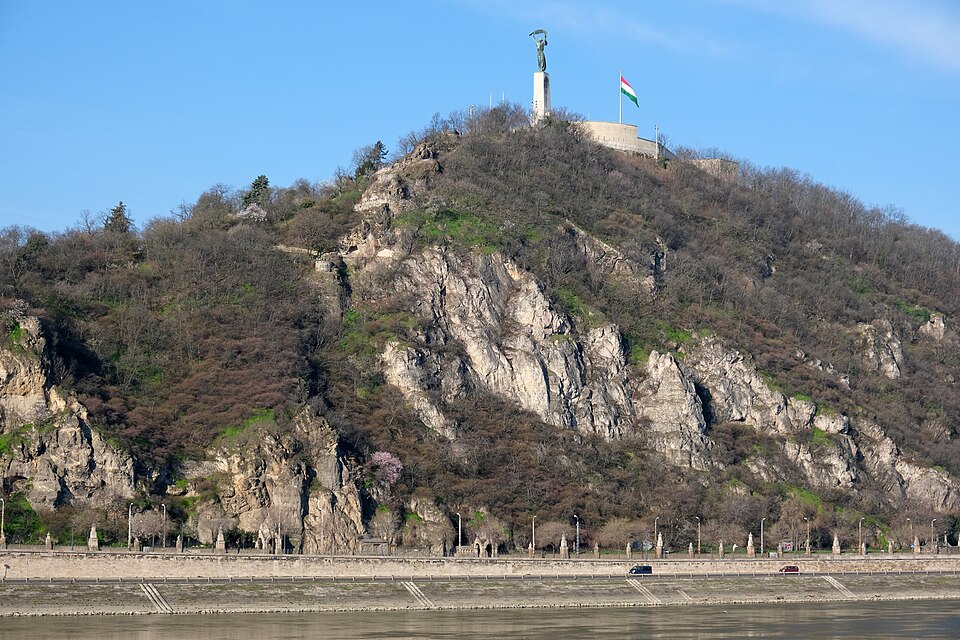
Gellért Hill is a 235-metre dolomite bluff on the Buda bank of the Danube, straddling the 1st and 11th districts and rising about 140 metres above the water directly opposite the Pest embankment. It is a hill first and a monument second: most of its surface is parkland and wooded slope, with embassies and villas on the gentler western side and a near-cliff of exposed rock on the side that faces the river. The name comes from Gerard, bishop of Csanád, killed during the pagan rebellion of 1046; earlier records call it Kelen-hegy, Pesti-hegy or Blocksberg, and the Ottomans knew it as Gürz Elyas bayiri after a Bektashi holy man whose grave on the summit drew pilgrims in the seventeenth century. The fortress on top is not medieval. The Habsburgs built the Citadella after the 1848-49 Hungarian war of independence, choosing the summit because guns placed there command both halves of the city. Since 1987 the hill has been inside the UNESCO World Heritage site covering the banks of the Danube. What a visitor comes for is the geometry: the Danube bends below, the bridges downstream and upstream line up in a single sweep, and Parliament sits square in the middle of the view from the northern edge.
Checked 2026-08-26 · Source
The summit is now the Citadella Park, reopened after a renewal that began with archaeological work in autumn 2020. The operator, Várkapitányság Nonprofit Zrt., puts the green area at roughly 20,000 square metres, with a new public park of more than 6,000 square metres inside the fortress walls; a cafe, an ice cream terrace and a gift shop sit within it. Hungary's largest national flag flies at the centre from a 36-metre mast, and a bronze inlay set into a circular stone surface marks the geodetic base point that the nineteenth-century observatory on this hill established as the origin of almost every Hungarian coordinate system. Walls that were solid have been cut through, so the wall-walks and the north, east and south bastions are open as free lookout terraces: the north faces Elizabeth Bridge and Margaret Island, the east faces Liberty Bridge, the south looks over Kelenföld. Inside the Western Round Bastion, a permanent exhibition called The Bastion of Liberty occupies over 1,700 square metres and is ticketed, as are the Roof Garden 360 and the Round Bastion Terrace reached through it. The Liberty Statue stands on the terraces below the walls, and a staircase on the eastern side now leads from the statue straight into the courtyard. Lower down the slope are the Cave Church, the Philosophers' Garden and the St Gellért waterfall.
Checked 2026-08-26 · Source
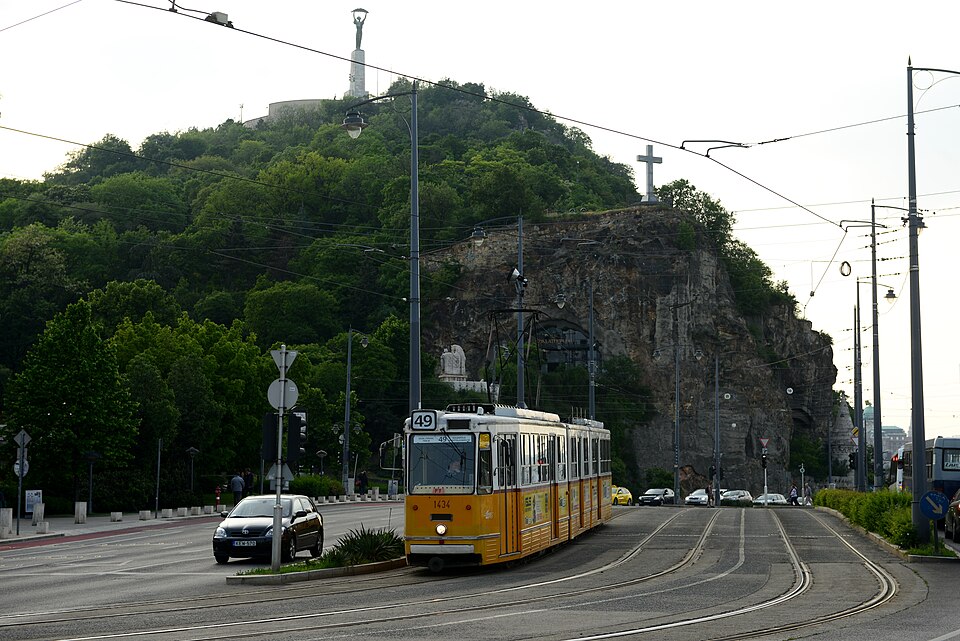
Allow two hours for Gellért Hill and treat it as a walk with a summit at the end rather than a sight with a queue. No operator publishes a suggested duration, so this is a judgement rather than a recorded figure. Roughly forty minutes of it is the climb: the stepped paths from Szent Gellért tér or from the Elizabeth Bridge end gain 140 metres, and nobody does that quickly in summer. Another forty minutes covers the free part of the top, which is more walking than it looks, because the wall-walk, the three bastion terraces and the promenade around the outside are all separate viewpoints facing different directions and each is worth standing at. Twenty to thirty minutes is enough for the Liberty Statue terraces and the descent on the other side. Ninety minutes works if the ascent is made by bus 27 and only the eastern half of the top is walked. Add ninety minutes to two hours if The Bastion of Liberty exhibition is included, since it is a timed-entry indoor route of more than 1,700 square metres with an audio guide, not a room to glance into. Add another hour for the Cave Church on the way down.
Checked 2026-08-26
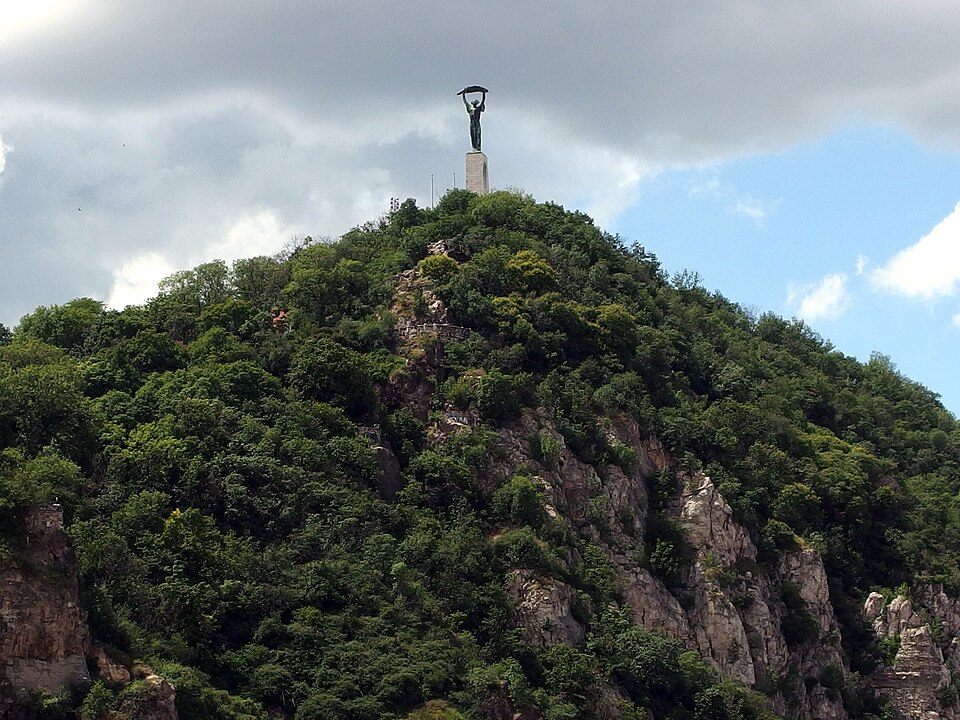
The Citadella Park keeps two seasonal sets of hours, published by its operator and the same on every day of the week: from April to October it is open 06:00 to midnight, and from November to March 08:00 to 22:00. There is no closing day and no midday break. That is unusually generous for a city sight and it decides the best time to come. Late afternoon into dusk is the hour to aim for: the sun sets behind the hill, so Pest, Parliament and the bridges are lit from the front while the terraces themselves are in shade, and in summer the park stays open long enough to watch the bridge lighting come on and still walk down. Early morning in summer is the quiet alternative, with the river flat and the terraces almost empty from six o'clock. Midday in July and August is the worst choice; the rock faces south and east, the terraces are stone, and there is very little shade on the walls. The exhibition inside keeps shorter hours than the park: 10:00 to 18:00 Monday to Thursday and at weekends, 12:00 to 20:00 on Friday, with last entry at 16:40 and at 18:40 on Friday.
Checked 2026-08-26 · Source
Gellért Hill costs nothing to visit, and neither does the fortress at the top. The operator states plainly that the Citadella is open to all free of charge during opening hours, and that this covers the inner park, the new viewpoints along the fortress walls, the promenade around them and the Liberty Statue. A ticket is needed for one thing only: The Bastion of Liberty exhibition inside the Western Round Bastion, together with the Roof Garden 360 and the Round Bastion Terrace, which are reached through it. Those tickets are 4,900 HUF for an adult, 2,450 HUF for students and visitors aged 6 to 26, and 2,450 HUF for holders of a valid pensioner card aged 62 to 70. A family ticket covering one or two adults with two children under 18 is 7,350 or 9,800 HUF. A free registration ticket exists for children under six, visitors aged 70 and over, and visitors with disabilities plus one companion. Entry is by timed slot with a maximum of 40 visitors per slot, and the time on the ticket opens a 20-minute entry window rather than fixing a minute. Late or unused tickets cannot be refunded or moved. The audio guide is included in the price and runs in several languages.
Checked 2026-08-26 · Source
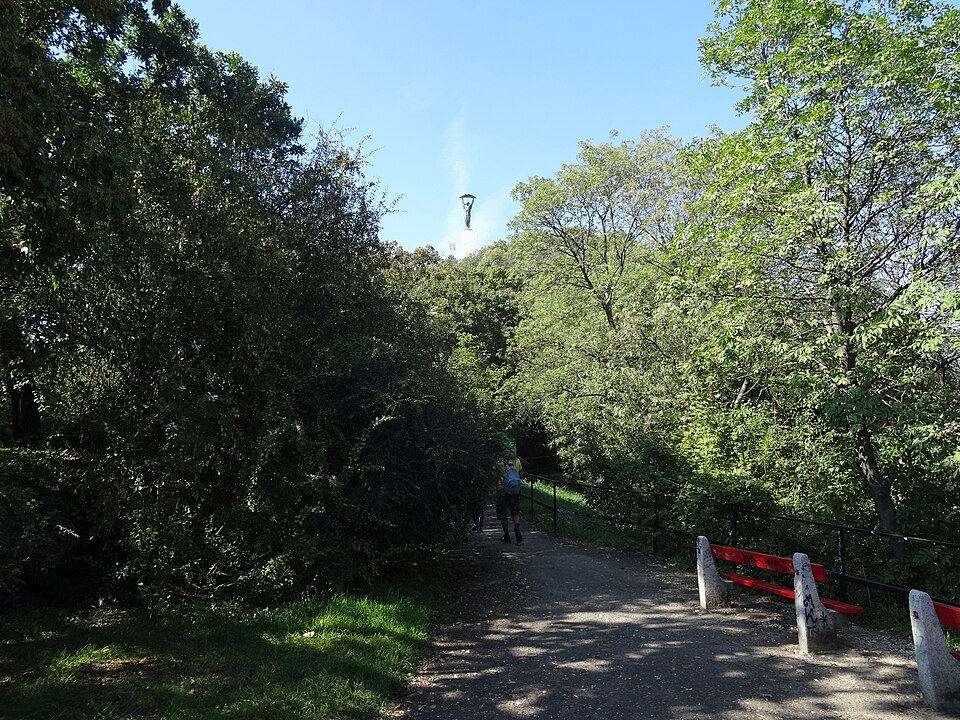
No car is needed and the operator recommends against one: the roads up Gellért Hill do reach the Citadella, but parking in the area is limited and charged, and the site's own advice is to use public transport. The simplest approach is bus 27 from Móricz Zsigmond körtér, getting off at the Búsuló Juhász (Citadella) stop; from there a short walk along Szirtes út reaches the northern entrance in about 500 metres, roughly six minutes. The other approach is on foot from the river, and it is the better one if legs allow: stepped paths climb from the Gellért Baths end and from the Elizabeth Bridge end, joining the terraces below the Liberty Statue, where a staircase built into the eastern wall during the renewal now leads directly up into the courtyard. That route turns the visit into a crossing rather than a return trip, since the bus can take the strain in one direction. Coaches are a separate matter: tourist buses may enter the Gellért Hill zone only with a permit obtained through the Budapest Közút TOBI system, applied for at least two days ahead, valid for one day and for entry between 06:00 and 22:00 only.
Checked 2026-08-26 · Source

The hill's own hazard is the climb rather than anything at the top. The ascent is 140 metres of steps and steep path with almost no shade on the eastern face, which in a Budapest summer afternoon is genuinely punishing; carry water, since the drinking options are all at the summit. Once up, the site is level and, according to the operator, fully accessible: the park, the lookout terraces and the wall-walks can be reached comfortably by wheelchair, and lifts serve every level inside the Round Bastion. Pushchairs are allowed in the exhibition provided the child stays in them, and children under two may enter only in a pushchair or a front carrier. Dogs are welcome in the park on a lead, guide and assistance dogs excepted from that rule. Two timing traps are worth knowing. The exhibition's last entry is 16:40, and 18:40 on Friday, which is well before the park itself closes, so an evening visit for the view is not an evening visit for the exhibition. And the Cave Church on the lower slope, run by the Pauline order, is open Monday to Saturday 09:30 to 19:30, closed all day Sunday, and closed to visitors during the mass that begins at 17:00 every day.
Checked 2026-08-26 · Source
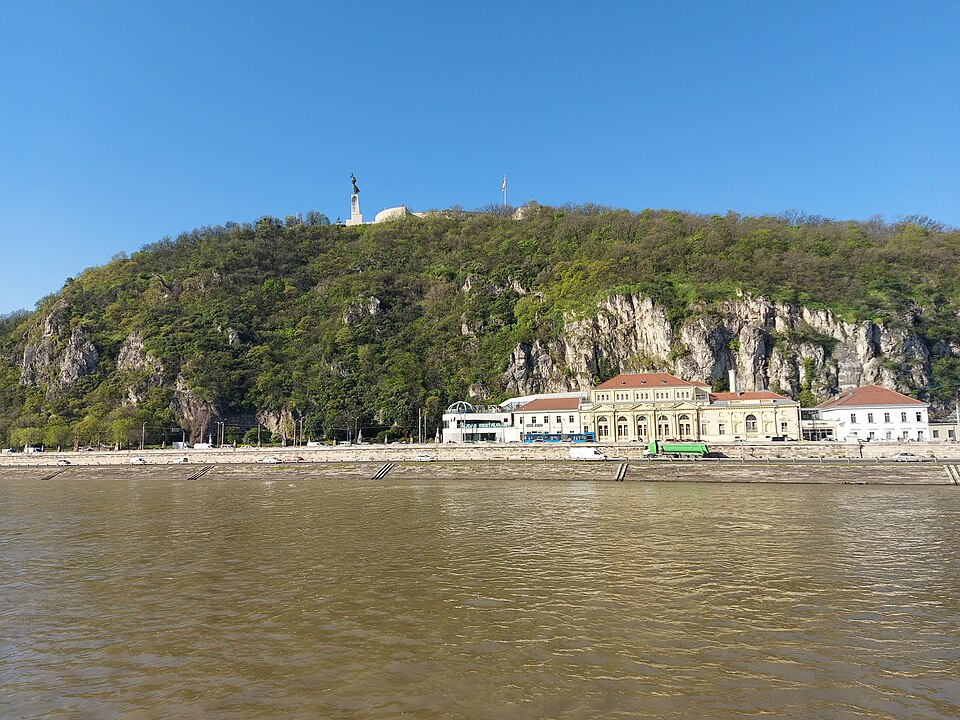
Private photography and filming are permitted in the Citadella Park, at the Liberty Statue and along the promenade. Inside the exhibition photography is allowed but flash is not, recording is barred during guided tours and education programmes, and anything intended for publication needs written permission from Várkapitányság Nonprofit Zrt. in advance. The practical problem here is that the classic Budapest panorama faces east and north, so the sun is behind the camera in the evening and straight into it in the morning. The east bastion is the frame most people want: Liberty Bridge in the foreground with the Pest embankment running away behind it, best about an hour before sunset. The north bastion is the one that holds Parliament and Elizabeth Bridge in the same shot, and it works at blue hour, when the bridge lighting is on and the sky still holds colour, roughly twenty to thirty minutes after sunset. In April to October the park stays open until midnight, so there is no need to rush the descent to beat a gate. The Liberty Statue itself is difficult from the terraces directly beneath, where the angle foreshortens the figure; it reads better from further along the promenade or from across the river.
Checked 2026-08-26 · Source
Yes. The operator of the Citadella states that the site is open to all free of charge during opening hours, and that this includes the inner park at the summit, the new lookout points along the former fortress walls, the promenade around them and the Liberty Statue. The hill's paths, the Philosophers' Garden and the terraces below the statue are open ground as well. The one paid element is The Bastion of Liberty exhibition inside the Western Round Bastion, along with the Roof Garden 360 and the Round Bastion Terrace that are reached through it.
The Citadella Park at the summit publishes two seasonal spans, identical on every day of the week: 06:00 to midnight from April to October, and 08:00 to 22:00 from November to March. There is no weekly closing day and no midday break. The exhibition inside keeps its own, shorter hours: 10:00 to 18:00 from Monday to Thursday and at weekends, and 12:00 to 20:00 on Friday, with last entry at 16:40 on most days and 18:40 on Friday.
About two hours, of which roughly forty minutes is the climb from the river and the rest is the summit, where the wall-walk and the three bastion terraces each face a different part of the city and are visited one after another rather than at a glance. Ninety minutes is enough if bus 27 does the ascent. Add ninety minutes to two hours for The Bastion of Liberty exhibition, and another hour if the Cave Church is included on the way down. No operator publishes a suggested duration for the hill, so these are estimates rather than recorded figures.
No, and the operator advises against it. The roads up Gellért Hill do reach the Citadella, but parking nearby is limited and charged, and the site recommends public transport instead. Bus 27 from Móricz Zsigmond körtér stops at Búsuló Juhász (Citadella), leaving a walk of about 500 metres, some six minutes, along Szirtes út to the northern entrance. Walking up from the Danube on the stepped paths is the other option. Tourist coaches need a permit obtained through the Budapest Közút TOBI system at least two days in advance.
An adult ticket is 4,900 HUF. Students and young visitors aged 6 to 26 pay 2,450 HUF, as do pensioners aged 62 to 70 holding a valid card. A family ticket for one or two adults with two children under 18 is 7,350 or 9,800 HUF. Children under six, visitors aged 70 and over, and visitors with disabilities together with one companion enter on a free registration ticket. The audio guide is included. Entry is by timed slot capped at 40 visitors, and the printed time opens a 20-minute entry window.
The operator states that both the Citadella Park and The Bastion of Liberty exhibition are fully accessible to wheelchair users, that lifts reach every level inside the Round Bastion, and that the lookout terraces and wall-walks along the fortress walls can be crossed comfortably. Pushchairs are allowed in the exhibition as long as the child remains in the pushchair, and children under two may only enter in a pushchair or a front-mounted carrier. Dogs and other pets are allowed in the park on a lead; guide dogs and assistance dogs are exempt from that requirement.
Loading the interactive map…
The interactive map could not be loaded.
Last updated:
Source: OpenStreetMap contributors, Wikidata ·