Museum of Memory and Human Rights
Museo de la Memoria y los Derechos Humanos
The Museum of Memory and Human Rights is Chile's principal museum addressing dictatorship-era state violence, memory, and human rights.
- Must see
- Museum
- Santiago
Language · 11 published
Country guide
Chile is a narrow strip between the Andes and the Pacific, the southernmost country in the world and the closest to Antarctica. Its 756,102 km² are arranged almost entirely along one north–south line, with Peru and Bolivia at the top and the Drake Passage at the bottom, so nearly every journey here is a journey up or down. The 2024 census counted 18.5 million people. Santiago is the capital and largest city. Chile also administers Pacific islands far offshore, among them Juan Fernández and Easter Island, which means two places under the same flag can sit an ocean apart.
Every city catalogued in this country so far, ranked by how much there is to see.
Photograph · Omnespsx (D•ES) · CC BY-SA 4.0
Ranked by importance — sitelinks, pageviews and heritage status, not editor preference.
19 places match
Category
Typical visit duration
Interests
Museo de la Memoria y los Derechos Humanos
The Museum of Memory and Human Rights is Chile's principal museum addressing dictatorship-era state violence, memory, and human rights.
Museo de Arte Precolombino
The Chilean Museum of Pre-Columbian Art, known locally as Museo Chileno de Arte Precolombino, is a museum in Santiago dedicated to Indigenous art and material culture from across the Americas.
Casa Museo La Chascona
La Chascona House Museum, locally Casa Museo La Chascona, stands as Pablo Neruda's distinctive Santiago residence in the Bellavista quarter.
Museo Nacional de Bellas Artes
The Museo Nacional de Bellas Artes is Chile's principal fine-arts institution, anchoring the Parque Forestal and the Lastarria museum circuit in Santiago.
Museo Histórico Nacional
The National Historical Museum, locally Museo Histórico Nacional, stands as Chile's central national-history collection. It occupies the former Royal Audience building on Plaza de Armas in Santiago.
Museo Nacional de Historia Natural
The National Museum of Natural History, known locally as Museo Nacional de Historia Natural, stands as Chile's principal natural-history museum. It serves as the flagship institution within Quinta Normal, a significant public park in Santiago.
Museo de Santiago - Casa Colorada
Casa Colorada is a colonial-era house in central Santiago, Chile. Built in 1769, it is one of the oldest surviving structures in the city and serves as the Museo de Santiago Casa Colorada.
Museo de Arte Colonial de San Francisco
San Francisco Museum of Colonial Art, or Museo de Arte Colonial de San Francisco, is a specialized museum within Santiago’s historic San Francisco religious complex.
The Salvador Allende Solidarity Museum, or Museo de la Solidaridad Salvador Allende, is a Santiago cultural institution built around an international modern-art collection.
The Violeta Parra Museum, Museo Violeta Parra, is a Santiago national institution devoted to one of Chile's foundational folk artists. Violeta Parra was a musician, composer, visual artist, and folklorist whose work crossed creative disciplines.
Museo Ferroviario
The Santiago Railway Museum, Museo Ferroviario de Santiago, is an outdoor museum devoted to Chile's railway heritage. Its setting inside Quinta Normal Park lets travelers encounter historic locomotives and rolling stock at full scale.
Museum of Science and Technology, locally Museo de Ciencia y Tecnología, is a hands-on science museum in Santiago. It forms part of Quinta Normal's family-oriented museum cluster and focuses on scientific and technological education through direct participation.
Mirador Interactive Museum, or Museo Interactivo Mirador, is a hands-on science museum in metropolitan Santiago. It is designed around participation, so visitors learn by touching, moving, testing and observing rather than only reading labels.
The National Aeronautical and Space Museum, Museo Nacional Aeronáutico y del Espacio, is Chile's principal aviation museum. It stands in Cerrillos, a commune in southwestern Santiago, and preserves the country's aeronautical heritage through aircraft and aerospace-related displays.
Museo de Artes Decorativas
The Museum of Decorative Arts, or Museo de Artes Decorativas, is a specialist museum within Santiago’s Recoleta cultural complex. Its focus is European and Asian decorative arts, giving the visit a more concentrated character than a broad national-history museum.
Museo Histórico Militar
The Historical and Military Museum of Chile occupies a substantial heritage building in Santiago that formerly served as Chile’s military school. The museum connects the building’s institutional past with displays about the country’s military history.
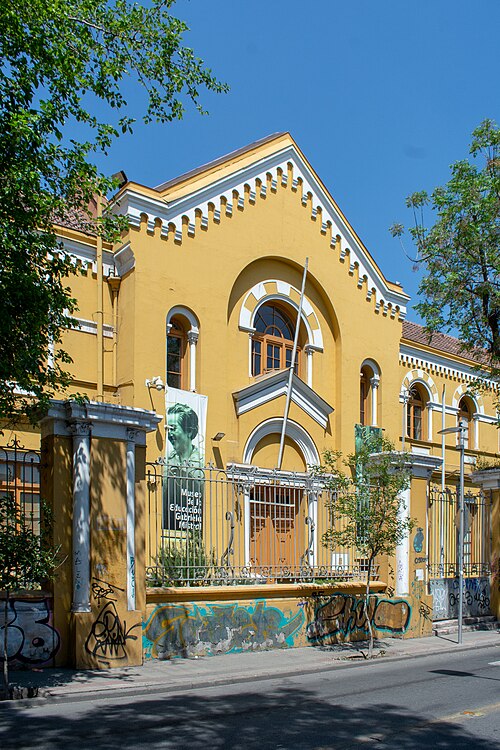
The Gabriela Mistral Museum of Education is a national museum in Santiago’s historic Barrio Yungay. It focuses on Chilean schooling and educational history, while its name honors Gabriela Mistral, the Chilean poet, educator, and Nobel Prize winner.
The Museo del Sonido, known in English as the Museum of Sound, is a specialist cultural museum in Santiago’s Yungay neighbourhood. The museum explores recorded sound, playback technology, and the ways people have listened to audio across changing periods.
Museo Numismático
The Museo Numismático del Banco Central de Chile is Chile's specialist public collection dedicated to coins, banknotes, and monetary history. Housed under the auspices of the nation's central bank, it preserves and exhibits the country's numismatic heritage.
Source: OpenStreetMap contributors, Wikidata ·
A 10–16 day visit should pair Santiago with one major region, such as the Atacama, the Lake District or a Patagonian gateway. Chile’s length makes combining north and far south in a short itinerary transfer-heavy.
Chile’s consular service publishes the visa rules used for entry. Nationality, travel purpose and length of stay determine the requirement, and any application should be made through the official consular channel.
Santiago is the central international and domestic hub. Flights connect the desert, lake and Patagonian gateways, while long-distance buses cover mainland corridors and remote parks require a confirmed final transfer.
October through April is the broad operating window for many central and southern journeys. Atacama conditions, central-valley heat and Patagonian wind are distinct, so the least flexible regional leg should set the calendar.
Chile uses the Chilean peso (CLP). Current withdrawal costs and merchant acceptance are Not recorded; review the amount in pesos and any conversion offered before completing payment.
Chile uses 133 for police, 131 for ambulance and 132 for fire. Power is 220 V with Type C and L plugs, while nationwide tap-water guidance remains Not recorded.