

.jpg)
.jpg)
.jpg)
.jpg)
1 min walk
Palace of Coudenberg
- Must see · Heritage site
- Museum
Language · 1 published
Museum · Brussels
Musée des instruments de musique - Muziekinstrumentenmuseum

| Monday | Closed |
|---|---|
| Tuesday | 09:30 – 17:00 |
| Wednesday | 09:30 – 17:00 |
| Thursday | 09:30 – 17:00 |
| Friday | 09:30 – 17:00 |
| Saturday | 10:00 – 17:00 |
| Sunday | 10:00 – 17:00 |
Checked 2026-08-26 · Source
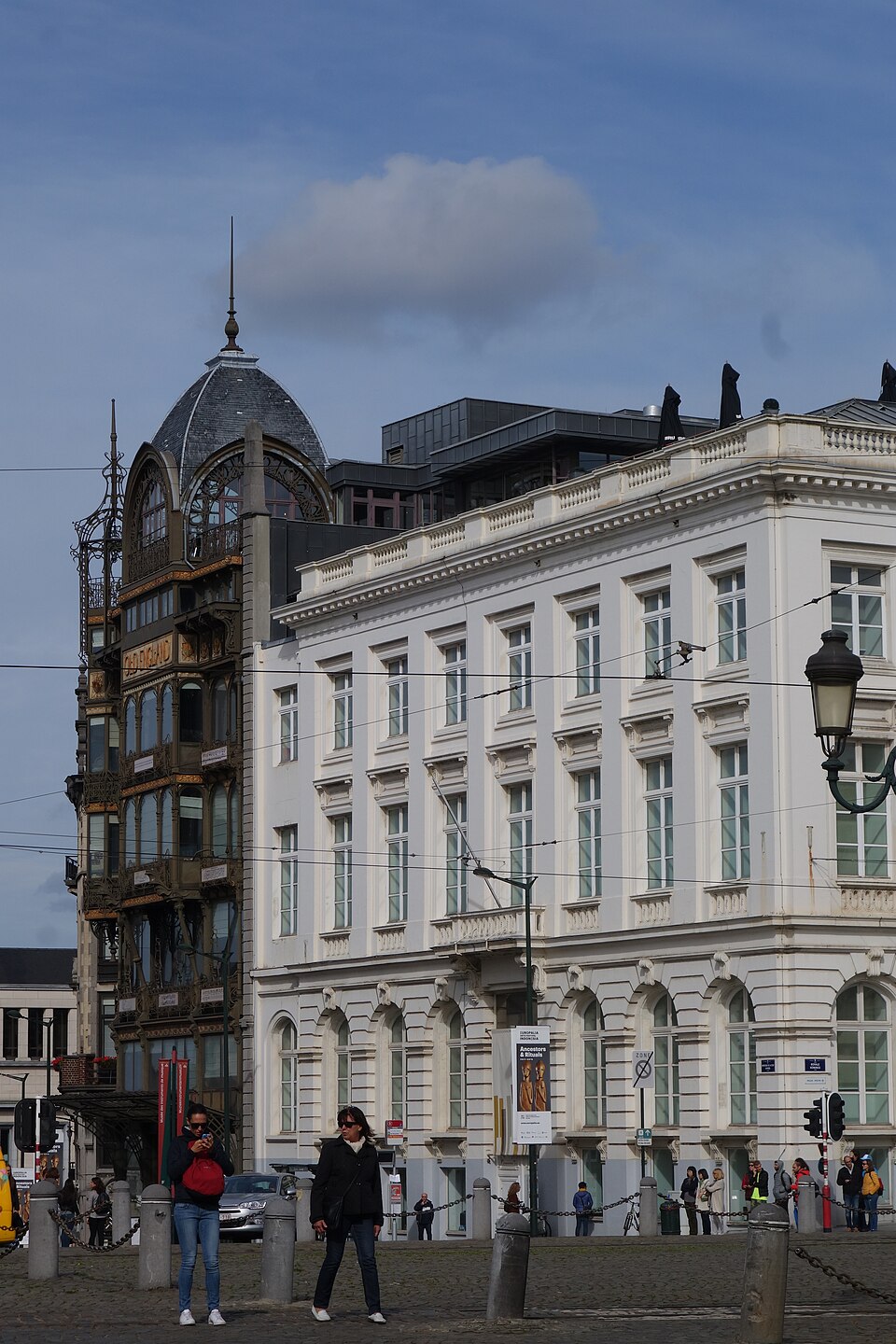
The Musical Instruments Museum, universally called the MIM, is a federal Belgian museum of roughly ten thousand instruments, of which about twelve hundred are on show. It was founded on 1 February 1877 as a teaching collection inside the Brussels Royal Music Conservatory, built out of two holdings: the library and instruments of the musicologist Francois-Joseph Fetis, bought by the Belgian state in 1872, and a gift of about a hundred Indian instruments made to King Leopold II in 1876 by Rajah Sourindro Mohun Tagore. Its first curator, Victor-Charles Mahillon, ran it until his death in 1924 and left 3,666 objects, of which 3,177 were instruments. Mahillon also wrote the five-volume catalogue published between 1880 and 1922 whose essay on classifying instruments became the basis of the Hornbostel-Sachs system still used today, which is why organologists treat this collection as a foundational one rather than merely a large one. Since 11 January 1992 the MIM has been the fourth department of the Royal Museums of Art and History, and since 2009 the RMAH has managed it directly. Two things are therefore on offer at one address: a collection of international scholarly weight, and the art nouveau building that houses it.
Checked 2026-08-26 · Source
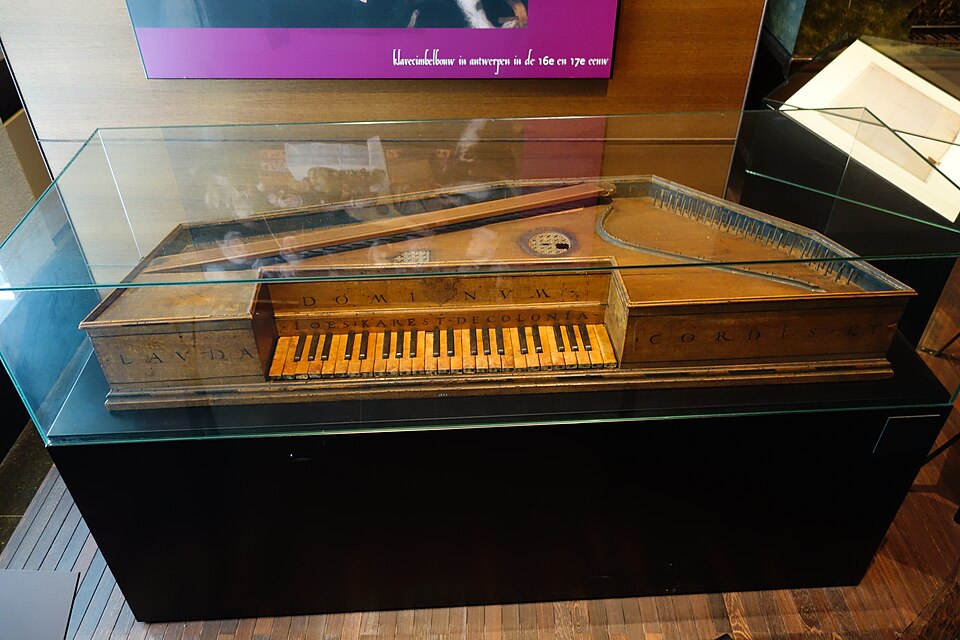
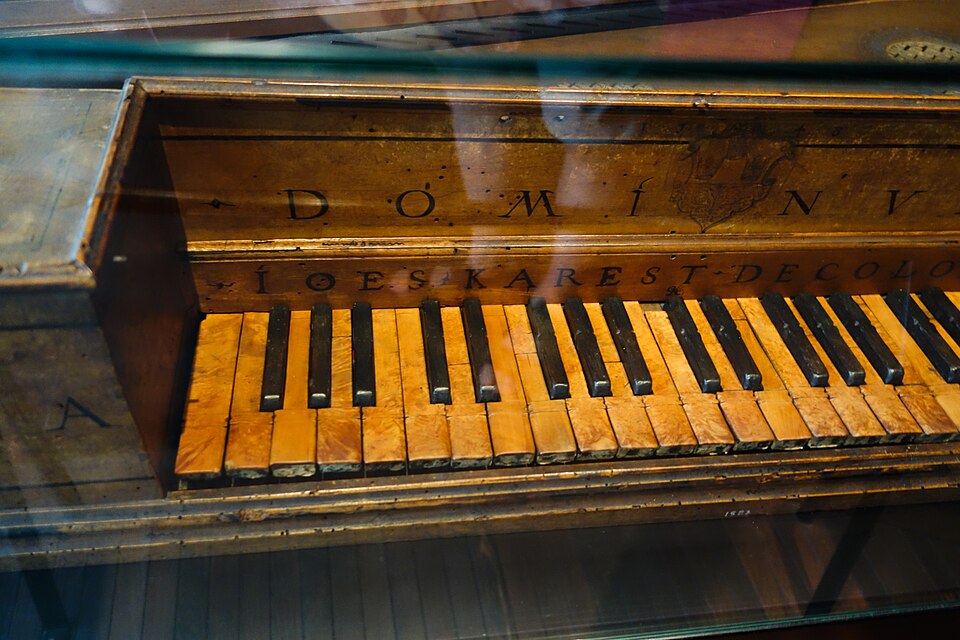
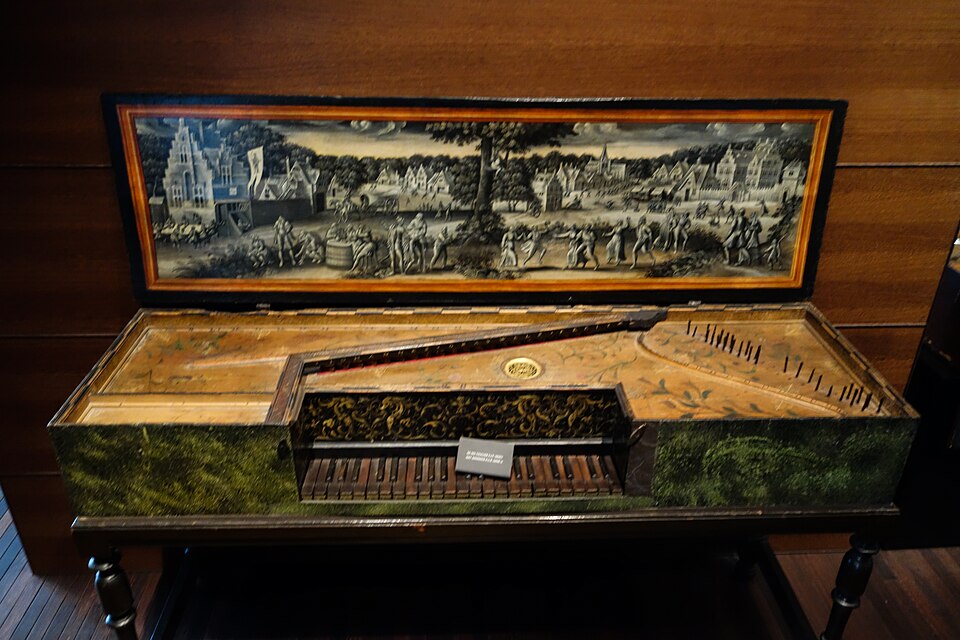
The displays run over four levels and are grouped into roughly ninety themed cases, each with recorded musical excerpts of the instruments in front of you. The museum divides them into four rooms. History of musical instruments in Europe is broadly chronological Western classical music, from the late medieval and Renaissance periods to the end of the nineteenth century. Keyboards traces keys and keyboards in the Western world. Traditional instruments starts in Belgium, works outward through European traditions and then across the rest of the world; the museum names it as a visitor favourite. Musicus Mechanicus holds mechanical, electrical and electronic instruments, along with clocks and bells. The museum's own list of fifty unusual instruments gives a fair sense of the range: a componium, a serpent chandelier, an ondes Martenot, a theremin, a glass harmonica, a trombone with seven bells, a trumpet marine, a gamelan, a Tibetan dung-chen and a square piano with a Turkish pedal. The building is part of the exhibit. The Montagne de la Cour block is Paul Saintenoy's art nouveau Old England department store of 1899, iron and glass; the Place Royale block behind it is neoclassical, part of the square laid out from 1774 under Barnabe Guimard and modelled on the Place Stanislas at Nancy.
Checked 2026-08-26 · Source
The museum publishes two different figures and they do not agree, so both are given here rather than blended. Its FAQ says to allow about ninety minutes, and adds that seeing everything will easily take half a day. Its multimedia guide page says an average visit lasts about two hours. This guide records two hours as the planning figure, because the multimedia guide is included in the admission price, nearly three hundred sound clips and videos sit on it, and a visitor who actually listens to the excerpts moves through the ninety themed cases at the slower of the two rates. Ninety minutes is realistic only for someone who treats the recordings as optional. The closing sequence caps the day whatever pace you keep: ticket sales end at 16:00, the last entry with a ticket is 16:15, the galleries close at 16:45 and the museum at 17:00. Arriving at 16:15 therefore buys thirty minutes of galleries, not the advertised hours. A Tuesday-to-Friday opening of 09:30 gives the longest available window at seven and a quarter hours; the weekend opening of 10:00 gives six and three quarters. Neither is a target. Two hours starting before 15:00 is the comfortable shape.
Checked 2026-08-26 · Source
The museum is open Tuesday to Friday from 09:30 to 17:00 and on Saturday, Sunday and public holidays from 10:00 to 17:00. It is closed every Monday, and closed outright on 1 January, 1 May, 1 November, 11 November and 25 December. On 24 and 31 December it shuts at 15:00 instead of 17:00, with the last tickets sold at 14:00 and the galleries closing at 14:45. There is no midday break: the museum itself stays open straight through. The museum shop does close over lunch, from 12:00 to 13:00 on every open day, which matters only if the shop is the reason for the trip. Tickets are sold for specific time slots and the number per slot is limited, so the museum recommends booking ahead even though the welcome desk sells on the day. The museum records an average of 125,000 visitors a year, about fifteen per cent of them in groups and mostly school groups, which is the pattern that makes a weekday morning in term time the busiest time inside the galleries. A weekday opening at 09:30 is the quietest hour the timetable offers, and it is also thirty minutes earlier than the weekend allows.
Checked 2026-08-26 · Source
The standard ticket is EUR 18 per person. It falls to EUR 14 for visitors over 65, for adults in a group of at least fifteen, and for FED+ card holders; to EUR 7 for anyone aged 18 to 25, for job seekers and for people receiving welfare benefits; and to EUR 1.25 with an Article 27 ticket. Entry is free for children and adolescents aged 0 to 17 whether individually or in a group, for Belgian teachers with a valid teacher card, for European Disability Card holders, for journalists showing a valid press card, for staff of the Federal Science Policy Office holding a BELSPO card, and for job seekers and welfare recipients during a yellow, orange or red heat alert issued by the Royal Meteorological Institute. Holders of an ICOM card, a Brussels Card, a museumPASSmusees, a Pass Art Nouveau or Friends of the RMAH membership also enter free, on each scheme's own conditions, and none of those passes covers a guided tour. Entering only the Saintenoy art nouveau building, the museum shop, the library or the concert hall costs nothing. The multimedia guide is included in the admission price. Tickets can be bought online or at the reception desk, and the museum asks visitors to pay electronically because its counters cannot always take cash.
Checked 2026-08-26 · Source
The address is Montagne de la Cour 2 / Hofberg, B-1000 Brussels, on the slope between the Place Royale and the lower town. No car is needed and the museum actively advises against bringing one. Brussels-Central station is about two hundred metres away, which makes this one of the easiest major Brussels museums to reach on a train ticket alone. Metro lines 1 and 5 stop at Gare Centrale and at Parc; trams 92 and 93 and buses 27, 38, 71 and 95 all stop at Royale, a short walk uphill. A Villo shared-bicycle station, number 20, sits directly outside the museum. Drivers face two obstacles the museum names itself: city-centre traffic and parking, and the Low Emission Zone that has covered the Brussels-Capital Region since January 2018 and which a non-compliant vehicle may not enter. The museum's own recommendation is to leave the car at a park-and-ride on the edge of the region, naming the ones near the Erasme, Delta and Kraainem metro stations, and to finish the trip by metro. Anyone determined to park close is pointed at the paid underground Congres-Albertine car park. Two designated spaces for disabled visitors sit in front of the museum entrance.
Checked 2026-08-26 · Source
One contradiction sits on the museum's own site and is worth knowing before you plan around it. The admission-fees page lists free entry on the first Wednesday of each month from 13:00; the FAQ answers the question directly with a flat no, the museum is not free on the first Wednesday or the first Sunday of the month. Both are the operator's pages and they cannot both be right, so do not travel on a first Wednesday expecting free entry without checking the day before. The rooftop restaurant is closed for renovation, so the top-floor view over the city is not currently on offer and lunch has to come from the surrounding streets or from the picnic area, which holds fifty people, needs a reservation and is primarily kept for groups. Tickets cannot be refunded or exchanged. Groups of more than fifteen must book in advance even without a guide, and a guided visit or workshop needs at least three weeks' notice. Lockers are provided and are free, but large bags, backpacks and umbrellas must go into the cloakroom, and anything too big for a locker is left in an unattended ground-floor cloakroom at your own risk. The instruments are played only very occasionally; the recordings, not live sound, are what you hear.
Checked 2026-08-26 · Source
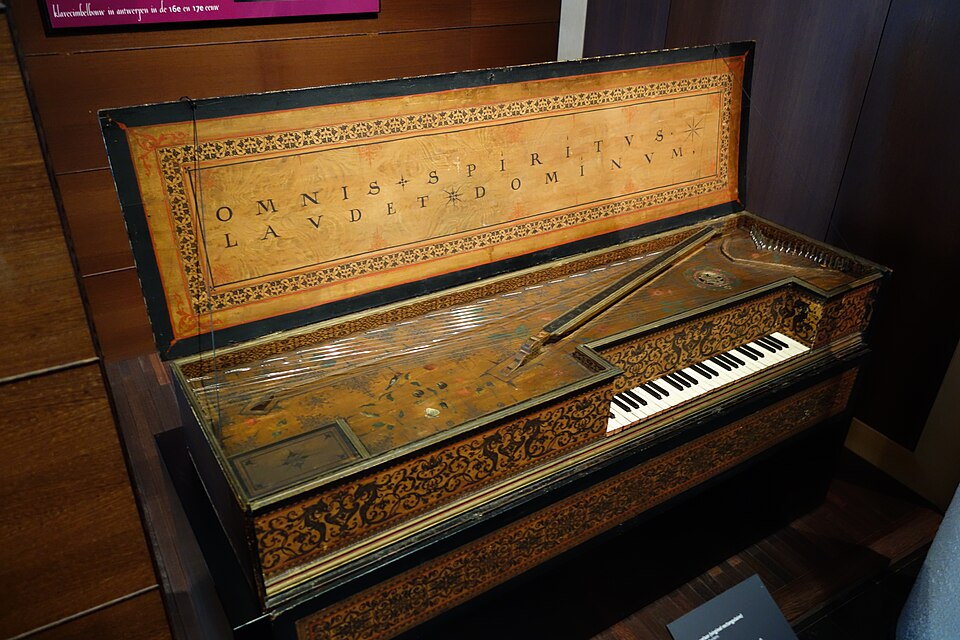
Photography is allowed in the galleries, but only without flash, and that single rule shapes everything about shooting here. The cases are lit low to protect wood, gut, varnish and paper, so a phone will hunt for exposure and a fast lens earns its place. Glass is the other constant: nearly everything is behind it, and the reflections of the room's own lights are the picture-ruining problem rather than the darkness. Getting the lens close to the glass and shooting slightly off-square kills most of it. The building is the easier subject and needs no permission at all, since entering the Saintenoy art nouveau block, the shop, the library and the concert hall is free. The 1899 iron-and-glass facade on the Montagne de la Cour, the stairwell and the ironwork detail are the frames that make this museum recognisable, and they can be photographed on a day when there is no time for the collection. Organised photo sessions are a separate matter and are not covered by an ordinary ticket: the museum sells a reportage ticket, allows sessions only on set dates and hours, restricts them to mornings, and requires them to be booked through its website. Turning up with a model, a tripod and a lighting kit on a normal ticket is not an option.
Checked 2026-08-26 · Source
No. The MIM is closed every Monday. It opens Tuesday to Friday from 09:30 to 17:00 and on Saturday, Sunday and public holidays from 10:00 to 17:00. It is also closed on 1 January, 1 May, 1 November, 11 November and 25 December, and it closes early at 15:00 on 24 and 31 December, with the last tickets sold at 14:00 on those two days.
A standard adult ticket is EUR 18 per person. It is EUR 14 for over-65s, for adults in a group of at least fifteen and for FED+ card holders, EUR 7 for 18 to 25 year olds and for job seekers and welfare recipients, and EUR 1.25 with an Article 27 ticket. Everyone aged 17 and under enters free, as do European Disability Card holders, Belgian teachers with a teacher card, journalists with a press card and BELSPO staff.
The museum publishes two figures. Its FAQ says to allow about ninety minutes and that seeing everything will take half a day; its multimedia guide page says an average visit lasts about two hours. This guide plans for two hours, because the multimedia guide is included in the ticket and listening to its clips slows the walk. Whatever you allow, ticket sales stop at 16:00, last entry is 16:15 and the galleries clear at 16:45.
Yes. The multimedia guide is included in the entrance fee, and it carries nearly three hundred sound clips, videos and extra notes on the instruments. Bring your own headphones or earphones with a 3.5 mm mini-jack if you prefer them; otherwise the museum lends headphones at the desk. The themed cases in the galleries are built around these musical excerpts, so a visit made without the guide loses most of the sound.
Yes, photography is allowed in the galleries, but only without flash. Almost everything is behind glass in low light, so reflections rather than darkness are the practical difficulty. Organised photo shoots are treated separately: they require a reportage ticket, can only be booked through the museum's website, and are only permitted on set dates and hours in the morning.
No car is needed and the museum advises against one, citing city-centre traffic and the Low Emission Zone in force across the Brussels-Capital Region since January 2018. Brussels-Central station is about two hundred metres away, metro lines 1 and 5 stop at Gare Centrale and Parc, and trams 92 and 93 and buses 27, 38, 71 and 95 stop at Royale. The museum is fully accessible, with an entrance ramp, a lift, adapted toilets, folding seats at the welcome desk, two designated parking places in front of the entrance and an Access-i certification; a companion accompanying a disabled visitor enters free.
Loading the interactive map…
The interactive map could not be loaded.
Last updated:
Source: OpenStreetMap contributors, Wikidata ·