


_20230826.jpg)
_issu_de_la_maison_du_peuple_de_Bruxelles_(1899)_et_expos%C3%A9_au_centre_belge_de_la_BD.jpg)
1 min walk
Marc Sleen Museum
- Must see
- Museum
Language · 1 published
Museum · Brussels
Centre Belge de la Bande Dessinée - Belgisch Stripcentrum
| Monday | Closed |
|---|---|
| Tuesday | 10:00 – 18:00 |
| Wednesday | 10:00 – 18:00 |
| Thursday | 10:00 – 18:00 |
| Friday | 10:00 – 18:00 |
| Saturday | 10:00 – 18:00 |
| Sunday | 10:00 – 18:00 |
Checked 2026-08-26 · Source
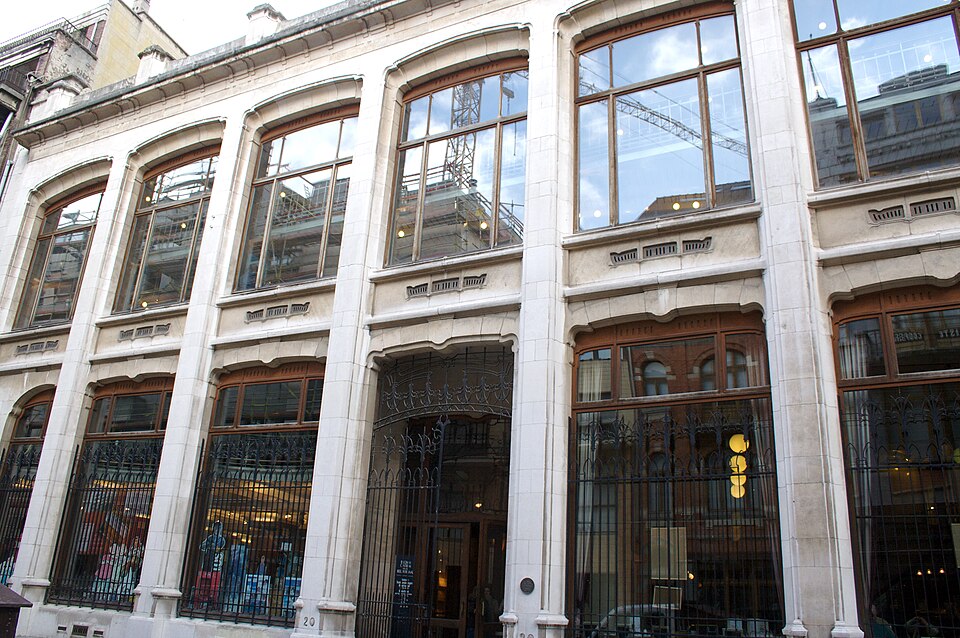
The Comic Art Museum, still widely signposted and registered under its founding name Belgian Comic Strip Center, occupies a department store that was never meant to hold pictures. Victor Horta designed the Waucquez warehouse in 1906 for a textile merchant, and it is the last semi-industrial building of his that survives. Cloth was sold there for seventy years; the shop closed in 1970, the federal state bought the building in 1984 with a museum in mind, and the museum opened on 6 October 1989. The non-profit that runs it was formed in 1984 by French-speaking and Dutch-speaking members, half of them drawn from the comics trade itself, with the twin aims of arguing for comics as a serious medium and keeping Horta's building standing. Those two jobs explain the place better than any single label does: a visitor who came only for Tintin will spend as long looking up at the glass roof and the ironwork of the entrance hall as at the drawings, and a visitor who came for the architecture will find the exhibition floors above it are not a token. The museum reports about 200,000 visitors a year across 4,200 square metres of permanent and temporary exhibitions. Adult admission is EUR 14.00. All museum texts are written in French, Dutch and English.
Checked 2026-08-26 · Source
Five permanent exhibitions carry the building. "The Invention of Comic Strip" covers how the form began and how it is defined; "The Art of Comic Strip" works through the making of a page and the genres European comics have settled into; "A Century of Belgian Comics" explains why a small country became Europe's publishing leader in the mid-twentieth century; "The Awakening of LITTLE NEMO" sends Winsor McCay's character through six countries in a new story written by six authors with Philippe de Pierpont; and "Horta and the Waucquez Warehouse", down in the entrance hall, is about the building itself. Large temporary exhibitions run alongside them and are included in the same ticket, as is the Gallery space. Two reading collections sit under the same roof and are separate from the exhibition route. The reading room holds over 7,000 albums, including translations into more than 40 languages, and is open during museum hours for EUR 0.50, or free with an entrance ticket. The documentation room gives access to a library of more than 60,000 works, consultable on site only, for visitors over 16. There is also the Brasserie Horta, the Slumberland bookshop, and the Marc Sleen House across the street, which a valid museum ticket covers at no extra charge if it is booked at least two days ahead.
Checked 2026-08-26 · Source
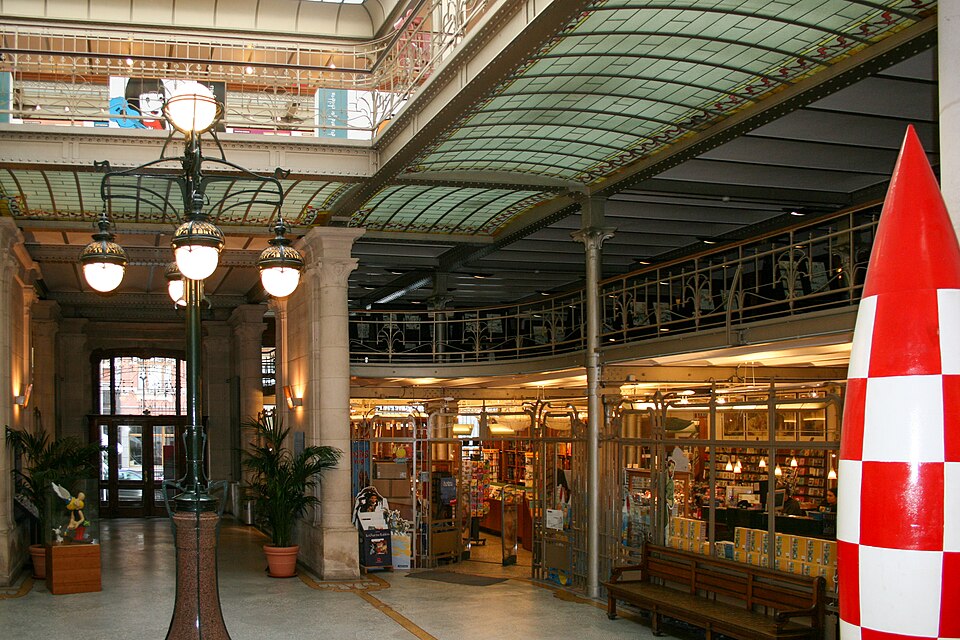
Allow two hours. The museum publishes no suggested visit length of its own, so that figure is this guide's judgement, built from numbers it does publish. The museum's own guided tour of the collection runs one hour and thirty minutes, and a guided tour moves briskly and skips nothing; two hours is that pace with the entrance hall added back, because the hall is half the reason to come and rewards standing still in it. The exhibition area is 4,200 square metres over several floors, and the five permanent displays plus whatever large temporary show is running is more than ninety minutes of honest looking. The hard cap is at the front door rather than at closing time: the last museum tickets are sold at 5.00pm for a 6.00pm close, so an arrival after five is not a short visit but no visit at all. A reader who wants the reading room as well should add whatever they intend to spend sitting down, and treat that as a separate decision from the exhibitions rather than as a few extra minutes; with 7,000 albums on the shelves it expands to fill any time offered it. Families working through the permanent floors with young children should plan closer to two and a half hours.
Checked 2026-08-26
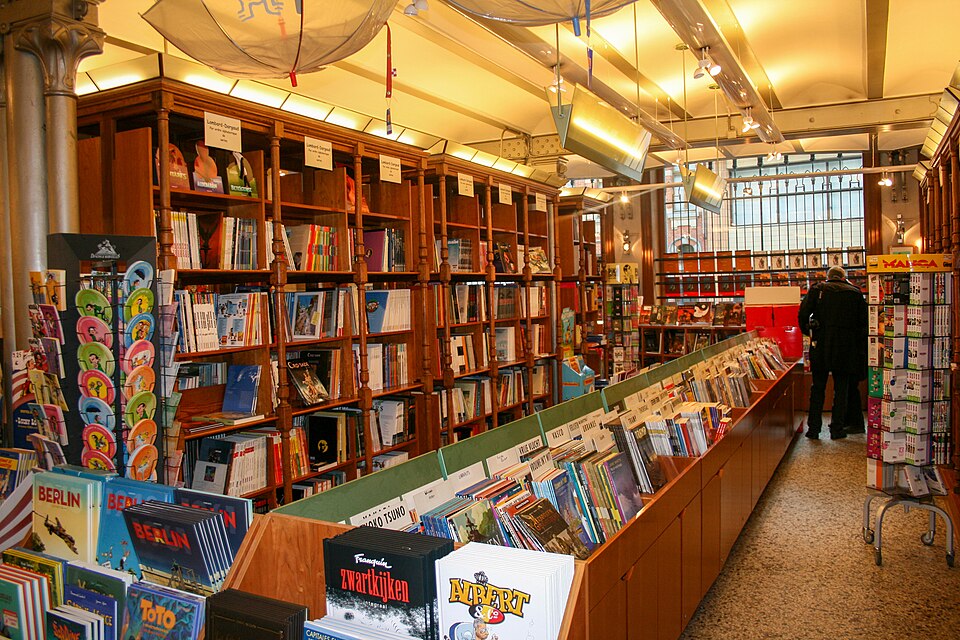
Monday is the closing day, and it is the single most useful thing to know before setting out. The museum, its permanent and temporary exhibitions and the bookshop are open Tuesday to Sunday from 10am to 6pm, with the last museum tickets sold at 5.00pm. The museum's own site carries one seasonal exception to the Monday rule: its footer states that the museum opens on Mondays in July and August, except on 24 and 31 August. The main opening-hours page states the Monday closure without that exception, so a visitor planning a summer Monday should confirm by email or telephone rather than assume. Public holidays are otherwise working days here: the museum states that it opens on holidays except 25 December and 1 January. Two days close early. On 24 December it closes at 4pm with last admission at 3pm, and on 31 December it closes at 5pm with last admission at 4pm. The two library spaces keep shorter hours than the exhibition floors. The reading room runs Tuesday to Sunday from 10.30am to 5.30pm, and the documentation room Tuesday to Saturday over the same span, which means a Sunday visitor gets the reading room but not the documentation room.
Checked 2026-08-26 · Source
One ticket covers the museum, the permanent exhibitions and the temporary exhibitions. Individual prices are EUR 14.00 for adults, EUR 11.00 for visitors aged 65 and over and for those aged 12 to 25, EUR 6.00 for children aged 6 to 11, and free for children under 6. A Belgian teacher card costs EUR 9.00, and a disability card halves the fare: EUR 7.00 for adults, EUR 5.50 for the 12 to 25 and 65-plus rates, EUR 3.00 for children aged 6 to 11 and EUR 4.50 for teachers, with no discount for an accompanying adult. Groups of 15 or more pay EUR 10.00 an adult, EUR 9.00 a senior, EUR 6.00 for school groups aged 12 to 25 and EUR 4.00 for children aged 6 to 11, with one free ticket for every 15 paying visitors; group visits must be booked by email. Booking online is not required, and the museum is explicit that an online ticket is not a fast-lane ticket, because staff scan every ticket at the door either way. MuseumPASSmusées, Brussels Card, Art Nouveau Pass, a 365.be passport, an ICOM card and a press card all admit the holder free, and they queue like everyone else. Tickets are neither exchanged nor refunded once bought.
Checked 2026-08-26 · Source
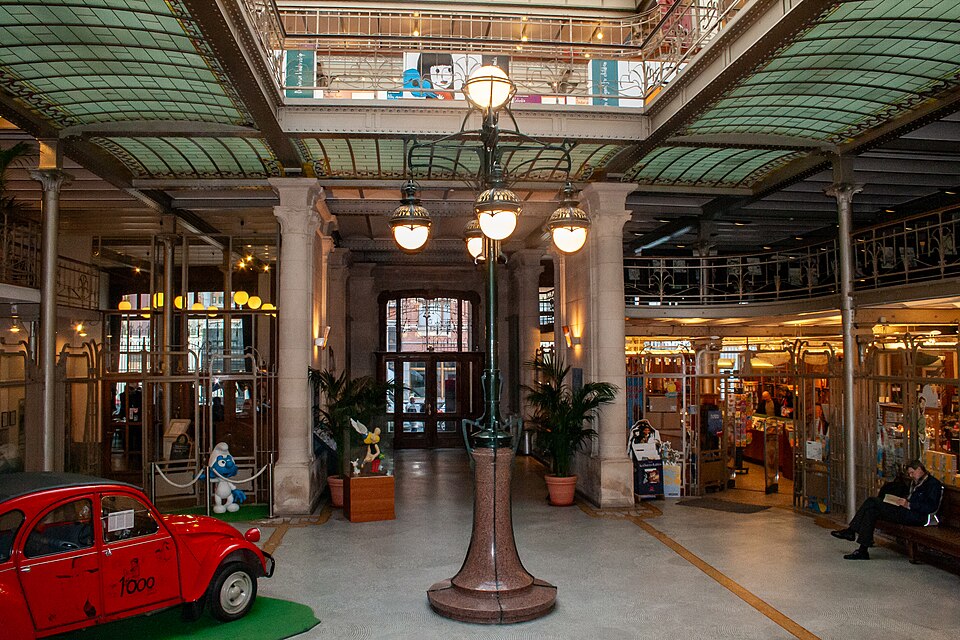
The address is 20 rue des Sables, 1000 Brussels, in the centre of the city near the Grand-Place, the Galeries Saint-Hubert and the Cathedral of Saints Michael and Gudula. No car is needed and none is worth the trouble. The museum states that Gare Centrale and Gare du Nord, the latter of which is where Flixbus and Eurolines coaches stop, are both a comfortable fifteen-minute walk away, and that many public transport stops are close by; it directs visitors to www.stib.be for a door-to-door itinerary using "Brussels, Rue des Sables 20" as the destination. Arriving by Belgian rail from elsewhere in the country is worth planning around: buying a ticket through the museum's own online shop returns a code per ticket that gives a 40 per cent discount on a return journey with the Discovery Ticket. Drivers who insist should use Interparking Passage 44 at Ommegangstraat 16, 150 metres from the door, which the museum recommends for weekdays and notes that parking closer is possible at weekends. Coaches use Boulevard Pacheco. Bicycle parking is directly in front of the museum. Wheelchair users enter through the doorway to the right of the main entrance, via the Brasserie Horta, and reach the central hall and the lift from there.
Checked 2026-08-26 · Source

The 5.00pm last-ticket rule and the Monday closure between them account for most wasted journeys, and neither is negotiable at the desk. After that, the museum's published conditions are worth reading because several are stricter than a visitor might expect. Eating and drinking are forbidden anywhere in the museum except the Brasserie Horta, and picnics are not allowed in the brasserie either. Pets are refused, assistance dogs excepted. Small backpacks and handbags come in; large bags and luggage go to the reception desk or the lockers, with museum staff deciding which is which, and staff may ask to inspect a bag. Part of the museum may be closed at any given time without entitling anyone to a refund, though a notice goes up on the website and at the entrance when a significant area is shut. Two current disruptions are published: the comic library's archives are being relocated, so books with a CNV shelfmark and most periodicals are unavailable from 1 July 2026, and the Brasserie Horta was closed from 30 June to 13 July 2026. Telephones are answered only Tuesday to Friday from 10am to 5pm and the museum asks for email instead. Guided tours need booking at least three weeks ahead.
Checked 2026-08-26 · Source

The museum publishes no photography policy on the pages consulted for this guide, including its practical information section and its general terms and conditions, which set out rules on food, bags and pets but say nothing about cameras. Treat that as unresolved rather than as permission, ask at the reception desk on the way in, and expect the answer to differ between the Horta hall and a temporary exhibition of original artwork, where lenders usually impose their own restrictions. Assume no flash and no tripod anywhere; both are refused as a matter of course in rooms hung with drawings on paper. The picture worth queueing for is not in the exhibitions at all. It is the entrance hall, where Horta's ironwork carries a glass roof over the full width of the building and the staircase gives a clean line from the mezzanine down. That space is daylit, which makes the hour and the weather matter more than any setting: a bright morning throws hard shadows across the tiled floor, while overcast light lands evenly on the metalwork and is easier to work with. The exhibition floors are lit low to protect the paper, so a fast lens or a steady hand is the only thing that helps there.
Checked 2026-08-26
Monday is the museum's closing day and it is open Tuesday to Sunday from 10am to 6pm. The museum's own site carries one exception in its footer: it opens on Mondays in July and August, except on 24 and 31 August. Its main opening-hours page states the Monday closure without naming that exception, so a visitor planning a summer Monday should confirm by email before travelling. The museum opens on public holidays except 25 December and 1 January.
Adults pay EUR 14.00. Visitors aged 65 and over and those aged 12 to 25 pay EUR 11.00, children aged 6 to 11 pay EUR 6.00 and children under 6 enter free. A Belgian teacher card is EUR 9.00 and a disability card halves the fare, which makes the adult rate EUR 7.00. One ticket covers the museum and both the permanent and the temporary exhibitions. Holders of a MuseumPASSmusées, a Brussels Card, an Art Nouveau Pass, a 365.be passport, an ICOM card or a press card enter free.
Allow about two hours. The museum publishes no suggested visit length, so this is a judgement rather than a figure read off its site: its own guided tour of the collection lasts one hour and thirty minutes, and two hours is that pace with time added for the Art Nouveau entrance hall. The exhibition area covers 4,200 square metres. Whatever the plan, arrive before 5.00pm, which is when the last museum tickets are sold.
There are two separate spaces. The reading room holds over 7,000 albums, with translations into more than 40 languages, and costs EUR 0.50 or nothing at all on presentation of an entrance ticket; it opens Tuesday to Sunday from 10.30am to 5.30pm. The documentation room, with more than 60,000 works that may only be consulted on site, costs EUR 1.50 or EUR 12.00 for a ten-day subscription, opens Tuesday to Saturday from 10.30am to 5.30pm, and admits visitors over 16 only. Its archives are being relocated, so CNV-shelfmark books and most periodicals are unavailable from 1 July 2026.
No. The museum is at 20 rue des Sables in central Brussels, near the Grand-Place and the Galeries Saint-Hubert, and it states that both Gare Centrale and Gare du Nord are a comfortable fifteen-minute walk away. It points visitors to www.stib.be for a public transport itinerary. Drivers who do come are pointed to Interparking Passage 44 at Ommegangstraat 16, 150 metres away, recommended for weekdays; coaches park on Boulevard Pacheco and bicycle parking is in front of the building.
Yes. Wheelchair users enter through the doorway to the right of the main entrance, cross the Brasserie Horta to the central hall, and take the lift beside the staircase, which reaches every floor of the museum. Adapted toilets are on the ground floor and a wheelchair can be borrowed at reception against any form of identification. A disability card halves the admission fare, so an adult pays EUR 7.00 instead of EUR 14.00, though the reduction does not extend to an accompanying adult.
Loading the interactive map…
The interactive map could not be loaded.
Last updated:
Source: OpenStreetMap contributors, Wikidata ·