-_Entrance_2.JPG)
4 min walk
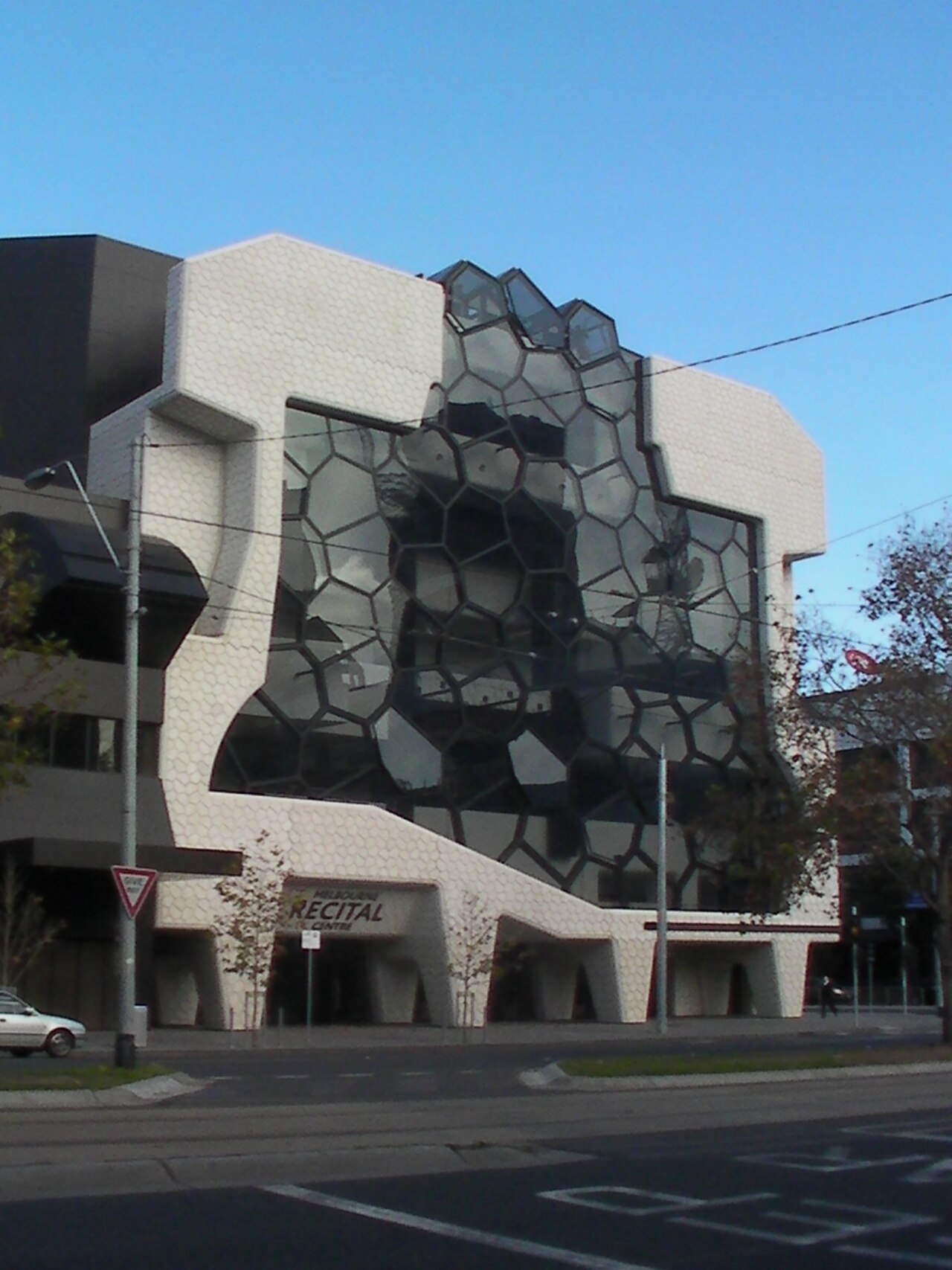
Melbourne Recital Centre
- Must see
- Art and culture venue
Language · 11 published
Art and culture venue · Melbourne

| Monday | Closed |
|---|---|
| Tuesday | 10:00 – 17:00 |
| Wednesday | 10:00 – 17:00 |
| Thursday | 10:00 – 17:00 |
| Friday | 10:00 – 17:00 |
| Saturday | 11:00 – 17:00 |
| Sunday | 11:00 – 17:00 |
Parsed from OpenStreetMap opening hours on 2026-08-26.
The Australian Centre for Contemporary Art is a leading Melbourne institution dedicated to exhibiting and promoting contemporary art from Australia and around the world. Located in the Southbank arts precinct, it occupies a distinctive rust-red building designed by architect Wood Marsh. ACCA serves as a non-collecting gallery, meaning it presents temporary exhibitions rather than maintaining a permanent collection. It focuses on commissioning new works and supporting living artists, positioning itself as a vital platform for experimental and innovative artistic practices. The centre contributes significantly to Melbourne's cultural landscape and international art dialogue.
Checked 2026-08-26
ACCA presents rotating exhibitions of contemporary art across multiple gallery spaces. These exhibitions feature diverse media including painting, sculpture, installation, video, performance, and digital works. The centre commissions artists to create new works specifically for its architectural spaces. Educational programs, artist talks, and public events accompany major exhibitions. The building itself is architecturally notable, with its striking geometric form and industrial aesthetic. A shop offering art publications and related items is typically available. The centre does not hold a permanent collection, so each visit offers entirely different content depending on current programming and curatorial focus.
Checked 2026-08-26
A typical visit to the Australian Centre for Contemporary Art requires approximately one to two hours, depending on the number of exhibitions on display and individual engagement levels. Visitors who attend artist talks, guided tours, or special events should allocate additional time. The compact nature of the gallery spaces allows efficient viewing, though contemporary art often rewards extended contemplation. Those with strong interest in specific artists or themes may spend longer examining individual works. The surrounding Southbank precinct offers numerous dining and cultural options for extending a visit beyond the gallery itself.
Checked 2026-08-26
Visitors should consult official ACCA channels or the Whatson Melbourne website for current opening times before planning a visit. Melbourne's temperate climate allows year-round visits, though indoor venues provide welcome relief during extreme weather. Exhibition openings and special events typically generate increased attendance. Weekday mornings may offer quieter experiences for those seeking contemplative engagement with artworks. School holidays and weekends naturally attract larger audiences. Checking exhibition schedules in advance helps align visits with specific artistic interests or programming of particular appeal. Check the operator's own site for the travel date before relying on a schedule or fare.
Checked 2026-08-26
Many Australian public contemporary art institutions offer free general admission, though special exhibitions may incur charges. Visitors should verify current ticketing arrangements through official ACCA communications or the Whatson Melbourne website. Concession rates for students, seniors, and other eligible categories may apply where fees exist. Membership programs or donation opportunities sometimes support institutional operations. Group bookings and educational visits may require advance arrangement. Any applicable fees contribute directly to exhibition programming and artist support, reflecting the centre's commitment to contemporary art development and public access. Check the operator's own site for the travel date before relying on a schedule or fare.
Checked 2026-08-26
The Australian Centre for Contemporary Art sits in Melbourne's Southbank precinct, accessible by multiple transport options. Flinders Street Station provides nearby rail connection, with walking access across the Yarra River. Tram routes service the St Kilda Road and Southbank area extensively. The site lies within Melbourne's central grid, making it reachable by foot from the CBD and Federation Square. Bicycle parking may be available for cyclists. Limited on-street parking exists in surrounding streets, with commercial parking facilities operating nearby. The riverside location offers pleasant approach routes for pedestrians and contributes to the cultural precinct atmosphere.
Checked 2026-08-26
Contemporary art exhibitions may include content challenging for some visitors, including mature themes, strong language, or provocative imagery. Parental guidance for children is advisable depending on current programming. The building's industrial aesthetic includes hard surfaces and open spaces requiring attention to footing and personal belongings. Crowding occurs during popular exhibitions and events. Photography policies vary by exhibition and individual artwork requirements. Visitors should observe all signage regarding prohibited activities. Accessibility features exist though individual needs may require advance inquiry. The surrounding Southbank area experiences typical urban activity levels, with standard awareness of personal security appropriate for any major city cultural destination.
Checked 2026-08-26
Photography policies at the Australian Centre for Contemporary Art depend on specific exhibition requirements and artist permissions. Some artworks permit photography without restriction, while others prohibit it entirely or limit flash and tripod use. Visitors must observe signage accompanying individual works and follow staff instructions. Copyright considerations protect living artists' intellectual property. Social media sharing may be encouraged for certain exhibitions as promotional support. When permitted, non-flash photography for personal use is typically acceptable. Commercial or professional photography requires advance institutional approval. Respecting restrictions demonstrates consideration for artists and enables continued public access to sensitive or ephemeral contemporary art practices.
Checked 2026-08-26
Many Australian contemporary art institutions offer free general admission. Check the operator's own site for the travel date before relying on a schedule or fare.
Consult official ACCA channels or Whatson Melbourne for current times.
No, ACCA is a non-collecting gallery that presents temporary exhibitions and commissions new works from living artists.
The Australian Centre for Contemporary Art is located in Melbourne's Southbank arts precinct, near the Yarra River.
Typically one to two hours for exhibitions, with additional time for talks, tours, or events.
Policies vary by exhibition and artwork; observe all signage and staff instructions regarding photography permissions.
Loading the interactive map…
The interactive map could not be loaded.


Last updated:
Source: OpenStreetMap contributors, Wikidata ·