.jpg)

3 min walk
Silva Kaputikjan Museum
- Must see
- Museum
Language · 11 published
Museum · Yerevan
Երկրաբանական թանգարան
Reviewed by Elena Voss · SSMTour Travel Editor
| Monday | 10:30 – 17:00 |
|---|---|
| Tuesday | 10:30 – 17:00 |
| Wednesday | 10:30 – 17:00 |
| Thursday | 10:30 – 17:00 |
| Friday | 10:30 – 17:00 |
| Saturday | Closed |
| Sunday | Closed |
Parsed from OpenStreetMap opening hours on 2026-08-26.
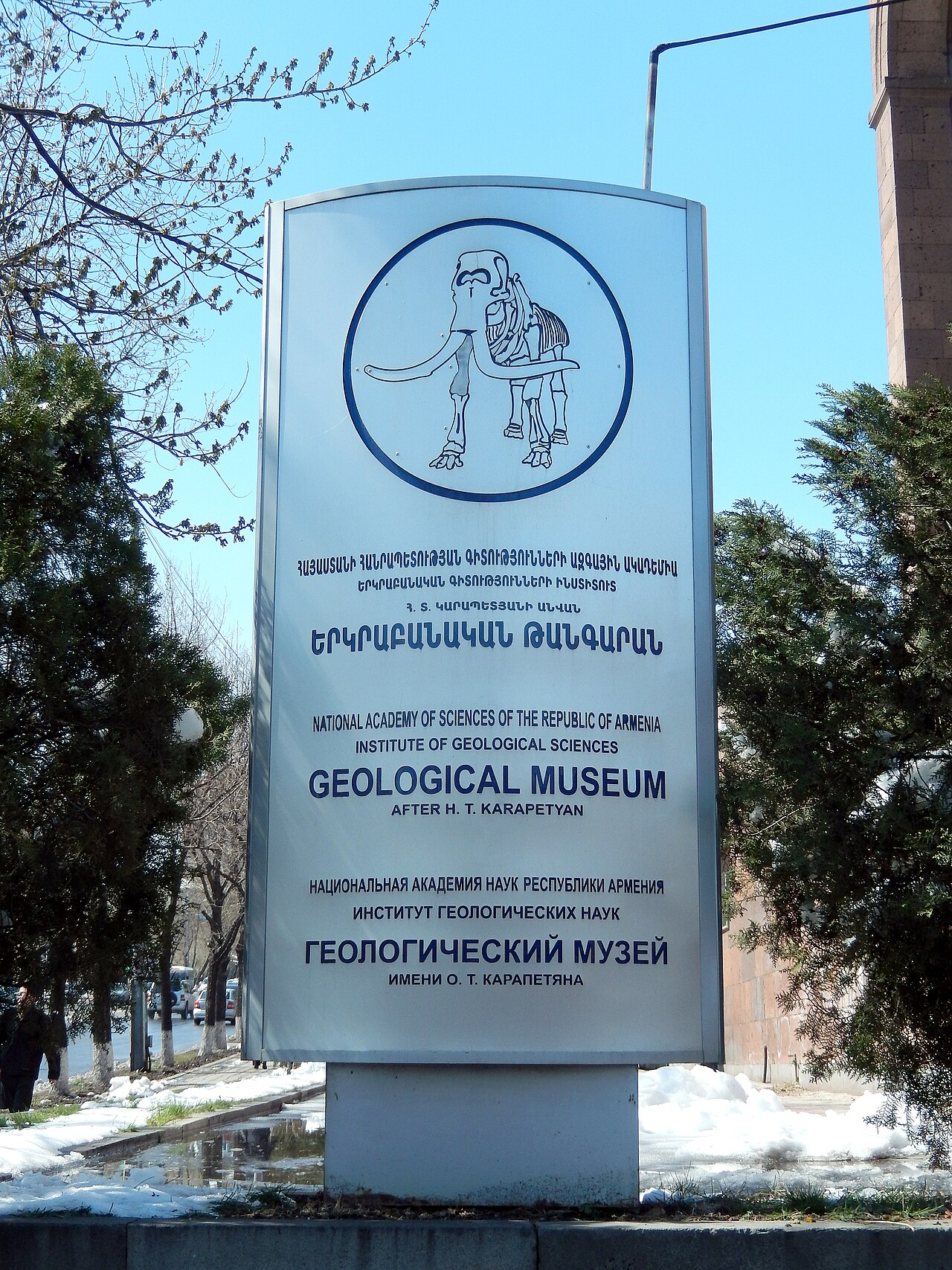
The Geological Museum after H. Karapetyan is a Yerevan museum devoted to geology and earth science. Its collection focuses on minerals, rocks, and fossils connected with Armenia and the surrounding region. The museum offers a specialised alternative to the capital’s art and history venues, giving travellers a closer look at the materials and geological forces that shaped the Armenian landscape. Karapetyan is a scientific museum in Yerevan dedicated to geology and earth sciences. Named after a notable Armenian geologist, the institution preserves and displays geological specimens from Armenia and the broader region. It serves educational and research purposes while remaining accessible to visitors interested in natural history. The museum represents an important repository of geological knowledge within the Armenian capital's cultural landscape, contributing to public understanding of the country's diverse geological heritage and mineral resources.
Checked 2026-08-26 · Source
Expect specimen-based displays rather than rooms arranged like a general history museum. Minerals, rocks, and fossils provide the central visual experience, with the collection relating to Armenia’s geological diversity and natural resources. Examine colour, crystal form, texture, and layering as you move through the displays. The museum suits travellers who enjoy natural history, scientific collections, and the physical story beneath a destination. The museum's collections encompass geological specimens including minerals, rocks, and fossils relevant to Armenian territory. Displays may include samples from local mining operations and natural deposits. The museum probably features educational materials explaining geological processes, stratigraphy, and paleontology.
Checked 2026-08-26 · Source
Plan roughly forty-five minutes to two hours, depending on how closely you study the specimens. A quick visit can cover the principal collection, while geology enthusiasts may spend much longer comparing minerals, rocks, and fossils. Read the labels where possible and pause at displays that connect individual samples with Armenia’s landscape. The museum fits comfortably into a broader Yerevan cultural itinerary. Visitor duration at the Geological Museum after H. Karapetyan depends on individual interest in geological subjects and the depth of exhibits encountered. A typical museum visit for specialized scientific institutions of comparable scale might range from forty-five minutes to two hours. Those with strong backgrounds in geology or mineralogy may spend extended periods examining specimen details. Casual visitors seeking general cultural exposure might complete a walkthrough more quickly. The actual time required cannot be precisely estimated without verified information about gallery size, exhibit density, and available interpretive materials at this specific location.
Checked 2026-08-26 · Source
The museum is a useful indoor stop during Yerevan’s hot summer afternoons or cold winter weather. Choose a time that leaves you unhurried, since small geological specimens reward close attention. Spring and autumn are also convenient seasons for pairing the museum with walks through the city. Build the visit around the collection itself and allow enough time to read, compare, and observe rather than rushing through each display.
Checked 2026-08-26 · Source
The museum is a focused cultural institution where the collection is the reason to enter. Treat the visit as a compact specialist museum experience and carry a practical payment option for a cultural outing. The geological specimens, rather than shopping or entertainment, provide the value of the stop. It is particularly worthwhile for visitors who want a more scientific perspective on Armenia after visiting the city’s major landmarks.
Checked 2026-08-26 · Source
Locate the museum in Yerevan using its full name, including H. Karapetyan, so it is distinguished from other science and natural-history institutions. It works best as part of a planned city route, with enough time reserved for the interior visit. If using a taxi, show the exact museum name and map pin. For a walk, allow extra time for Yerevan’s varied pavements and street crossings.
Checked 2026-08-26 · Source
This is a specialised museum, so the experience is strongest when you enjoy close observation and scientific subject matter. Labels may be more useful to visitors who can read Armenian or Russian, while the specimens remain visually engaging regardless. Move carefully around display cases and keep children close to the exhibits. The collection is better suited to an attentive visit than a fast photo stop between major attractions.
Checked 2026-08-26 · Source
Photograph the colours, crystal shapes, textures, and fossil forms that make the collection visually distinctive. Work slowly around cases so your images do not block other visitors or distract from the displays. Avoid flash or equipment that could disturb the museum environment, and follow any notices inside the galleries. Close details can communicate the collection’s character better than a single wide image of the room.
Checked 2026-08-26 · Source
Its collection includes minerals, rocks, and fossils connected with Armenia and the wider region.
The museum is named after H. Karapetyan, an Armenian geologist associated with the institution’s geological focus.
Allow roughly forty-five minutes to two hours, with longer visits suited to travellers who study specimens in detail.
It is especially suitable for visitors interested in geology, minerals, fossils, natural history, and Armenia’s physical landscape.
No. It is a specialised scientific museum centred on geological specimens rather than a broad chronological history collection.
It adds a scientific perspective on Armenia and complements visits focused on art, architecture, politics, or religious history.
Loading the interactive map…
The interactive map could not be loaded.


Last updated:
Source: OpenStreetMap contributors, Wikidata ·