


3 min walk
Sewall-Belmont House and Museum
- Must see · Heritage site
- Nature site
Language · 1 published
Historic monument · Washington
| Monday | 09:00 – 15:00 |
|---|---|
| Tuesday | 09:00 – 15:00 |
| Wednesday | 09:00 – 15:00 |
| Thursday | 09:00 – 15:00 |
| Friday | 09:00 – 15:00 |
| Saturday | Closed |
| Sunday | Closed |
Parsed from OpenStreetMap opening hours on 2026-08-26.
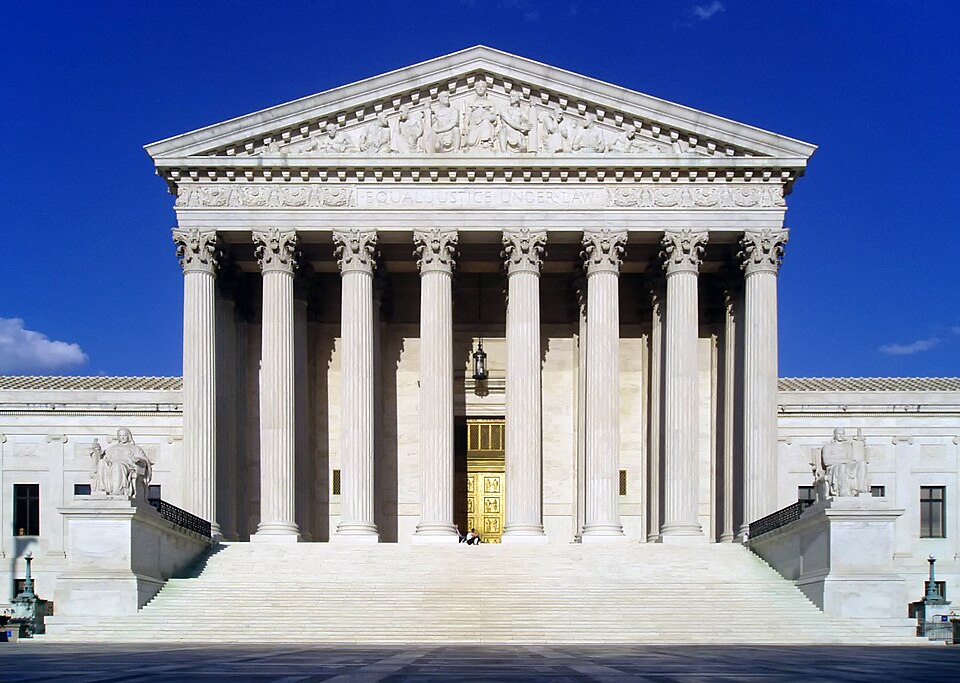
The Supreme Court of the United States is the highest judicial body in the federal judiciary of the United States. Established by Article III of the Constitution, it serves as the final interpreter of federal constitutional law. The building stands on Capitol Hill east of the United States Capitol. Designed by Cass Gilbert in neoclassical style, the marble structure was completed in 1935. The Court hears limited cases, primarily those involving federal law, constitutional questions, and disputes between states. Its decisions shape American law and society.
Checked 2026-08-26
The building contains the courtroom where justices hear oral arguments and deliver opinions. The Great Hall features busts of former chief justices. Visitors may observe the courtroom when court is not in session. The building also houses justices' chambers, the library, and administrative offices. The ground floor contains exhibition spaces with rotating displays about the Court's history and work. The courtroom itself features mahogany benches, marble columns, and ornate ceiling details. Public spaces display historical artifacts related to the Court's function and evolution since 1789.
Checked 2026-08-26

Visitor duration depends on interest level and available access. Self-guided exploration of public exhibition spaces typically requires thirty to sixty minutes. Those wishing to attend oral arguments must plan for extended time due to security screening and seating procedures. The Court does not offer formal guided tours. Visitors should account for potential waiting periods during busy periods or when significant cases draw public attention. Combined visits with nearby Capitol Hill attractions may extend a full day of civic sightseeing in this historic district.
Checked 2026-08-26
Operator-confirmed hours are Not recorded pending review. The Court traditionally follows a yearly term from October through June, with oral arguments typically heard on specific weekdays during this period. Visitors wishing to attend oral arguments should verify current scheduling independently. The building may close for federal holidays, justice-related events, or security considerations. Seasonal weather in Washington varies considerably, with hot humid summers and cold winters. Visitors should consult official sources before planning trips, as access policies may change without advance public notification. Supreme Court of the United States also earns time in a washington dc itinerary because The nation’s highest court and a major Capitol Hill civic landmark. The corrected live Wikipedia page resolves Q11201, matching the exact production name and relation at 8 m from the Wikidata coordinate. Production is publishable. Its value becomes clearer when the stop is compared with the surrounding streets and the other ranked places nearby.
Checked 2026-08-26
Operator-confirmed prices are Not recorded pending review. Admission to the building and exhibition spaces has historically been free of charge. Oral argument seating operates on a first-come basis with public lines forming before sessions. No advance tickets are typically available for general public seating. Special accommodation for certain groups may exist but requires direct verification with Court authorities. Visitors should not rely on third-party vendors claiming to sell access. Any payment requests for standard entry should be treated as fraudulent pending official confirmation.
Checked 2026-08-26
The Supreme Court building sits at One First Street NE, Washington, DC, adjacent to the United States Capitol and Library of Congress. The Capitol South Metro station on the Blue, Orange, and Silver lines provides nearest rail access. Union Station offers regional rail and bus connections within reasonable walking distance. Multiple Metrobus routes serve the Capitol Hill area. Limited street parking exists nearby; commercial garages operate in surrounding blocks. Bicycle racks are available. Walking from the National Mall takes approximately fifteen to twenty minutes past the Capitol grounds.
Checked 2026-08-26
Security screening is mandatory for all entrants with airport-style procedures prohibited items include weapons and hazardous materials. Oral argument seating is extremely limited and lines form well before sessions begin. The Court maintains strict decorum; disruptive behavior results in removal. Photography is restricted in certain areas. Visitors should dress appropriately for a federal institution. Food and drink are generally prohibited beyond designated areas. Large bags may face restrictions. Construction or security events occasionally affect access routes. Cell phones must be silenced; active use may be prohibited in proceedings.
Checked 2026-08-26

Photography policies vary by location within the building. The Court generally prohibits photography in the courtroom at all times. Exhibition spaces and the Great Hall may permit photography but visitors should verify current rules upon entry. Flash photography and tripods are typically restricted throughout. Video recording faces stricter limitations than still photography. Visitors should observe posted signage and staff instructions. For commercial photography or media requests, advance authorization from Court Public Information Office is required. Visitors seeking definitive guidance should contact authorities before bringing specialized equipment.
Checked 2026-08-26
Members of the public may attend oral arguments when the Court is in session, typically October through June. Seating is limited and available on a first-come basis. Lines form early, particularly for high-profile cases. Visitors should verify current argument schedules through official Court sources before planning attendance.
The Supreme Court does not offer formal guided tours for the general public. Visitors may explore public exhibition spaces and the Great Hall independently. Docent-led programs for educational groups may exist but require advance arrangement directly with Court education staff. Self-guided materials may be available at visitor entry points.
Not recorded. Visitors should not assume availability of commercial services within the building. The surrounding Capitol Hill neighborhood offers dining and retail options. The Library of Congress and Capitol Visitor Center nearby have established visitor amenities that may supplement a Supreme Court visit.
The building contains elevators and accessible routes. Visitors requiring specific accommodations should contact the Court in advance to confirm available services. Sign language interpretation or other assistance for oral arguments may require advance request. Entry procedures accommodate visitors with disabilities, though individual needs vary.
No. Justices' chambers, conference rooms, and administrative offices are not open to public visitation under standard circumstances. Only designated public spaces are accessible during normal visiting hours. Private areas remain restricted to maintain Court operations and judicial security protocols.
Consult the official Supreme Court website or telephone the Public Information Office directly. Closure may occur for federal holidays, maintenance, security events, or unforeseen circumstances. Do not rely solely on third-party sources or prior visit experience, as operational status changes without guaranteed advance notification.
Loading the interactive map…
The interactive map could not be loaded.
Last updated:
Source: OpenStreetMap contributors, Wikidata ·