.jpg)
.jpg)
.jpg)


6 min walk
National Postal Museum
- Must see
- Museum
Language · 1 published
Historic monument · Washington
Japanese American Memorial
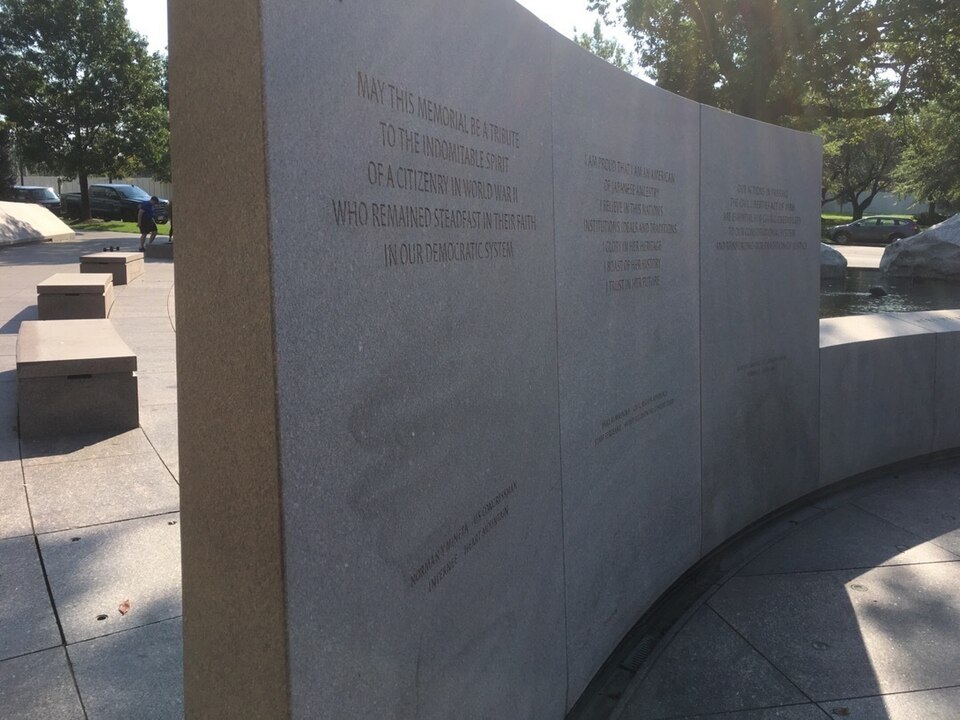
The Japanese American Memorial to Patriotism During World War II is a national memorial in Washington, D.C. It honors the loyalty and sacrifice of Japanese Americans who served in the United States Armed Forces during World War II, as well as those who endured wartime incarceration in internment camps. The memorial stands as a testament to patriotism demonstrated under extraordinary circumstances. It serves as a permanent reminder of a difficult chapter in American history when citizens faced discrimination and loss of civil liberties despite their allegiance to the nation.
Checked 2026-08-26
The memorial features sculptural and inscribed elements designed to convey its historical significance. Central to the site is a bronze sculpture of two cranes entangled in barbed wire, symbolizing both freedom and confinement. Granite walls bear inscriptions including the names of Japanese American military units and individuals who served. The memorial incorporates quotes and historical text that document the experience of wartime incarceration and military service. Water elements and landscaping contribute to the contemplative atmosphere appropriate for reflection on this complex history.
Checked 2026-08-26

Visitors typically spend approximately thirty to sixty minutes at the memorial. The compact site allows for thorough examination of inscriptions and sculptures without extensive time commitment. Those with particular interest in Japanese American history, military service records, or civil liberties issues may wish to allocate additional time for careful reading of all textual elements. The memorial suits both brief stops and extended contemplation depending on individual engagement with the historical content. No guided tours or interpretive programs are indicated in available sources.
Checked 2026-08-26
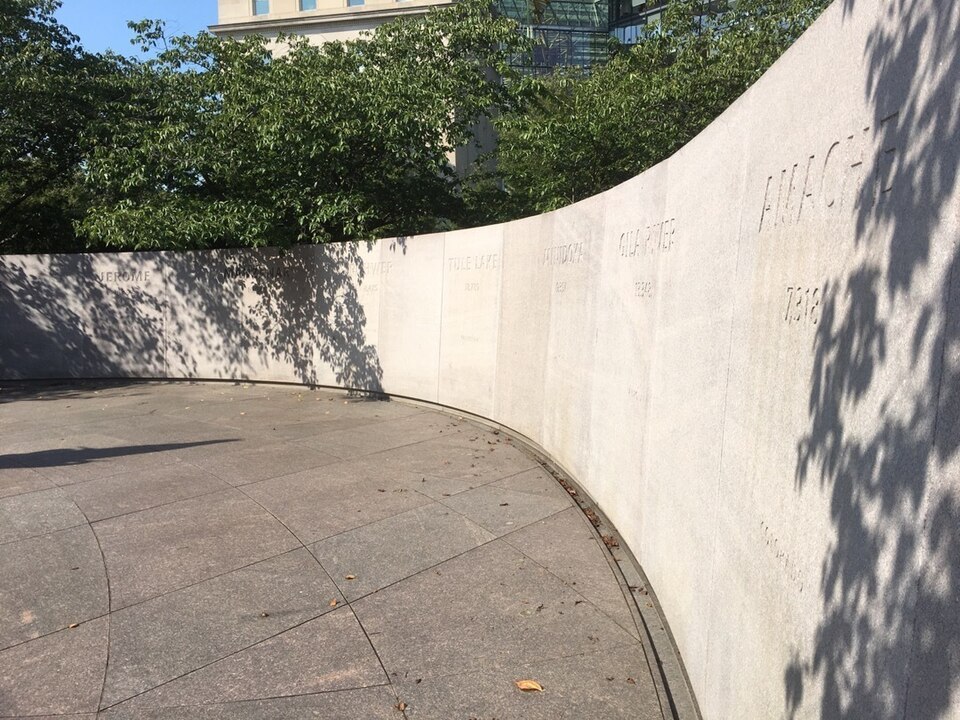
Operator-confirmed hours are Not recorded pending review. The memorial occupies an outdoor public space, suggesting potential accessibility during standard daylight periods. Weather conditions in Washington, D.C. vary considerably across seasons, with hot humid summers and cold winters. Visitors should consider personal comfort regarding temperature and precipitation when planning attendance. Spring and autumn generally offer moderate conditions favorable to outdoor memorial sites. Evening visits may be possible though lighting conditions for reading inscriptions would diminish. Seasonal foliage changes affect the visual context of the memorial surroundings.
Checked 2026-08-26
Operator-confirmed prices are Not recorded pending review. National memorials typically operate without admission fees, though this cannot be confirmed for this specific site without verified current information. Visitors should not assume payment requirements or absence thereof. No advance reservation systems or timed entry procedures are documented in available sources. Group visit arrangements, if desired, would require direct inquiry with managing authorities. Any potential changes to access policies would need verification through official channels rather than general assumptions about federal memorial practices. Japanese American Memorial to Patriotism During World War II also earns time in a washington dc itinerary because The national memorial to Japanese American wartime service and incarceration. Live Wikipedia resolved Q1967392; its coordinate is 16 m from the unique production POI. Its value becomes clearer when the stop is compared with the surrounding streets and the other ranked places nearby.
Checked 2026-08-26

The memorial occupies a location near the United States Capitol complex in Washington, D.C. The city's public transportation system, including Metrorail and Metrobus services, provides access to the general Capitol Hill area. Union Station serves as a nearby multimodal transit hub. Walking from surrounding government buildings and museums is feasible given central location. Street parking in this district faces heavy demand and regulatory restrictions. Visitors unfamiliar with Washington's layout should consult current transit schedules and walking directions. Bicycle sharing systems operate in the broader downtown area.
Checked 2026-08-26

The memorial occupies an urban environment with standard city safety considerations. Visitors should remain aware of surroundings, particularly during hours of reduced pedestrian activity. Weather exposure requires appropriate preparation as the site lacks substantial covered areas. Inscription readability varies with lighting conditions and angle of sun. Some historical content addresses traumatic experiences including incarceration and racial discrimination, which may affect visitors personally connected to these events. Physical accessibility features are not documented in available sources. Nearby government buildings may affect pedestrian flow and security presence in the area.
Checked 2026-08-26

Photography policies are not explicitly documented in available sources. General practice at national memorials typically permits personal photography without restriction, though this cannot be confirmed for this specific site. Commercial or professional photography may require permits through managing authorities. Respectful conduct consistent with memorial dignity should guide all image-making. The bronze sculpture and inscribed walls offer primary photographic subjects. Optimal natural lighting occurs during morning and late afternoon hours. Night photography possibilities depend on site illumination and access hours. Drone operation would fall under federal aviation and National Park Service regulations.
Checked 2026-08-26
The memorial is an outdoor installation with sculptural and inscribed elements in an open-air setting.
No reservation requirement is documented in available sources.
Guided tours are not indicated in available sources.
Accessibility features are not documented in available sources.
No gift shop or visitor center is indicated in available sources.
On-site restroom facilities are not documented in available sources.
Loading the interactive map…
The interactive map could not be loaded.
Last updated:
Source: OpenStreetMap contributors, Wikidata ·