


3 min walk
National World War I Memorial (Washington, D.C.)
- Notable
- Historic monument
Language · 1 published
Art and culture venue · Washington
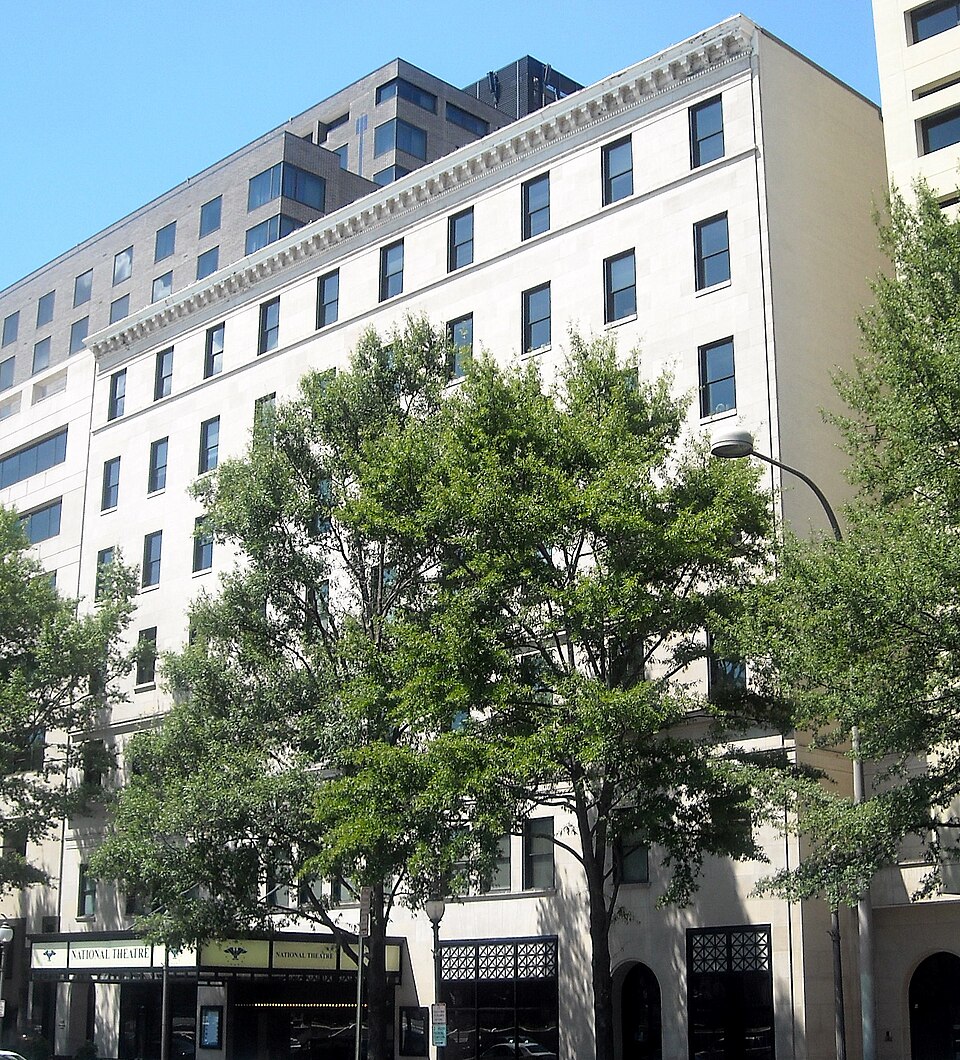
The National Theatre is a historic performing arts venue located in downtown Washington, D.C. Established in 1835, it is one of the oldest continuously operating theatres in the United States. The theatre serves as a major Broadway touring venue, hosting national touring productions of major theatrical shows. It occupies a prominent position in the city's Penn Quarter neighborhood, near other cultural institutions. The building has undergone several reconstructions while maintaining its identity as a landmark entertainment destination. Its long history reflects the evolution of American theatre architecture and performance culture over nearly two centuries of operation.
Checked 2026-08-26
The National Theatre contains a traditional proscenium-arch auditorium designed for large-scale theatrical productions. The interior accommodates orchestra seating, mezzanine, and balcony levels typical of historic American theatres. Stage facilities support Broadway touring productions with full technical capabilities. Public areas include lobbies for audience gathering and concession services. The venue maintains accessibility features for patrons with mobility needs. Restroom facilities serve multiple levels of the house. The architectural details reflect periods of renovation while preserving the character of a major nineteenth-century-founded theatre. Backstage areas support touring company requirements for loading, dressing rooms, and rehearsal space.
Checked 2026-08-26
The duration of a visit to the National Theatre depends entirely on the specific production attended. Standard Broadway touring musicals typically run approximately two and a half hours including one intermission. Plays generally range from ninety minutes to two and a half hours depending on the work. Visitors should consult individual production information for precise running times. Arrival thirty to forty-five minutes before curtain allows time for security screening, ticket collection, and finding seats. The theatre's downtown location permits combining attendance with nearby dining before or after performances, extending the overall evening experience substantially.
Checked 2026-08-26

The National Theatre hosts performances throughout the year with schedules determined by individual touring productions. Matinee and evening performances follow patterns typical for Broadway touring schedules, with variations by production. Seasonal programming changes as new shows enter the touring circuit. Operator-confirmed hours are Not recorded pending review. Visitors should verify specific performance dates and times through official channels before planning travel. The theatre's downtown location means performances may coincide with weekday rush periods or weekend tourist traffic. Advance planning is advisable given the venue's popularity and the limited engagement nature of touring productions.
Checked 2026-08-26
The National Theatre sells tickets for individual productions through its official box office and authorized ticketing partners. Pricing varies by production, seating location, and demand factors typical for major touring theatrical presentations. Discount programs may be available for select groups or performances, though specific eligibility and availability fluctuate. Operator-confirmed prices are Not recorded pending review. Visitors should purchase only through authorized sellers to avoid fraudulent tickets. Group sales may be available for larger parties. Ticket policies regarding exchanges, refunds, and transferability are set by the presenting production and should be verified at time of purchase.
Checked 2026-08-26

The National Theatre occupies a downtown Washington, D.C. location accessible by multiple transportation modes. The Metro rapid transit system serves the area through nearby stations on multiple lines. Multiple bus routes operate in the surrounding street grid. The theatre sits within walking distance of the National Mall and other central attractions. Driving visitors face typical downtown parking constraints with commercial garages and street parking as available options. Bicycle infrastructure exists in the area. The central location makes it feasible to combine theatre attendance with daytime sightseeing at nearby museums and monuments, reducing the need for separate trips.
Checked 2026-08-26
Visitors should arrive with adequate time before curtain to complete security screening procedures now standard at major venues. Bag policies may apply and should be verified in advance. The historic building contains stairs to all seating levels; elevator access should be confirmed if needed. Downtown location means street activity varies by time of day and surrounding events. Weather conditions affect walking access from parking or transit. Mobile phone use is prohibited during performances. Late seating may be restricted to designated intervals to minimize disruption. Personal belongings should be secured in crowded lobby conditions during intermissions and exits.
Checked 2026-08-26

Photography and recording policies at the National Theatre are determined by individual production requirements and general theatrical practice. Unauthorized photography, video recording, and audio recording are typically prohibited during performances to protect intellectual property and prevent audience distraction. This restriction generally includes phone screens visible to other patrons. Pre-show and post-show photography in public lobby areas may be permitted at management discretion. Specific productions may have additional restrictions or occasional exceptions for designated events. Visitors should observe all posted instructions and staff directions regarding electronic devices. Flash photography is almost universally prohibited due to performer safety and audience experience concerns.
Checked 2026-08-26
No, this is a separate historic theatre in Washington, D.C., founded in 1835, unrelated to the British National Theatre.
The venue primarily hosts touring Broadway productions rather than maintaining a resident producing company.
The theatre was founded in 1835, though the physical structure has been rebuilt multiple times.
Concession policies vary by production; visitors should check specific restrictions for their attended performance.
Accessibility features exist, but visitors with specific mobility needs should contact the venue directly for accommodation details.
Public access to interior spaces is generally limited to ticket holders during performance times.
Loading the interactive map…
The interactive map could not be loaded.
Last updated:
Source: OpenStreetMap contributors, Wikidata ·