Smart Self-Managed Tours

City guide · United Kingdom

Glasgow

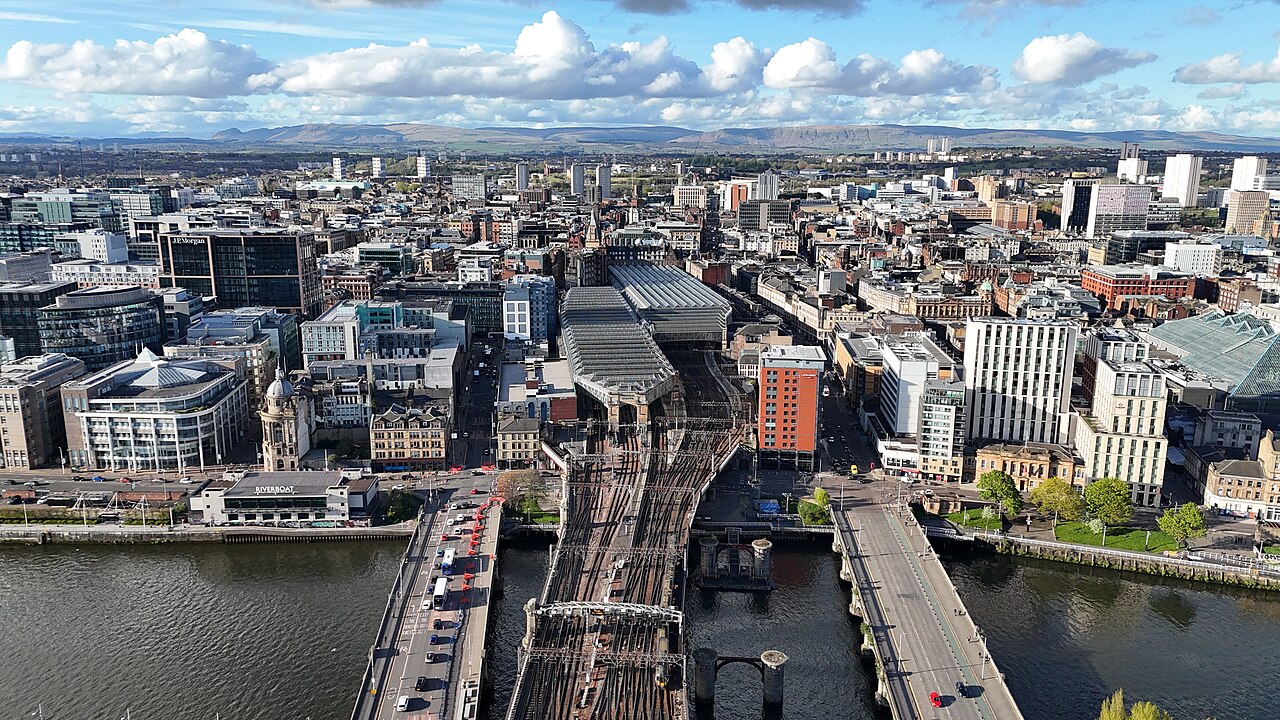
A photograph of Glasgow
Photograph · 瑞丽江的河水 · CC BY-SA 4.0

Glasgow is a compact central city with major visitor districts stretching west along the River Clyde and university corridor. The city centre and Merchant City are walkable, while the West End, Riverside Museum and Southside are better reached by subway, train or bus. Two main railway stations serve different directions. Plan the central core and West End as separate blocks rather than walking every transfer.

Practical information

Language spoken
English; Welsh is official in Wales
National practical orientation; regional and minority languages may also be used
Dialling code
+44
International calling code; local area and mobile prefixes still apply
Currency
Pound sterling (GBP)
Use the official local currency; card acceptance varies by place
Emergency number
999 or 112
Use only for an emergency; tourist assistance may use a separate number
Plug type
Type G · 230 V
Check that chargers support the recorded voltage before using an adapter
Tap water
Safe from the mains
Public water suppliers regulate mains drinking water; use cold mains taps

Planning a visit

Suggested stay
2-3 days
Getting around
Walking, Subway, train and bus
  1. January: seasonal closure recorded
  2. February: seasonal closure recorded
  3. March: seasonal closure recorded
  4. April: seasonal closure recorded
  5. May: seasonal closure recorded
  6. June: seasonal closure recorded
  7. July: seasonal closure recorded
  8. August: no seasonality data recorded — this month
  9. September: seasonal closure recorded
  10. October: seasonal closure recorded
  11. November: seasonal closure recorded
  12. December: seasonal closure recorded

Top things to see

Ranked by importance — sitelinks, pageviews and heritage status, not editor preference.

  1. Mackintosh Building
    02 45 min

    Mackintosh Building

    The Mackintosh Building is a landmark structure in Glasgow, Scotland, deeply associated with the renowned architect and designer Charles Rennie Mackintosh. It forms part of the Glasgow School of Art campus, situated in the city centre.

    • Must see
    • Historic monument
  2. The Lighthouse
    03 45 min

    The Lighthouse

    The Lighthouse is Scotland's Centre for Design and Architecture, housed in a distinctive building in Glasgow city centre. It occupies the former Glasgow Herald newspaper offices, a structure designed by Charles Rennie Mackintosh in 1895.

    • Must see
    • Historic monument
  3. Clydeside distillery
    04 45 min

    Clydeside distillery

    The Clydeside Distillery is a whisky distillery located on the riverfront in Glasgow. It operates as a working distillery with visitor facilities, situated near the historic Queen's Dock area.

    • Must see
    • Historic monument
  4. Finnieston Crane
    05 45 min

    Finnieston Crane

    The Finnieston Crane is a disused giant cantilever crane standing on the north bank of the River Clyde in Glasgow, Scotland.

    • Must see
    • Historic monument
  5. Centre for Contemporary Arts
    06 45 min

    Centre for Contemporary Arts

    The Centre for Contemporary Arts is a Glasgow cultural venue dedicated to contemporary art, film, and music. It operates as a hub for creative production and public engagement with experimental and interdisciplinary work.

    • Must see
    • Historic monument
  6. Bothwell Castle
    07 45 min

    Bothwell Castle

    Bothwell Castle stands as a substantial medieval ruin on the banks of the River Clyde.

    • Must see
    • Historic monument
  7. Crookston Castle
    08 45 min

    Crookston Castle

    Crookston Castle is a medieval ruin located in Glasgow, Scotland. It stands as one of the city's surviving historic fortifications, offering visitors a tangible connection to Scotland's architectural heritage.

    • Must see
    • Historic monument
  8. Antonine Wall
    10 45 min

    Antonine Wall

    The Antonine Wall is a Roman frontier fortification stretching across Scotland's Central Belt. Constructed around 142 AD under Emperor Antoninus Pius, it represents the northwesternmost boundary of the Roman Empire.

    • Must see
    • Historic monument
  9. Elder Park
    11 45 min

    Elder Park

    Elder Park is a public park in Glasgow, Scotland. It was established in the nineteenth century through a bequest from the Elder family, prominent local shipbuilders.

    • Must see
    • Historic monument
  10. Doulton Fountain, Glasgow Green
    12 45 min

    Doulton Fountain, Glasgow Green

    The Doulton Fountain stands in Glasgow Green as the largest terracotta fountain in the world. Sir Henry Doulton donated this monumental structure to the city in 1888 to commemorate Queen Victoria's Golden Jubilee.

    • Must see
    • Historic monument
  11. Provan Hall
    13 45 min

    Provan Hall

    Provan Hall is a historic building situated in Glasgow, Scotland. It represents an important part of the city's architectural heritage and stands as a notable landmark within the urban landscape.

    • Must see
    • Historic monument
  12. Bearsden Roman Bath House
    14 45 min

    Bearsden Roman Bath House

    The Bearsden Roman Bath House is an archaeological site in Glasgow, Scotland, preserving remains of a Roman bathing complex associated with the Antonine Wall frontier system.

    • Must see
    • Historic monument
  13. Castlehill Roman fort
    15 45 min

    Castlehill Roman fort

    Castlehill Roman fort, known locally as Castlehill Fort, is an archaeological site in Glasgow representing Roman military presence in Scotland. The fort belongs to the broader network of Roman installations constructed during campaigns to control northern Britain.

    • Must see
    • Historic monument
  14. Haggs Castle
    18 45 min

    Haggs Castle

    Haggs Castle is a historic tower house in Glasgow, Scotland. The structure represents a type of fortified residence common in Scotland from the medieval period through the early modern era.

    • High
    • Historic monument
  15. Bedlay Castle
    19 45 min

    Bedlay Castle

    Bedlay Castle is a historic tower house situated near Glasgow in North Lanarkshire, Scotland. The structure dates to the late sixteenth century and represents Scottish Renaissance domestic architecture.

    • High
    • Historic monument
  16. Cathcart Castle
    20 45 min

    Cathcart Castle

    Cathcart Castle is a historic site in Glasgow, Scotland. The structure represents part of the city's medieval architectural heritage, situated in the Cathcart area of the city.

    • High
    • Historic monument
  17. Gilbertfield Castle
    23 45 min

    Gilbertfield Castle

    Gilbertfield Castle is a historic tower house situated in the Glasgow area. The structure represents a significant example of Scottish defensive architecture from earlier centuries.

    • High
    • Historic monument
  18. Crossbasket
    26 45 min

    Crossbasket

    Crossbasket Castle is a historic country house situated in the suburban landscape of Greater Glasgow, within South Lanarkshire's boundaries near the town of Blantyre. The building represents Scottish baronial architecture, characterised by its tower house elements and Victorian-era additions.

    • High
    • Historic monument

Source: OpenStreetMap contributors, Wikidata ·

How the city is laid out

The city centre is a regular street grid between Glasgow Central and Queen Street stations, with Merchant City immediately east. The River Clyde forms the southern edge of the core and leads west toward the SEC and Riverside Museum. The West End clusters around the University of Glasgow, Kelvingrove and Byres Road. South of the river, Pollok Country Park and the Burrell Collection form another distinct outing. The compact Subway loop links the centre, West End and parts of the Southside.

Checked 2026-08-26

Getting around

Walk through the city centre and Merchant City, then use the Subway, suburban trains or buses for the West End and Southside. Visit Glasgow identifies the Subway as a simple link among the centre, West End and south of the river, while rail reaches a much wider Greater Glasgow area. Central and Queen Street stations are separate but close enough to connect on foot. Check the operator journey planner before combining rail and Subway legs.

Checked 2026-08-26

Common questions

How many days does Glasgow need?

Two to three days cover the principal districts. Use one day for the city centre and Merchant City, another for the West End, and add a third for the Southside or Clyde waterfront.

When is the best time to visit Glasgow?

May through September provides longer daylight for architecture, parks and river routes. Rain is possible in every season, so museums work well as flexible anchors rather than fixed weather bets.

Is Glasgow easy to explore on foot?

The city centre and Merchant City are easy to walk. The West End, Southside and farther Clyde attractions are better linked by Subway, train or bus.

What does the Glasgow Subway connect?

The circular Subway links the city centre with the West End and parts of the Southside. It is useful for district-to-district travel but does not replace suburban rail or buses for every attraction.

Which station should visitors use in Glasgow?

Glasgow Central mainly serves routes south and west, while Queen Street mainly serves routes north and east. They are separate stations, so confirm the departure point before planning a connection.

Turn this list into a plan

Set your days, your pace and the hours you actually want to be out. The planner works around closing days and travel time, and leaves room to eat.

Plan Glasgow