


.jpg)
.jpg)
1 min walk
Calton Hill
- Must see
- Nature site
Language · 1 published
Historic monument · Edinburgh
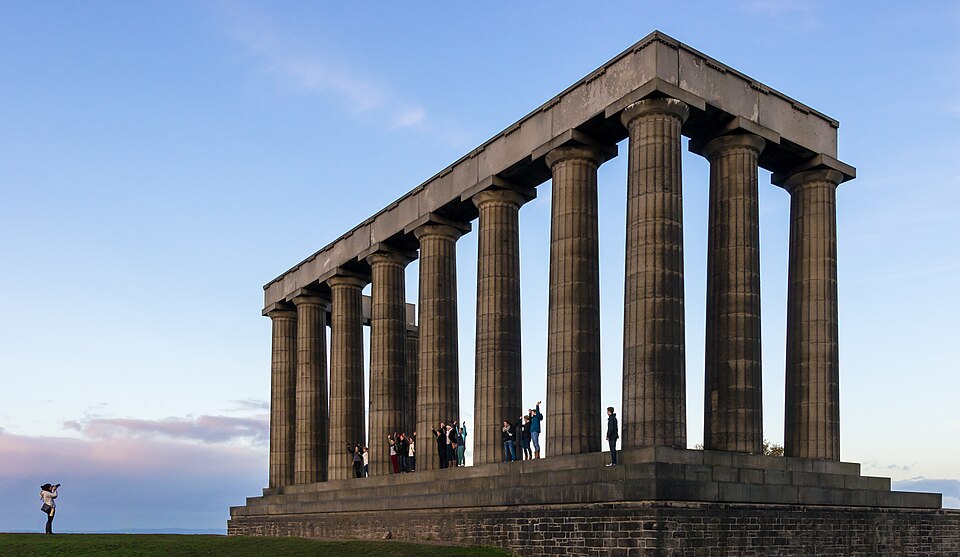
The National Monument of Scotland is an unfinished memorial on Calton Hill in Edinburgh. Begun in 1826, it was intended to commemorate Scottish soldiers who died in the Napoleonic Wars. The design was modelled on the Parthenon in Athens. Construction halted in 1829 when funds were exhausted, leaving only a partial colonnade. The monument stands prominently on the hilltop, visible across the city. Its incomplete state has earned it nicknames including 'Scotland's Disgrace' and 'Edinburgh's Folly'. The structure remains a significant landmark and subject of architectural and historical interest despite never achieving its original purpose.
Checked 2026-08-26
The National Monument of Scotland has no interior spaces accessible to visitors. It consists solely of an exposed stone colonnade with no roof, walls, or enclosed areas. Visitors may walk around and between the columns on the exterior platform. There are no exhibitions, displays, or facilities within the structure. The monument offers open views across Edinburgh and the surrounding landscape from its elevated position on Calton Hill. Visitors should treat the site as an outdoor architectural ruin rather than a building with internal features or amenities to explore.
Checked 2026-08-26

A visit to the National Monument of Scotland typically requires between fifteen and thirty minutes. This duration allows for circumnavigating the structure, observing the columns and stonework, and appreciating the panoramic views from Calton Hill. The monument forms part of a broader Calton Hill experience that may include other nearby structures and viewpoints. Visitors often combine this stop with exploration of the wider hill area. No queues or entry procedures affect timing. Weather conditions may influence how long visitors choose to remain exposed on the hilltop.
Checked 2026-08-26
The National Monument of Scotland stands in an open, exposed location on Calton Hill with no formal access restrictions or gates. Visitor judgement should determine suitable conditions. The hilltop position means strong winds and rain are common experiences. Clear days offer superior visibility for views across Edinburgh. Sunrise and sunset provide atmospheric lighting for the stone structure. Operator-confirmed hours are Not recorded pending review. The monument lacks shelter, making adverse weather potentially uncomfortable. Summer months generally bring milder conditions, though Scottish weather remains unpredictable throughout the year. Early mornings tend to be less crowded.
Checked 2026-08-26
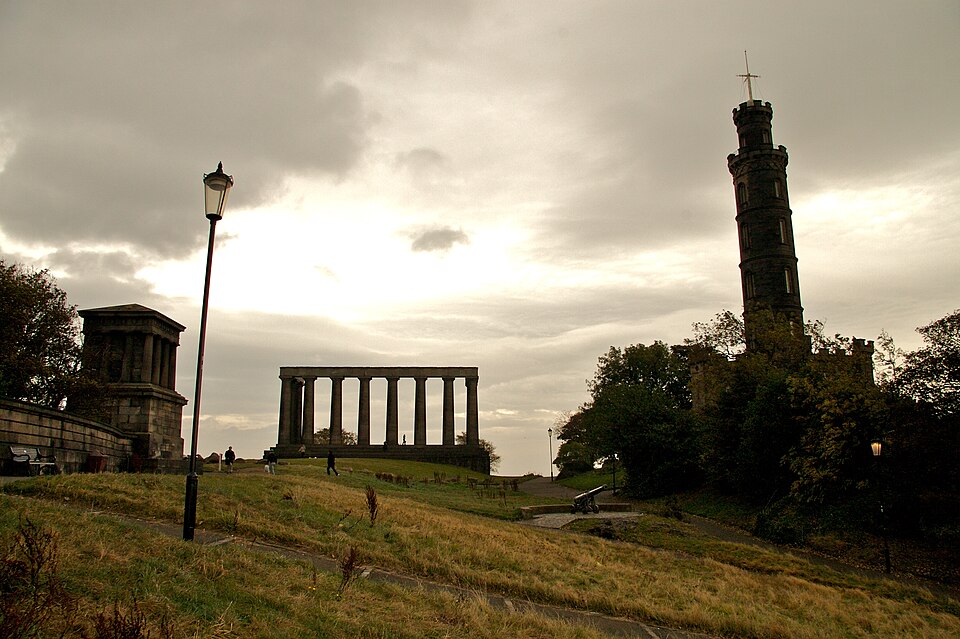
The National Monument of Scotland imposes no admission charge for access. No ticket office, booking system, or payment mechanism exists at the site. Visitors approach freely from the surrounding Calton Hill area. No guided tours or special access arrangements are operated from the monument itself. Operator-confirmed prices are Not recorded pending review. Any future changes to access arrangements would require verification from official sources. Visitors should be aware that while the monument is free, nearby parking or transport to Calton Hill may involve separate costs managed by other entities.
Checked 2026-08-26

Calton Hill lies east of Edinburgh's New Town, accessible on foot from the city centre. The most common approach ascends steps from Regent Road or follows gentler paths from nearby streets. The hill is within walking distance of Waverley railway station and the eastern end of Princes Street. Several bus routes serve adjacent roads. No dedicated car park exists at the summit. Visitor judgement should assess physical fitness for the uphill walk, particularly via the stair routes. The monument occupies the highest visible point once on the hill, making navigation straightforward.
Checked 2026-08-26
The National Monument of Scotland presents several considerations for visitors. The incomplete structure has no safety barriers at edges or between columns. Stone surfaces may be slippery when wet. The exposed hilltop location amplifies weather hazards including sudden wind gusts. No staff, lighting, or emergency facilities are present at the monument. Climbing on the structure is not advisable given its unfinished state and weathered stonework. Visitor judgement must govern behaviour. The surrounding Calton Hill area includes other monuments with their own conditions. Appropriate footwear and weather-appropriate clothing are strongly recommended for all visits.
Checked 2026-08-26
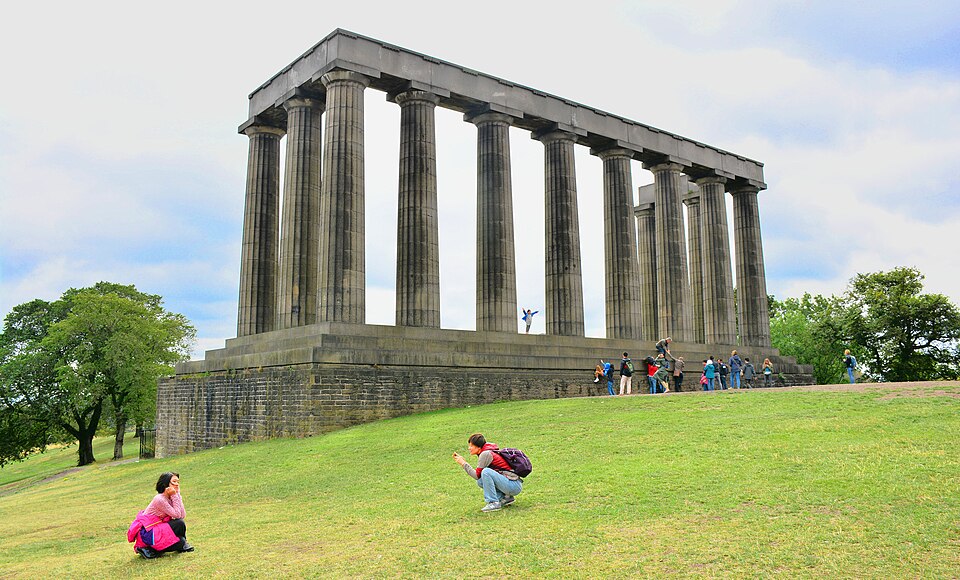
The National Monument of Scotland offers extensive photography opportunities from multiple angles. The colonnade provides classical architectural compositions against sky or city backdrops. The elevated position enables shots incorporating Edinburgh's skyline, Arthur's Seat, and the Firth of Forth. Early morning and late afternoon light enhance the stone texture dramatically. No restrictions on photography are evident. Tripods may be practical given the open space, though visitor judgement should respect other visitors' movement around the structure. The incomplete state creates unique framing possibilities through the absent roof and walls. Weather conditions significantly affect photographic outcomes.
Checked 2026-08-26
Construction stopped in 1829 when the private subscription fund was exhausted. The project relied on voluntary contributions rather than government funding, and insufficient money remained to complete the full Parthenon-inspired design.
Visitor judgement should discourage climbing. The structure is unfinished, weathered, and lacks safety features. No staff supervise behaviour. Responsible visitors observe from the ground level and surrounding platform.
No. These are separate structures on the same hill. The Nelson Monument is a tall tower commemorating Admiral Horatio Nelson, located nearby but distinct from the Parthenon-inspired National Monument.
Not recorded. The monument itself has no facilities. Visitor judgement should plan accordingly before ascending Calton Hill, using city centre amenities beforehand.
Not recorded. The monument occupies an open hilltop without evident dedicated lighting infrastructure. Night visits would rely on ambient city light, and visitor judgement should assess personal safety and visibility conditions.
Not recorded. The original construction was privately funded through subscription. Current stewardship arrangements would require verification from official sources rather than assumption.
Loading the interactive map…
The interactive map could not be loaded.
Last updated:
Source: OpenStreetMap contributors, Wikidata ·