Dubai Opera House
Dubai Opera House is a performing arts centre in Downtown Dubai, United Arab Emirates. The building opened in 2016 and was designed by architect Janus Rostock.
- Must see
- Art and culture venue
Language · 1 published
City guide · United Arab Emirates
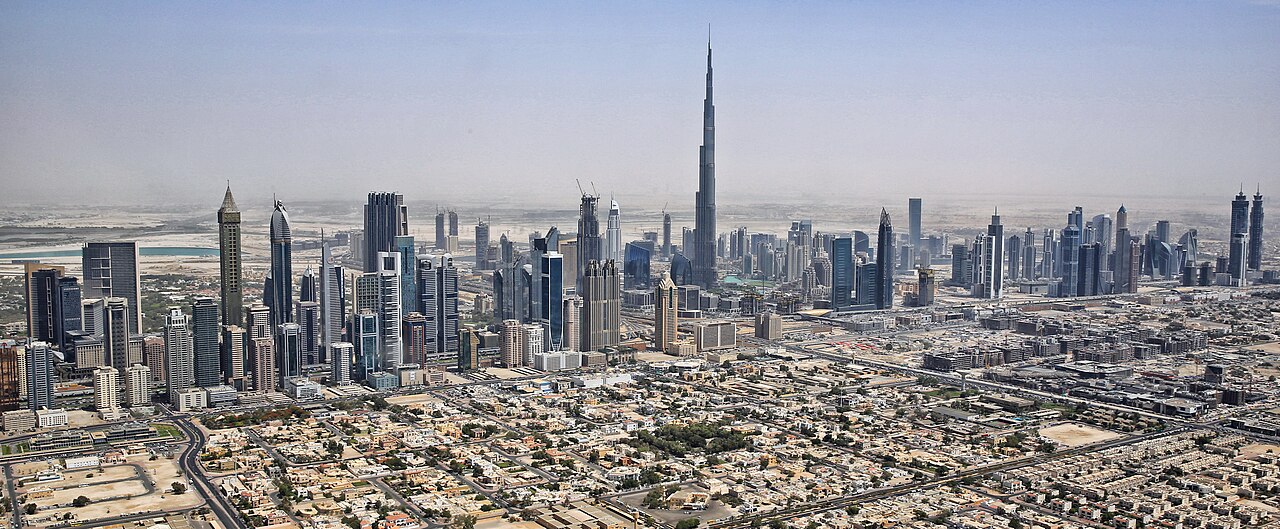
Dubai is a long coastal city rather than a compact centre. Historic districts cluster around Dubai Creek, the modern business and visitor core follows Sheikh Zayed Road, and resort districts continue southwest through Dubai Marina and Palm Jumeirah. A practical visit groups sights by corridor because crossing between old Dubai, Downtown and the marina repeatedly wastes time. The metro handles the main north-south spine, while taxis and buses cover the final connection to places away from it.
Ranked by importance — sitelinks, pageviews and heritage status, not editor preference.
25 places match
Category
Typical visit duration
Dubai Opera House is a performing arts centre in Downtown Dubai, United Arab Emirates. The building opened in 2016 and was designed by architect Janus Rostock.
Theatre Of Digital Art is an immersive cultural venue in Dubai dedicated to digital art exhibitions and multisensory experiences. It utilises advanced projection technology to transform interior spaces into dynamic visual environments.
Madame Tussauds Dubai is a wax museum and tourist attraction located on Bluewaters Island, an artificial island development off the coast of Jumeirah Beach Residence.
Source: OpenStreetMap contributors, Wikidata ·
District boundaries come from OSM administrative relations, so a district page holds exactly the places inside it — plus, for the islands and the coast, the nearest district by proximity.
Dubai Creek divides the older quarters of Deira and Bur Dubai, where souks, abra crossings and the Al Fahidi district sit close together. Downtown Dubai and Business Bay form a separate cluster around Burj Khalifa and Dubai Mall. Farther southwest, the coast becomes the main organising line: Jumeirah, Madinat Jumeirah, Palm Jumeirah and Dubai Marina are successive districts, not one walkable resort zone. Desert attractions and Hatta require separate trips and should not be combined with a dense central sightseeing day.
Checked 2026-08-26
Use the Dubai Metro for the airport, old-city connections and the Sheikh Zayed Road corridor, then switch to tram, bus or taxi for districts beyond easy walking distance. The Red and Green lines connect the main urban spine and the creek-side districts, while the Dubai Tram serves Marina and links with the Palm monorail area. Stations can still be a long outdoor walk from a destination, especially in hot weather, so route planning should include the final kilometre rather than treating every metro label as doorstep access.
Checked 2026-08-26
Three to four days cover the main visitor corridors without crossing the city repeatedly. Use one day for the creek and old Dubai, one for Downtown, and one for the Jumeirah-Marina coast. Add a fourth only for a separate desert or Hatta trip.
November through March is the practical outdoor season. Summer heat makes long walks and exposed transfers difficult, so a warm-season itinerary needs shorter outdoor blocks and more time for air-conditioned transport and indoor attractions.
The metro is the best backbone for the airport, creek-side interchange points, Downtown and Sheikh Zayed Road. It does not place every attraction within a short walk, so tram, bus or taxi connections remain part of most days.
Keep Deira, Bur Dubai and Al Fahidi together; combine Burj Khalifa and Dubai Mall in a Downtown day; and treat Palm Jumeirah, Madinat Jumeirah and Dubai Marina as the coastal corridor. This avoids long backtracking.
The creek-side sights are the most walkable cluster, especially Al Fahidi, the souks and the abra crossings. The wider city is not compact, and distances between named districts are often too large for sightseeing on foot.
Set your days, your pace and the hours you actually want to be out. The planner works around closing days and travel time, and leaves room to eat.