

2 min walk · Akhisar
Thyatira
- Must see
- Historic monument
Language · 1 published
Museum · Akhisar, Manisa
Akhisar Müzesi
| Monday | Closed |
|---|---|
| Tuesday | 08:00 – 19:00 |
| Wednesday | 08:00 – 19:00 |
| Thursday | 08:00 – 19:00 |
| Friday | 08:00 – 19:00 |
| Saturday | 08:00 – 19:00 |
| Sunday | 08:00 – 19:00 |
Checked 2026-08-24 · Source
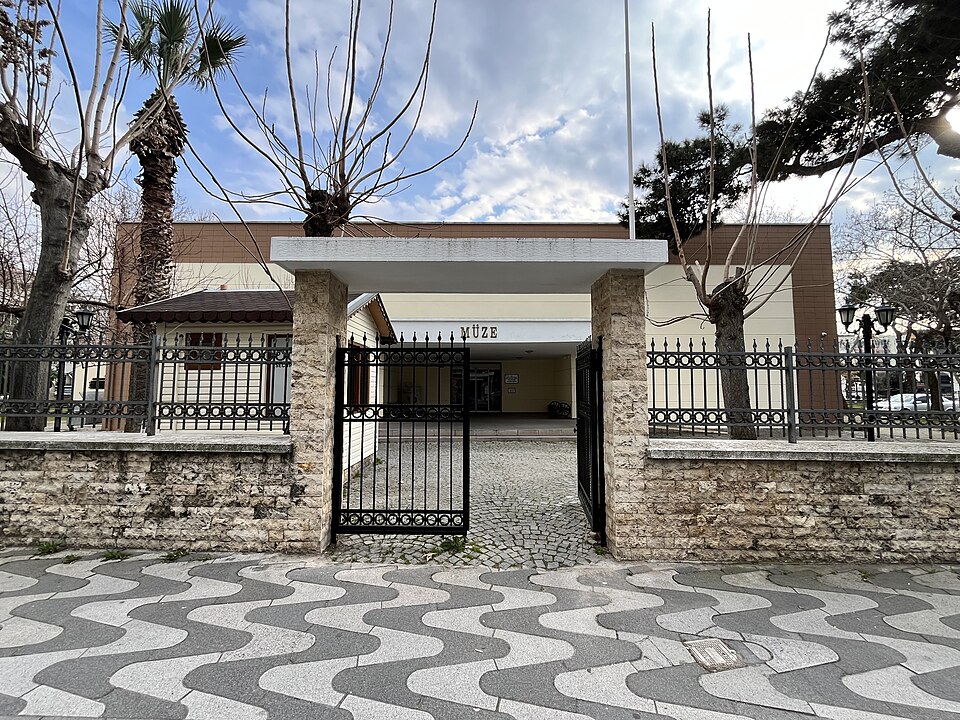
Akhisar Museum, in the Paşa neighbourhood of Akhisar district, opened on 6 August 2012 in a building with a longer history than the museum itself: built in 1932 as the Ali Şefik Hospital, endowed by Ayşe Aloğlu, it later became Ali Şefik Middle School, then from 1994 a teachers' guesthouse, before a 2007-2012 restoration converted it into a museum.
Its core purpose is to hold what has come out of the ground at Thyatira, the ancient city directly across the street, alongside wider finds from the district and a separate ethnography section on regional craft. It is a district archaeology and ethnography museum, not a single-monument site: the museum building and the Thyatira excavation are two connected but separate things to see, on one shared ticket.
Checked 2026-08-24
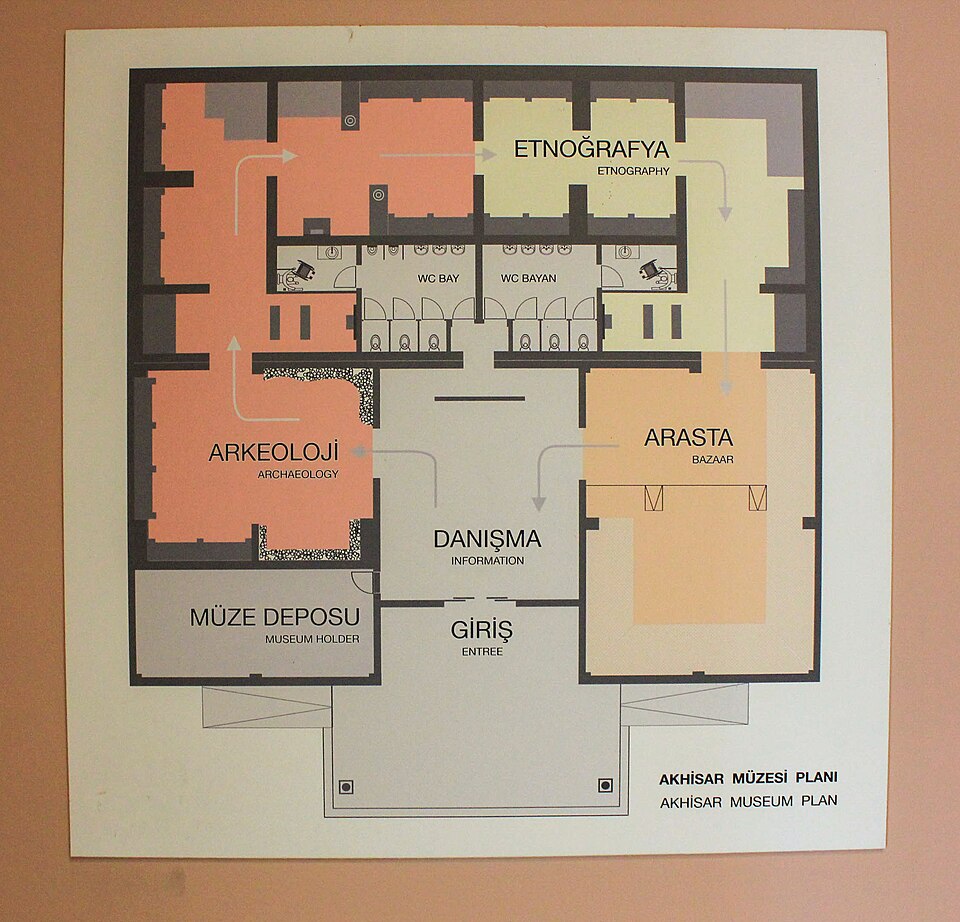
The museum is organised into archaeology and ethnography sections across 650 square metres of enclosed exhibition space, with a further 1,250 square metres of open-air display for larger stonework, plus an arasta section on traditional local crafts. As of 2019 the collection held 689 catalogued artefacts, down from the 1,051 it opened with in 2012 — items moved or reassigned rather than a size the museum was ever meant to hold fixed.
The Thyatira material is coins and ceramics spanning the Archaic period to the Ottoman era. Beyond Thyatira, the museum holds Early Bronze Age pottery from the Yortan culture, Lydian-era gold objects, Attic lekythoi of the 5th-4th centuries BC, and the Gökçeler relief. A separate case in the natural history corner displays fossils from the Soma coal basin, dated eleven to eighteen million years old.
Checked 2026-08-24
An hour to ninety minutes covers the enclosed galleries and the open-air stone display at an unhurried pace; someone moving quickly through both sections can do it in forty-five. That range, rather than a single figure, is the honest answer here — the open-air area adds real walking distance beyond a typical single-room town museum, so it is worth budgeting more time than a small-town collection with only indoor cases.
Anyone also visiting the Thyatira ruins directly across the street should plan that as separate time on top of this — the ruins are an open site, not part of the museum building, and reward slower walking on their own.
Checked 2026-08-24
The museum opens 08:00 to 19:00 with the ticket office closing at 18:45, every day except Monday, when it is closed entirely — confirmed directly on muze.gov.tr. A plan built around a Monday visit needs to move to another day; there is no partial or afternoon-only Monday access.
Outside of that, the long daily window leaves flexibility for morning or late-afternoon visits alike. The open-air stone and fossil display is outdoors, so a cooler part of the day is more comfortable in summer; the enclosed galleries are unaffected by weather or season.
Checked 2026-08-24 · Source
3 euros for foreign visitors; Turkish citizens enter with a Müzekart. This is on the Ministry's DÖSİMM price list, confirmed against both dosim.ktb.gov.tr and muze.gov.tr, and it is a single ticket that also covers the Thyatira excavation across the street.
The museum is closed on Mondays — the ticket office closes at 18:45 on the days it is open, fifteen minutes ahead of the building's own 19:00 closing time, so arriving after 18:45 means no new admission that day even though the building is still technically open.
Checked 2026-08-24 · Source
The museum sits in central Akhisar, in the Paşa neighbourhood, directly opposite the Thyatira archaeological site, and is reached within the town by city bus lines 41-46 or 291; there is no on-site car park, so street parking nearby is the practical option for anyone driving in.
Akhisar itself is about 55 km north of Manisa city centre, reached by intercity bus from Manisa's otogar or by car along the main road north — a day-trip distance rather than a walkable or short-hop addition to a city-centre itinerary. Because the museum and the Thyatira ruins face each other, arriving by any of these routes puts both within a single short walk.
Checked 2026-08-24
The Monday closure is the detail most likely to derail a visit planned from Manisa, since a wasted 55 km trip is a real cost in a way it would not be for a city-centre stop — check the day before setting out. The 18:45 ticket cutoff, fifteen minutes before the museum's stated closing time, is easy to miss when arriving late in the day expecting the full window until 19:00.
The open-air display area means uneven ground and sun exposure beyond what the enclosed galleries involve, so footwear and shade planning matter more here than at a fully indoor museum.
Checked 2026-08-24 · Source
The open-air stonework — including the Gökçeler relief and the larger architectural fragments — photographs best in the daylight of the 1,250-square-metre outdoor area, where there is room to step back for full-piece shots the enclosed 650-square-metre gallery does not allow as easily.
The Thyatira ruins directly across the street are a natural pairing for anyone photographing the museum's coin and ceramic finds alongside the site they came from. Indoor cases holding the Lydian gold and the Attic lekythoi are artificially lit and set behind glass, so a lens hood or angled shot helps avoid reflections there.
Checked 2026-08-24
08:00 to 19:00 every day except Monday, with the ticket office closing at 18:45 — confirmed directly on muze.gov.tr.
3 euros for foreign visitors; Turkish citizens enter with a Müzekart. The same ticket also covers the Thyatira excavation across the street.
Yes, every Monday, with no partial or afternoon access — a visitor coming the 55 km from Manisa city should check the day before travelling.
An hour to ninety minutes at an unhurried pace, or about forty-five minutes moving quickly through both the enclosed galleries and the open-air stone display.
Yes — the museum holds the coins and ceramics excavated from Thyatira, the ancient city directly across the street, on the same ticket, but the ruins themselves are a separate stop worth their own time.
No on-site car park; street parking nearby is the practical option for anyone arriving by car, or city bus lines 41-46 and 291 from elsewhere in Akhisar.
Loading the interactive map…
The interactive map could not be loaded.
Last updated:
Source: OpenStreetMap contributors, Wikidata ·