

7 min walk · Akhisar
Sultan Camii
- Notable
- Place of worship
Language · 1 published
Place of worship · Akhisar, Manisa
Akhisar Musevi Mezarlığı
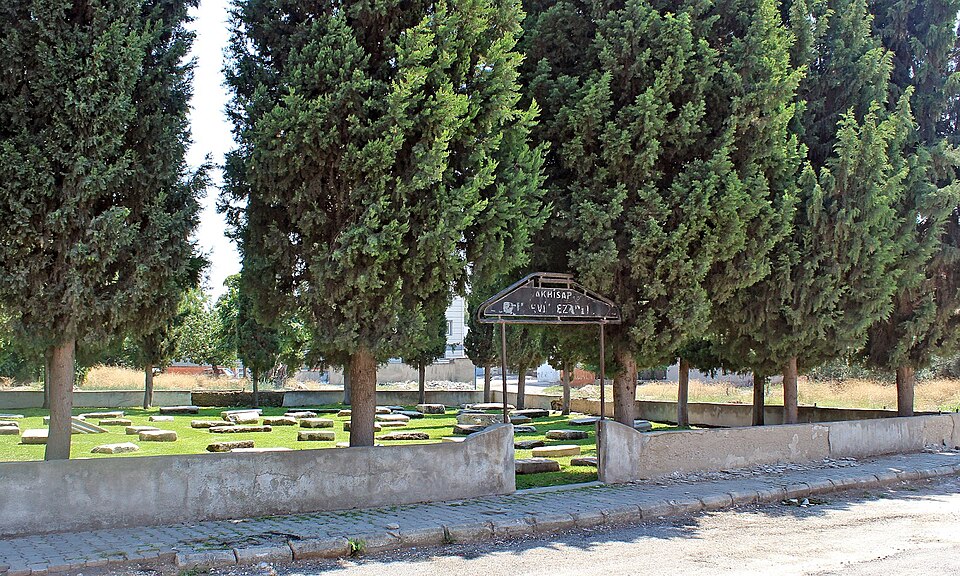
This is the burial ground of Akhisar's Jewish community, a Sephardic congregation that at its peak numbered around 400 people and no longer exists in the town. The original cemetery was founded in 1875 on land donated by Moiz Franko; the earliest burials recorded there carry the surnames Kohen, Levi and Israel.
That original ground did not survive. In 1996 the Turkish Treasury sold the land to private owners, and the gravestones that could be recovered were regrouped onto a protected plot near Reşat Bey Cemetery in the southeastern part of the town, which is the site preserved and visited today. It is a burial ground with descendants, not a curiosity — the people buried here belonged to a real community, and the site should be approached with the same respect given to any cemetery, quietly and without disturbing the ground, on the understanding that families connected to those buried here may still exist even though the congregation itself has dispersed.
Checked 2026-08-23 · Source
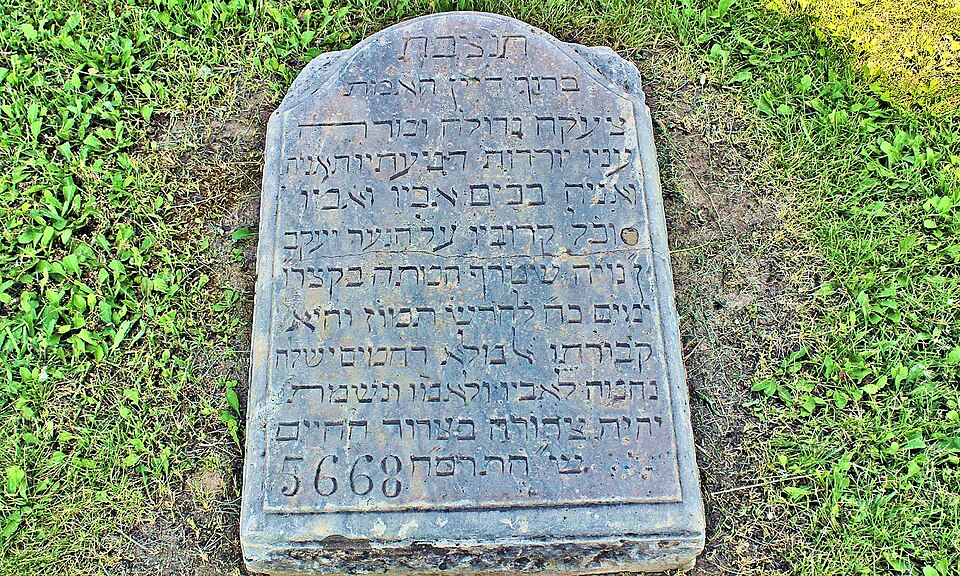
A 2014 field study by the Thyateira Excavation Committee, working with a Cambridge University scholar on the Hebrew translations, catalogued 26 legible tombstones on the site, most from the Ottoman period. Separately, the oldest tombstone recorded across the cemetery's history is dated 1876 and the most recent to 1936 — a roughly sixty-year span of recorded burials.
The stones are laid out at intervals on an open plot rather than in their original grave positions, since they were relocated after the 1996 sale of the founding site; authorities have since enclosed the area and added grass. Inscriptions are in Hebrew, and one legible example — for Noya, wife of Samuel son of Solomon, dated December 1911 — has been documented directly. There is no synagogue, chapel or building on site; this is an open-air field of gravestones.
Checked 2026-08-23 · Source
Fifteen to twenty minutes is enough for the site itself — it is a small, open plot, not a sprawling necropolis, and there is no path system or signage to work through. Visitors who read Hebrew, or who come specifically to look for a named stone, should allow longer, since the stones are not indexed or mapped for casual searching.
Checked 2026-08-23
The cemetery has no set opening hours and no gate that is opened or closed for the public — it is described locally as visitable at any time, free of charge. Daylight is the only practical constraint: there is no lighting on an open field, and reading worn Hebrew inscriptions is far easier in the low, raking light of morning or late afternoon than at midday.
Checked 2026-08-23 · Source
There is no ticket and no entrance fee. The site is not run as a paid attraction or museum; it is a protected but unstaffed heritage cemetery under municipal and cultural-heritage protection rather than a business, and no current source publishes any charge for visiting it or any donation arrangement in place. Nothing is sold on site and no ticket booth or attendant should be expected at the gate.
Checked 2026-08-23 · Source
The cemetery sits near Reşat Bey Cemetery in the southeastern part of Akhisar town, close enough to the centre to be reached on foot from there. Akhisar itself is about 55 km north of Manisa city; there is no metro and no useful rail service on this route, so an intercity bus to Akhisar followed by walking or a short taxi ride is the practical way in, and a car covers the whole route directly.
Checked 2026-08-23 · Source
This is an active burial ground for descendants, not a ruin to wander through casually. Men should cover their heads before entering, in keeping with Jewish cemetery custom generally, nothing should be removed from the site — no stone, no fragment, no rubbing — and visitors should not stand or step on the gravestones themselves, which now lie close together on the relocated plot. The cemetery's sign has been vandalised more than once in recent years, which is itself part of why the site is fenced and monitored rather than left fully open.
Checked 2026-08-23 · Source
Photographing individual inscriptions is the main reason to bring a camera here, and low-angle morning or late-afternoon light picks out worn Hebrew lettering better than overhead sun. Photograph respectfully and from a standing position beside the stones rather than over or on them. There is no shade and no facilities on an open field, so plan for sun exposure in summer.
Checked 2026-08-23
No. The community, once around 400 people, no longer exists in the town; the cemetery is what remains of its presence there.
Recorded burials span from a tombstone dated 1876 to one dated 1936, with a 2014 study cataloguing 26 legible stones mostly from the Ottoman period.
No. The founding cemetery was established in 1875 on donated land, but that land was sold by the Treasury to private owners in 1996; the surviving gravestones were regrouped onto the protected plot near Reşat Bey Cemetery seen today.
No. The site has no ticket, no fee and no fixed opening hours — it is described locally as open to visit at any time.
Men should cover their heads, nothing should be removed from the site, and visitors should not stand or step on the gravestones, which are set close together on the relocated plot.
Yes. A 2014 survey by the Thyateira Excavation Committee, with Hebrew translation help from a Cambridge University scholar, catalogued the legible tombstones, and a separate paper in an İzmir university journal documents the site's condition and history.
Loading the interactive map…
The interactive map could not be loaded.
Last updated:
Source: OpenStreetMap contributors, Wikidata ·