
2 min walk · Şehzadeler
Tomb of Saruhan Bey
- Must see
- Historic monument
Language · 1 published
Place of worship · Şehzadeler, Manisa
Muradiye Cami
Read from the OpenStreetMap access tags; anything not listed has no tag recorded.
Set the group type to family in the planner and the day window contracts to about three quarters of a solo day.
The Muradiye is the mosque Mimar Sinan designed for Manisa, built between 1583 and 1586 for Sultan Murad III. It replaced a smaller mosque begun on the site in 1571 and is the finest Ottoman building in the city.
Sinan drew it but did not see it finished. The architect Mahmud Halife built it until his death, and from January 1586 the work passed to Sedefkâr Mehmed Ağa — the man who would later design the Sultan Ahmed Mosque in İstanbul. The associated buildings of the complex were not completed until after 1590.
That the mosque still stands is not ordinary. Most of historic Manisa was destroyed during the Greek army's retreat from the city in 1922; the Muradiye is one of the few buildings that survived it.
Checked 2026-08-23 · Source
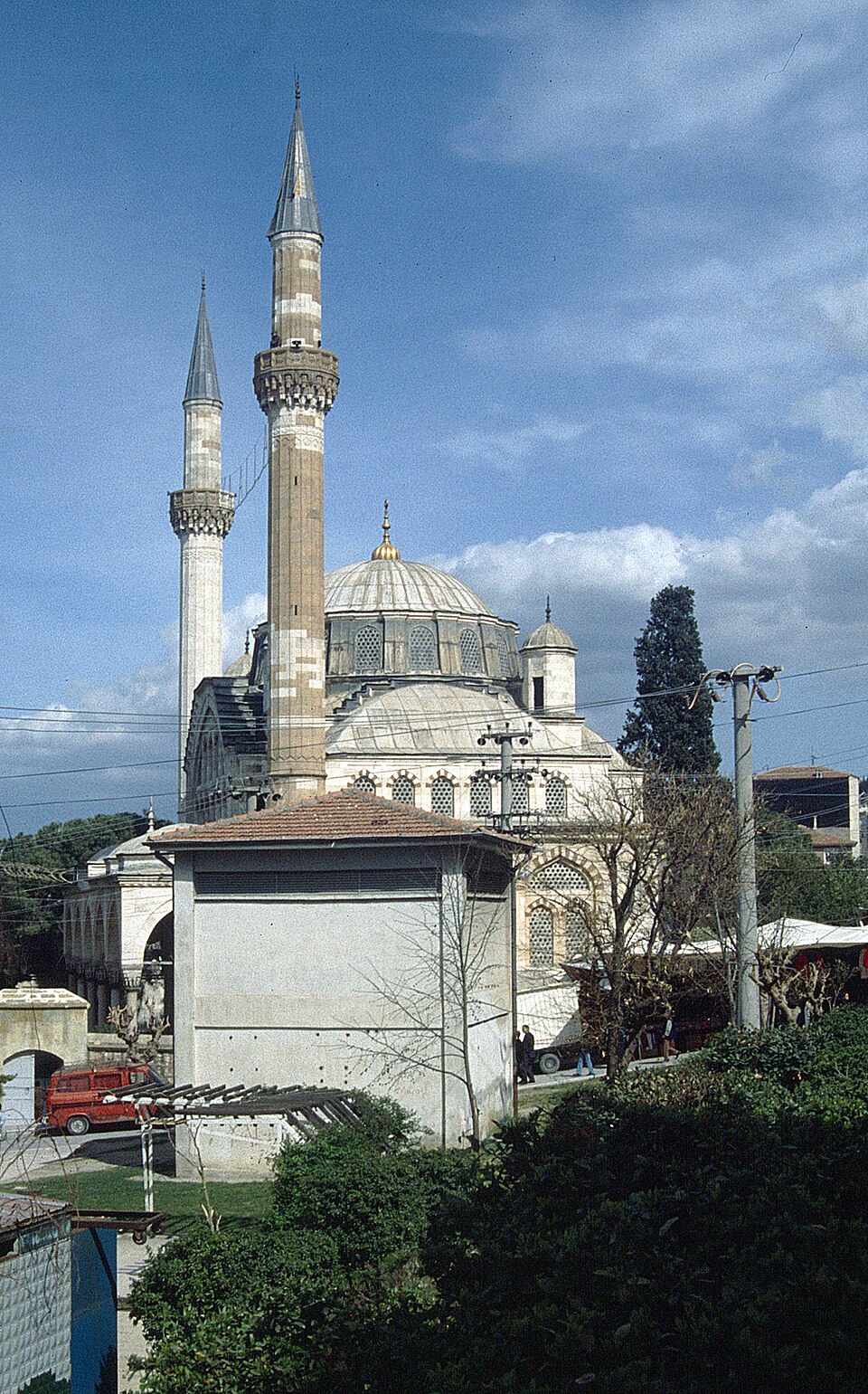
Sandstone outside, İznik tile inside. The prayer hall sits under a central dome carried on three half-domes, and two single-galleried minarets stand 45 m.
The interior is decorated with İznik tiles, and the minbar and mihrab are the pieces worth standing in front of. The dome measures 28.50 m to the outside of its crown.
The külliye around the mosque held a medrese and an imaret. The imaret is now the Manisa Museum, so the archaeological collection and the mosque share one walled compound — you can see both without leaving the site.
Checked 2026-08-23 · Source
Forty-five minutes for the mosque; two hours if you take in the museum in the same compound.
The prayer hall is a single space and reading it takes twenty minutes: the dome and half-domes, the tilework, the minbar. Another twenty in the courtyard, and longer if the light is good on the sandstone.
The Manisa Museum next door, in the old imaret, is worth an hour on its own. Treat the two as one visit; they were built as one complex and they still work as one.
Checked 2026-08-23
Outside prayer times, and outside the middle of a summer afternoon.
This is a working mosque, not a museum piece, and visits fit around the five daily prayers. Mid-morning and mid-afternoon are the reliable windows; Friday around noon is the one time to avoid entirely.
Spring and autumn suit Manisa generally, and they suit the Muradiye in particular because the compound has little shade. In the last week of March the whole city bends around the Mesir festival at the Sultan Mosque, a few hundred metres away, and the Muradiye is quieter than usual in consequence.
Checked 2026-08-23
No entrance fee is recorded for the mosque. It is a working place of worship and admission to the prayer hall is free, as it is at every mosque in Turkey.
The Manisa Museum in the same compound is a separate institution with its own admission; its current rate is not published on the sources this page uses and is not reproduced here.
Checked 2026-08-23
On foot from anywhere in Şehzadeler, the historic half of Manisa on the lower slope of Mount Spil.
The Muradiye stands within a few hundred metres of the Sultan Mosque and the museum, and the bazaar streets run downhill from all three. Nothing in the Ottoman core needs transport.
Coming from outside the city: four trains a day from İzmir Basmane take about 90 minutes, local buses cover the 40 km in about 35 minutes, and İzmir Adnan Menderes airport is roughly 65 km away.
Checked 2026-08-23 · Source
Dress as you would for any working mosque. Shoulders and knees covered for everyone; a headscarf for women, usually lent at the door. Shoes come off at the threshold and go on the racks.
Prayer times close the hall to visitors, and they move through the year. If you arrive at a prayer, wait outside — twenty minutes is usually enough — rather than walking in.
The museum in the same compound keeps its own hours, which are not the mosque's. Turning up at the compound does not guarantee both are open.
Nothing here is ticketed separately inside the mosque, and there is no scam economy around it. Manisa is a provincial city that gets few foreign visitors.
Checked 2026-08-23
Photography is not restricted in the prayer hall, but the courtesy that applies in every working mosque applies here: not during prayer, and not pointed at people praying.
The sandstone takes late light well, and the west face is the one to catch in the last hour before sunset. Inside, the tilework needs a steady hand rather than a flash — the hall is lit for prayer, not for cameras.
The two minarets at 45 m and the dome group behind them are the shot that says Muradiye rather than any other Ottoman mosque; take it from far enough back in the courtyard to hold all of it.
Checked 2026-08-23
Mimar Sinan designed it for Sultan Murad III, and it was built between 1583 and 1586. Sinan did not see it finished: the architect Mahmud Halife ran the work until his death, and from January 1586 it passed to Sedefkâr Mehmed Ağa, who later designed the Sultan Ahmed Mosque in İstanbul.
Yes. It is a working mosque with free admission, closed to visitors during the five daily prayers. Shoulders and knees covered, shoes off at the threshold, and a headscarf for women — usually lent at the door.
Forty-five minutes for the mosque alone. Two hours if you also go into the Manisa Museum, which occupies the imaret of the same complex a few steps away.
The İznik tilework, the minbar and the mihrab. The prayer hall sits under a central dome carried on three half-domes, and the two single-galleried minarets stand 45 m.
It is part of the same complex. The imaret — the charity kitchen of the külliye — is now the Manisa Museum, which opened on 29 October 1937 and holds finds from Sardis, Aigai and the region.
No — the Sultan Mosque of 1522 is sixty years older. But the Muradiye is the one most of historic Manisa did not outlive: the city was largely destroyed during the Greek army's retreat in 1922, and this mosque is among the few buildings that survived.
Loading the interactive map…
The interactive map could not be loaded.
Last updated:
Source: OpenStreetMap contributors, Wikidata ·