

2 min walk · Şehzadeler
Cumhuriyet Hamamı
- Notable
- Family attraction
Language · 1 published
Place of worship · Şehzadeler, Manisa
Çeşnigir Cami
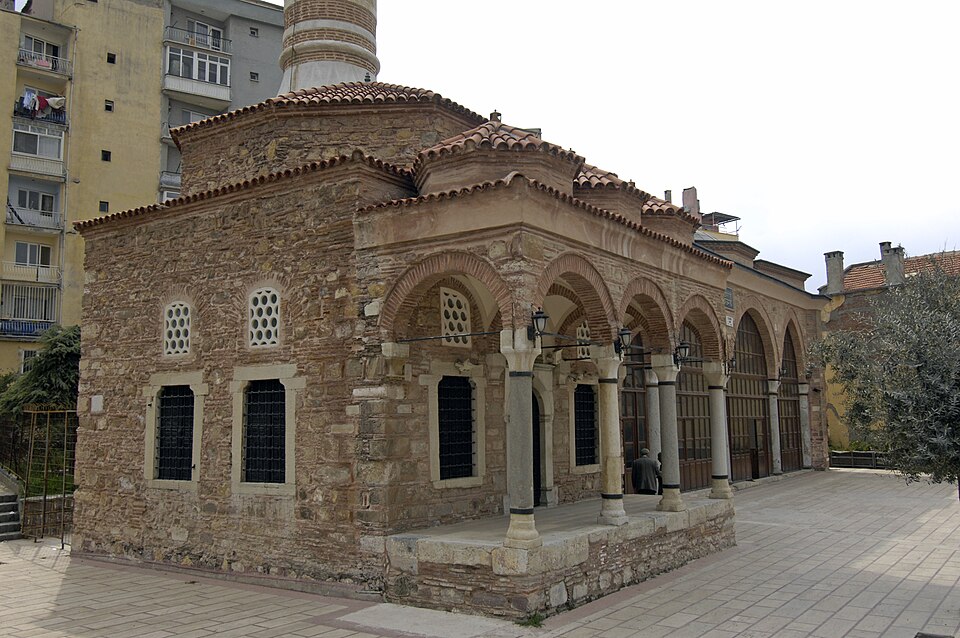
The Çeşnigir Camii of 1474 is one of the oldest mosques in Manisa, built by Çeşnigir Sinan Bey — a man who had been enslaved and was freed by Mehmed II, the sultan who took Constantinople.
It went up two decades after that conquest and half a century before the Sultan Mosque, in the generation when Ottoman Manisa was still being assembled out of a Saruhanoğulları town. The mosque had a library, which in a fifteenth-century provincial foundation is a statement about its patron rather than a footnote.
It stands in Şehzadeler, the historic half of the city on the lower slope of Mount Spil.
That it is here at all is worth saying. Most of historic Manisa was destroyed during the Greek army's retreat from the city in 1922, and the buildings that came through are a short list. A 1474 foundation on that list has survived a great deal more than five and a half centuries of ordinary weather.
Checked 2026-08-23 · Source
The building itself, and very little published about it.
The Turkish record for the Çeşnigir gives its patron, its date and the fact that it held a library, and stops there. No architectural description, no dimensions and no restoration history are recorded in the sources this page uses, and none are invented here.
What can be said is where it sits in the sequence. Manisa's mosques run from the Ulu Camii of 1366 through the Çeşnigir of 1474 and the İvaz Paşa of 1484 to the Hatuniye of 1490–91, the Sultan Mosque of 1522 and the Muradiye of 1583–86. This is the middle of that line and one of the oldest surviving pieces of it.
Checked 2026-08-23 · Source
Fifteen to twenty minutes, as one stop among several.
There is no complex to walk and no collection to read. The visit is the prayer hall and the exterior.
The reason to include it is sequence rather than spectacle: walking the Ulu Camii, the Çeşnigir, the Hatuniye, the Sultan Mosque and the Muradiye in one afternoon shows two centuries of Ottoman building in a single quarter, and this is one of the early links.
All six of those mosques are inside a walk of well under an hour end to end, which is the practical argument for treating Şehzadeler as one visit rather than a list of separate stops.
Checked 2026-08-23
Mid-morning or mid-afternoon, outside the five daily prayers. Not Friday at noon.
Spring and autumn are the seasons for walking Şehzadeler; the quarter is on a slope with little shade and a summer afternoon is hard work.
In the last week of March the city's attention moves to the Sultan Mosque for the Mesir festival, which leaves the smaller mosques quieter than usual.
Checked 2026-08-23
Free. This is a working mosque and admission to a working mosque in Turkey costs nothing.
There is no ticket desk, no guide service and nothing inside that is separately charged for.
The only paid admission among Manisa's Ottoman buildings is the museum inside the Muradiye complex, a short walk away.
Checked 2026-08-23
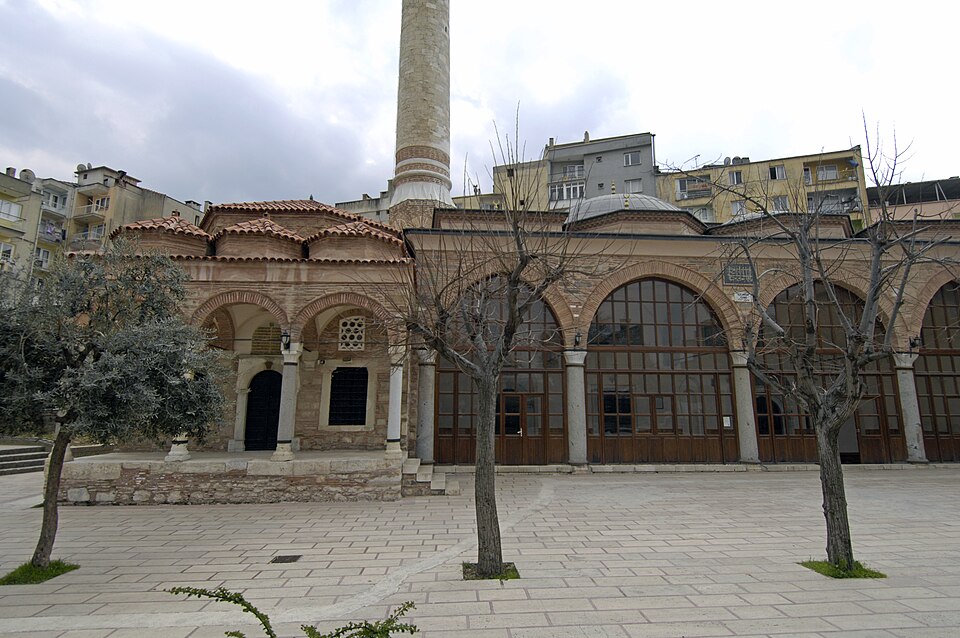
On foot, in Şehzadeler, among the streets that hold Manisa's other Ottoman mosques on the lower slope of Mount Spil.
Nothing in the historic core needs transport. Town buses cover the rest of the city.
Reaching Manisa: four trains a day from İzmir Basmane take about 90 minutes, local buses cover the 40 km in about 35 minutes, and İzmir Adnan Menderes airport is roughly 65 km away.
Checked 2026-08-23 · Source
Shoulders and knees covered for everyone, a headscarf for women — usually lent at the door — and shoes off at the threshold.
The hall closes to visitors during the five daily prayers, and those times move through the year. Friday around noon is the slot to avoid entirely.
This is a neighbourhood mosque, not a monument on a tour route: no ticket desk, no guide, and nobody expecting visitors. If the door is locked outside prayer there is no one to ask.
Manisa sees few foreign visitors and carries no scam economy around its buildings.
Checked 2026-08-23 · Source
A plain fifteenth-century neighbourhood mosque, photographed plainly. There is no famous angle here and no crowd to work around.
Raking light early or late does more for the masonry than midday, which is true of every building on this slope.
Inside, photography is not restricted, but the courtesy of a working mosque holds: not during prayer, and not pointed at people praying. No photography restriction is recorded for the building.
Checked 2026-08-23
It was built in 1474, which makes it one of the oldest mosques in Manisa — nearly fifty years older than the Sultan Mosque and over a century older than the Muradiye.
A man who had been enslaved and was freed by Mehmed II. He endowed the mosque in 1474, and it held a library.
The prayer hall. No architectural description, dimensions or restoration history is recorded in the sources this page uses, so none is given here.
No. It is a working mosque and admission is free.
Fifteen to twenty minutes. It belongs in a walk through Şehzadeler rather than a trip of its own.
In the middle of the sequence: the Ulu Camii of 1366, the Çeşnigir of 1474, the İvaz Paşa of 1484, the Hatuniye of 1490–91, the Sultan Mosque of 1522 and the Muradiye of 1583–86.
Loading the interactive map…
The interactive map could not be loaded.
Last updated:
Source: OpenStreetMap contributors, Wikidata ·