.jpg)
_%E0%B8%95%E0%B8%B6%E0%B8%81%E0%B9%81%E0%B8%96%E0%B8%A7%E0%B8%A3%E0%B8%B4%E0%B8%A1%E0%B8%96%E0%B8%99%E0%B8%99%E0%B9%80%E0%B8%A2%E0%B8%B2%E0%B8%A7%E0%B8%A3%E0%B8%B2%E0%B8%8A_%E0%B9%80%E0%B8%82%E0%B8%95%E0%B8%AA%E0%B8%B1%E0%B8%A1%E0%B8%9E%E0%B8%B1%E0%B8%99%E0%B8%98%E0%B8%A7%E0%B8%87%E0%B8%A8%E0%B9%8C_%E0%B8%81%E0%B8%A3%E0%B8%B8%E0%B8%87%E0%B9%80%E0%B8%97%E0%B8%9E%E0%B8%A1%E0%B8%AB%E0%B8%B2%E0%B8%99%E0%B8%84%E0%B8%A3_(1).jpg)
_%E0%B8%95%E0%B8%B6%E0%B8%81%E0%B9%81%E0%B8%96%E0%B8%A7%E0%B8%A3%E0%B8%B4%E0%B8%A1%E0%B8%96%E0%B8%99%E0%B8%99%E0%B9%80%E0%B8%A2%E0%B8%B2%E0%B8%A7%E0%B8%A3%E0%B8%B2%E0%B8%8A_%E0%B9%80%E0%B8%82%E0%B8%95%E0%B8%AA%E0%B8%B1%E0%B8%A1%E0%B8%9E%E0%B8%B1%E0%B8%99%E0%B8%98%E0%B8%A7%E0%B8%87%E0%B8%A8%E0%B9%8C_%E0%B8%81%E0%B8%A3%E0%B8%B8%E0%B8%87%E0%B9%80%E0%B8%97%E0%B8%9E%E0%B8%A1%E0%B8%AB%E0%B8%B2%E0%B8%99%E0%B8%84%E0%B8%A3_(2).jpg)
_%E0%B8%95%E0%B8%B6%E0%B8%81%E0%B9%81%E0%B8%96%E0%B8%A7%E0%B8%A3%E0%B8%B4%E0%B8%A1%E0%B8%96%E0%B8%99%E0%B8%99%E0%B9%80%E0%B8%A2%E0%B8%B2%E0%B8%A7%E0%B8%A3%E0%B8%B2%E0%B8%8A_%E0%B9%80%E0%B8%82%E0%B8%95%E0%B8%AA%E0%B8%B1%E0%B8%A1%E0%B8%9E%E0%B8%B1%E0%B8%99%E0%B8%98%E0%B8%A7%E0%B8%87%E0%B8%A8%E0%B9%8C_%E0%B8%81%E0%B8%A3%E0%B8%B8%E0%B8%87%E0%B9%80%E0%B8%97%E0%B8%9E%E0%B8%A1%E0%B8%AB%E0%B8%B2%E0%B8%99%E0%B8%84%E0%B8%A3_(3).jpg)
_%E0%B8%95%E0%B8%B6%E0%B8%81%E0%B9%81%E0%B8%96%E0%B8%A7%E0%B8%A3%E0%B8%B4%E0%B8%A1%E0%B8%96%E0%B8%99%E0%B8%99%E0%B9%80%E0%B8%A2%E0%B8%B2%E0%B8%A7%E0%B8%A3%E0%B8%B2%E0%B8%8A_%E0%B9%80%E0%B8%82%E0%B8%95%E0%B8%AA%E0%B8%B1%E0%B8%A1%E0%B8%9E%E0%B8%B1%E0%B8%99%E0%B8%98%E0%B8%A7%E0%B8%87%E0%B8%A8%E0%B9%8C_%E0%B8%81%E0%B8%A3%E0%B8%B8%E0%B8%87%E0%B9%80%E0%B8%97%E0%B8%9E%E0%B8%A1%E0%B8%AB%E0%B8%B2%E0%B8%99%E0%B8%84%E0%B8%A3_(4).jpg)
_%E0%B8%95%E0%B8%B6%E0%B8%81%E0%B9%81%E0%B8%96%E0%B8%A7%E0%B8%A3%E0%B8%B4%E0%B8%A1%E0%B8%96%E0%B8%99%E0%B8%99%E0%B9%80%E0%B8%A2%E0%B8%B2%E0%B8%A7%E0%B8%A3%E0%B8%B2%E0%B8%8A_%E0%B9%80%E0%B8%82%E0%B8%95%E0%B8%AA%E0%B8%B1%E0%B8%A1%E0%B8%9E%E0%B8%B1%E0%B8%99%E0%B8%98%E0%B8%A7%E0%B8%87%E0%B8%A8%E0%B9%8C_%E0%B8%81%E0%B8%A3%E0%B8%B8%E0%B8%87%E0%B9%80%E0%B8%97%E0%B8%9E%E0%B8%A1%E0%B8%AB%E0%B8%B2%E0%B8%99%E0%B8%84%E0%B8%A3_(1).jpg)
3 min walk · เขตสัมพันธวงศ์
Wat Traimit
- Must see · Heritage site
- Place of worship
Language · 1 published
Historic monument · เขตสัมพันธวงศ์, Bangkok
ถนนเยาวราช
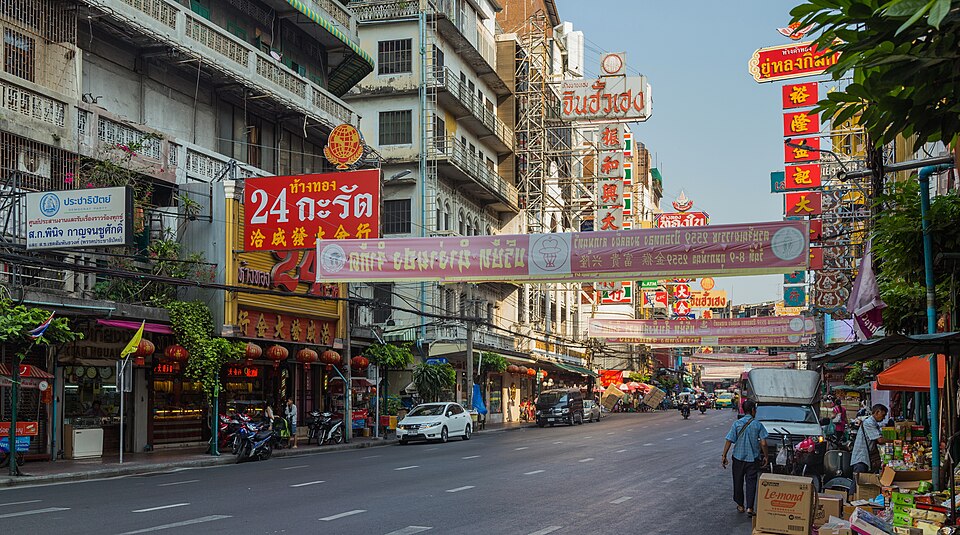
Yaowarat Road is the mile and a half of Chinatown that records the commercial history of Bangkok, as against the royal history a few streets north. When Rama I took Rattanakosin Island for the Grand Palace in 1782, the Chinese traders already settled there were moved downriver to this stretch of ground, and the junk-trade network they ran from it built the district. The road itself was a state project a century later: ordered by Rama V in 1891 and built between 1892 and 1900, a curving boulevard cut through an existing quarter of shophouses and alleys. It is still a working street rather than a preserved one — gold dealers and wholesalers by day, one of the densest concentrations of street food anywhere in Asia after dark, with shophouses that have passed through the same families for generations. There is nothing to enter and no ticket to buy: the place is the street, and the visit is a walk.
Checked 2026-08-25 · Source
Two things run along Yaowarat and a third runs off it. The first is gold: a line of shops with red and gold frontage trading bullion chains by weight, which is why the road is lit the way it is and why it looks prosperous at ten in the morning when nothing else is happening. The second is food, which takes the pavements over in the evening — grilled seafood, noodle carts, chestnut roasters, dessert stalls and shophouse restaurants with plastic stools spilling into the traffic lane. The third is the alleys. Sampeng Lane, one block south, is a wholesale market a metre or two wide where motorbikes push through shoppers all day; Trok Itsaranuphap runs north across Yaowarat carrying dried goods, funeral paper and offerings; Talat Noi to the south is a quarter of engine-part workshops, old shophouses and a Portuguese-era church, and is the quiet counterweight to the main road. Wat Mangkon Kamalawat, the principal Chinese temple, sits a block off Yaowarat on Charoen Krung and is the busiest religious building in the district.
Checked 2026-08-25 · Source
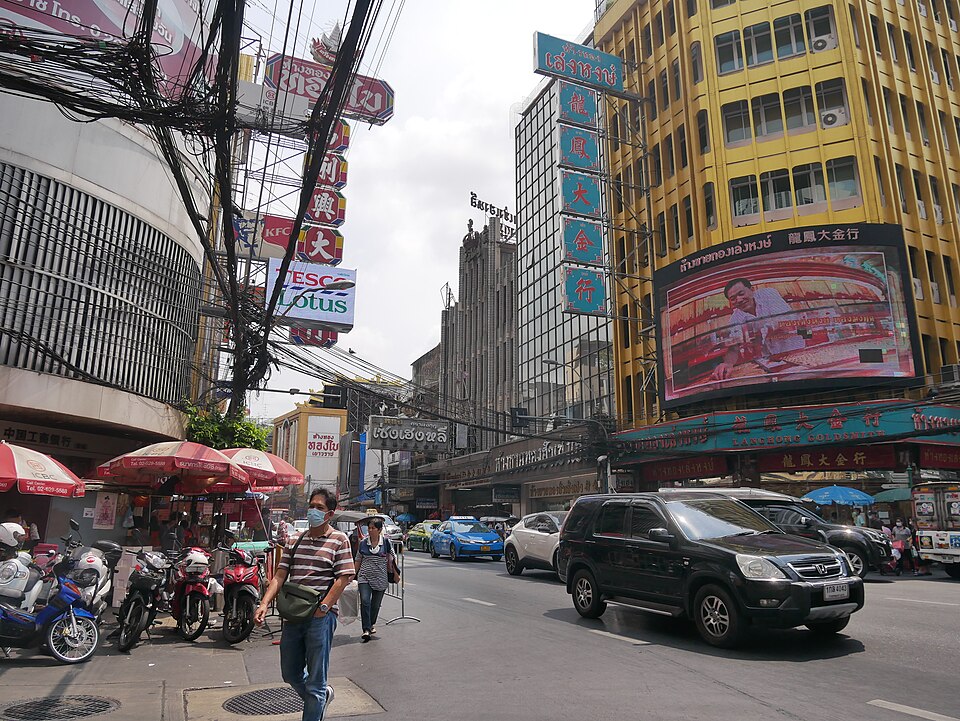
Allow two hours. That is the length of the road at a walking pace with stops, plus one of the side alleys and a couple of things eaten standing up. It is judgement, not a published figure — a public street has no operator to publish one. Anyone treating the evening as dinner rather than as a walk should plan three hours and eat at four or five places rather than one. A daytime walk that takes in Sampeng Lane and Talat Noi properly is also a two-hour proposition, and it is a different visit from the evening one rather than a shorter version of it.
Checked 2026-08-25
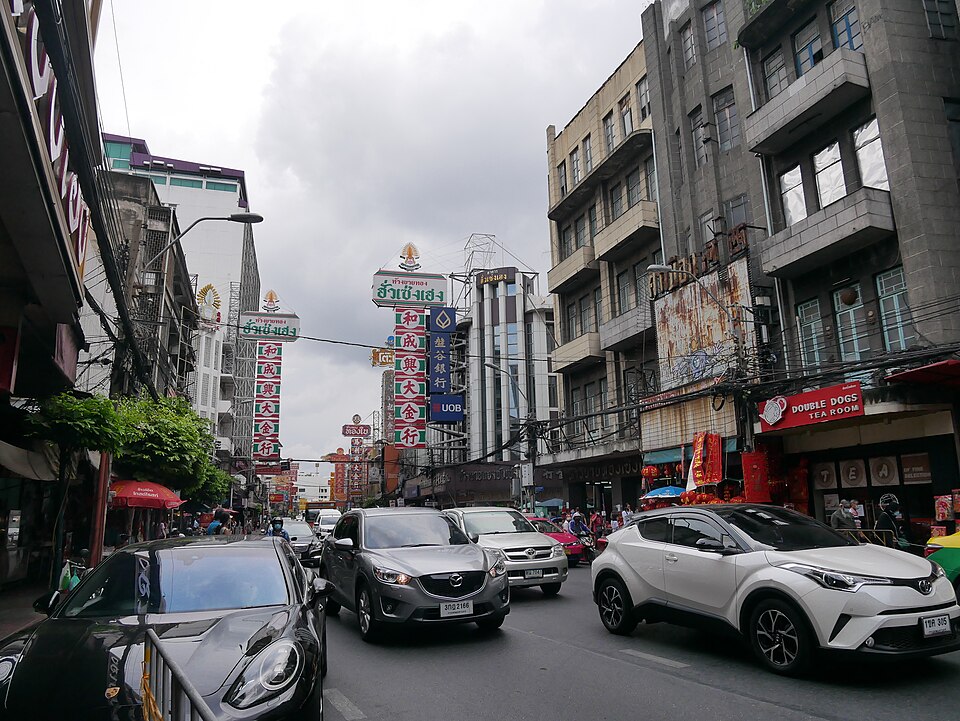
Yaowarat has two good hours and they are not the same hour. From 18:00 the food stalls take the pavements and the street becomes what most people come for — crowded, loud, brilliantly lit, and best after dark rather than at dusk. For a quiet walk that shows the architecture and the gold trade instead, come at about 10:00, when the shophouses are open and the pavement is passable. November to February is the season, because the evening walk is on foot in crowds and the cool dry months are the difference between pleasant and unbearable. Chinese New Year, in late January or February, is the street at its most spectacular and its most crowded, and those are the same evening — decide which of the two matters more before choosing that date.
Checked 2026-08-25
There is nothing to pay and nothing recorded. Yaowarat is a public road: it has no operator, no gate and no admission, so this page records no figure rather than a zero, because the absence of a fee is not the same thing as a sourced free entry. The same applies to hours. No authority publishes trading hours for the road; a search for a Samphanthawong district office or Bangkok Metropolitan Administration statement of the evening street-food hours found nothing, and the Tuesday-to-Sunday 17:00 to 23:00 pattern quoted widely appears only on aggregator sites, so it is not recorded. What a visit costs is what gets eaten. Most stalls are cash-only, prices are displayed or asked for openly, and the food is inexpensive by any Bangkok standard; carry small notes, because a 1,000-baht note at a noodle cart is a problem for both parties.
Checked 2026-08-25
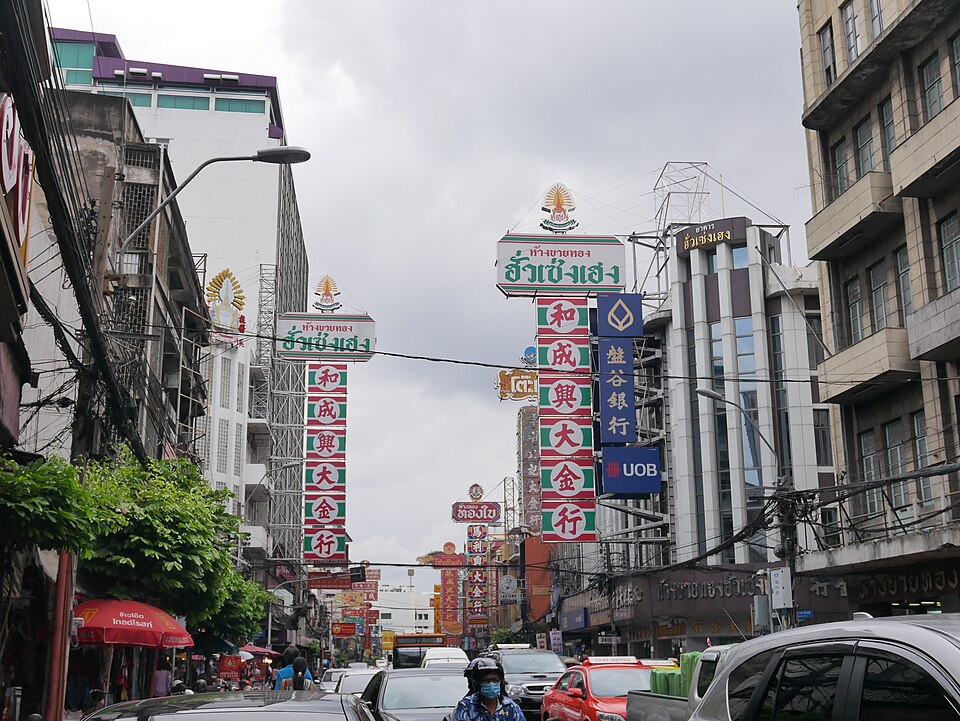
MRT Wat Mangkon opens directly onto the Yaowarat area and is the only sensible way to arrive, particularly in the evening when the road is effectively impassable to traffic. From the river, the Chao Phraya boat pier at Ratchawong lands a few minutes' walk south of the road and makes a good approach in daylight. Do not take a car or a taxi to the middle of Yaowarat after dark: the street is jammed, the pavements are full, and a vehicle will spend longer covering the last three hundred metres than a walker spends covering the whole road. Hua Lamphong, the old railway terminus, is at the eastern end, which makes Yaowarat an easy walk from the Golden Buddha at Wat Traimit.
Checked 2026-08-25
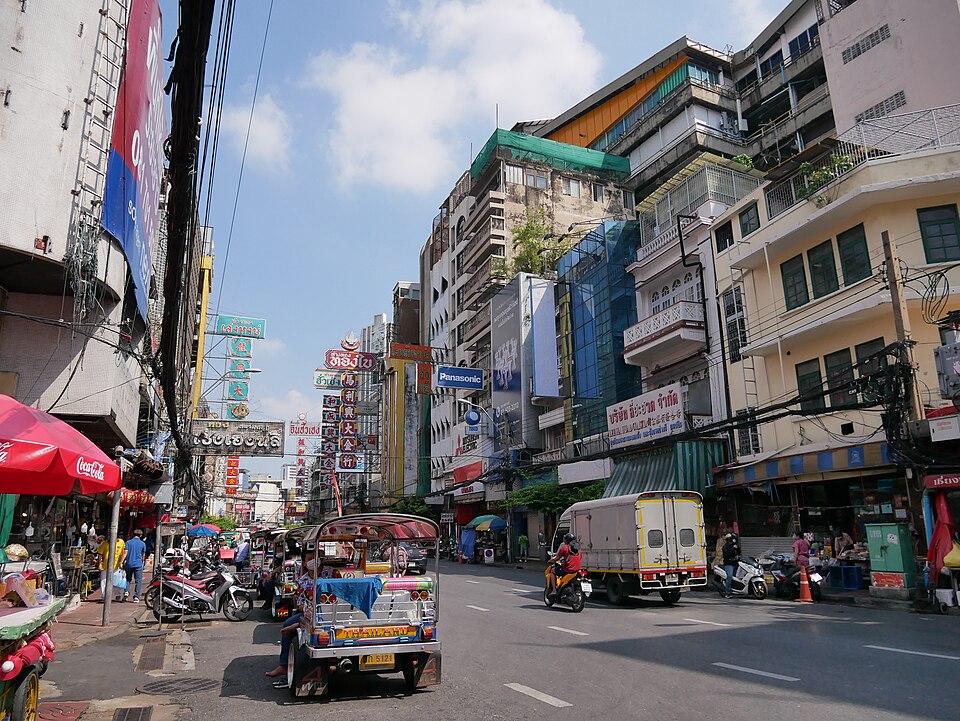
The traffic is the hazard people underestimate. Yaowarat is a live road with a narrow pavement that the stalls occupy, so walkers end up in the carriageway among motorbikes that do not slow down and do not always come from the direction expected. In Sampeng Lane the motorbikes come through a gap barely wider than a person; step into a doorway rather than trying to be quick. Pickpocketing works well in the evening crush — bag in front, nothing loose. On food: buy from stalls with a queue and visible turnover, watch what is cooked to order, and take shellfish seriously if the stomach is untested. Some of the best-known restaurants run queues of an hour or more, and there are twenty places within fifty metres that are nearly as good and empty. During the vegetarian festival in the ninth lunar month the entire street turns meat-free and yellow-flagged, which delights some visitors and surprises others who came for grilled pork.
Checked 2026-08-25

This is Bangkok's best night street and it wants a fast lens rather than a tripod. After dark the light comes from neon signs, stall bulbs and the gold shops, all of it different in colour temperature and none of it strong, so raise the ISO, open the aperture, fix the white balance somewhere and stop chasing it. The two signature frames are the road itself shot along its length with the sign-boards stacked above the traffic — best from a pedestrian bridge or an upper-floor window rather than from the pavement — and the close work at a stall, where the fire from a grill or a wok is the light source. In daylight the shophouse facades and the shutters of Talat Noi reward an unhurried walk more than the main road does. Ask before photographing a cook or a shopkeeper, and never photograph inside a gold shop or its doorway: those are working premises handling bullion, and cameras are not welcome for obvious reasons.
Checked 2026-08-25
The stalls take the pavements from about 18:00 and the street is at its best after dark. No authority publishes hours for the road — it is a public street with no operator — and the Tuesday-to-Sunday 17:00 to 23:00 pattern quoted online comes from aggregator sites only, so it is not recorded here.
Yes, as a different visit. From about 10:00 the gold shops and wholesalers are trading and the pavements are walkable, which is when the shophouse architecture, Sampeng Lane and Talat Noi can actually be seen. The evening is for food; the morning is for the district.
MRT Wat Mangkon opens directly onto the Yaowarat area and is the best arrival, especially after dark when the road is effectively impassable to cars. The Chao Phraya boat pier at Ratchawong is a good daylight alternative, and Wat Traimit stands at the eastern end near Hua Lamphong.
Allow two hours for the road's mile and a half at a walking pace, one side alley and a few things eaten standing up. Treating the evening as a full dinner across several stalls takes closer to three.
It is the district the Chinese traders moved to in 1782 when Rama I took Rattanakosin Island for the Grand Palace, and the road itself was ordered by Rama V in 1891 and built between 1892 and 1900. It records the commercial history of Bangkok rather than the royal one.
It is busy rather than dangerous, and the risks are practical: motorbikes in a carriageway that walkers are pushed into, pickpockets in the evening crush, and street food that rewards choosing stalls with visible turnover. Keep bags in front and step into doorways rather than racing a motorbike in the narrow alleys.
Loading the interactive map…
The interactive map could not be loaded.
Last updated:
Source: OpenStreetMap contributors, Wikidata ·