Wat Mangkon Kamalawat is the largest and most important Chinese Buddhist temple in Bangkok, standing on Charoen Krung Road between sois 19 and 21 in Pom Prap Sattru Phai. It was founded in 1871 or 1872 by Phra Archan Chin Wang Samathiwat under its Teochew name, Wat Leng Noei Yi, and King Chulalongkorn later granted the Thai name Wat Mangkon Kamalawat, Dragon Lotus Temple; Thai sources say the construction took eight years. What distinguishes it from every temple on a Bangkok first-timer's list is that it is not a Thai Theravada wat at all: it practises Mahayana Buddhism blended with Chinese folk religion, it belongs to the Chinese Buddhist order in Thailand, and its ritual year runs on the Chinese calendar. Visitors come to make offerings to Guanyin, to settle bad luck attached to their birth year, and, during the ninth lunar month, to eat.
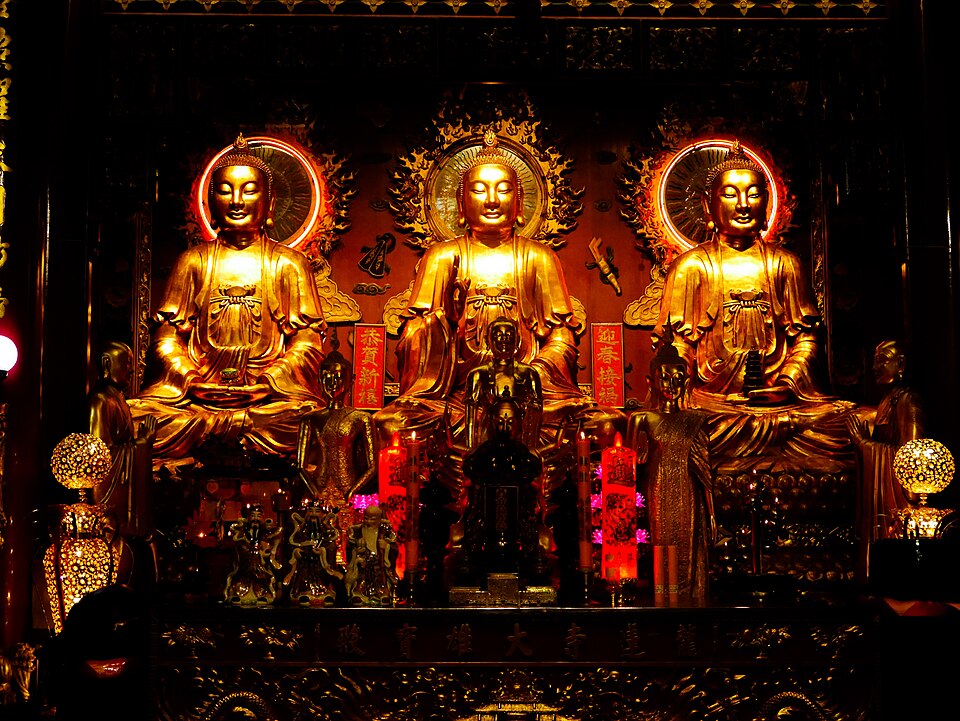
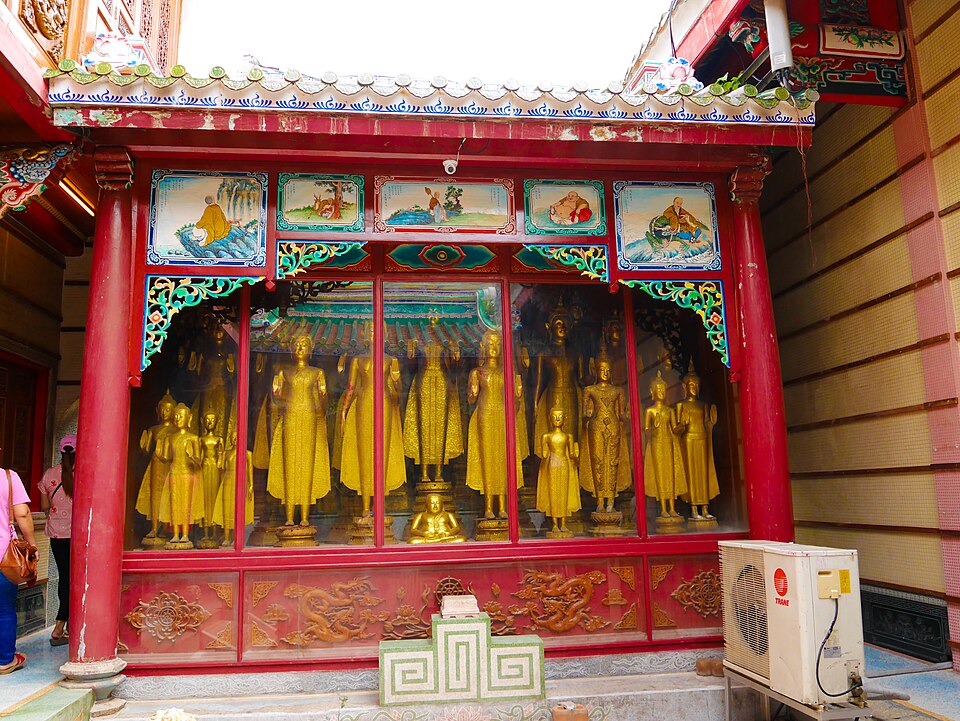
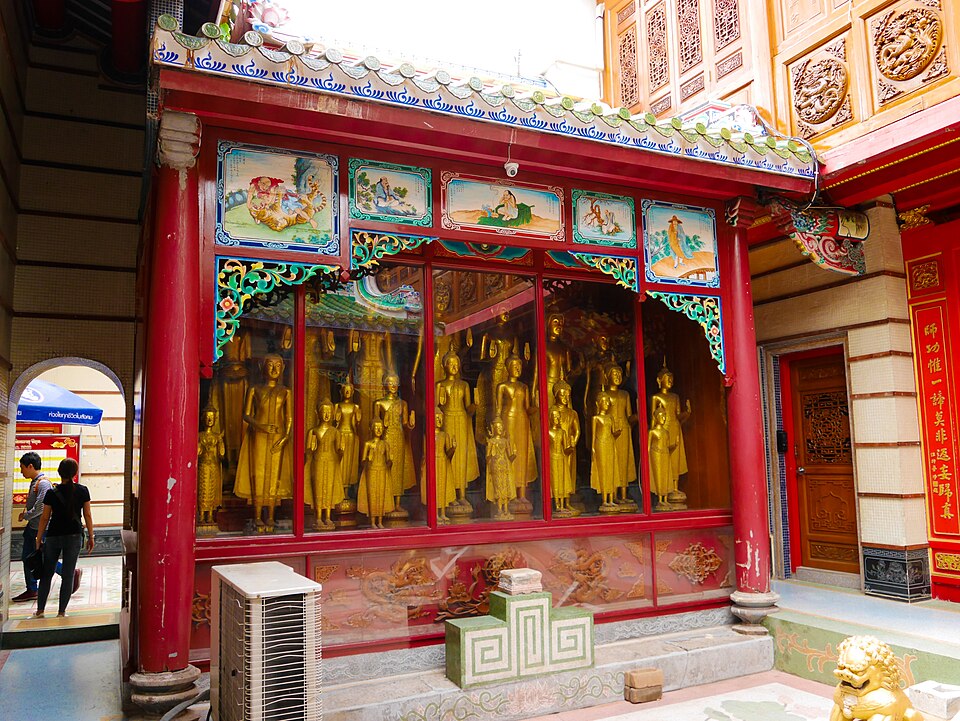
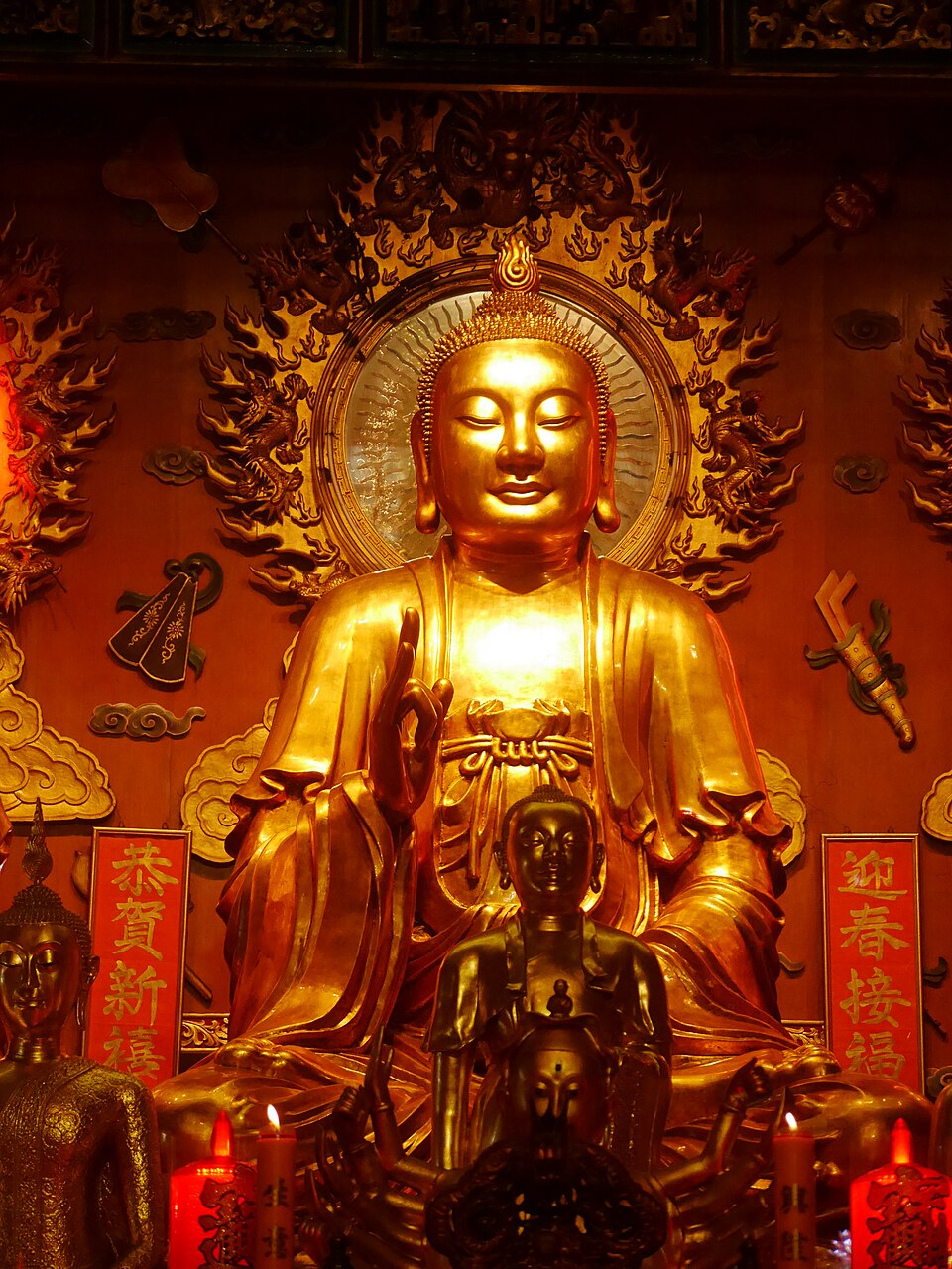
The plan is southern Chinese, executed by Teochew craftsmen, and it reads as a sequence of courtyards rather than a single hall in a walled enclosure. Four guardian statues, the Chatulokkaban or Heavenly Kings, flank the entrance; beyond them the ordination hall holds three principal images, Shakyamuni, Amitabha and the Medicine Buddha, with eighteen further statues around them, and Thai sources count roughly fifty-eight deities across the complex. Rear pavilions are dedicated to Guanyin, to the temple's founder and to Saint Lak Chao, a gallery displays gilded Buddha images, and a courtyard shrine holds a furnace for ancestral offerings. The roofs are the give-away: sweeping tiled ridges loaded with animal and floral motifs and with the dragons the temple is named for. Worshippers move between shrines buying incense bundles, oil for lamps and paper offerings, and the sixty deities of the year cycle draw the longest queues from people whose birth year is in conflict.
Forty-five minutes is the recorded figure and it fits an ordinary day: a circuit of the courtyards, time at the Guanyin pavilion, and enough of a pause to watch a full offering being made rather than glimpsing one. A visitor who joins the incense queue or has a birth-year ceremony performed should add half an hour or more. During Chinese New Year or the ninth-month vegetarian festival, forty-five minutes buys entry, a slow shuffle and little else, and the honest allowance is ninety minutes or an early start.
Two dates dominate the year. Chinese New Year fills the temple and the surrounding streets for days, and the nine-day Nine Emperor Gods festival, held from the eve of the ninth Chinese lunar month and usually falling in October, turns the temple and the lanes around it into a vegetarian food quarter: participants wear white, shops fly red and yellow jay flags to mark that their food is acceptable, and no meat, fish sauce, egg or dairy is used. Both are worth attending deliberately and worth avoiding if the aim is a calm look at the architecture. Outside them, early morning is best; the temple is busiest in the middle of the day and around auspicious dates in the Chinese calendar. No operator-published opening hours could be confirmed, so an early arrival is also the safest way to find the courtyards open.
No admission price and no opening hours are recorded for Wat Mangkon Kamalawat, because no operator page could be read on 25 August 2026. The temple website named by the Thai encyclopaedia entry, lengnoeiyi.com, does not resolve, and no other page published by the temple or by the Chinese Buddhist order in Thailand could be reached. Third-party figures disagree with each other and none is operator-published: the English encyclopaedia entry states 08:00 to 16:00 daily with free admission, while Thai listings variously give 07:00 to 18:00 and 08:00 to 17:00. Those are printed here as unverified reports, not recorded as facts. What visitors do spend money on is offerings, incense, lamp oil and paper goods sold at stalls inside and outside the gate, which are voluntary and are not an entrance fee.
The MRT reaches the door. Wat Mangkon station on the Blue Line opened on 29 July 2019 directly beside the temple, and the station was designed around it, with murals of Chinese dragons and water lilies, red and gold finishes chosen as auspicious colours, and a ceiling shaped so that passengers walk through what is meant to feel like the belly of a dragon. Coming out of the station puts a visitor on Charoen Krung Road within a couple of minutes' walk of the entrance, between sois 19 and 21. Arriving by taxi through Chinatown's lanes is slow at almost any hour and unpleasant in the evening; walking in from Yaowarat Road takes a few minutes and is the more interesting approach.
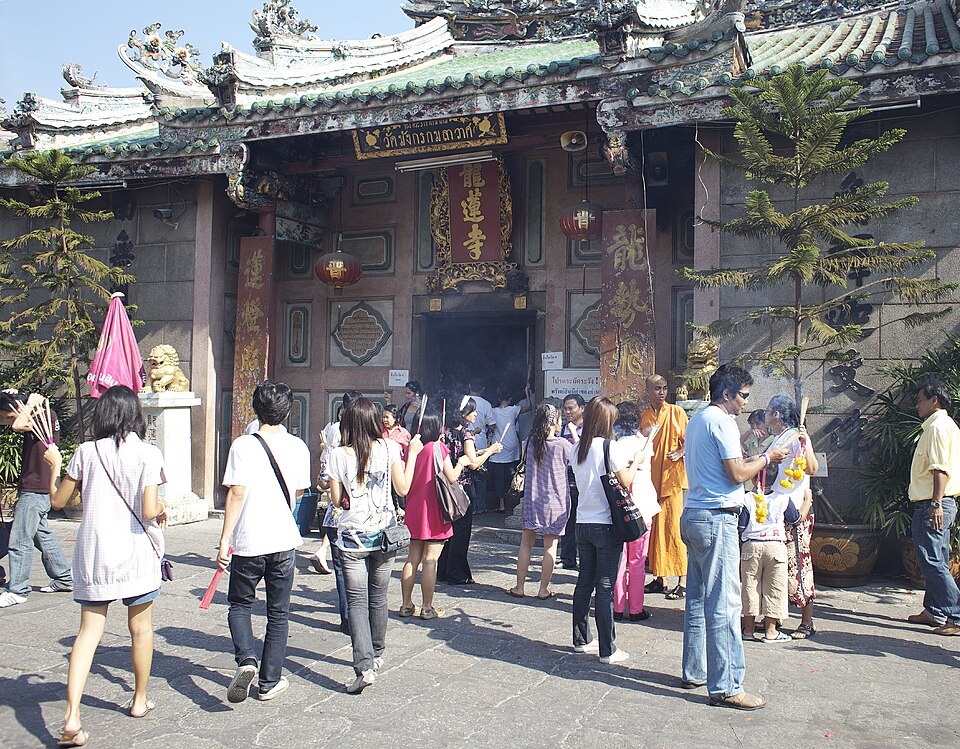
This is a functioning place of worship where almost everyone present is doing something, not looking at something, and the commonest mistake is standing in the way of it. Shoulders and knees stay covered, shoes come off where a sign or a rack says so, and visitors should not walk between a worshipper and the shrine they are facing. Lit incense is carried at head height in crowds and burns clothing and skin easily; the smoke in the enclosed courtyards is genuinely thick and is hard going for anyone with asthma. Offerings and candles are bought from the temple stalls, not brought in from outside, and touching images, the offering furnace or another person's offerings is not acceptable. Pickpocketing is a real risk in the dense festival crowds on Charoen Krung and Yaowarat. During the vegetarian festival, do not bring meat food into the temple precinct.
The temple gives colour rather than scale, and it gives it best in the courtyards. Late morning drops light down between the roofs onto the incense smoke, which is the shot most people come away wanting; the dragon ridges and the animal and floral roof motifs need a telephoto from the courtyard floor, since there is nowhere to stand back far enough for a wide view. Photograph the shrines from behind the worshippers, never across the front of them, and never use flash inside a hall. Ask before photographing monks, and do not photograph people at the moment of prayer or divination. The MRT station below is itself a decent subject and is far easier to shoot than the temple. Tripods have no place in these courtyards on any busy day.
Checked 2026-08-25
Common questions
What kind of temple is Wat Mangkon Kamalawat?
It is the largest and most important Chinese Buddhist temple in Bangkok, practising Mahayana Buddhism blended with Chinese folk religion, with Guanyin as a principal deity. It is not a Thai Theravada wat, and its ritual year follows the Chinese calendar.
What does the name mean and when was the temple founded?
It was founded in 1871 or 1872 by Phra Archan Chin Wang Samathiwat as Wat Leng Noei Yi, its Teochew name. King Chulalongkorn later granted the Thai name Wat Mangkon Kamalawat, which means Dragon Lotus Temple; Thai sources say construction took eight years.
What are the opening hours and is there an entrance fee?
Neither is recorded here. The temple website named by the Thai encyclopaedia entry, lengnoeiyi.com, does not resolve, so nothing operator-published could be read. Unverified third-party reports disagree: the English encyclopaedia entry says 08:00 to 16:00 daily with free admission, while Thai listings give 07:00 to 18:00 and 08:00 to 17:00.
When is the vegetarian festival and what happens?
The nine-day Nine Emperor Gods festival begins on the eve of the ninth Chinese lunar month and usually falls in October. Participants wear white, shops fly red and yellow jay flags to show their food is acceptable, and no meat, fish sauce, egg or dairy is used.
How do visitors reach the temple?
Wat Mangkon station on the MRT Blue Line opened on 29 July 2019 beside the temple, which stands on Charoen Krung Road between sois 19 and 21. The station was decorated for the temple, with Chinese dragon and water-lily murals and red and gold finishes.
What should visitors be careful about inside?
Cover shoulders and knees, do not walk between a worshipper and the shrine they face, and watch for lit incense carried at head height in the crowd. Smoke in the enclosed courtyards is thick, offerings are bought from the temple stalls, and festival crowds on Charoen Krung attract pickpockets.
Nothing non-essential is set before you choose, in regions where consent is required. If you decline, ads still appear but they are non-personalised, and analytics is switched off entirely.

_%E0%B8%A7%E0%B8%B1%E0%B8%94%E0%B8%A1%E0%B8%B1%E0%B8%87%E0%B8%81%E0%B8%A3%E0%B8%81%E0%B8%A1%E0%B8%A5%E0%B8%B2%E0%B8%A7%E0%B8%B2%E0%B8%AA_%E0%B9%80%E0%B8%82%E0%B8%95%E0%B8%9B%E0%B9%89%E0%B8%AD%E0%B8%A1%E0%B8%9B%E0%B8%A3%E0%B8%B2%E0%B8%9A%E0%B8%A8%E0%B8%B1%E0%B8%95%E0%B8%A3%E0%B8%B9%E0%B8%9E%E0%B9%88%E0%B8%B2%E0%B8%A2_%E0%B8%81%E0%B8%A3%E0%B8%B8%E0%B8%87%E0%B9%80%E0%B8%97%E0%B8%9E%E0%B8%A1%E0%B8%AB%E0%B8%B2%E0%B8%99%E0%B8%84%E0%B8%A3_(2).jpg)
_%E0%B8%A7%E0%B8%B1%E0%B8%94%E0%B8%A1%E0%B8%B1%E0%B8%87%E0%B8%81%E0%B8%A3%E0%B8%81%E0%B8%A1%E0%B8%A5%E0%B8%B2%E0%B8%A7%E0%B8%B2%E0%B8%AA_%E0%B9%80%E0%B8%82%E0%B8%95%E0%B8%9B%E0%B9%89%E0%B8%AD%E0%B8%A1%E0%B8%9B%E0%B8%A3%E0%B8%B2%E0%B8%9A%E0%B8%A8%E0%B8%B1%E0%B8%95%E0%B8%A3%E0%B8%B9%E0%B8%9E%E0%B9%88%E0%B8%B2%E0%B8%A2_%E0%B8%81%E0%B8%A3%E0%B8%B8%E0%B8%87%E0%B9%80%E0%B8%97%E0%B8%9E%E0%B8%A1%E0%B8%AB%E0%B8%B2%E0%B8%99%E0%B8%84%E0%B8%A3_(3).jpg)
_%E0%B8%A7%E0%B8%B1%E0%B8%94%E0%B8%A1%E0%B8%B1%E0%B8%87%E0%B8%81%E0%B8%A3%E0%B8%81%E0%B8%A1%E0%B8%A5%E0%B8%B2%E0%B8%A7%E0%B8%B2%E0%B8%AA_%E0%B9%80%E0%B8%82%E0%B8%95%E0%B8%9B%E0%B9%89%E0%B8%AD%E0%B8%A1%E0%B8%9B%E0%B8%A3%E0%B8%B2%E0%B8%9A%E0%B8%A8%E0%B8%B1%E0%B8%95%E0%B8%A3%E0%B8%B9%E0%B8%9E%E0%B9%88%E0%B8%B2%E0%B8%A2_%E0%B8%81%E0%B8%A3%E0%B8%B8%E0%B8%87%E0%B9%80%E0%B8%97%E0%B8%9E%E0%B8%A1%E0%B8%AB%E0%B8%B2%E0%B8%99%E0%B8%84%E0%B8%A3_(4).jpg)
_%E0%B8%A7%E0%B8%B1%E0%B8%94%E0%B8%A1%E0%B8%B1%E0%B8%87%E0%B8%81%E0%B8%A3%E0%B8%81%E0%B8%A1%E0%B8%A5%E0%B8%B2%E0%B8%A7%E0%B8%B2%E0%B8%AA_%E0%B9%80%E0%B8%82%E0%B8%95%E0%B8%9B%E0%B9%89%E0%B8%AD%E0%B8%A1%E0%B8%9B%E0%B8%A3%E0%B8%B2%E0%B8%9A%E0%B8%A8%E0%B8%B1%E0%B8%95%E0%B8%A3%E0%B8%B9%E0%B8%9E%E0%B9%88%E0%B8%B2%E0%B8%A2_%E0%B8%81%E0%B8%A3%E0%B8%B8%E0%B8%87%E0%B9%80%E0%B8%97%E0%B8%9E%E0%B8%A1%E0%B8%AB%E0%B8%B2%E0%B8%99%E0%B8%84%E0%B8%A3_(5).jpg)
_%E0%B8%A7%E0%B8%B1%E0%B8%94%E0%B8%A1%E0%B8%B1%E0%B8%87%E0%B8%81%E0%B8%A3%E0%B8%81%E0%B8%A1%E0%B8%A5%E0%B8%B2%E0%B8%A7%E0%B8%B2%E0%B8%AA_%E0%B9%80%E0%B8%82%E0%B8%95%E0%B8%9B%E0%B9%89%E0%B8%AD%E0%B8%A1%E0%B8%9B%E0%B8%A3%E0%B8%B2%E0%B8%9A%E0%B8%A8%E0%B8%B1%E0%B8%95%E0%B8%A3%E0%B8%B9%E0%B8%9E%E0%B9%88%E0%B8%B2%E0%B8%A2_%E0%B8%81%E0%B8%A3%E0%B8%B8%E0%B8%87%E0%B9%80%E0%B8%97%E0%B8%9E%E0%B8%A1%E0%B8%AB%E0%B8%B2%E0%B8%99%E0%B8%84%E0%B8%A3_(6).jpg)