
_%E0%B8%A7%E0%B8%B1%E0%B8%94%E0%B8%AA%E0%B8%A3%E0%B8%B0%E0%B9%80%E0%B8%81%E0%B8%A8%E0%B8%A3%E0%B8%B2%E0%B8%8A%E0%B8%A7%E0%B8%A3%E0%B8%A1%E0%B8%AB%E0%B8%B2%E0%B8%A7%E0%B8%B4%E0%B8%AB%E0%B8%B2%E0%B8%A3_%E0%B9%80%E0%B8%82%E0%B8%95%E0%B8%9B%E0%B9%89%E0%B8%AD%E0%B8%A1%E0%B8%9B%E0%B8%A3%E0%B8%B2%E0%B8%9A%E0%B8%A8%E0%B8%B1%E0%B8%95%E0%B8%A3%E0%B8%B9%E0%B8%9E%E0%B9%88%E0%B8%B2%E0%B8%A2_%E0%B8%81%E0%B8%A3%E0%B8%B8%E0%B8%87%E0%B9%80%E0%B8%97%E0%B8%9E%E0%B8%A1%E0%B8%AB%E0%B8%B2%E0%B8%99%E0%B8%84%E0%B8%A3_(11).jpg)
_%E0%B8%A7%E0%B8%B1%E0%B8%94%E0%B8%AA%E0%B8%A3%E0%B8%B0%E0%B9%80%E0%B8%81%E0%B8%A8%E0%B8%A3%E0%B8%B2%E0%B8%8A%E0%B8%A7%E0%B8%A3%E0%B8%A1%E0%B8%AB%E0%B8%B2%E0%B8%A7%E0%B8%B4%E0%B8%AB%E0%B8%B2%E0%B8%A3_%E0%B9%80%E0%B8%82%E0%B8%95%E0%B8%9B%E0%B9%89%E0%B8%AD%E0%B8%A1%E0%B8%9B%E0%B8%A3%E0%B8%B2%E0%B8%9A%E0%B8%A8%E0%B8%B1%E0%B8%95%E0%B8%A3%E0%B8%B9%E0%B8%9E%E0%B9%88%E0%B8%B2%E0%B8%A2_%E0%B8%81%E0%B8%A3%E0%B8%B8%E0%B8%87%E0%B9%80%E0%B8%97%E0%B8%9E%E0%B8%A1%E0%B8%AB%E0%B8%B2%E0%B8%99%E0%B8%84%E0%B8%A3_(12).jpg)
_%E0%B8%A7%E0%B8%B1%E0%B8%94%E0%B8%AA%E0%B8%A3%E0%B8%B0%E0%B9%80%E0%B8%81%E0%B8%A8%E0%B8%A3%E0%B8%B2%E0%B8%8A%E0%B8%A7%E0%B8%A3%E0%B8%A1%E0%B8%AB%E0%B8%B2%E0%B8%A7%E0%B8%B4%E0%B8%AB%E0%B8%B2%E0%B8%A3_%E0%B9%80%E0%B8%82%E0%B8%95%E0%B8%9B%E0%B9%89%E0%B8%AD%E0%B8%A1%E0%B8%9B%E0%B8%A3%E0%B8%B2%E0%B8%9A%E0%B8%A8%E0%B8%B1%E0%B8%95%E0%B8%A3%E0%B8%B9%E0%B8%9E%E0%B9%88%E0%B8%B2%E0%B8%A2_%E0%B8%81%E0%B8%A3%E0%B8%B8%E0%B8%87%E0%B9%80%E0%B8%97%E0%B8%9E%E0%B8%A1%E0%B8%AB%E0%B8%B2%E0%B8%99%E0%B8%84%E0%B8%A3_(13).jpg)
_%E0%B8%A7%E0%B8%B1%E0%B8%94%E0%B8%AA%E0%B8%A3%E0%B8%B0%E0%B9%80%E0%B8%81%E0%B8%A8%E0%B8%A3%E0%B8%B2%E0%B8%8A%E0%B8%A7%E0%B8%A3%E0%B8%A1%E0%B8%AB%E0%B8%B2%E0%B8%A7%E0%B8%B4%E0%B8%AB%E0%B8%B2%E0%B8%A3_%E0%B9%80%E0%B8%82%E0%B8%95%E0%B8%9B%E0%B9%89%E0%B8%AD%E0%B8%A1%E0%B8%9B%E0%B8%A3%E0%B8%B2%E0%B8%9A%E0%B8%A8%E0%B8%B1%E0%B8%95%E0%B8%A3%E0%B8%B9%E0%B8%9E%E0%B9%88%E0%B8%B2%E0%B8%A2_%E0%B8%81%E0%B8%A3%E0%B8%B8%E0%B8%87%E0%B9%80%E0%B8%97%E0%B8%9E%E0%B8%A1%E0%B8%AB%E0%B8%B2%E0%B8%99%E0%B8%84%E0%B8%A3_(14).jpg)
_%E0%B8%A7%E0%B8%B1%E0%B8%94%E0%B8%AA%E0%B8%A3%E0%B8%B0%E0%B9%80%E0%B8%81%E0%B8%A8%E0%B8%A3%E0%B8%B2%E0%B8%8A%E0%B8%A7%E0%B8%A3%E0%B8%A1%E0%B8%AB%E0%B8%B2%E0%B8%A7%E0%B8%B4%E0%B8%AB%E0%B8%B2%E0%B8%A3_%E0%B9%80%E0%B8%82%E0%B8%95%E0%B8%9B%E0%B9%89%E0%B8%AD%E0%B8%A1%E0%B8%9B%E0%B8%A3%E0%B8%B2%E0%B8%9A%E0%B8%A8%E0%B8%B1%E0%B8%95%E0%B8%A3%E0%B8%B9%E0%B8%9E%E0%B9%88%E0%B8%B2%E0%B8%A2_%E0%B8%81%E0%B8%A3%E0%B8%B8%E0%B8%87%E0%B9%80%E0%B8%97%E0%B8%9E%E0%B8%A1%E0%B8%AB%E0%B8%B2%E0%B8%99%E0%B8%84%E0%B8%A3_(15).jpg)
4 min walk · เขตพระนคร
Jay Fai
- High
- Restaurant or café
Language · 1 published
Art and culture venue · เขตป้อมปราบศัตรูพ่าย, Bangkok
The Golden Mount
| Monday | 07:30 – 19:00 |
|---|---|
| Tuesday | 07:30 – 19:00 |
| Wednesday | 07:30 – 19:00 |
| Thursday | 07:30 – 19:00 |
| Friday | 07:30 – 19:00 |
| Saturday | 07:30 – 19:00 |
| Sunday | 07:30 – 19:00 |
Checked 2026-08-25 · Source
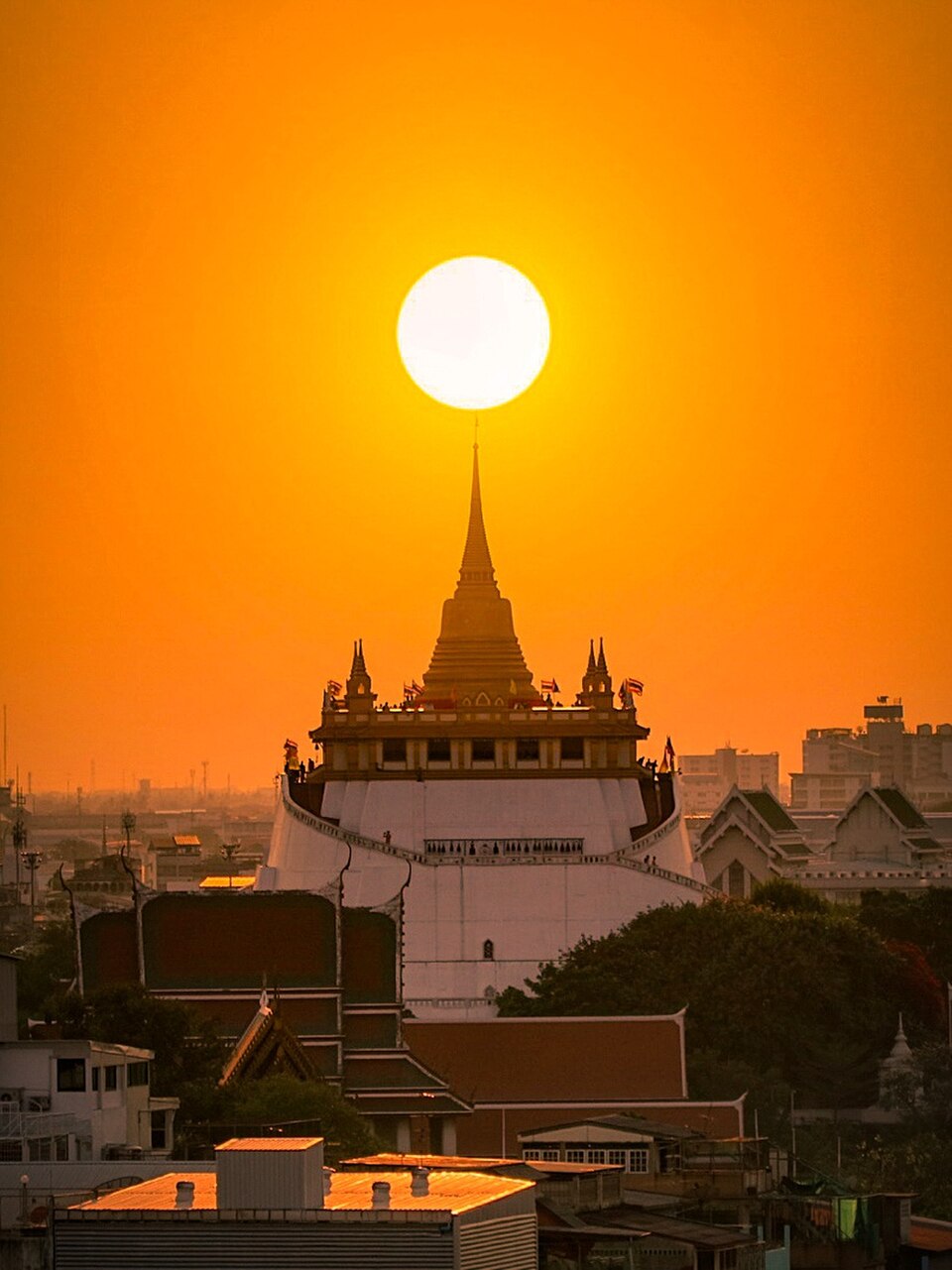
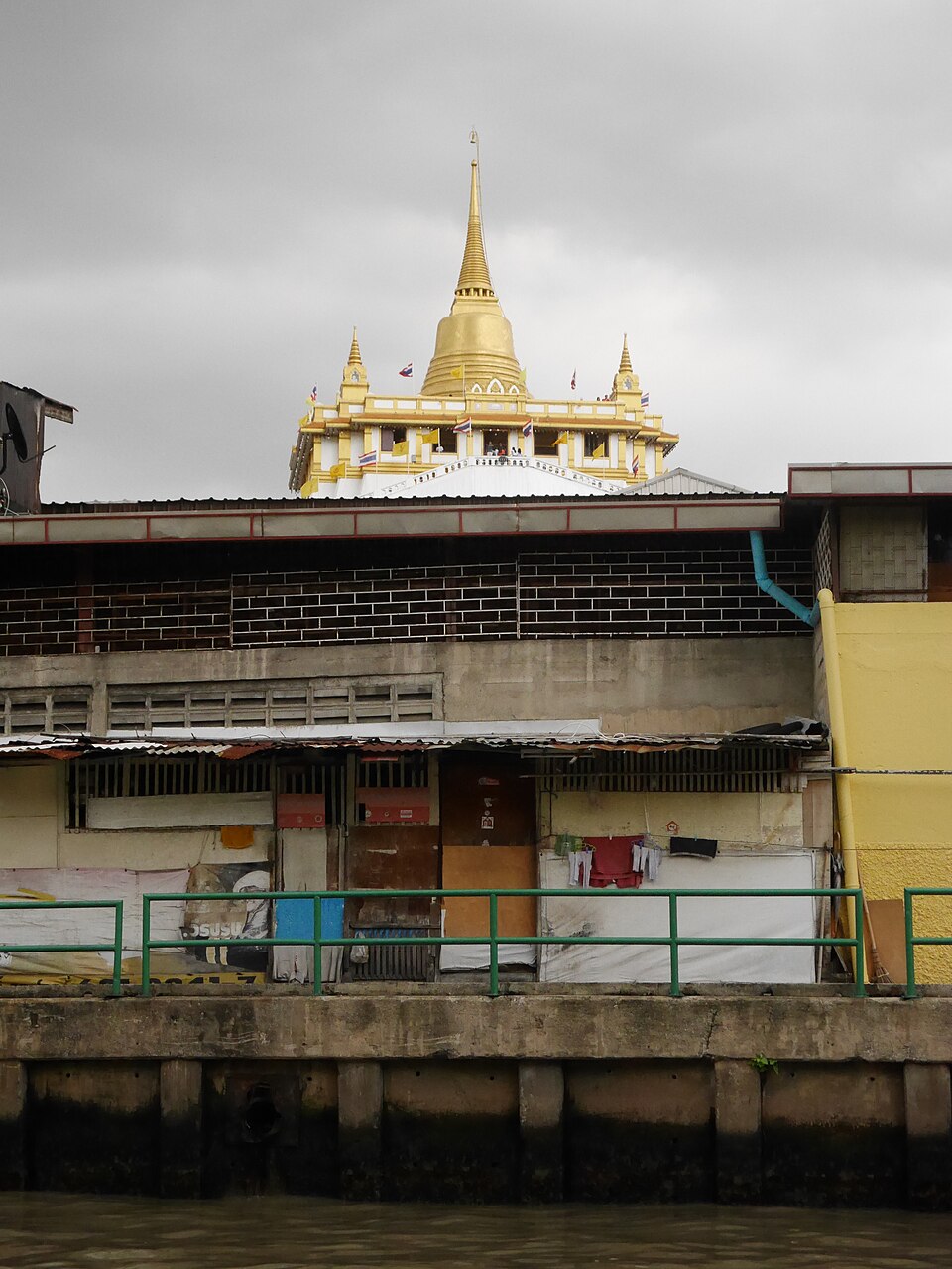
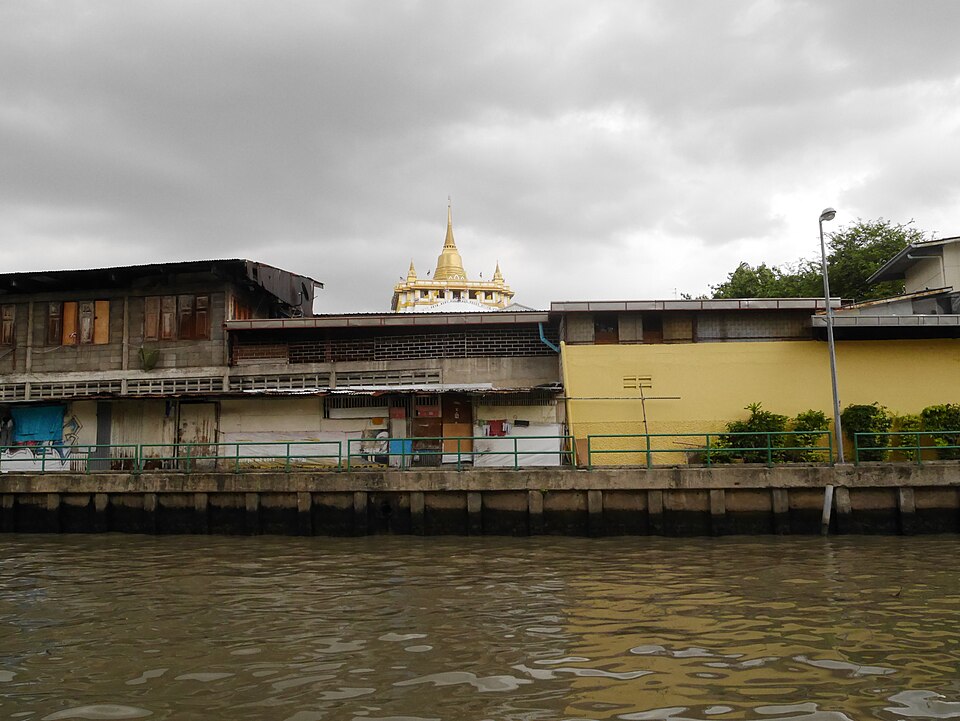
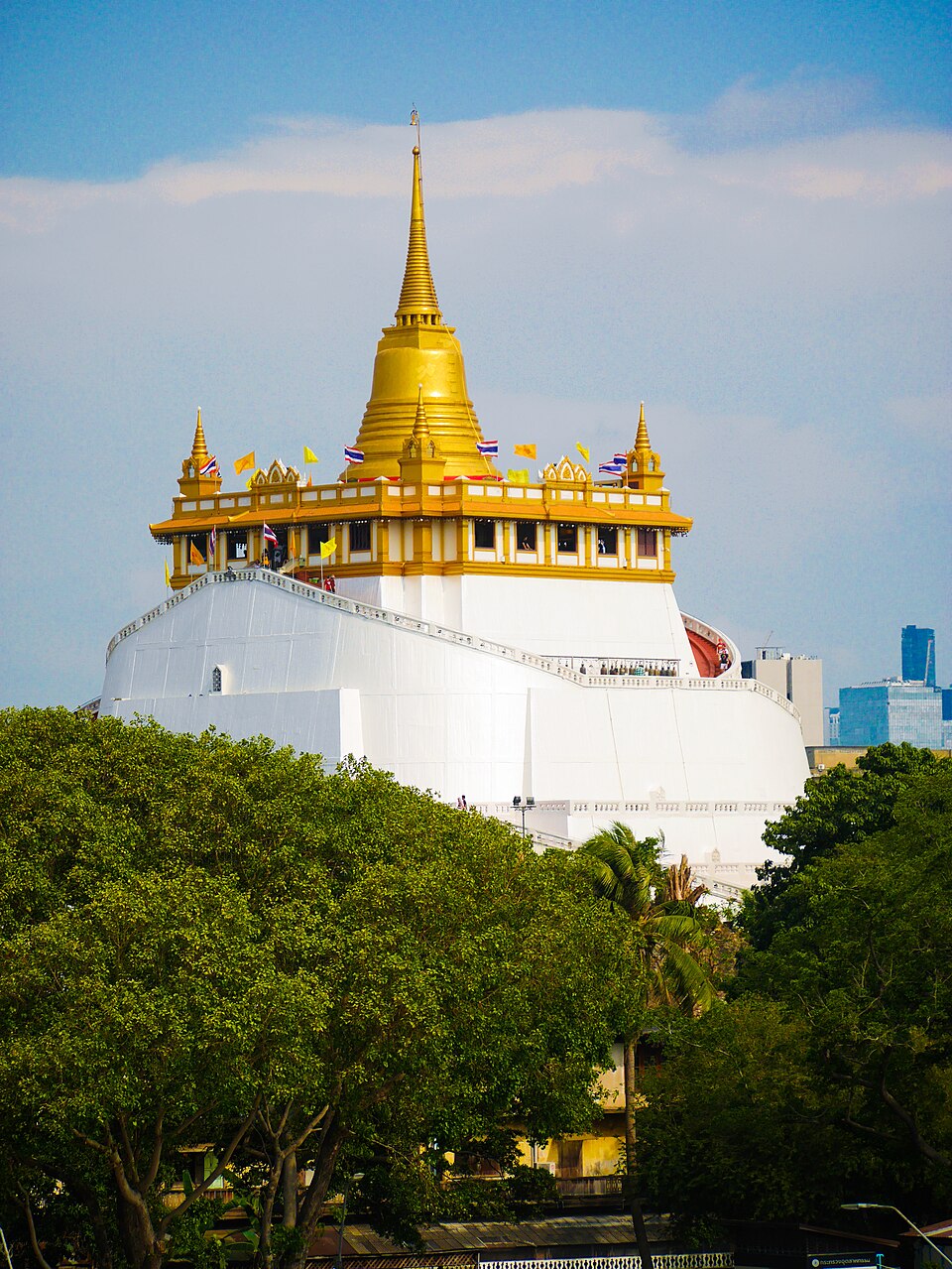
The Golden Mount is a hill that was never meant to be one. King Rama III set out to build an enormous chedi at Wat Saket, and Bangkok's soft delta soil would not carry it; the structure collapsed while it was going up and was abandoned. Left to the weather, the mud-brick ruin settled and greened over into a mound, and Bangkok gained the only real elevation in its old quarter by accident. King Rama IV began a far smaller chedi on top of that mound, it was completed early in the reign of his son King Rama V, and it was sanctified by being covered in a layer of gold — which is where the English name comes from. Inside it sits a Buddha relic brought from Sri Lanka by Prince Prisdang. In the 1940s concrete walls were added to stop the hill from eroding away beneath it. So the thing a visitor climbs is a failure, a ruin, a reliquary and a retaining wall stacked in that order, and the reason it is on every Bangkok list is what it made possible: from the terrace at the top, the old royal island lies out flat below, and there is nowhere else in Rattanakosin to see it from above.
Checked 2026-08-25 · Source
The visit is a stair. It spirals up the outside of the planted mound in the open air, turning as it climbs, so the view opens by degrees rather than all at once and the old quarter arrives in slices — first the tin roofs of Ban Bat, then Ratchadamnoen and the canal, then the palace end of the island. Near the top the stair reaches the shrine level beneath the chedi, where the Sri Lankan relic is enshrined and where visitors stop, kneel and leave incense; this is the quiet part and it is indoors and cool. Above it, the open terrace rings the gilded chedi and can be walked all the way round, which is worth doing rather than stopping at the first parapet, because the four directions give four different cities: the low old quarter to the west, the towers of the new one to the east. Every November the chedi is wrapped in red cloth for the temple's annual festival, a candlelight procession climbs this stair after dark, and the robe tradition has been observed since the reign of King Rama V.
Checked 2026-08-25 · Source

Allow forty-five minutes for the Golden Mount itself, measured from the foot of the stair back to the foot of the stair. That is a steady climb with stops, a pause at the relic shrine, a full circuit of the terrace rather than a glance from one side, and the descent. No operator publishes a visit length, so the figure is editorial judgement. It is honest about pace rather than fitness: the climb is not steep, but it is unshaded and long enough that anyone taking it fast in April will want the shrine level for longer than they planned. Add the temple below as a separate hour if the monastery is being visited too. Subtract nothing for a sunset visit — that is when the terrace is fullest and a circuit takes longest.
Checked 2026-08-25
Two answers, and they suit different visits. For the climb itself, come at 07:30 when the published day begins: the stair is empty, the stone is cool, and the terrace can be walked round without waiting for a gap at the parapet. For the view, late afternoon is when the city looks best from up here and the light rakes across the old quarter — but it is also when everyone else comes, the stair becomes single-file, and the 19:00 close means the descent is a queue. Between November and February either choice is comfortable; between March and May the morning is not a preference but a necessity, because the terrace has no shade at all. In November the temple's festival week wraps the chedi in red cloth and fills the stair after dark, which is either the reason to come or the week to avoid.
Checked 2026-08-25 · Source
No admission figure is recorded, and the reason is set out in full on the Wat Saket page this mount stands in: the temple publishes no fee anywhere, the hundred baht on its website is one mosaic tile of the chedi restoration appeal rather than a ticket, and the alternative temple domains that search returns either fail to resolve or serve an expired certificate. Guide sites quote twenty, fifty and one hundred baht for foreigners at the mount. The disagreement is recorded as a disagreement; no figure is entered as this page's price, because none of them has an operator behind it. Practical consequence for a visitor: carry small notes, expect that a charge may be taken at the foot of the stair rather than at the temple gate, and do not plan a budget around any figure quoted on a third-party page, this one included.
Checked 2026-08-25 · Source
The approach is the same one described on the Wat Saket page — MRT Sam Yot and a walk of about a kilometre, or the Khlong Saen Saep canal boat to Phan Fa Lilat pier, and no car — because the mount is inside that temple's compound and there is no separate entrance to it from the street. The part that belongs to this page is the last stretch. The stair begins at ground level behind the monastery buildings and it is the only way up that this guide can vouch for; no operator statement about a lift, an escalator or any step-free route was found, so anyone who needs one should ask at the temple rather than assume from this page in either direction. Shoes matter more here than at any other Rattanakosin temple stop: the treads are open to the weather and slick after rain.
Checked 2026-08-25

The hazard here is heat and water, not crowds. The climb is entirely open, the terrace has no shade, and there is no drinking water on the way up — carry a bottle from the street, because turning back for one means doing the stair twice. After a rain shower the treads and the terrace tiles are slippery, and the handrail is the one to use rather than the parapet. The 19:00 close is a hard one and it applies to a structure that has to be descended: be starting down by about a quarter to seven rather than still circling the chedi, and do not count on the stair being lit. Dress is the temple's dress, and the full rule is on the Wat Saket page — shoulders and knees covered, shoes off inside the shrine level. At the relic shrine people are praying rather than sightseeing; step around them, keep voices down, and do not stand between a worshipper and the chedi to take a photograph. In festival week the stair is one-way in practice even when nobody says so.
Checked 2026-08-25
This is a viewpoint before it is a monument, and the useful frames are made in the last hour of light and the first. Facing west from the terrace in the late afternoon puts the old royal island, Ratchadamnoen and the river beyond it into a single receding plane, and the haze that ruins a midday shot is exactly what separates those planes at low sun. Facing east at 07:30 gives the opposite picture — the modern skyline hard against the light with the old quarter still in shadow — and no crowd in the frame. The gilding itself photographs badly at noon and beautifully at a low angle, when the chedi goes from flat yellow to something with modelling in it. Bring the widest lens for the panorama and something long for the detail below: the roofs, the canal boats and the alms-bowl workshops read as pattern from up here. A phone will do the panorama; nothing will fix a smeared frame taken at 18:55 with an unsteady hand, so brace on the parapet rather than raising the ISO blindly.
Checked 2026-08-25
No step count is recorded here, because no operator source publishes one and the figures in circulation come from third-party pages. What can be said honestly is the shape of the climb: an open-air stair spiralling around the outside of the mound, not steep, taken in a few minutes by anyone comfortable on stairs, and hot in the middle of the day.
Daily 07:30 to 19:00. That is the span the temple publishes on its own site for the Borom Banphot chedi, which is this structure, and it is the only operator-published time either this page or the Wat Saket page has.
Because the hill is a collapsed building. Rama III's attempt at a very large chedi sank into the soft soil and failed; the ruin weathered into a mound, Rama IV built a smaller chedi on top of it, and it was finished and gilded early in Rama V's reign. Concrete walls were added in the 1940s to stop the mound eroding.
Sunset gives the better picture and the worse visit: the light rakes across the old quarter, and the stair and terrace are at their most crowded before the 19:00 close. The 07:30 opening gives an empty terrace, cool stone and a clean view east. Visitors who want both should take the morning for the climb and accept a photograph without the golden hour.
A Buddha relic brought from Sri Lanka by Prince Prisdang, enshrined at the shrine level beneath the gilded chedi. It is an active place of prayer rather than an exhibit, and it is the one indoor and cool point on the climb.
No operator statement about a lift, an escalator or a step-free route was found, so this page does not claim one exists and does not claim one does not. Anyone who needs step-free access should ask at the temple before committing to the visit.
Loading the interactive map…
The interactive map could not be loaded.
Last updated:
Source: OpenStreetMap contributors, Wikidata ·