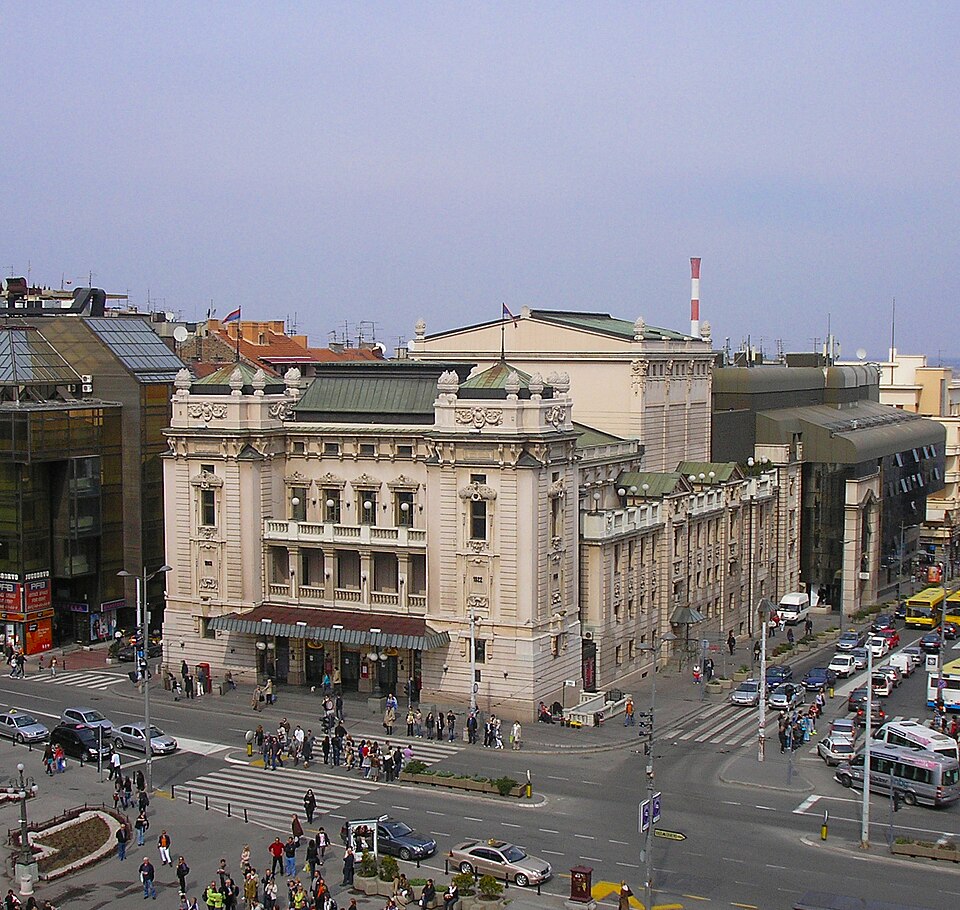
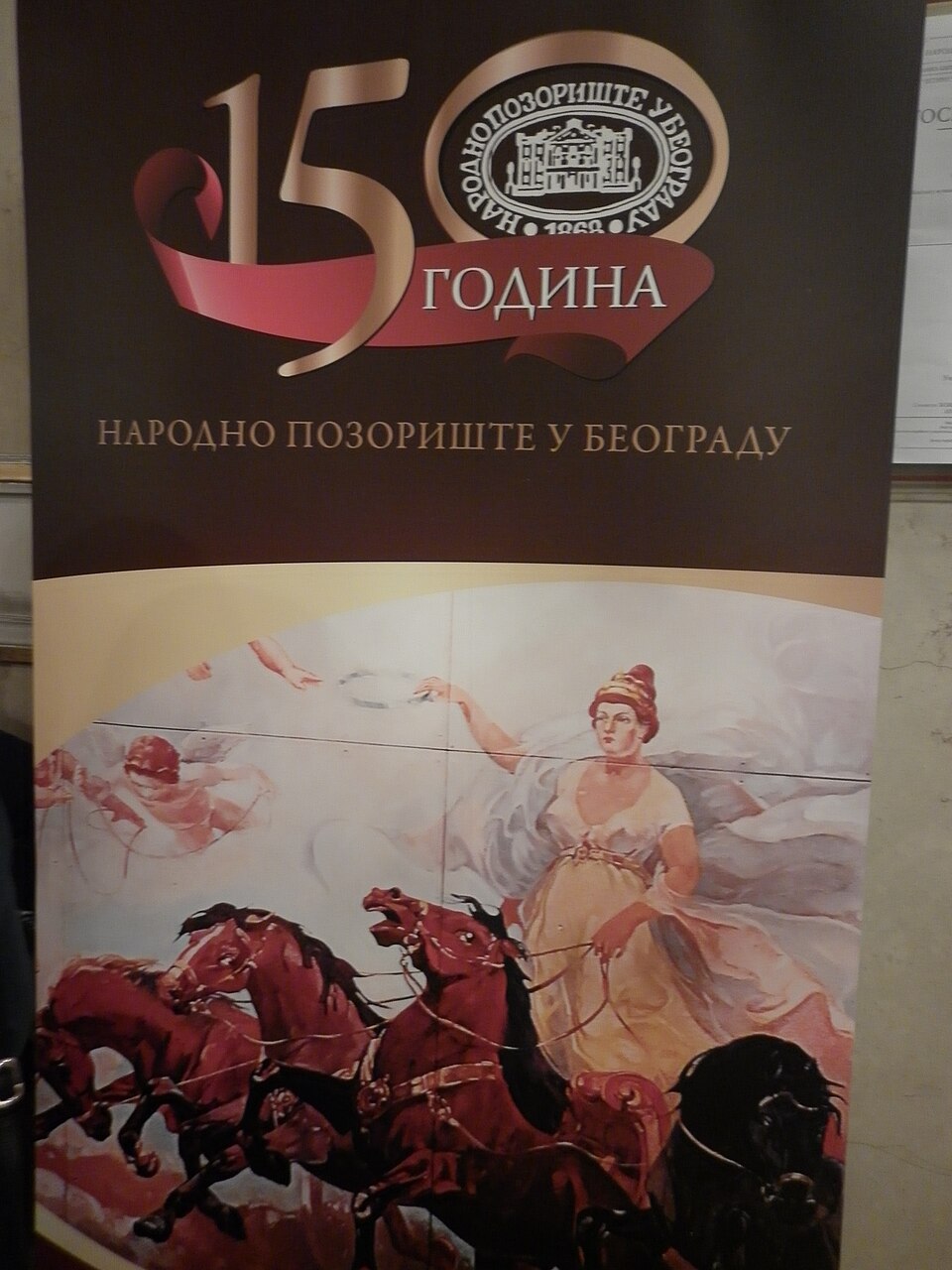
The National Theatre opened on Republic Square in 1868, modelled by the architect Aleksandar Bugarski on Milan's La Scala and Moscow's Bolshoi rather than on a local precedent, at a time when Serbia was asserting itself as a modern European state after Ottoman rule.
The square in front of the theatre carries the theatre's own name in everyday Belgrade speech as often as its official one, and the building anchors the pedestrian core of the city more than any other single structure. It now houses three companies under one roof — Opera, Ballet and Drama — which is unusual among European national theatres of comparable size. The theatre has been rebuilt and extended repeatedly, most substantially between 1989 and 1991, when a fourth floor and expanded backstage facilities were added without altering the historic Republic Square facade people recognise.
The main auditorium seats an opera and ballet company on the same stage the Drama company also uses, on a rotating repertoire rather than a single long-running production.
The Ballet company traces its own history back to 1923–1924, decades after the Opera and Drama were established, and the three companies' overlapping repertoire is scheduled around a single shared stage rather than three separate houses. The building's public foyers keep nineteenth-century decoration — chandeliers, painted ceilings, a grand staircase — restored through the 1989–1991 works rather than replaced with a modern interior. In front of the building, the equestrian Monument to Prince Mihailo Obrenović, unveiled in 1882, has become the informal meeting point of the square itself — “under the horse” is the standard Belgrade phrase for meeting there.
A performance runs to its own programme, typically two to three hours with an interval for opera or ballet, and a shorter run for a single drama production; the building is not generally open for casual daytime browsing outside a ticketed performance or an organised backstage tour.
A guided building tour, where offered, typically runs closer to forty-five minutes and covers the auditorium and foyers outside performance hours. Anyone visiting Republic Square without a ticket sees the exterior and the Prince Mihailo monument rather than the interior, itself a five to ten minute stop within a longer walk down Knez Mihailova.
Evening, for a performance — the theatre's season runs through the autumn to spring months with a lighter summer schedule, and specific programming is not detailed on the sources this page uses.
Republic Square itself, where the building fronts, is a year-round meeting point regardless of what is playing inside, busiest in the early evening as Belgrade heads out for dinner.
Checked 2026-08-24
Photograph
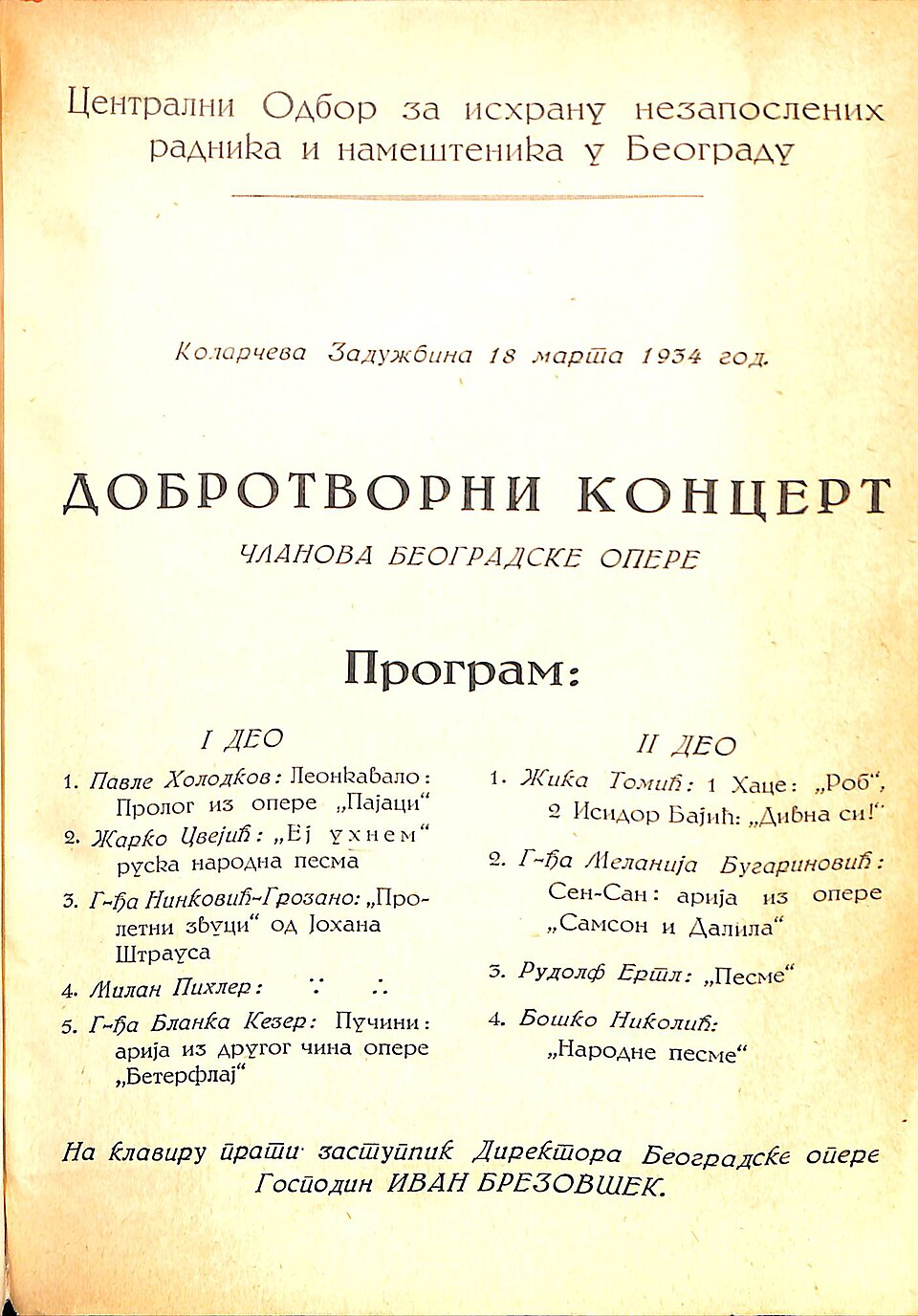
· Zadužbina Ilije M. Kolarca ·
Public domain
Performance tickets are sold per production and vary with the seat and the programme; current rates are not published on the sources this page uses and are not reproduced here.
Backstage or building tours, where offered, are booked and ticketed separately from a performance.
On Republic Square itself, at the head of Knez Mihailova, the pedestrian street running down to Kalemegdan — the most central address a visitor will use in Belgrade.
Trams and buses converge on the square from every direction. There is no metro in Belgrade; trams, buses and trolleybuses run instead, and the old town is walkable end to end from here. The square also holds the National Museum directly opposite, so the two are commonly visited as one stop before continuing down Knez Mihailova toward the fortress.
Because the theatre is a working venue rather than a museum, entry without a ticket is generally limited to the foyer and the square outside; expecting to walk through the auditorium unannounced is a common visitor mistake.
Formal dress is not strictly required for most performances today, but arriving well before curtain matters more here than at a casual attraction, since latecomers are typically held until an interval. Republic Square itself is one of the busiest pickpocket-reported areas in central Belgrade after dark, as is true of most major European squares.
The facade is best photographed from across Republic Square, where the full width reads against the open plaza rather than the narrower angle available from directly in front.
The Prince Mihailo monument in the foreground gives scale and is itself one of the most-photographed objects in the city. Interior photography during a performance is generally prohibited once the show begins, in line with most working theatres.
Checked 2026-08-24
Common questions
When did the National Theatre open?
In 1868, on Republic Square, modelled by architect Aleksandar Bugarski on Milan's La Scala and Moscow's Bolshoi.
What companies perform at the National Theatre?
Opera, Ballet and Drama all perform on the same stage, on a rotating repertoire rather than in three separate buildings.
What is the statue in front of the theatre?
The equestrian Monument to Prince Mihailo Obrenović, unveiled in 1882, which gives Republic Square its informal Belgrade meeting-point name, “under the horse”.
Can the theatre be visited without a ticket?
Entry is generally limited to the foyer and the square outside without a ticket or a booked building tour; the auditorium is a working performance space rather than a museum.
Where is the National Theatre located?
On Republic Square, at the head of Knez Mihailova, the most central address in Belgrade.
Is formal dress required for a performance?
No — formal dress is not strictly required today, but arriving before curtain matters, since latecomers are typically held until an interval.
Nothing non-essential is set before you choose, in regions where consent is required. If you decline, ads still appear but they are non-personalised, and analytics is switched off entirely.