


.jpg)
.jpg)
2 min walk · Stari Grad
Bista Milutina Bojića
- High
- Historic monument
Language · 1 published
Art and culture venue · Градска општина Стари град, Belgrade
Атеље 212
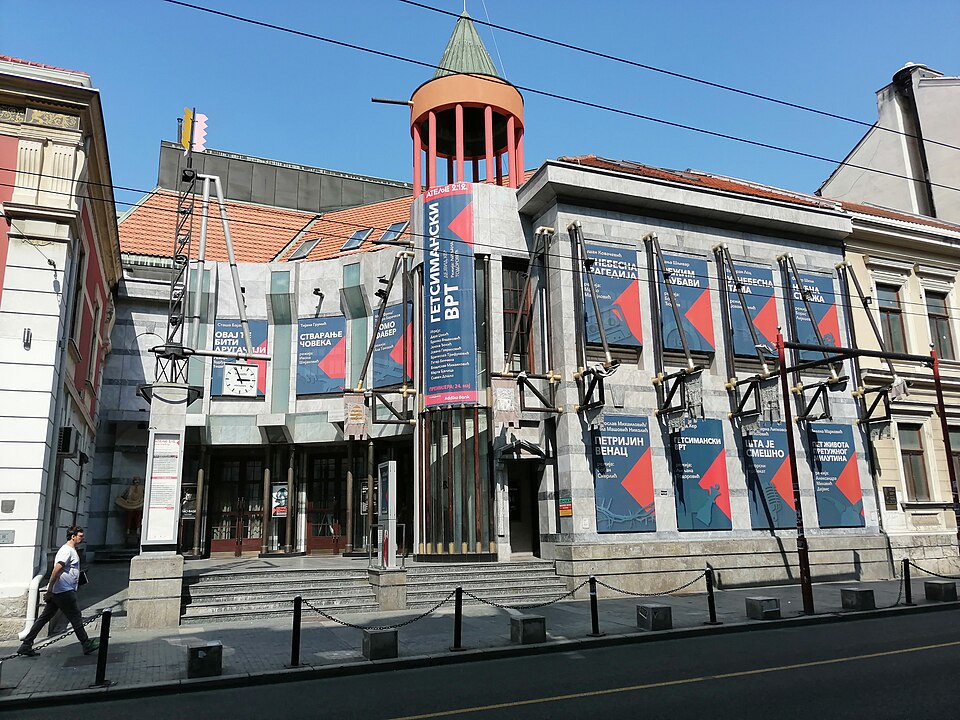
Atelje 212 is a repertory theatre in central Belgrade, opened on 12 November 1956 with a staging of Goethe's Faust directed by Mira Trailović.
The company existed before it had a stage. In summer 1956 a group led by Trailović and painter Mića Popović performed Samuel Beckett's Waiting for Godot semi-clandestinely in Popović's private studio, before about forty people — the play had already been banned in every Communist country, and a staging at the Belgrade Drama Theatre the year before had been shut down. The troupe then found a permanent home in the Borba building, and Godot returned there on 17 December 1956 as the first performance of the play open to the general public anywhere in post-war Eastern Europe.
From its first season the theatre built its name on avant-garde playwrights largely absent from Yugoslav stages — Sartre, Ionesco, Genet, Jarry — under managers Radoš Novaković and Bojan Stupica, with Trailović moving from assistant manager to the lead role. In 1967 Trailović and critic Jovan Ćirilov used the theatre as the base to found the Belgrade International Theatre Festival, BITEF, still held every September and one of Serbia's most significant cultural festivals. Atelje 212 later moved into a purpose-built house on what is now Svetogorska street, designed by Stupica himself.
Checked 2026-08-24 · Source
One repertory stage in the building on Svetogorska, fitted with a retractable roof in a later renovation so a summer programme can run open to the sky.\n\nThe repertoire mixes contemporary Serbian playwrights with the international authors the theatre made its name on in 1956, plus revivals tied to its own history — Godot returns to the programme periodically as the piece that founded the company. Every September the theatre also carries part of the BITEF programme it co-founded in 1967, bringing international experimental productions onto the same stage as the regular season.\n\nThirty-four actors held a permanent contract as of 2018, working alongside guests from Belgrade's other repertory houses, which is the normal arrangement for the city's theatres rather than something specific to this one.
Checked 2026-08-24 · Source
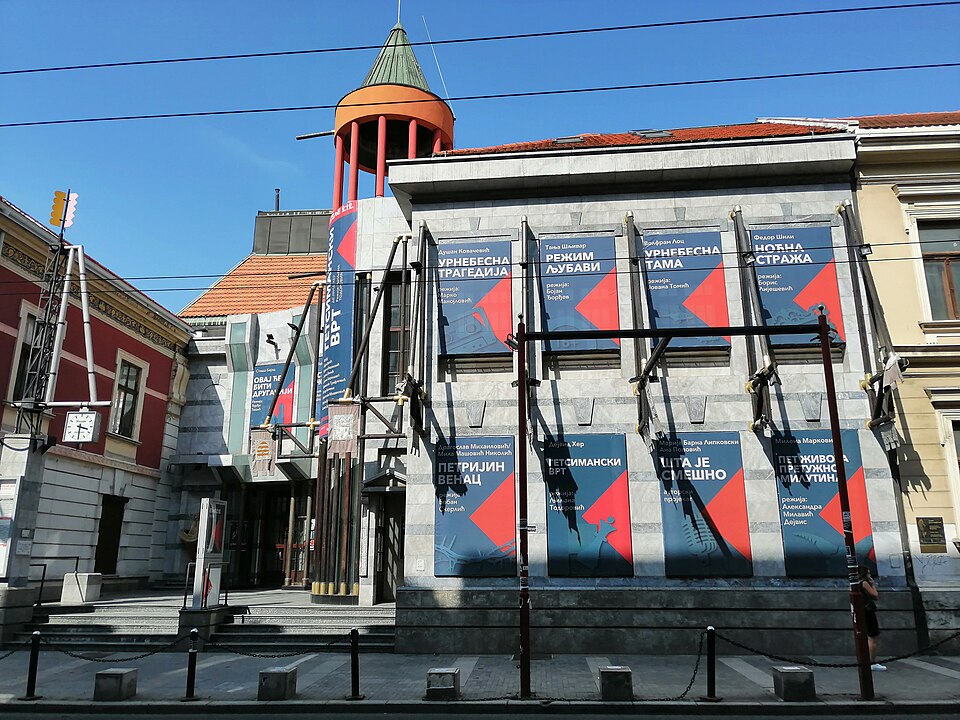
A single evening performance, typically ninety minutes to two and a half hours depending on the production, with one interval on the longer ones.
The building is not a museum and has no separate visiting hours outside performance and box-office times — there is nothing to see here without a ticket to a specific show or, in September, a BITEF screening.
Checked 2026-08-24 · Source
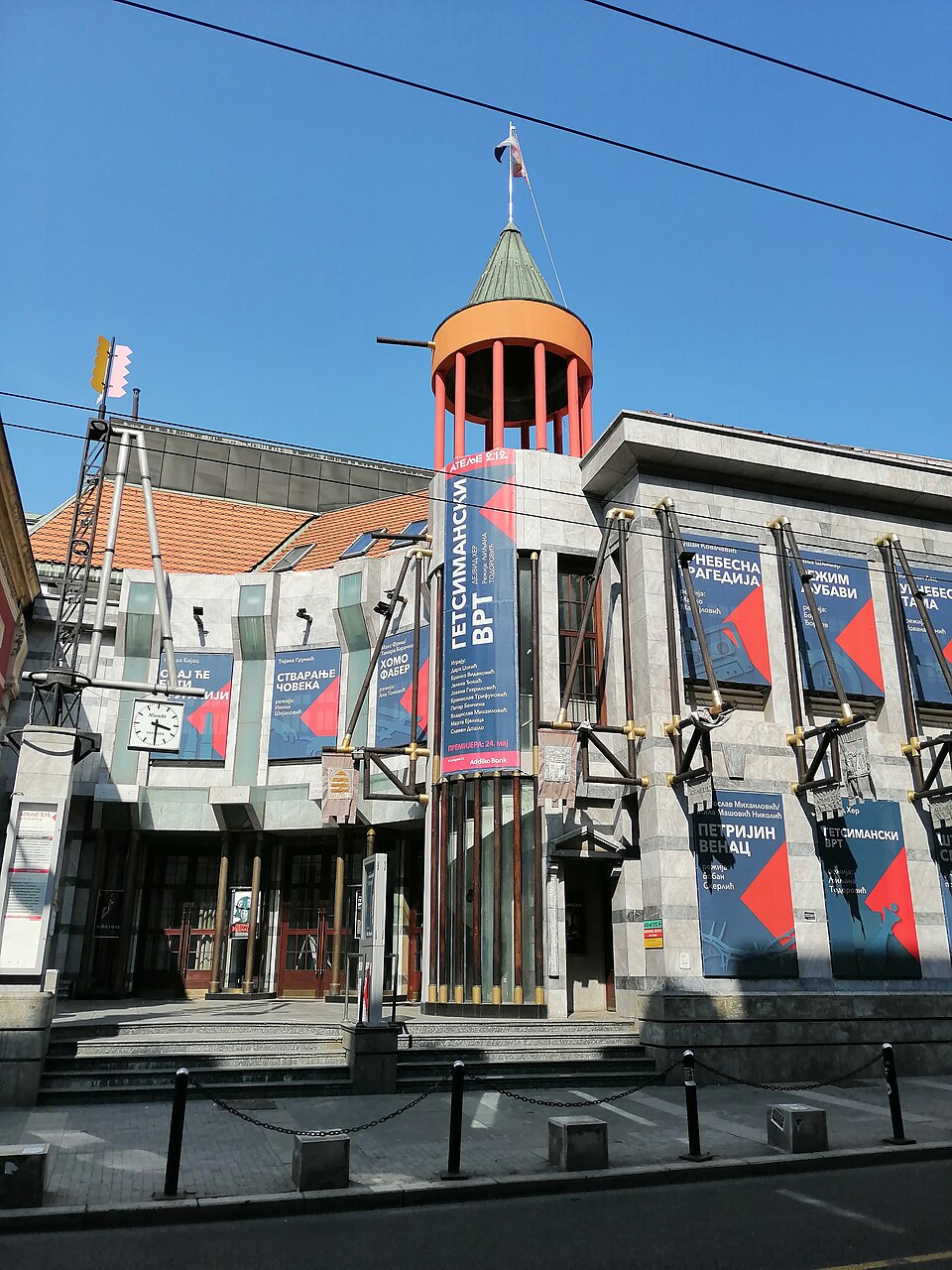
Evening performances, which is the only way the theatre is normally seen; Belgrade repertory houses generally run at 20:00.
September is different: BITEF, the festival the theatre co-founded in 1967, fills the programme with international productions and draws the theatre's busiest houses of the year. The retractable roof also means the summer season is weather-dependent in a way the winter one is not.
Checked 2026-08-24 · Source
Prices are set per production at the box office and are not published on the sources this page uses, so none are reproduced here.
The theatre is funded partly by box-office revenue and partly by a City of Belgrade subsidy — around €1 million a year as of 2011 — which keeps prices for a repertory house of this reputation well under a commercial theatre's. BITEF performances in September are ticketed separately through the festival rather than through the theatre's own regular-season box office.
Checked 2026-08-24 · Source
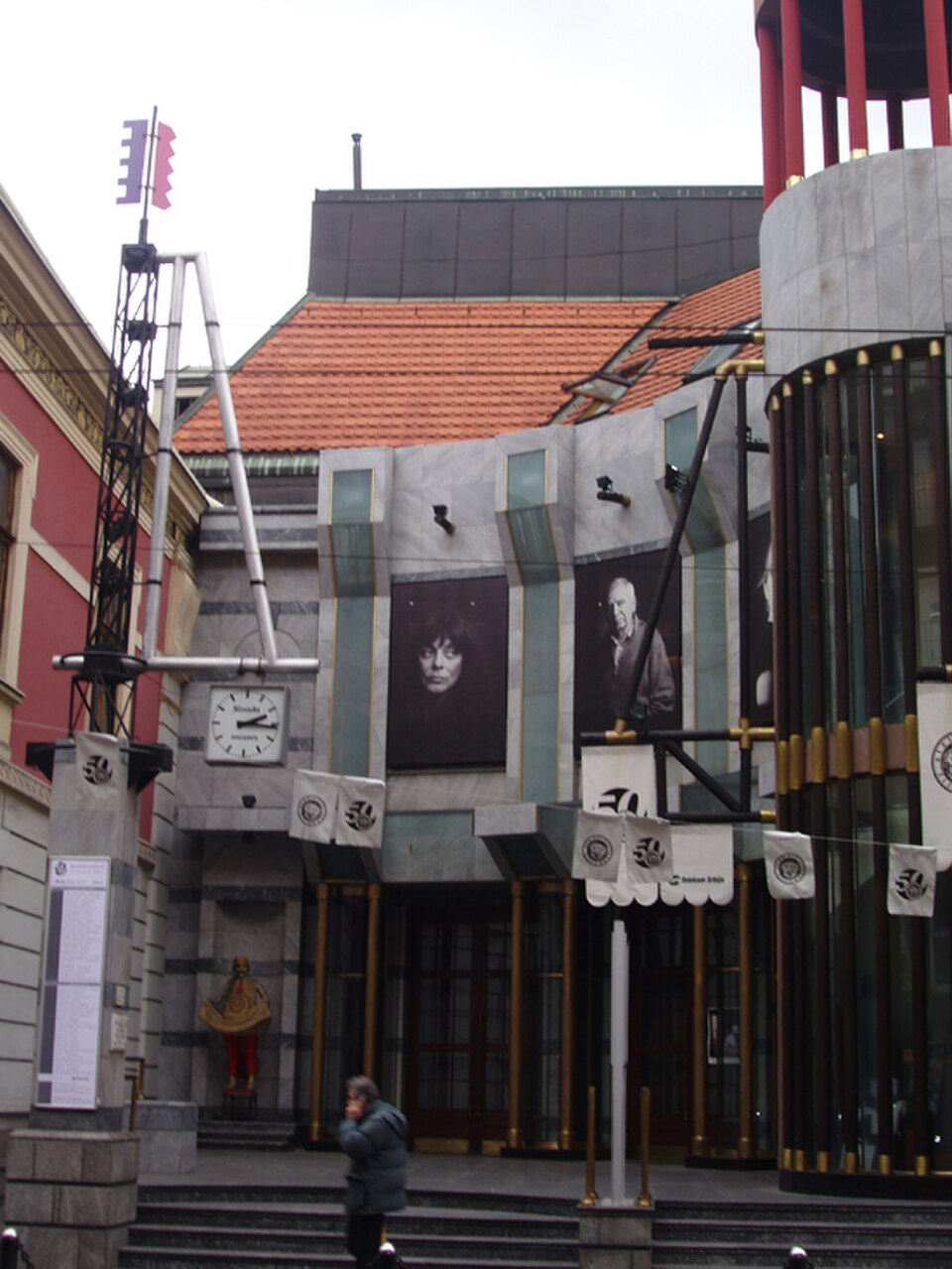
Svetogorska 21, in Stari Grad, a five-minute walk east of Republic Square and Knez Mihailova — the same stretch of the old town that most of the pedestrian-only sightseeing runs through.\n\nBelgrade has no metro; trams, buses and trolleybuses serve the surrounding streets, and the old town around Republic Square is walkable end to end, so a taxi or ride-hail is rarely needed to reach the box office.
Checked 2026-08-24 · Source
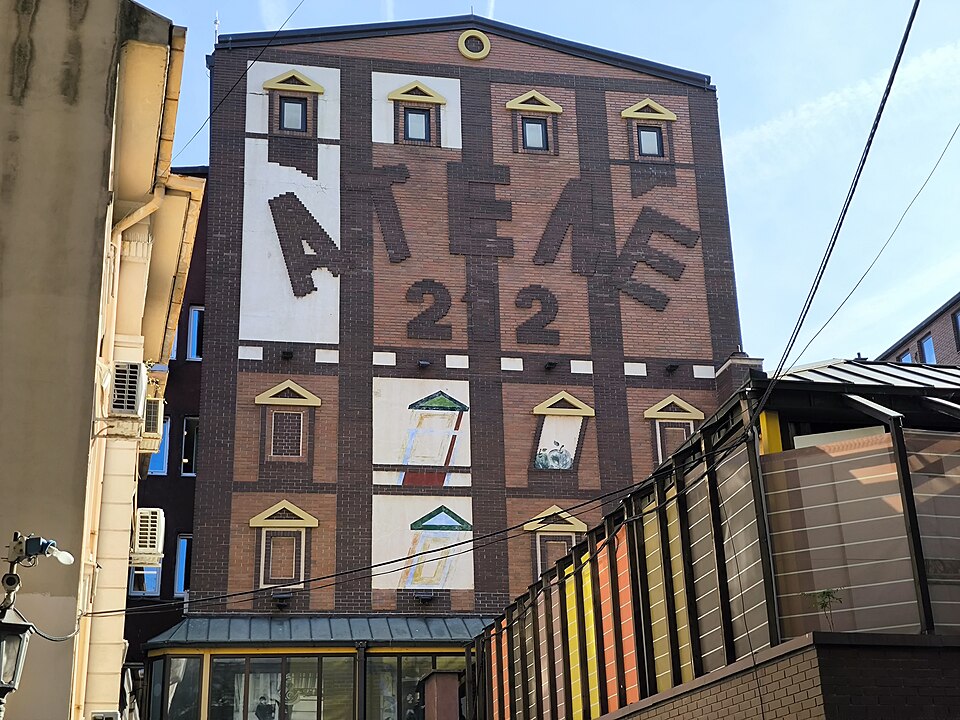
Almost everything outside the BITEF festival plays in Serbian with no surtitles, which the sources for this page do not record an exception to — worth confirming directly with the box office before booking as a non-Serbian speaker. BITEF productions in September are more often international and some carry surtitles.
Popular productions sell out, and the theatre is described as among the most expensive in the city; last-minute tickets are not guaranteed, least of all during the festival.
The open-roof summer shows can be cancelled or moved indoors for weather with little notice.
Checked 2026-08-24 · Source
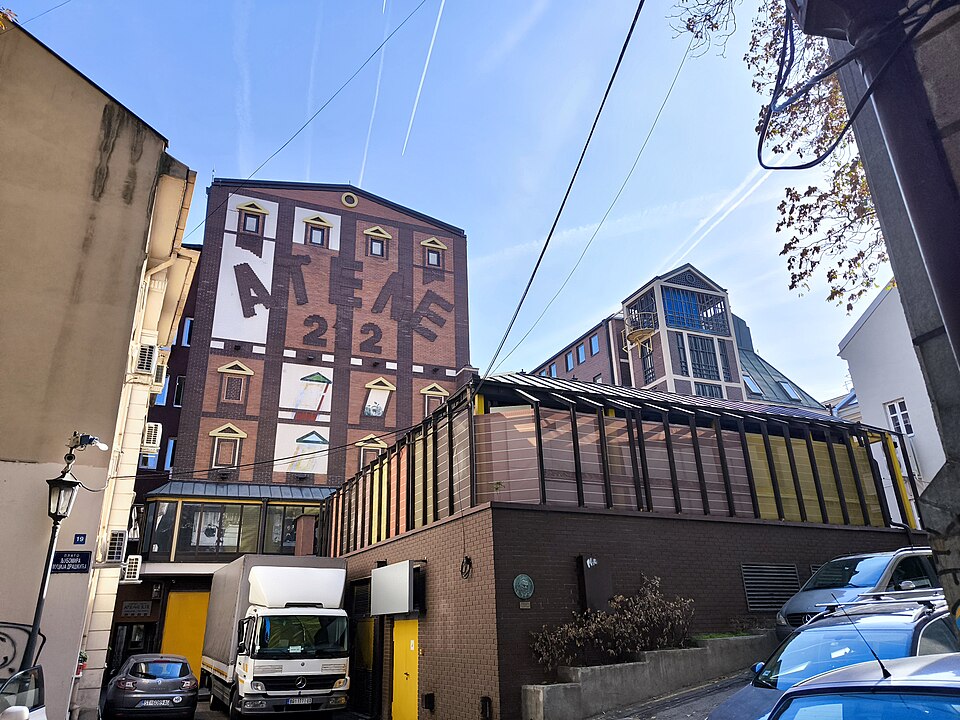
The building's plain modern facade on Svetogorska is the only part open to a camera without a ticket; the auditorium is not visitable outside a performance, and photography during one is the usual theatre no.
No photography policy for the foyer or box office is published on the sources this page uses.
Checked 2026-08-24
Staging the first public performance of Beckett's Waiting for Godot in post-war Eastern Europe, on 17 December 1956, after a banned staging elsewhere in Belgrade and a semi-clandestine one in a private studio earlier that year.
The company had already performed through 1956; its official inauguration at the Borba building was 12 November 1956, with a staging of Goethe's Faust.
Svetogorska 21 in Stari Grad, a five-minute walk from Republic Square along or near Knez Mihailova.
The Belgrade International Theatre Festival, founded in 1967 by Atelje 212 manager Mira Trailović and critic Jovan Ćirilov, runs every September and uses the theatre as one of its venues.
Not as a rule outside BITEF — the sources this page uses do not record surtitled or English-language performances in the regular season; check with the box office before booking.
Partly by box-office revenue, partly by a City of Belgrade subsidy of around €1 million a year as of 2011.
It opens the auditorium to the sky for a summer programme, added in a later renovation of the Svetogorska building.
Loading the interactive map…
The interactive map could not be loaded.
Last updated:
Source: OpenStreetMap contributors, Wikidata ·