Smart Self-Managed Tours

City guide · Morocco

Marrakesh

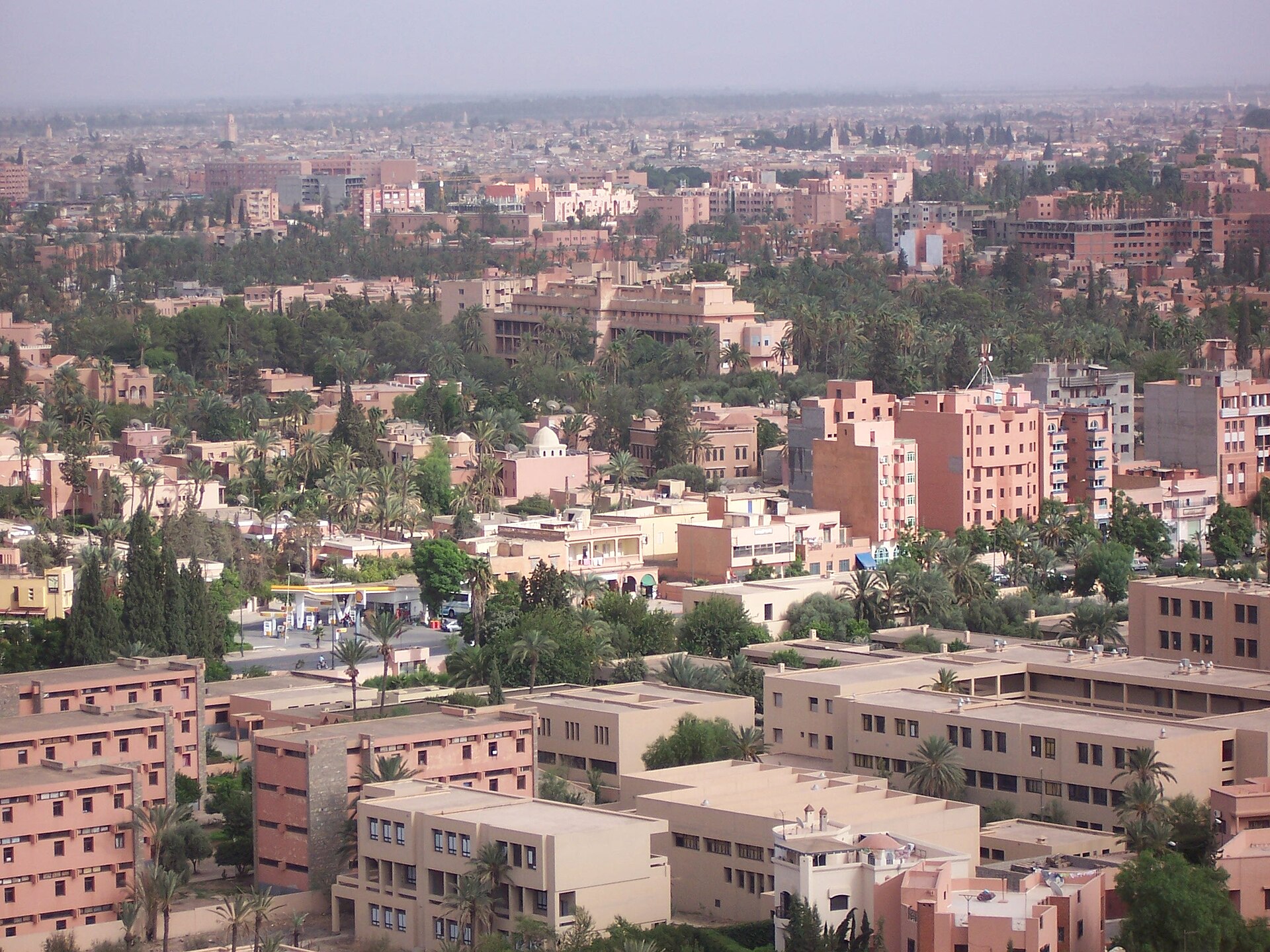
A photograph of Marrakesh
Photograph · CS.D. · CC BY-SA 3.0

Marrakesh has a clear contrast between the walled Medina and modern districts outside it. Jemaa el-Fna, the souks, palaces and many historic monuments belong to the Medina walking network. Guéliz and Hivernage have wider streets, modern hotels and cultural venues, while Sidi Ghanem and the Palmeraie lie farther out. The Atlas Mountains and Agafay are separate excursions, not extensions of a city-centre walk.

Practical information

Language spoken
Arabic and Amazigh; French is widely used
National practical orientation; regional and minority languages may also be used
Dialling code
+212
International calling code; local area and mobile prefixes still apply
Currency
Moroccan dirham (MAD)
Use the official local currency; card acceptance varies by place
Emergency number
19 police in cities · 177 gendarmerie · 15 fire/ambulance
Use only for an emergency; tourist assistance may use a separate number
Plug type
Type C and E · 220 V
Check that chargers support the recorded voltage before using an adapter
Tap water
Not recorded
No verified nationwide visitor drinking-water statement was recorded

Turn this list into a plan

Set your days, your pace and the hours you actually want to be out. The planner works around closing days and travel time, and leaves room to eat.

Plan Marrakesh

Planning a visit

Suggested stay
Not recorded
Getting around
Walking, bus and taxi
  1. January: best time to visit
  2. February: best time to visit
  3. March: best time to visit
  4. April: best time to visit
  5. May: good time to visit
  6. June: viable with meaningful trade-offs
  7. July: recurring difficult conditions
  8. August: recurring difficult conditions
  9. September: viable with meaningful trade-offs — current month
  10. October: best time to visit
  11. November: best time to visit
  12. December: best time to visit
  • Best time
  • Good time
  • Viable with trade-offs
  • Difficult conditions

Sources

Top things to see

Ranked by importance — sitelinks, pageviews and heritage status, not editor preference.

  1. Bab Doukkala Mosque Bab Doukkala Mosque
    02 30 min

    Bab Doukkala Mosque

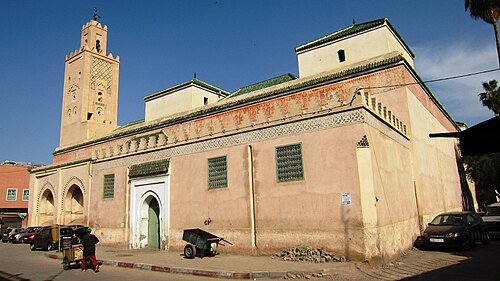
    Bab Doukkala Mosque is a major sixteenth-century mosque located in the northwestern quarter of Marrakesh's medina. It stands as a significant religious and architectural landmark, giving its name to the surrounding Bab Doukkala neighbourhood and market quarter.

    • Must see
    • Place of worship
  2. Ben Youssef Mosque Ben Youssef Mosque
    03 30 min

    Ben Youssef Mosque

    Ben Youssef Mosquée مسجد ابن يوسف

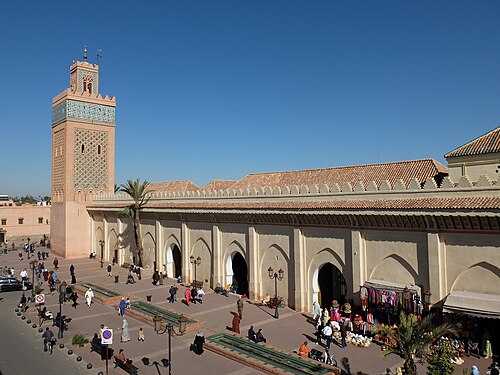
    Ben Youssef Mosque is a major Almoravid-era religious landmark in Marrakesh's medina. It stands beside the famous Ben Youssef Madrasa, forming an important historical and spiritual complex in the old city.

    • Must see
    • Place of worship
  3. Miaara Jewish Cemetery
    04 30 min

    Miaara Jewish Cemetery

    Cimetière Juif Miaara

    The Miaara Jewish Cemetery is the principal Jewish burial ground serving Marrakesh's historic Mellah quarter.

    • Must see
    • Place of worship
  4. Eglise des Saints Martyrs Eglise des Saints Martyrs
    05 30 min

    Eglise des Saints Martyrs

    The Church of the Holy Martyrs, known locally as Eglise des Saints Martyrs, stands as a central twentieth-century church in Marrakesh's Gueliz district.

    • Must see
    • Place of worship
  5. Buraima Mosque Buraima Mosque
    06 30 min

    Buraima Mosque

    Mosquee Berrima مسجد بريمة

    The Berrima Mosque, known locally as Mosquee Berrima مسجد بريمة, stands as a historic mosque in the southern medina visitor area of Marrakesh. It represents traditional Moroccan Islamic architecture within the dense urban fabric of the old city.

    • Must see
    • Place of worship
  6. Al-Mansour Mosque Al-Mansour Mosque
    07 30 min

    Al-Mansour Mosque

    Mosquée Moulay El Yazid مسجد القصبة

    • Must see
    • Place of worship
  7. AL HOUDA
    09 30 min

    AL HOUDA

    • Notable
    • Place of worship
  8. al iimran
    10 30 min

    al iimran

    • Notable
    • Place of worship
  9. Assif C
    11 30 min

    Assif C

    • Notable
    • Place of worship
  10. El Anbar El Anbar
    21 30 min

    El Anbar

    • Notable
    • Place of worship
  11. El Ihsane
    22 30 min

    El Ihsane

    • Notable
    • Place of worship
  12. GZA
    24 30 min

    GZA

    • Notable
    • Place of worship

Source: OpenStreetMap contributors, Wikidata ·

How the city is laid out

Jemaa el-Fna is the main orientation point for the Medina, with souks extending north and palaces and tombs to the south. The Mellah forms a distinct historic quarter beside the palace area. Guéliz and Hivernage sit beyond the walls and are reached more efficiently by road transport. Sidi Ghanem and the Palmeraie require separate connections. Keep Medina walks compact because lanes are indirect and vehicle access changes near pedestrian areas.

Checked 2026-08-26

Getting around

Walking is the practical way to explore the Medina, while city buses and taxis connect the old city with Guéliz, Hivernage and outer districts. The official tourism service also identifies bicycles, scooters and horse-drawn carriages as local options, with different suitability by route. Confirm the fare before a taxi journey and use designated transport for airport or regional travel. Atlas and Agafay excursions need separate arrangements.

Checked 2026-08-26

Common questions

How is Marrakesh organised for sightseeing?

the walled Medina and modern Guéliz-Hivernage districts are separate visitor areas

How many days should I spend in Marrakesh?

No fixed stay length is recorded; plan Medina, palace district and modern areas separately.

What is the easiest way to get around Marrakesh?

Walk inside the Medina and use buses or taxis for districts outside the walls.

Which places need a separate trip from central Marrakesh?

Agafay and the Atlas Mountains are regional excursions requiring dedicated road transport.

What is the most practical way to plan a day in Marrakesh?

Use Jemaa el-Fna as the main Medina orientation point, then group nearby souks and monuments.