


8 min walk
Museum of Oriental Art
- Must see · Heritage site
- Museum
Language · 1 published
Place of worship · Venice
| Monday | 10:30 – 17:00 |
|---|---|
| Tuesday | 10:30 – 17:00 |
| Wednesday | 10:30 – 17:00 |
| Thursday | 10:30 – 17:00 |
| Friday | 10:30 – 17:00 |
| Saturday | 10:30 – 17:00 |
| Sunday | Closed |
Parsed from OpenStreetMap opening hours on 2026-08-26.
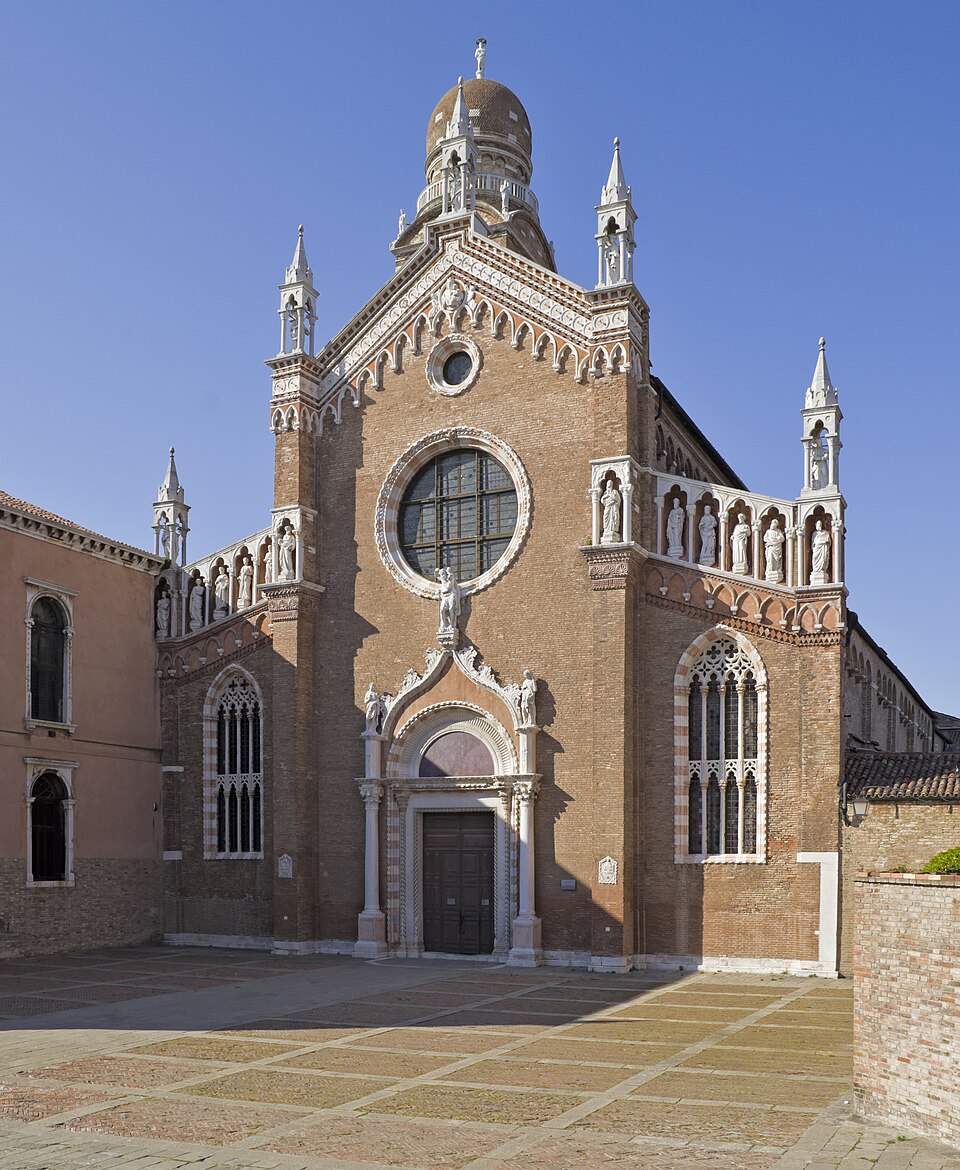
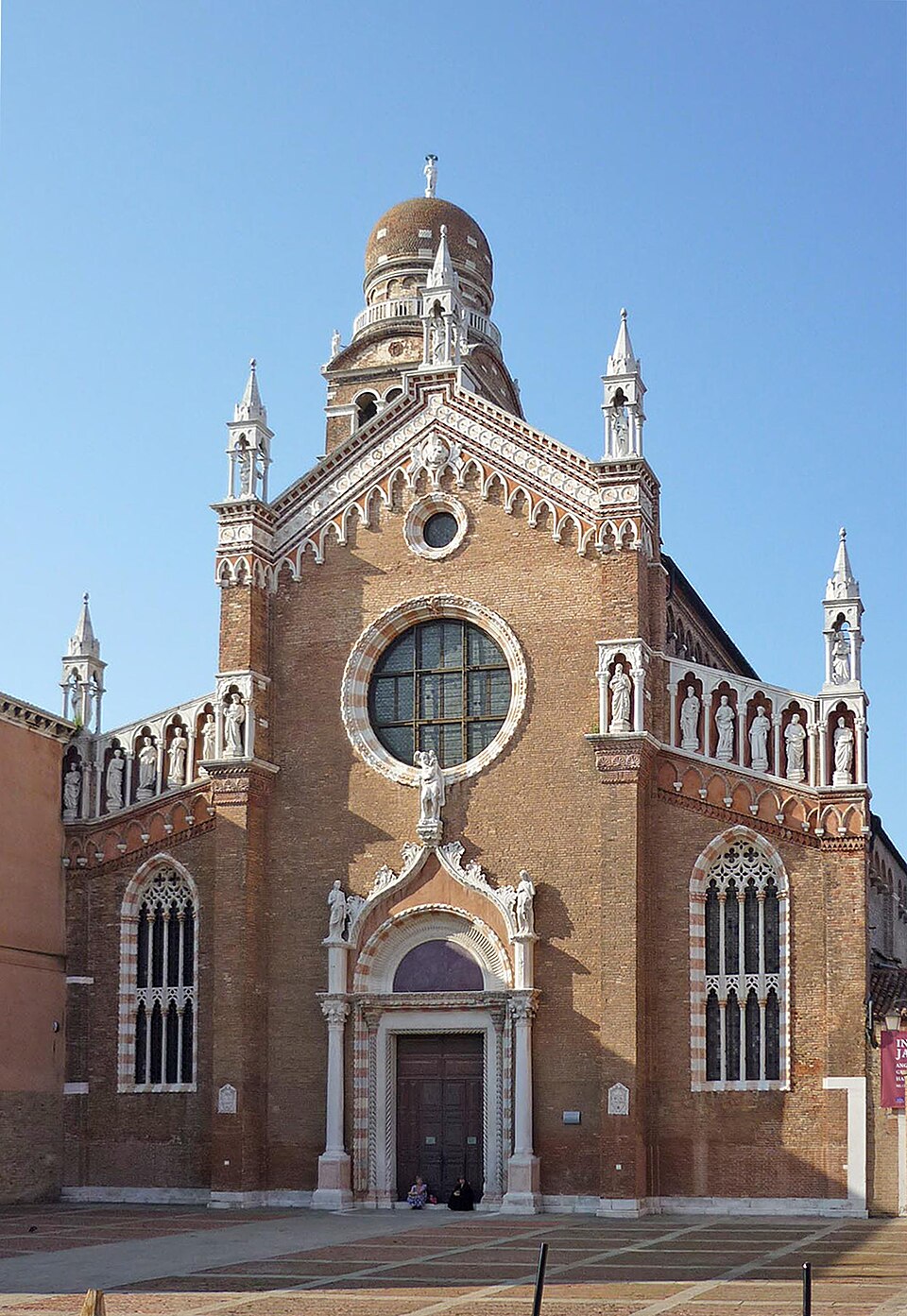
Madonna dell'Orto is a Gothic church in Venice's Cannaregio district. Founded in the mid-14th century by the now-defunct Humiliati order, it later became a parish church. The building takes its name from a miraculous statue of the Virgin Mary discovered in a nearby vegetable garden, or orto. The church is particularly significant as the parish church of Tintoretto, the great Venetian painter who lived nearby and is buried here. The exterior presents a striking brick facade with a prominent rose window and campanile, characteristic of Venetian Gothic religious architecture.
Checked 2026-08-26
The interior contains major works by Tintoretto, who received commissions from the Scuola Grande di San Marco that was based here. Notable paintings include the Presentation of the Virgin in the Temple and the Last Judgment, among others. These large canvases demonstrate his dramatic use of light and muscular figures. The church also holds sculptures and architectural details from various periods. The Cappella di San Mauro contains notable monuments. Tintoretto's tomb is located within the church, marking his enduring connection to this parish where he worshipped and worked throughout his life in Venice.
Checked 2026-08-26

Visitors typically spend between thirty minutes and one hour at Madonna dell'Orto, depending on their interest in Renaissance art and religious history. Those wishing to study Tintoretto's paintings in detail may require additional time. The church is relatively compact compared to major Venetian basilicas, allowing for efficient viewing. Art historians and dedicated enthusiasts sometimes extend their visit to examine the architectural features and contemplate the works at length. The quiet Cannaregio location means fewer crowds than central tourist sites, permitting a more relaxed pace without pressure from large tour groups or timed entry requirements.
Checked 2026-08-26
Operator-confirmed hours are Not recorded pending review. Visitors should verify current opening times before planning their visit, as religious sites in Venice often maintain variable schedules and may close for services, feast days, or maintenance without advance public notice. The Cannaregio district offers a more residential atmosphere than central Venice, making any season potentially suitable for those seeking quieter exploration. Morning visits may coincide with local activity, while afternoons can provide calmer conditions for viewing art. Checking ahead remains essential given the uncertainty of unconfirmed operational hours.
Checked 2026-08-26
Operator-confirmed prices are Not recorded pending review. Many Venetian churches operate with donation-based entry, combined ticket systems, or free admission policies that change periodically. Some churches participate in the Chorus Association network requiring specific passes, while others maintain independent arrangements. Visitors should prepare for various possibilities including voluntary contributions or modest fixed fees. Payment methods and exact costs require verification at entry or through official channels. Budget-conscious travellers should note that cumulative church visits in Venice can become expensive if multiple entry fees apply across different sites without appropriate pass coverage.
Checked 2026-08-26

Madonna dell'Orto occupies a position in Cannaregio, north of the Grand Canal and away from the densest tourist concentrations. The vaporetto waterbus provides access to nearby stops along the northern lagoon route, followed by walking through characteristic Venetian calli. The church sits within a maze of narrow passages typical of this working-class district historically associated with shipbuilding and Jewish community presence. Signage may be limited, requiring attention to directional markers or mapping applications. The walk from Rialto or San Marco areas crosses numerous bridges and takes considerable time, rewarding those who appreciate gradual discovery of less commercialised Venetian streetscapes.
Checked 2026-08-26
Religious services take precedence over tourism at this functioning parish church, potentially interrupting visitor access without warning. Appropriate dress covering shoulders and knees is expected as standard practice for Italian churches. The Cannaregio location means fewer tourist amenities nearby; water and facilities require planning. Evening arrivals risk finding closed doors regardless of nominal schedules. Some interior areas may be roped off or under restoration. Photography restrictions, if any, are typically posted at entry but may not be prominently displayed in English. Respectful silence is customary given the sacred function of the space alongside its artistic importance.
Checked 2026-08-26

Photography policies at Madonna dell'Orto are Not recorded pending review. Italian churches commonly restrict flash photography to protect artworks and preserve atmosphere, though non-flash photography may be permitted or prohibited depending on specific institutional decisions. Some Venetian churches require purchased permits for any photography. Visitors should observe posted regulations and staff instructions, refraining from photography if uncertainty exists. Tripods and professional equipment generally face stricter limitations than casual smartphone use. The subdued interior lighting that enhances Tintoretto's dramatic compositions simultaneously challenges photographic capture without artificial illumination, making personal observation potentially more rewarding than attempted documentation regardless of permitted status.
Checked 2026-08-26
No. The Scuola Grande di San Marco was a confraternity that once had its headquarters at Madonna dell'Orto and commissioned Tintoretto paintings, but the building itself remains a parish church with distinct identity.
Yes, Tintoretto is buried within Madonna dell'Orto, the parish church where he lived and worked nearby throughout his Venetian career.
Not recorded pending review. Church participation in ticket networks changes; verify current arrangements before visiting.
Not recorded pending review. Venetian churches typically present step barriers and bridge approaches that may challenge wheelchair users.
Not recorded pending review. The church's relatively modest profile suggests independent visiting is standard, though private arrangements may exist.
Madonna dell'Orto offers intimate Tintoretto viewing in a functioning parish setting within a residential district, contrasting with Saint Mark's state ceremonial function, Byzantine emphasis, and massive tourist volumes.
Loading the interactive map…
The interactive map could not be loaded.
Last updated:
Source: OpenStreetMap contributors, Wikidata ·