
.JPG)
.JPG)

.JPG)

2 min walk
San Luigi dei Francesi
- High · Heritage site
- Place of worship
Language · 1 published
Historic monument · Rome
Fontana dei Quattro Fiumi
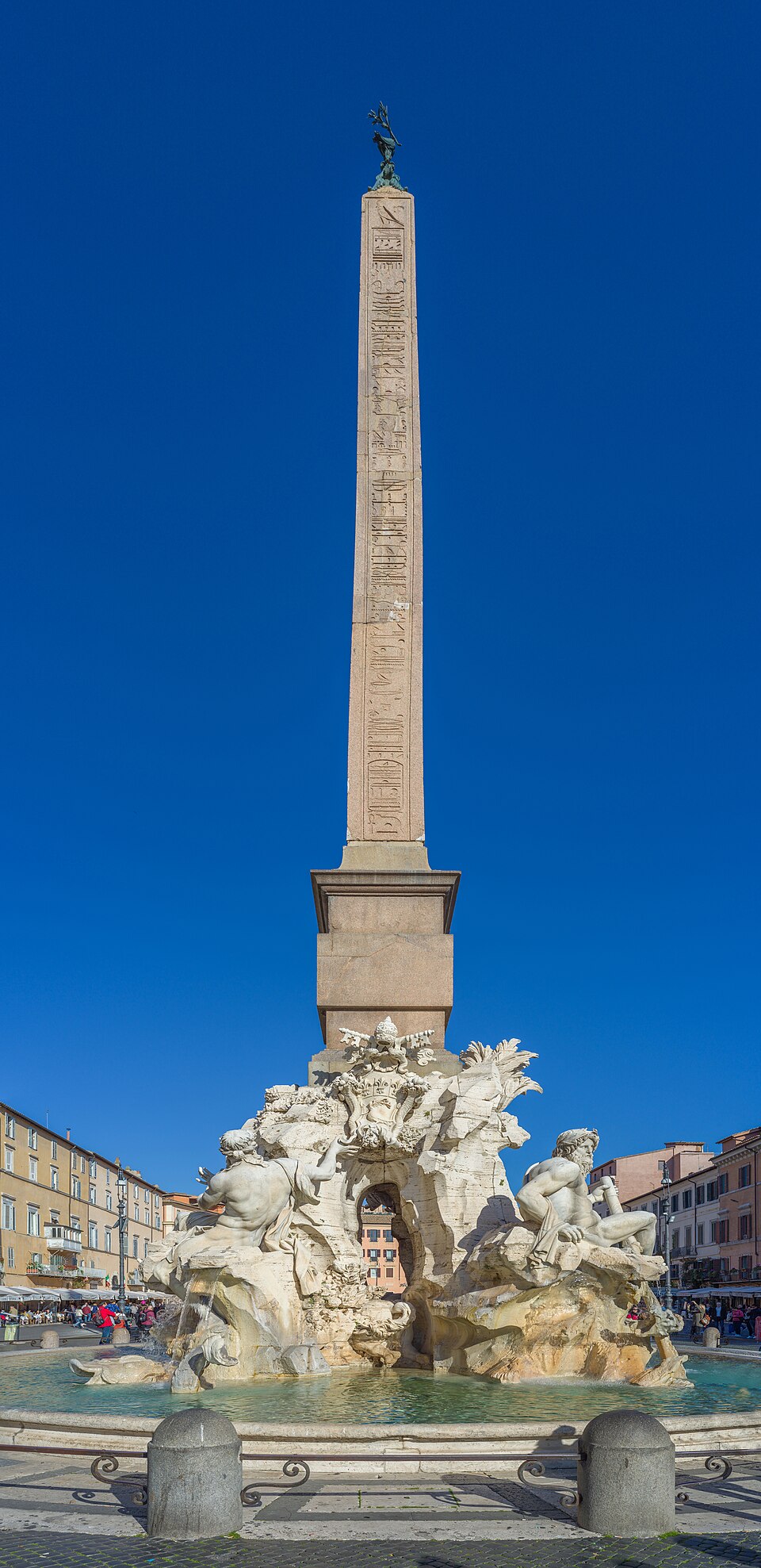
The Fontana dei Quattro Fiumi is a Baroque masterpiece designed by Gian Lorenzo Bernini and completed in 1651. It occupies the center of Piazza Navona, one of Rome's most celebrated public squares. The fountain represents four major rivers from four continents: the Nile, Danube, Ganges, and Río de la Plata, each embodied by a muscular male figure. An Egyptian obelisk rises from the rocky base, crowned with a dove symbolizing the Pamphili family papacy. The work exemplifies the theatrical dynamism of Roman Baroque sculpture and remains a defining monument of the Eternal City.
Checked 2026-08-26
The fountain's composition centers on a granite obelisk of Roman origin, surmounted by the Pamphili dove with an olive branch. Four allegorical river gods recline upon travertine rocks, each accompanied by identifying flora and fauna. The Nile's head is veiled, referencing unknown sources at that time. The Danube touches the papal coat of arms. The Ganges carries an oar. The Río de la Plata sits upon coins symbolizing New World wealth. A lion and horse emerge from the waters. The ensemble creates a dramatic staged landscape within the urban fabric.
Checked 2026-08-26
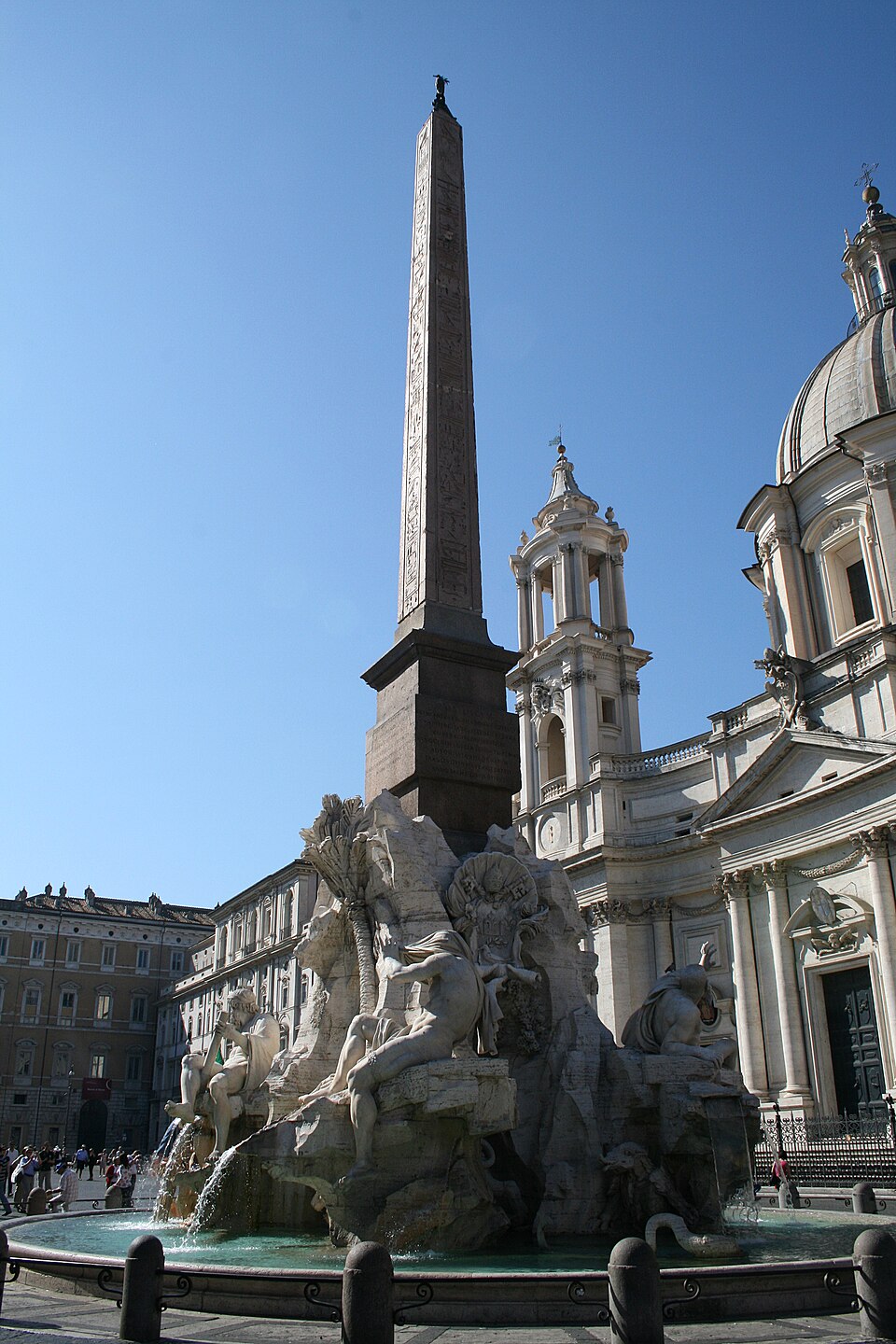
Most visitors spend fifteen to thirty minutes observing the fountain's details and photographing its sculptures. The experience typically extends to encompass the broader Piazza Navona, where two additional fountains by other architects compete for attention. The square itself rewards extended contemplation, with its elongated shape following the ancient Stadium of Domitian. Visitors often combine this stop with nearby churches and palaces. The duration depends entirely on personal interest in sculptural analysis, Baroque history, and the atmospheric qualities of one of Rome's most animated public spaces throughout day and evening.
Checked 2026-08-26
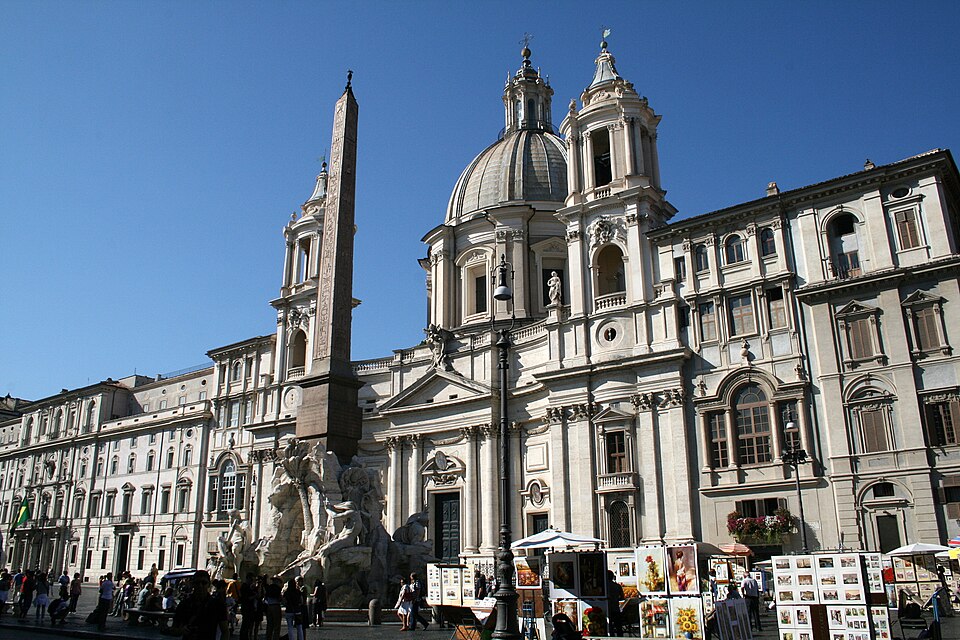
The fountain stands in an open public square accessible at all hours. Operator-confirmed hours are Not recorded pending review. Early morning offers relative tranquility and favorable light for observation before tour groups arrive. Midday brings intense crowding and harsh illumination. Evening hours transform the piazza with atmospheric lighting and reduced tourist density, though restaurants occupy peripheral seating. Seasonal considerations include Roman summer heat, which makes midday visits uncomfortable, and winter rain, which may diminish the square's customary vibrancy without affecting fountain accessibility. No advance scheduling appears necessary.
Checked 2026-08-26
The Fontana dei Quattro Fiumi requires no admission fee as it occupies public space. Operator-confirmed prices are Not recorded pending review. No ticketing infrastructure surrounds the monument. Visitors should remain vigilant regarding unofficial guided tour operators who may solicit payment for services of uncertain quality. The surrounding restaurants command premium prices for seating with fountain views. No combination tickets or city passes specifically incorporate this site, though various Roma Pass configurations include nearby attractions. Cash reserves prove useful for incidental purchases in this heavily trafficked tourist zone.
Checked 2026-08-26

Piazza Navona sits within Rome's historic center, accessible by foot from numerous landmarks. The nearest metro stations require substantial walking through medieval street networks. Bus routes serve adjacent Corso del Rinascimento and Corso Vittorio Emanuele II, though traffic congestion frequently impedes surface transport. Taxis and ride services may approach nearby drop points. The most reliable method remains walking from the Pantheon, Campo de' Fiori, or Piazza Venezia, each approximately ten to fifteen minutes distant. Signage through narrow streets proves adequate. Nighttime return requires awareness of limited public transport frequency.
Checked 2026-08-26
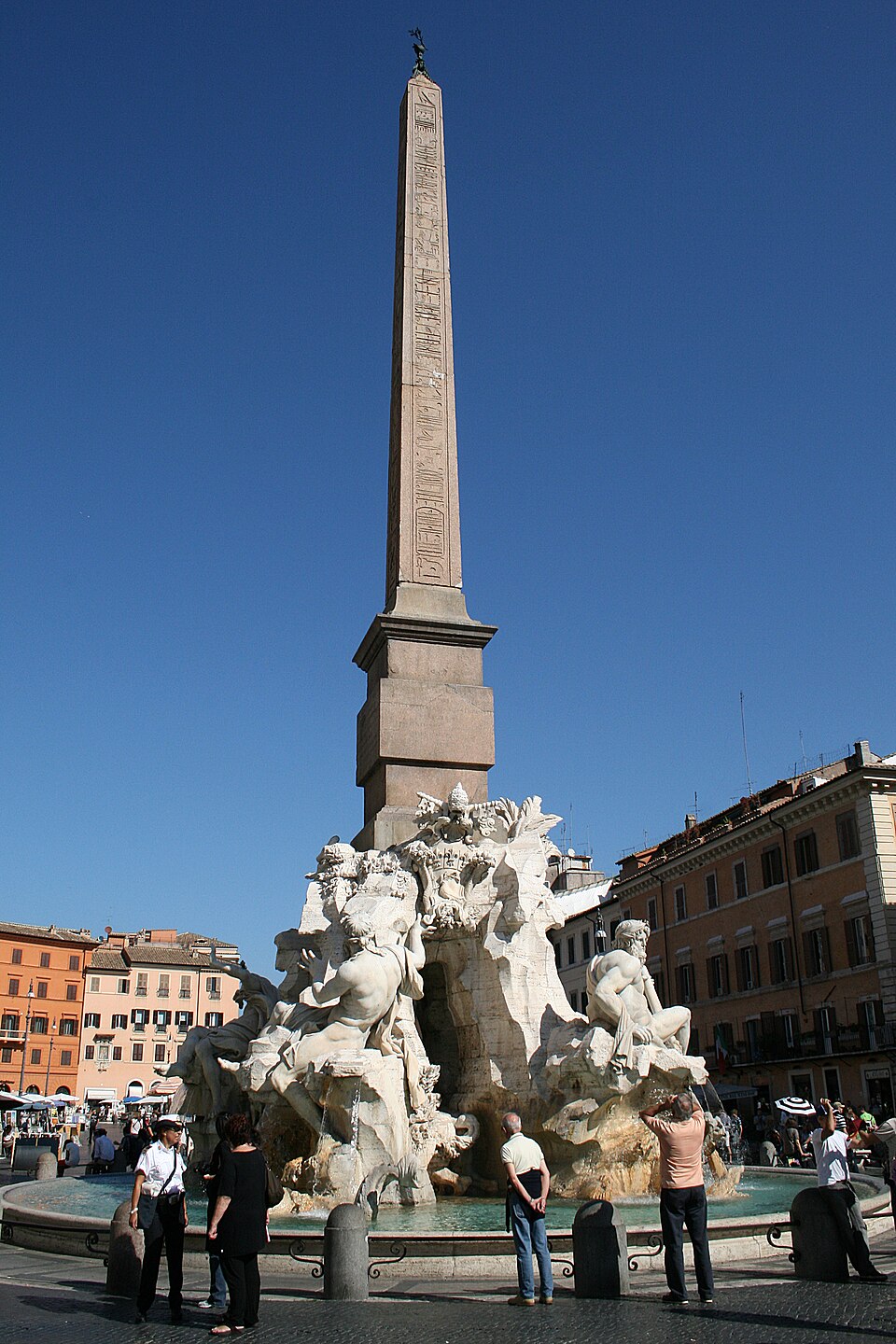
The fountain's basin edge invites seating, which authorities periodically discourage. Pickpockets operate actively in dense tourist concentrations around the monument. Aggressive rose vendors and costumed gladiator impersonators demand persistent refusal. Restaurant terraces encroach upon the piazza's central space, restricting movement and sight lines. Fountain water is not potable. Climbing upon sculptures risks intervention by municipal police. The uneven cobblestone surface presents trip hazards, particularly when attention focuses upward. Summer sun exposure is severe with minimal shade. Evening lighting, while atmospheric, creates shadowed areas where vigilance regarding personal belongings remains prudent.
Checked 2026-08-26
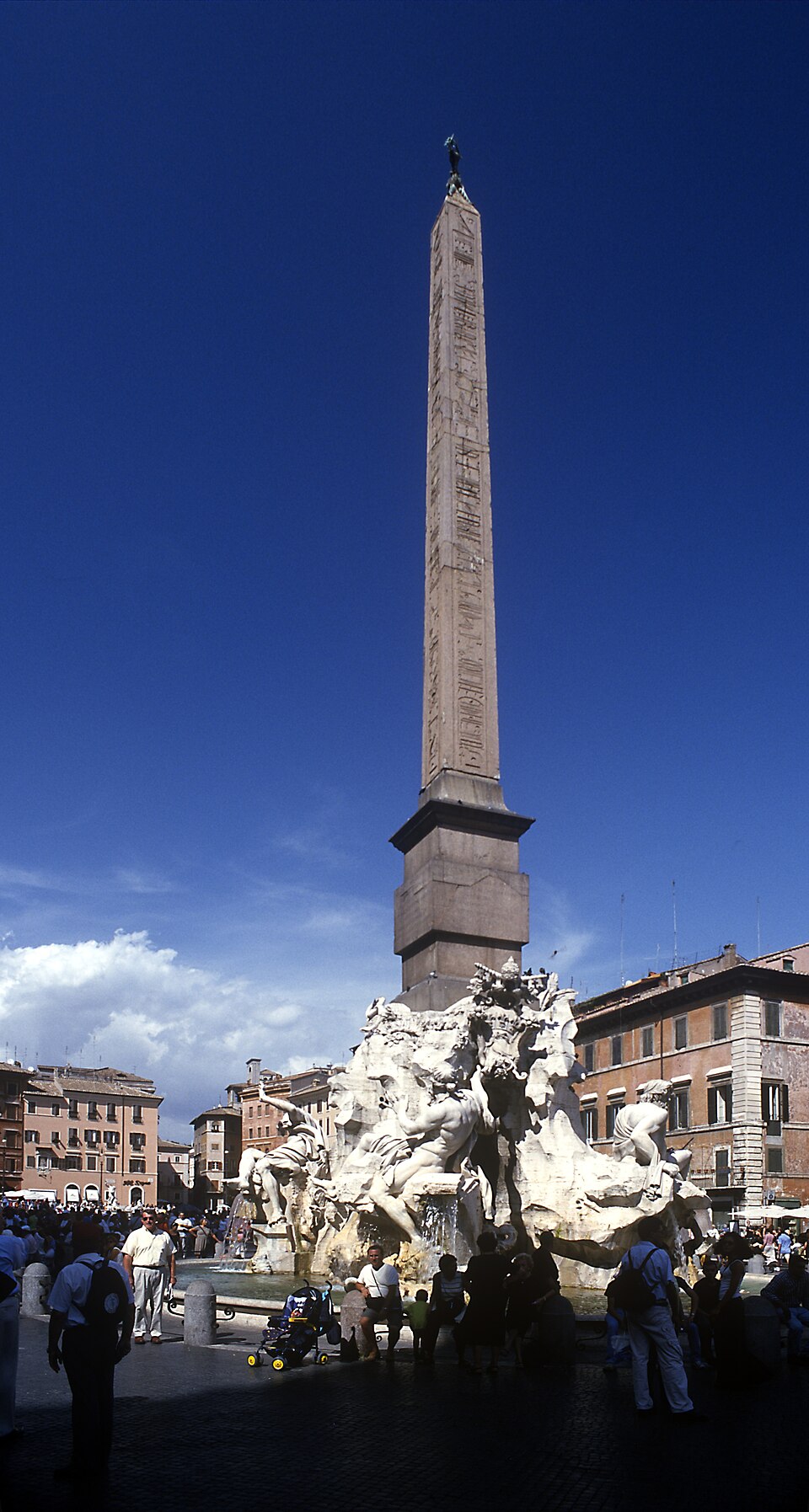
The fountain presents exceptional photographic subjects from multiple angles, though comprehensive views require wide-angle lenses due to spatial constraints. Morning light illuminates the river gods' faces with warm directional quality. The obelisk against blue sky creates strong vertical compositions. Detail shots reward patient observation of Bernini's textural variations in stone. Night photography benefits from artificial illumination, though tripod deployment may attract security attention. The surrounding building facades frame contextual shots. Selfie attempts near the basin edge risk disturbance by authorities or other visitors. Crowd management demands patience for unobstructed perspectives during peak hours.
Checked 2026-08-26
The fountain receives artificial illumination after dark, creating dramatic effects upon the sculptural surfaces and enhancing evening atmosphere in the piazza.
Physical contact with the fountain water or climbing upon the sculptural elements is discouraged and may result in intervention by municipal authorities.
No guided tour is required for access or basic appreciation, though historical context enriches understanding of Bernini's iconographic program and papal patronage.
The fountain's water circulation appears continuous during normal conditions, though maintenance activities or technical issues may occasionally interrupt flow.
Public restroom facilities in the immediate vicinity are not recorded; visitors typically rely upon adjacent cafes and restaurants with patronage requirements.
The cobblestone surface of Piazza Navona presents challenges for wheeled mobility devices, though the flat central area permits cautious approach to viewing positions.
Loading the interactive map…
The interactive map could not be loaded.
Last updated:
Source: OpenStreetMap contributors, Wikidata ·