


5 min walk
museo di Roma in Trastevere
- Must see · Heritage site
- Museum
Language · 1 published
Historic monument · Rome
Fontana Dell'Acqua Paola
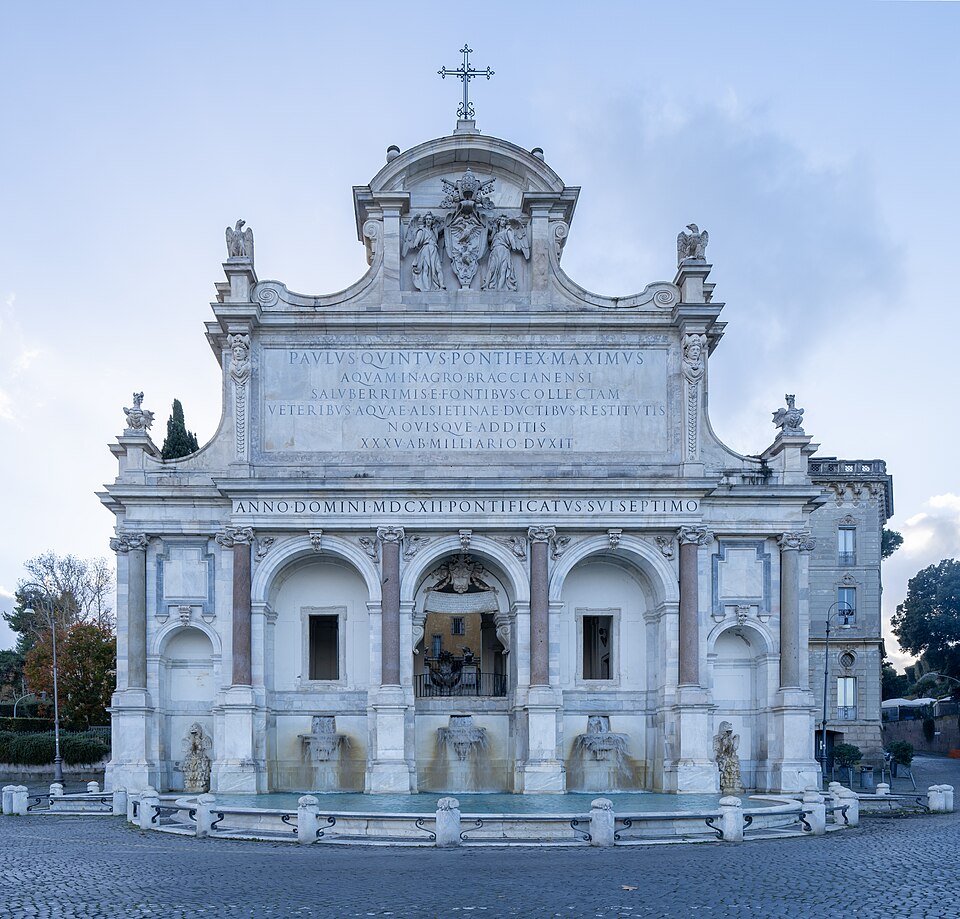
Fontana dell'Acqua Paola is a monumental Baroque fountain located on the Janiculum Hill in Rome. Commissioned by Pope Paul V and completed in the early seventeenth century, it was built to mark the restoration of the ancient Trajan aqueduct. The fountain serves as a grand terminus for the Acqua Paola water supply, bringing fresh water to this elevated district. Its imposing white marble structure dominates the hillside, offering visitors a significant historical landmark with panoramic views across the city. The fountain represents papal engineering ambition and remains an important feature of Rome's hydraulic heritage.
Checked 2026-08-26
The fountain presents a substantial architectural composition in white marble. Five arched niches contain basins where water collects and overflows. A central attic bears inscriptions commemorating Pope Paul V's patronage. Heraldic emblems and decorative stonework embellish the structure. The design incorporates elements reminiscent of ancient Roman triumphal arches, adapted to hydraulic function. Large central and subsidiary basins receive water channeled from the restored aqueduct. The material palette consists predominantly of marble sourced from quarries, with sculptural details including papal symbols. The overall effect creates a theatrical water display against the hillside terrain, with architectural gravitas appropriate to its commemorative purpose.
Checked 2026-08-26
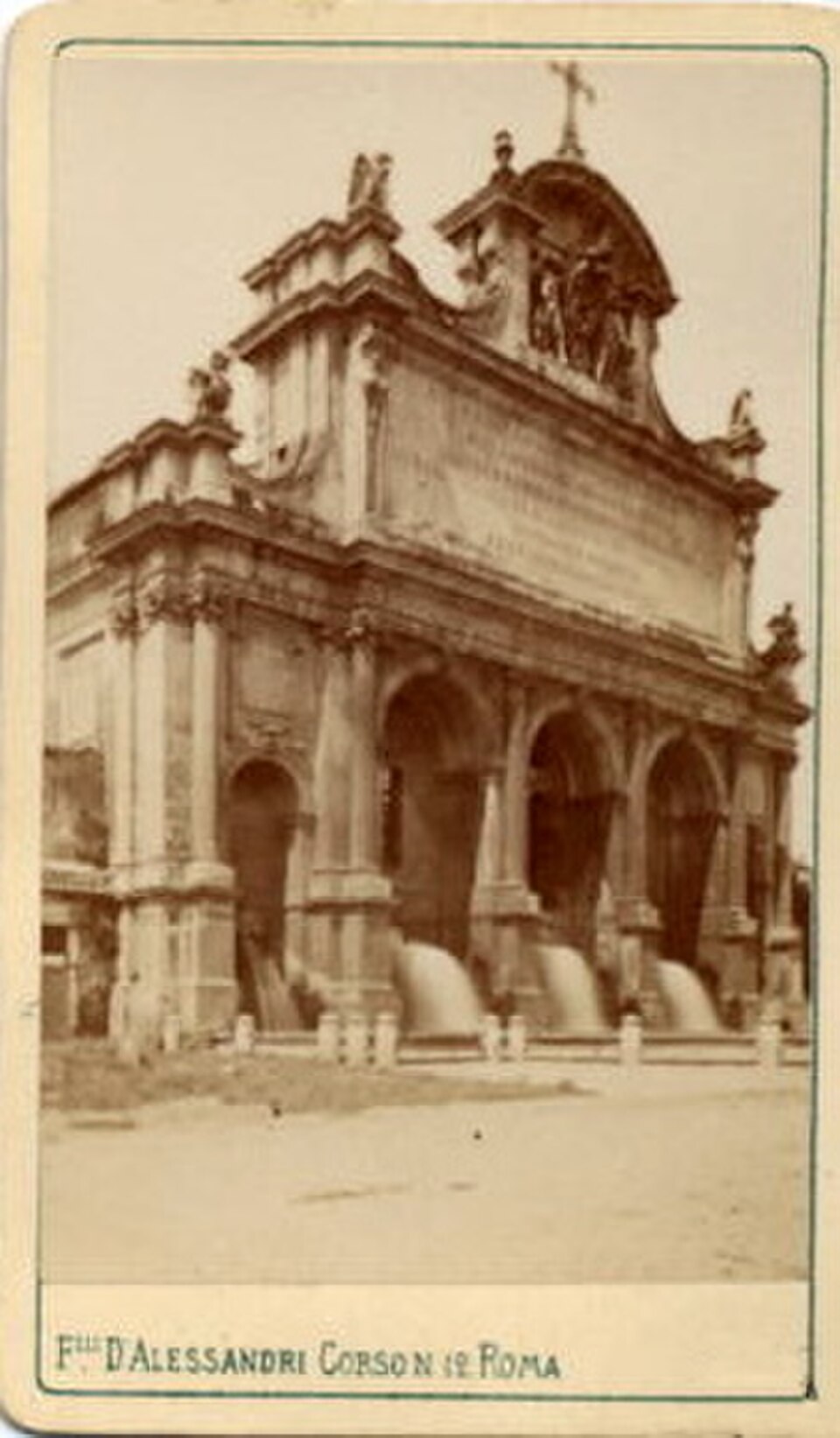
A visit to Fontana dell'Acqua Paola typically requires between twenty and forty minutes for adequate appreciation. This duration allows observation of the architectural details, reading of commemorative inscriptions, and enjoyment of the surrounding views. The site functions primarily as an exterior monument without interior spaces to explore. Visitors often combine this stop with other Janiculum Hill attractions, extending the overall excursion. The fountain demands no queue time under normal circumstances. Photography, contemplation of the water features, and brief rest on adjacent seating constitute the main activities. Those with strong interest in Baroque fountains or hydraulic engineering may wish to linger longer examining construction techniques.
Checked 2026-08-26
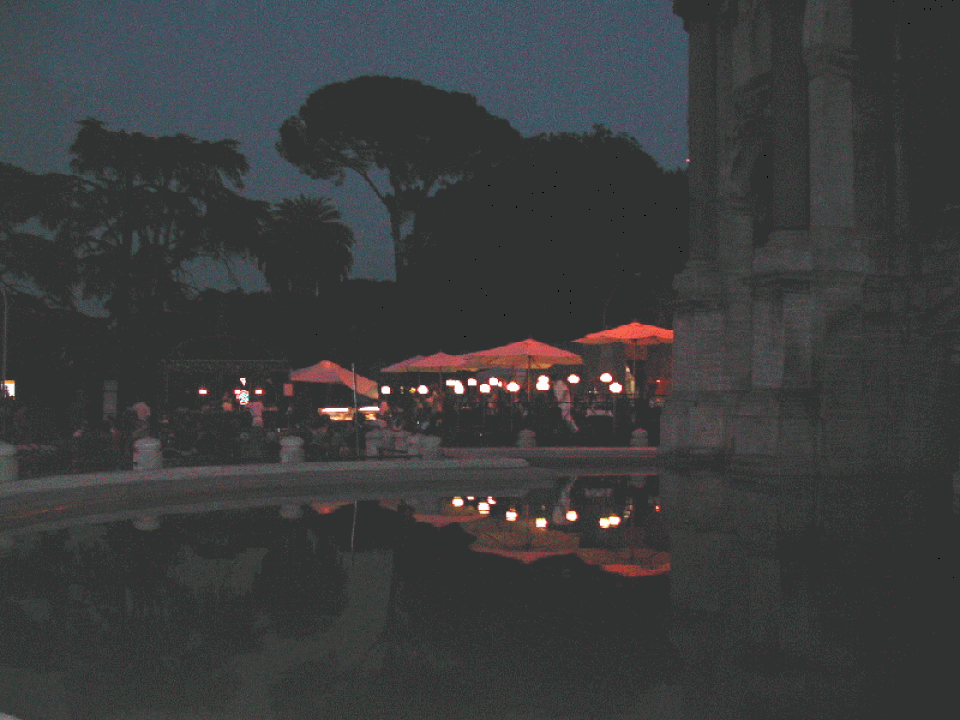
The fountain operates as an outdoor public monument accessible during daylight hours. Operator-confirmed hours are Not recorded pending review. Evening illumination may enhance visual impact, though specific lighting schedules remain unverified. The Janiculum Hill location provides cooler temperatures than central Rome during summer months, potentially improving comfort. Morning visits may offer preferable light conditions for photography and fewer visitors. Winter access depends on weather conditions affecting hill pathways. No seasonal closure information is documented. Visitors should verify current accessibility before planning dedicated journeys, as maintenance activities or water supply interruptions could affect fountain operation without advance public notification.
Checked 2026-08-26
Fontana dell'Acqua Paola stands in public space without controlled entry. No admission fee applies for viewing the fountain exterior. Operator-confirmed prices are Not recorded pending review. No ticketed interior exists. Visitors incur no direct costs beyond personal transportation to the Janiculum Hill location. Associated expenses might include guided tours incorporating the site within broader itineraries, though independent access requires no payment. No concession categories or free entry provisions are relevant. Commercial photography permits are not documented. Visitors should carry sufficient funds for incidental purchases in the vicinity, as the immediate area offers limited commercial services compared to central tourist districts.
Checked 2026-08-26

The fountain occupies the Janiculum Hill, west of the Tiber River and separate from Rome's ancient center. Public bus services connect to stops requiring uphill walking. The route from Trastevere neighborhood involves ascending paved paths and staircases. Private vehicles face restricted parking availability on narrow hill roads. Walking from central Rome demands considerable elevation gain and physical exertion. The site lacks adjacent metro station access. Visitors with mobility limitations should research current transport options carefully, as hill terrain presents challenges. Taxi or ride services may approach nearby though final access typically requires walking. Cycling is possible for experienced riders comfortable with gradients.
Checked 2026-08-26
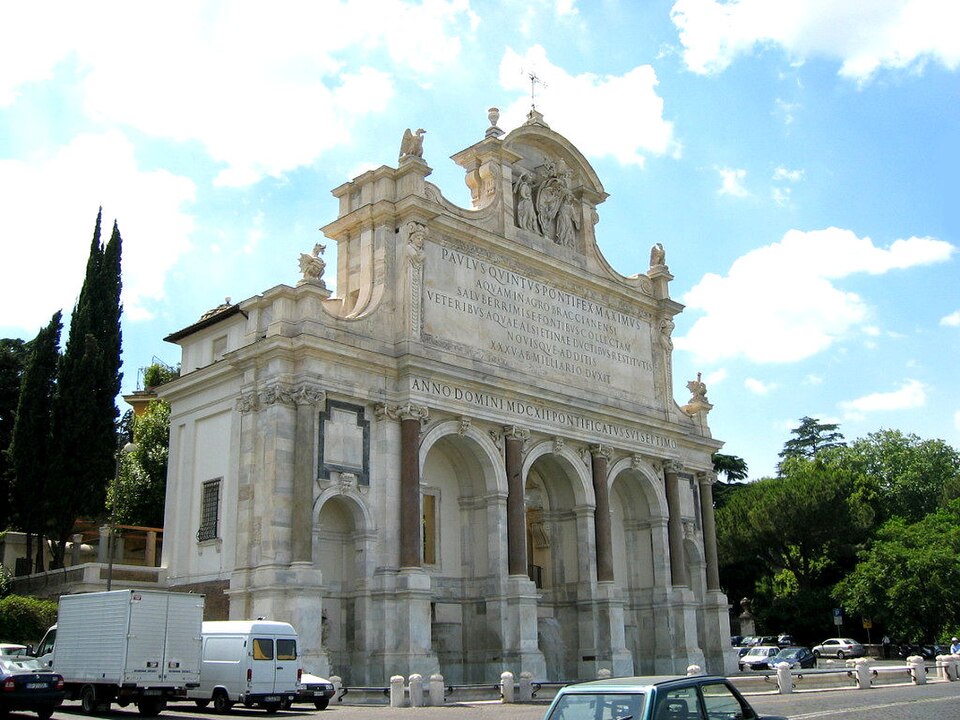
The Janiculum Hill location involves uneven paving, steps, and sloping approaches that require appropriate footwear and caution. Water surfaces near the fountain may become slippery. The elevated position exposes visitors to stronger winds and sun than sheltered central locations. Limited shade around the fountain necessitates sun protection during warm periods. No permanent security presence is evident; visitors should exercise standard urban awareness. Evening visits involve reduced visibility on approach paths without comprehensive lighting. The area receives fewer tourists than major monuments, meaning assistance may not be immediately available. Mobile telephone coverage should not be assumed reliable for emergency communication in all locations.
Checked 2026-08-26
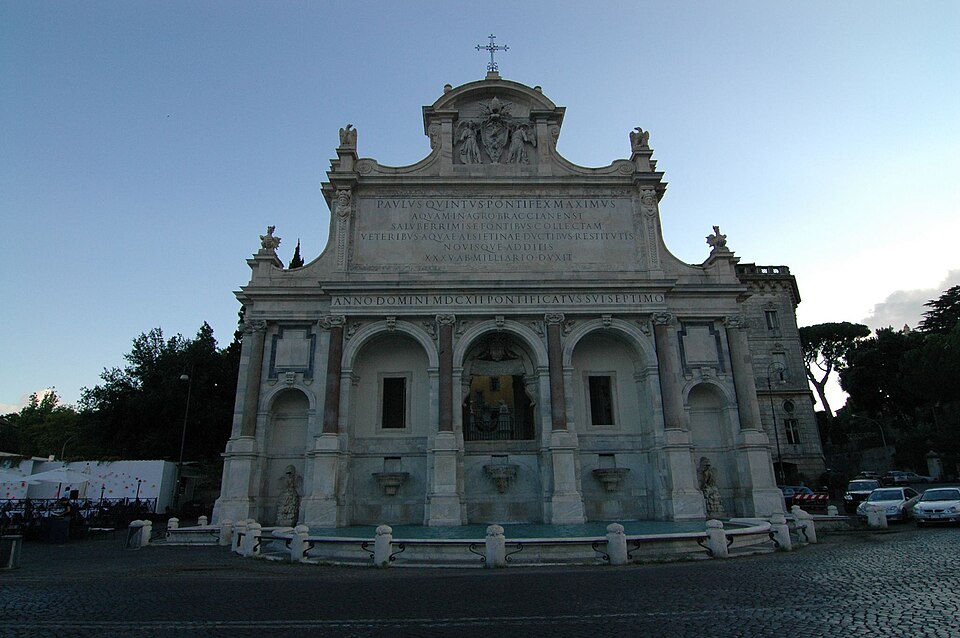
The fountain's white marble construction presents high contrast under direct sunlight, challenging exposure balance. Morning and late afternoon light softens shadows and reveals sculptural detail. The panoramic city backdrop offers compositional opportunities combining architecture with urban vistas. Wide-angle lenses accommodate the monument's scale and surrounding context. Tripod use in public space should respect pedestrian circulation. Water movement requires faster shutter speeds for crisp capture or slower speeds for flowing effects. The elevated position yields atmospheric perspective on clear days. Night photography possibilities depend on operational lighting, which visitors should verify. No commercial restrictions on personal photography are documented, though respectful conduct near other visitors applies.
Checked 2026-08-26
No. These are distinct fountains in different locations. Fontana dell'Acqua Paola stands on the Janiculum Hill, while the Trevi Fountain occupies central Rome near the Quirinal Palace. They differ in age, design, and historical function.
No. The monument comprises exterior architecture only. Visitors may approach and observe from surrounding public space but cannot access interior chambers as none exist within this hydraulic terminus.
Not recorded. Traditional Roman fountains often provided public drinking water, but current potability status of this specific outlet requires verification from municipal authorities before consumption.
Not recorded. Water flow may be interrupted for maintenance, conservation, or supply reasons. Visitors should not assume constant operation without current local confirmation.
Not recorded. The site typically features in broader Janiculum Hill or thematic Baroque walking tours rather than dedicated fountain excursions. Independent visitation is standard practice.
Not recorded. The Janiculum Hill terrain and approach paths present significant gradients and uneven surfaces. Prospective visitors requiring level access should investigate current route conditions and available assistance before attempting the journey.
Loading the interactive map…
The interactive map could not be loaded.
Last updated:
Source: OpenStreetMap contributors, Wikidata ·