.jpg)


_-_Imperial_family_depiction.png)
1 min walk
Mausoleum of Augustus
- Must see
- Historic monument
Language · 1 published
Historic monument · Rome
Ara Pacis Augustae
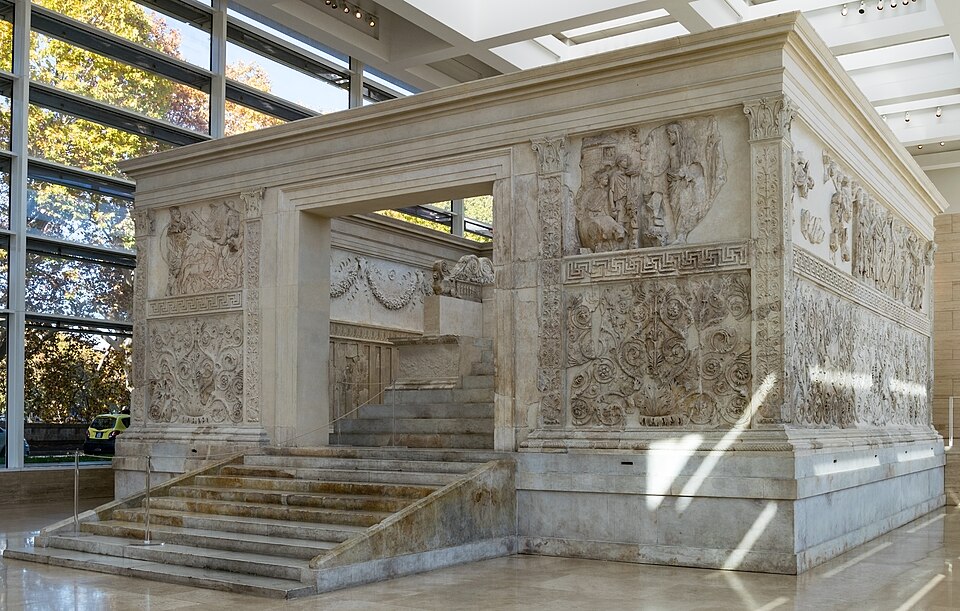
The Ara Pacis Augustae is an ancient Roman altar dedicated to Pax, the goddess of peace. Commissioned by the Roman Senate in 13 BCE to honor the return of Augustus from campaigns in Hispania and Gaul, it stands as a significant monument of Augustan propaganda. The altar originally stood in the Campus Martius. Its intricate reliefs depict imperial processions, sacrificial scenes, and symbolic representations of Roman prosperity. The monument was reconstructed from scattered fragments and today occupies a modern museum building designed by Richard Meier, completed in 2006.
Checked 2026-08-26
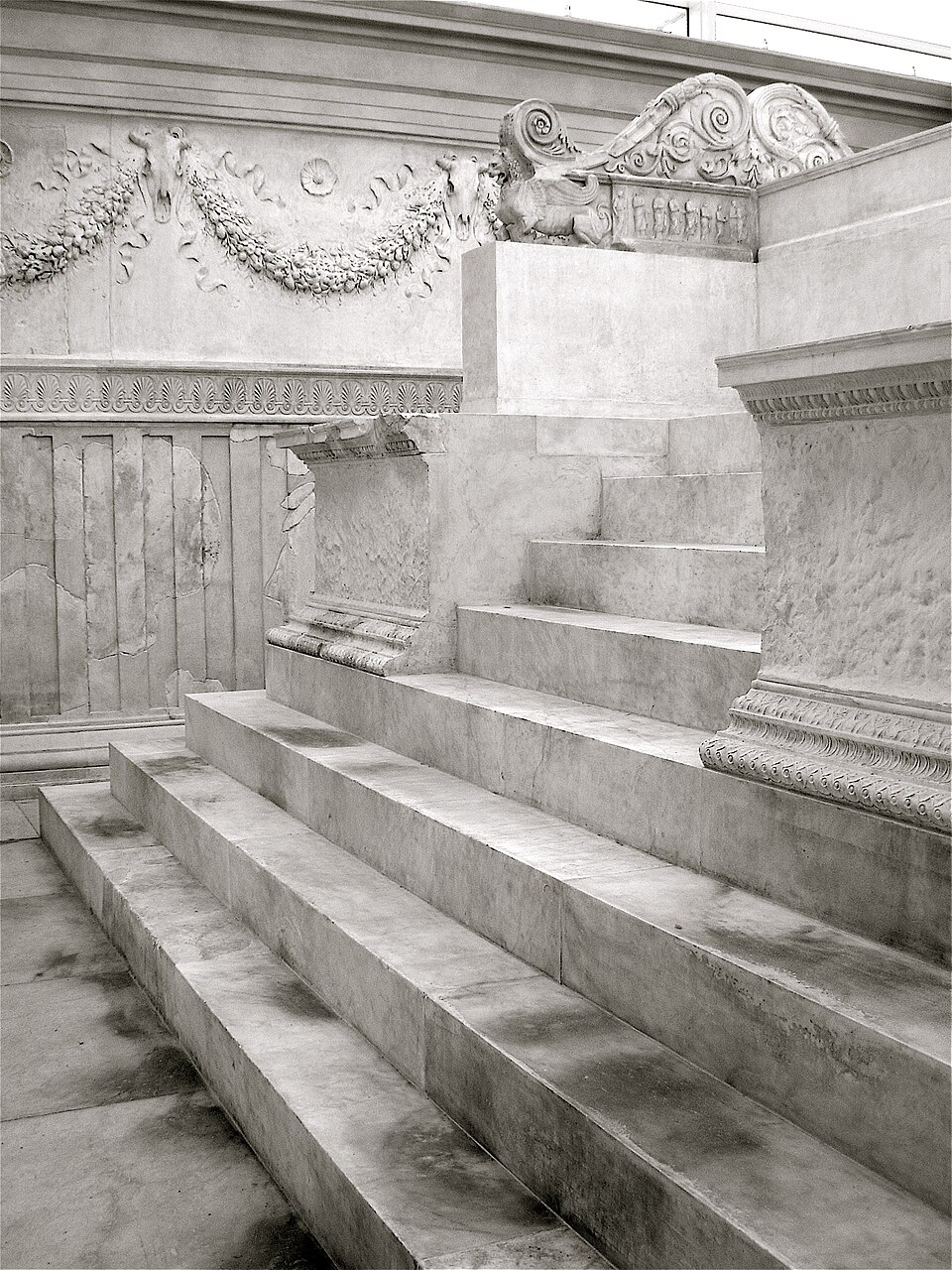
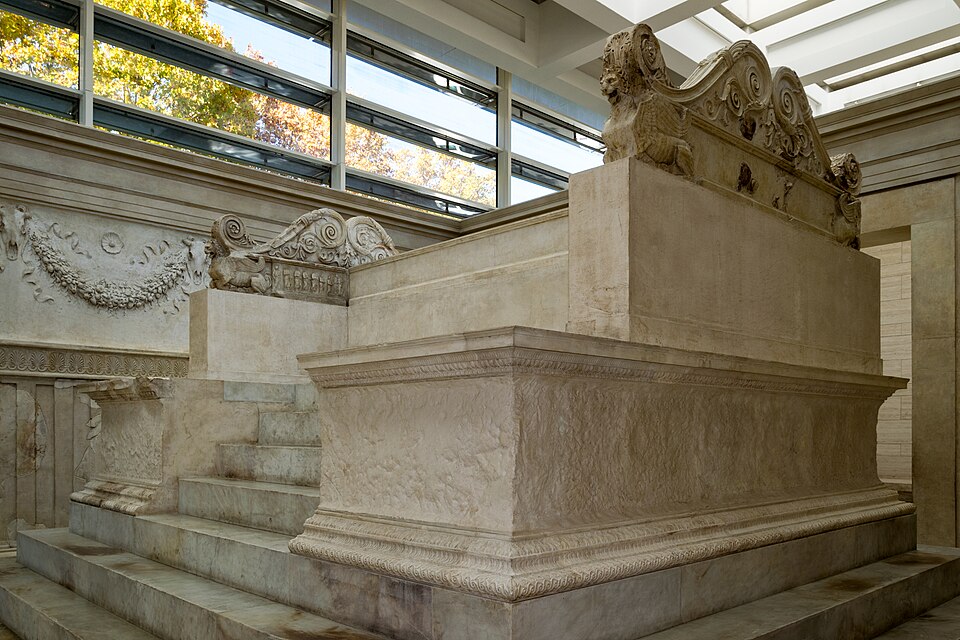
The museum centers on the reconstructed marble altar itself, enclosed in a climate-controlled glass and travertine pavilion. Visitors encounter the altar's four-sided enclosure with its elaborate friezes showing Augustus leading a religious procession, members of the imperial family, priests, and personifications of Rome's provinces. The interior altar table remains where sacrifices occurred. The surrounding museum space includes fragments, casts, and interpretive displays. The upper level offers vantage points over the monument. The building's architecture creates dialogue between ancient artifact and contemporary design.
Checked 2026-08-26
Most visitors spend approximately sixty to ninety minutes exploring the Ara Pacis museum. The central altar demands careful examination of its detailed sculptural program across multiple sides. Those with particular interest in Roman art history or Augustan iconography may extend their visit. The museum's compact scale prevents overwhelming duration. Audio guides or reading all interpretive materials adds time. The adjacent Mausoleum of Augustus, when accessible, permits combining both sites. Casual visitors often complete the circuit more quickly than dedicated enthusiasts.
Checked 2026-08-26
Operator-confirmed hours are Not recorded pending review. The museum operates year-round though seasonal variations likely affect visiting conditions. Rome's peak tourist seasons of spring and autumn bring larger crowds to major attractions. Summer heat may affect comfort given the building's glass elements. Winter offers reduced congestion. Evening visits when the museum extends hours provide atmospheric lighting of the marble. Checking current operational status before travel remains prudent. The monument's indoor setting provides shelter from weather regardless of season. A flexible visit lets travellers connect Ara Pacis with the rest of the day without treating one room, viewpoint or photograph as the whole experience. The useful pace depends on personal interest and conditions on arrival.
Checked 2026-08-26
Operator-confirmed prices are Not recorded pending review. The Ara Pacis typically requires paid admission as a municipally managed museum. Various visitor categories may qualify for reductions including students, seniors, or residents, though specific eligibility requires verification. Combination tickets with other Rome cultural sites occasionally exist. Online advance booking may be advisable during high season. Free admission days for state museums do not consistently apply to municipal institutions. Budgeting for full standard admission remains the cautious approach pending current price confirmation.
Checked 2026-08-26
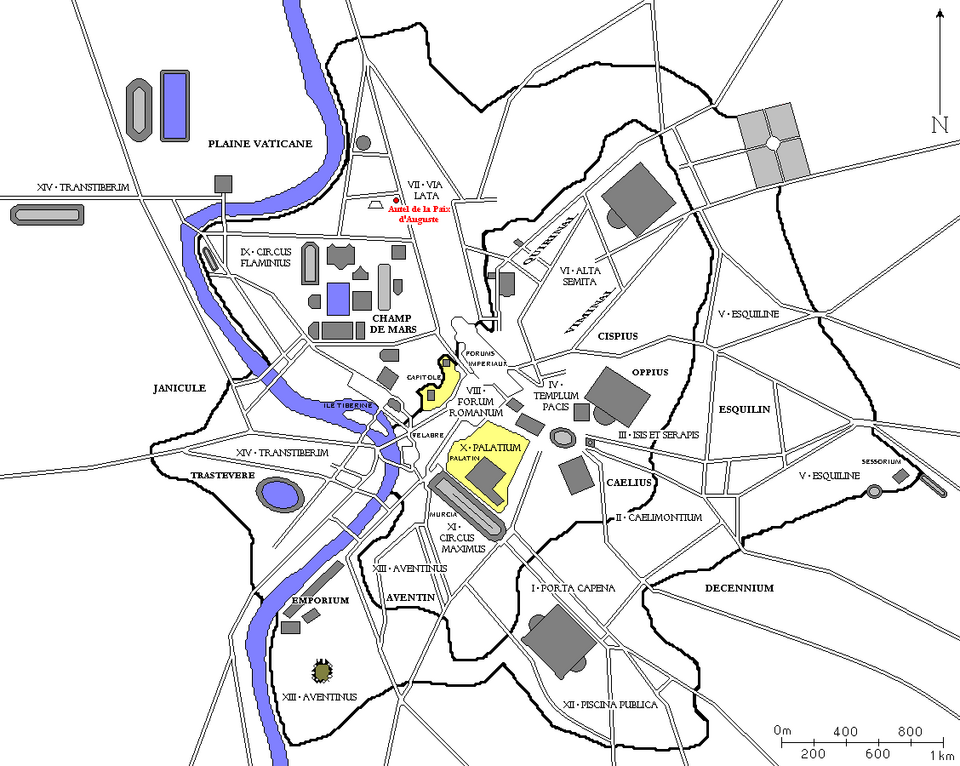
The Ara Pacis occupies the Lungotevere in Augusta along the Tiber River's eastern bank. The site sits between Piazza del Popolo and Piazza Augusto Imperatore. Metro line A stops at Spagna or Flaminio, both requiring subsequent walking. Multiple bus routes serve the surrounding Corso area. The central location permits walking from numerous historic center accommodations. Cycling along the Tiber embankment reaches the museum. River boats do not provide practical access. Signage in the Augusto Imperatore zone directs pedestrians to the entrance.
Checked 2026-08-26
The glass pavilion creates greenhouse effects during Roman summers, potentially causing interior temperature spikes despite climate control. Crowds concentrate around the altar's most famous relief panels, creating bottlenecks. Photography policies may restrict certain equipment or behaviors. The surrounding Piazza Augusto Imperatore remains partially under redevelopment, affecting pedestrian flows and adjacent amenity availability. Security screening applies at entry. The monument's fragility necessitates barrier distances that prevent close inspection of sculptural details. Wheelchair accessibility appears provisioned though verification advisable. Ara Pacis also earns time in a rome itinerary because Exact unique production name match within the declared city scope. Its value becomes clearer when the stop is compared with the surrounding streets and the other ranked places nearby.
Checked 2026-08-26

The museum's glass walls create challenging lighting conditions with mixed natural and artificial sources. Morning and late afternoon sun angles produce dramatic shadows across reliefs. Flash photography likely prohibited to protect ancient pigments and stone surfaces. Tripods probably restricted without special arrangement. The upper gallery offers overview compositions impossible at ground level. Reflections in protective glass surrounding fragments require careful positioning. The modern architecture itself provides striking geometric frames for the ancient altar. Exterior night illumination of the pavilion creates distinctive photographic opportunities.
Checked 2026-08-26
The visible structure represents a scholarly reconstruction from scattered original fragments discovered over centuries. Substantial portions are original marble; missing sections were restored in the 1930s reconstruction.
The Mausoleum stands immediately adjacent. Its accessibility and coordination with Ara Pacis visits depend on current operational status, which requires direct verification.
Formal guided tour availability is Not recorded pending review. Audio guides may be offered. Independent visitation with interpretive materials is standard practice.
The modern building appears designed with accessibility provisions including elevators and level pathways, though specific current facilities require operator confirmation.
The altar exemplifies Augustan visual propaganda, portraying the emperor as pious restorer of traditional Roman religion and social order while depicting his family as model Roman citizens.
Traces of ancient polychromy have been detected through analysis. The marble now appears predominantly white, though scholars reconstruct original painted appearance.
Loading the interactive map…
The interactive map could not be loaded.
Last updated:
Source: OpenStreetMap contributors, Wikidata ·