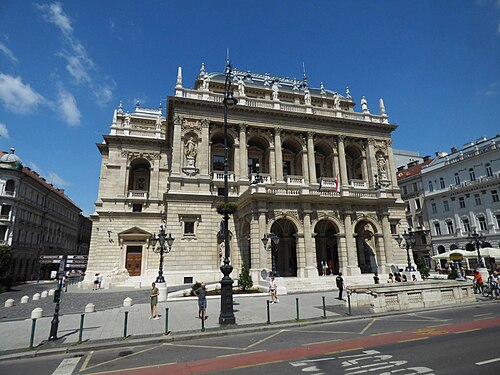
Hungarian State Opera House
Magyar Állami Operaház
The Hungarian State Opera House is a prominent performing arts venue in Budapest. It serves as a major centre for opera and ballet performances in Hungary.
- Must see
- Art and culture venue
Language · 11 published
City guide · Hungary
Budapest is divided by the Danube into hilly Buda and flatter Pest. Castle Hill and the Buda riverbank hold major historic sights, while Pest contains Parliament, the central boulevards, the Jewish Quarter, the main market and much of the nightlife. Bridges connect the two halves, but steep terrain and river crossings make geographic grouping more efficient than repeatedly switching banks.
Set your days, your pace and the hours you actually want to be out. The planner works around closing days and travel time, and leaves room to eat.
Ranked by importance — sitelinks, pageviews and heritage status, not editor preference.
100 places match
Category
Typical visit duration
Magyar Állami Operaház
The Hungarian State Opera House is a prominent performing arts venue in Budapest. It serves as a major centre for opera and ballet performances in Hungary.
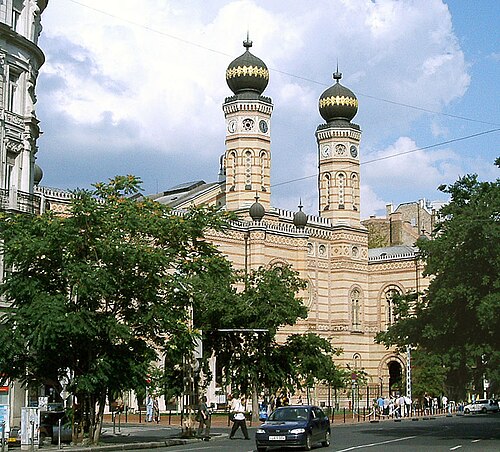
Dohány utcai zsinagóga
The Dohany Street Synagogue stands as a major Jewish religious and cultural monument in Budapest. Located on Dohany utca in the city's seventh district, it serves as the largest synagogue in Europe and a significant centre of Neolog Judaism.
Magyar Nemzeti Galéria
The Hungarian National Gallery occupies a prominent position within Buda Castle, the historic palace complex overlooking the Danube from the Buda side of the capital.
Nemzeti Színház
The National Theatre in Budapest is Hungary's principal state theatre institution, occupying a prominent riverside position along the Danube. The current building opened in the early 2000s after decades of political and architectural debate about the theatre's proper home.
Magyar Zene Háza
The House of Music Hungary is a cultural institution in Budapest dedicated to music. It forms part of the Liget Budapest project within City Park.
Fővárosi Nagycirkusz
The Capital Circus of Budapest is a historic circus venue located in the city. It stands as one of the notable entertainment establishments in the Hungarian capital, offering traditional circus performances to visitors.
Jáki kápolna
Vajdahunyad Castle is a prominent architectural complex located in Budapest's City Park. The structure was originally built as a temporary exhibition for the 1896 Millennium Celebration, designed to showcase Hungary's historical building styles.
Fiumei úti sírkert
Kerepesi Cemetery is a historic burial ground in Budapest, Hungary. Established in 1847, it serves as a major national pantheon where many prominent Hungarian figures are interred.
Belvárosi Nagyboldogasszony-templom
The Inner City Parish Church stands as one of Budapest's oldest ecclesiastical structures, situated near the Elizabeth Bridge on the Pest embankment. Its foundations incorporate remains from Roman Contra-Aquincum, reflecting successive layers of Hungarian history.
Rumbach utcai zsinagóga
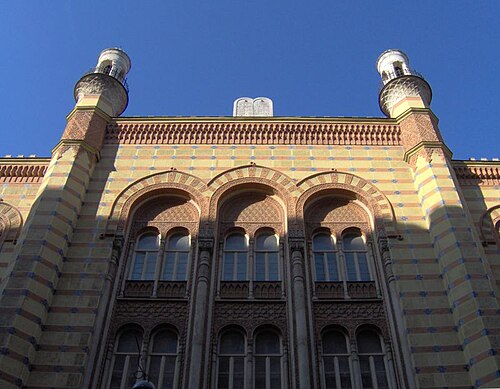
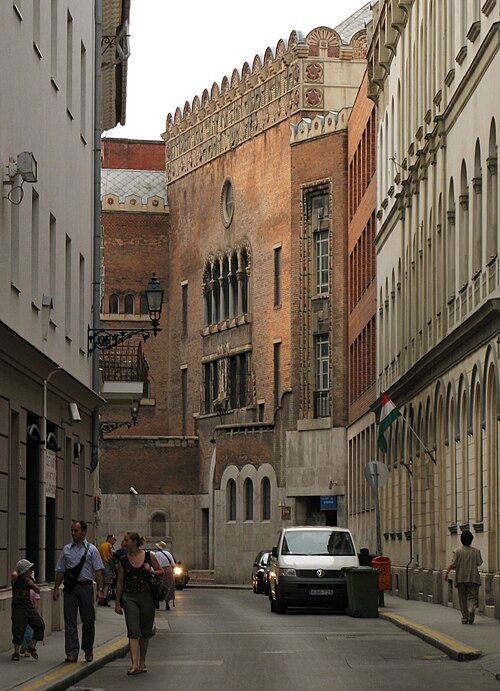
Rumbach Street Synagogue stands in Budapest's Jewish Quarter as a significant 19th-century Moorish Revival religious building. Designed by architect Otto Wagner and completed in 1872, it served the Neolog Jewish community.
Sász-Chevra Zsinagóga
Kazinczy Street Synagogue is an Orthodox Jewish house of worship located on Kazinczy Street in Budapest's historic Jewish Quarter. The synagogue forms part of the broader cultural and religious landscape of the district, which contains several significant Jewish heritage sites.
Magyarok Nagyasszonya Sziklatemplom
Erkel Színház
„0” kilométerkő
Koller Galéria
Alexandriai Szent Katalin-templom
Kiskirálylány
Olasz Kultúrintézet
Erzsébetligeti Színház – Corvin Művelődési Ház
Szentháromság-szobor
Madách Színház
Szerb ortodox templom
Farkasréti temető
Szent Péter és Pál-templom
Columbo
Katona József Színház Kamra
Magyar Színház
Thália Színház
Fasori Evangélikus Gimnázium
Kozma utcai zsidó temető
Óbudai zsinagóga
Frankel Leó úti zsinagóga
Epreskert
KSH Könyvtár
Alexandra Pavlovna sírkápolnája
Városmajori Jézus Szíve-templom
ELTE Radnóti Miklós Gyakorló Általános Iskola és Gyakorló Gimnázium
József Attila Színház
Újszínház
Istenszülő elhunyta Nagyboldogasszony-székesegyház
Havas Boldogasszony-templom
Szent Ferenc sebei-templom
Dózsa György úti zsinagóga
Deák téri evangélikus templom
Érdi minaret
Egyetemi Kisboldogasszony-templom
Páva utcai zsinagóga
Kieselback Galéria
Kispesti Munkásotthon Művelődési Ház
Radnóti Miklós Művelődési Központ
Magyarok Nagyasszonya-templom
Örökimádás-templom
Bethlen Téri Színház
Zikkurat Galéria
Fészek Művészklub
Gólem Színház És Zsidó Előadóművészeti Központ
Karinthy Színház
Radnóti Miklós Színház
Kálvin téri református templom
Új Köztemető
Óbudai izraelita temető
Szent Anna-templom
Árpád-házi Szent Erzsébet-templom
Salgótarjáni utcai zsidó temető
Árpád-házi Szent Erzsébet-templom
Kisboldogasszony Bazilika
Fasori evangélikus templom
Unitárius templom
Megbékélés háza templom
Fasori református templom
Jézus Szíve templom
Budai Ciszterci Szent Imre-templom
Szent Flórián-templom
Szent József-templom
Szent Rókus-kápolna
Satoshi Nakamoto
Csokonai Művelődési Ház
Gózon Gyula Kamaraszínház
Hősök szobra
MOM Kulturális Központ
Nemzeti Táncszínház
Nagyboldogasszony-templom
Pesti Színház
Turay Ida színház
Városmajori Szabadtéri Színpad
Lágymányosi zsinagóga
Szent Cirill és Szent Metód-templom
Kármelhegyi Boldogasszony kármelita templom és rendház
Segítő Szűz Mária-kápolna
A Tan Kapuja Buddhista Főiskola
Farkasréti izraelita temető
Istenszülő oltalma templom
Szentlélek-templom
Source: OpenStreetMap contributors, Wikidata ·
Buda rises west of the river around Castle Hill, Gellert Hill and residential slopes. Pest spreads east across a flatter grid: Parliament stands on the river, the inner districts surround Deak Ferenc Square, and Andrassy Avenue runs northeast toward City Park. The Jewish Quarter sits east of the central core. Treat Margaret Island and the outer thermal baths as dedicated stops rather than extensions of a riverside walk.
Checked 2026-08-26
Use metro, tram, trolleybus and bus services for cross-city travel, then walk within Castle Hill or the compact inner Pest districts. BKK states that the public transport network covers the capital, while its BudapestGO service supports journey planning and digital tickets. River crossings and Buda's slopes can make a short map distance slower than expected, so check the route before changing banks.
Checked 2026-08-26
A fixed stay length is not recorded. Plan at least separate blocks for Castle Hill and Buda, central Pest, City Park and any thermal bath or island visit.
Buda is the hillier western side with Castle Hill and Gellert Hill. Pest is the flatter eastern side containing Parliament, central boulevards, markets and much of the nightlife.
Use BKK metro and tram services for the main corridors, buses or trolleybuses for gaps, and walk inside compact districts. BudapestGO provides official journey planning and digital tickets.
Yes, central bridges connect the two sides, but the river crossing and Buda's slopes add time. Combine nearby sights on each bank before crossing to the other.
Yes. Castle Hill is a concentrated historic district on elevated terrain. Group its sights together rather than returning to it between stops in central Pest.