


4 min walk
Fernsehturm Berlin
- Must see · Heritage site
- Historic monument
Language · 1 published
Historic monument · Berlin
Urania-Weltzeituhr
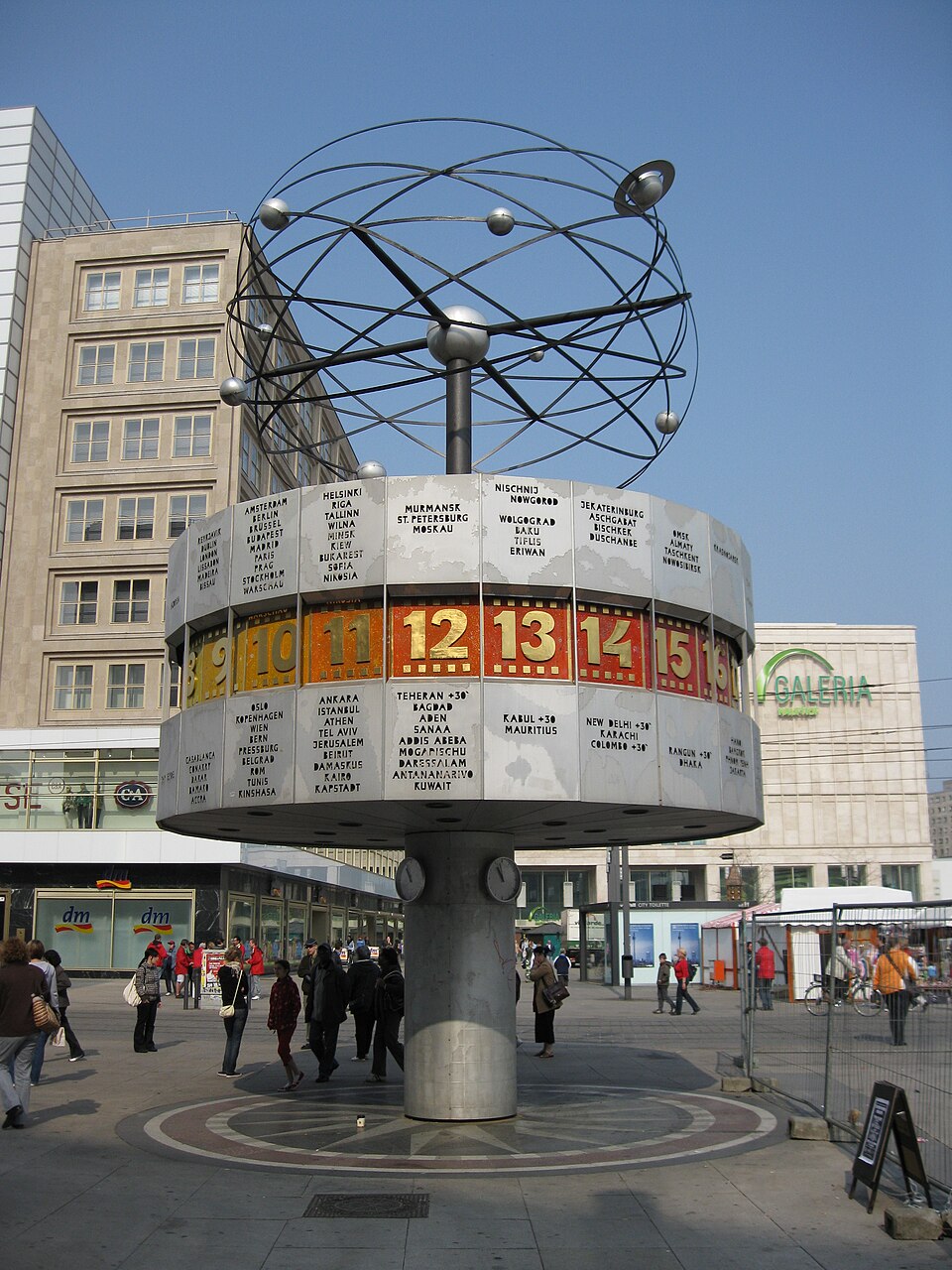
The Urania-Weltzeituhr, or World Clock, is a prominent public clock installation in Berlin. Located at Alexanderplatz in the Mitte district, this landmark serves as a meeting point and timekeeping monument. The structure displays times across multiple global time zones simultaneously, reflecting Berlin's historical position during the Cold War era when the city was a focal point of international attention. The clock was erected in the former German Democratic Republic period and remains a recognizable feature of the square's urban landscape, contributing to the area's distinctive socialist-era architectural character.
Checked 2026-08-26
The World Clock is an external public monument without interior spaces accessible to visitors. Its design features a rotating cylinder mechanism with twenty-four world cities marked around its circumference, corresponding to international time zones. The mechanical display includes a simplified world map and solar indicators. Visitors observe the clock from the surrounding plaza area. The structure incorporates metal and concrete materials typical of East German public art installations. No exhibition spaces, visitor facilities, or enclosed viewing areas are present within the monument itself.
Checked 2026-08-26
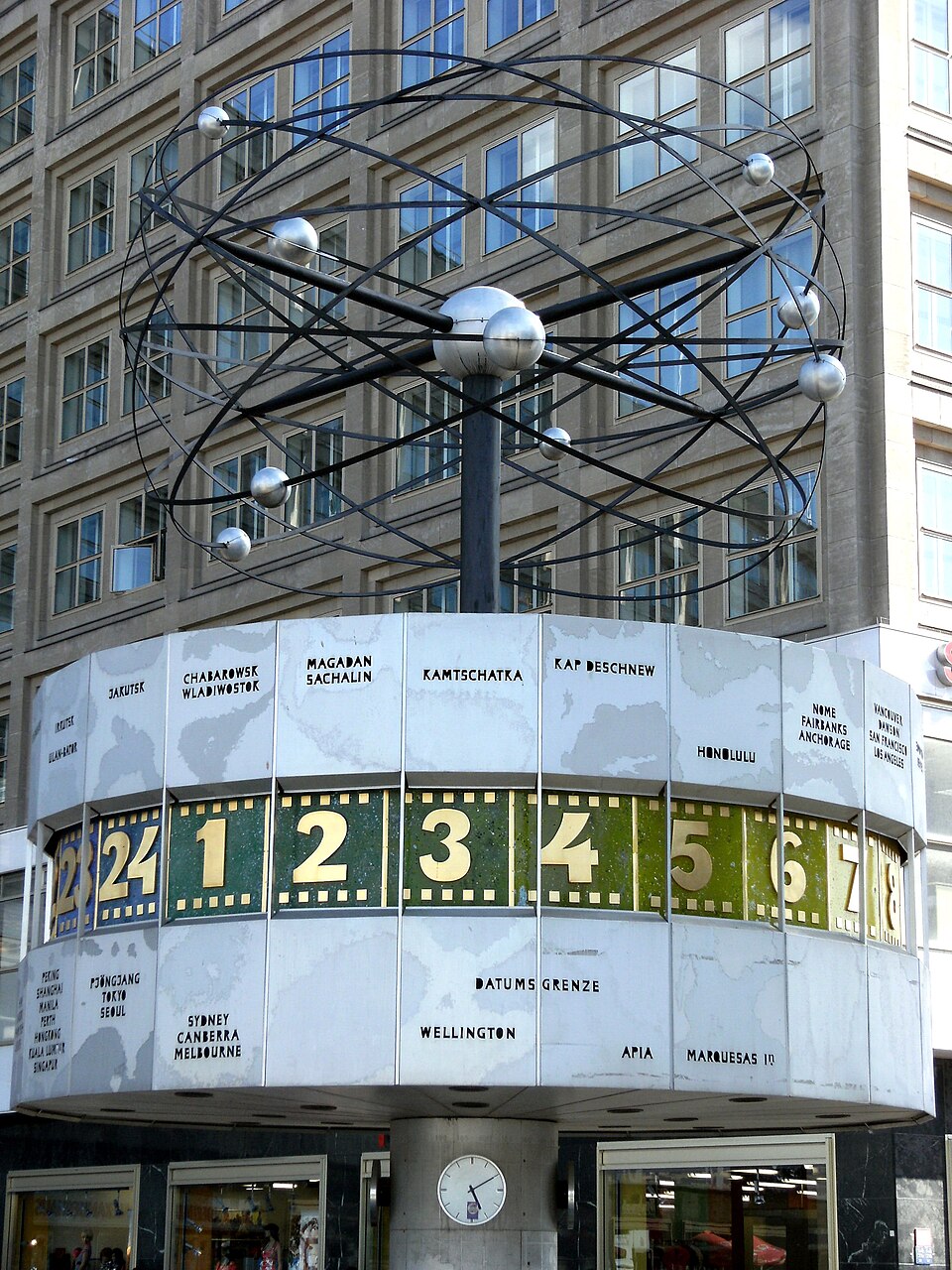
A visit to the World Clock requires minimal time commitment, as it functions as a pass-by landmark rather than a destination requiring extended engagement. Most visitors allocate five to fifteen minutes to observe the mechanism, photograph the structure, and orient themselves using the displayed time zones. The clock serves frequently as a rendezvous point for groups exploring Alexanderplatz and surrounding attractions. Travelers typically incorporate the visit within broader itineraries covering the square, nearby television tower, and central Mitte district points of interest.
Checked 2026-08-26
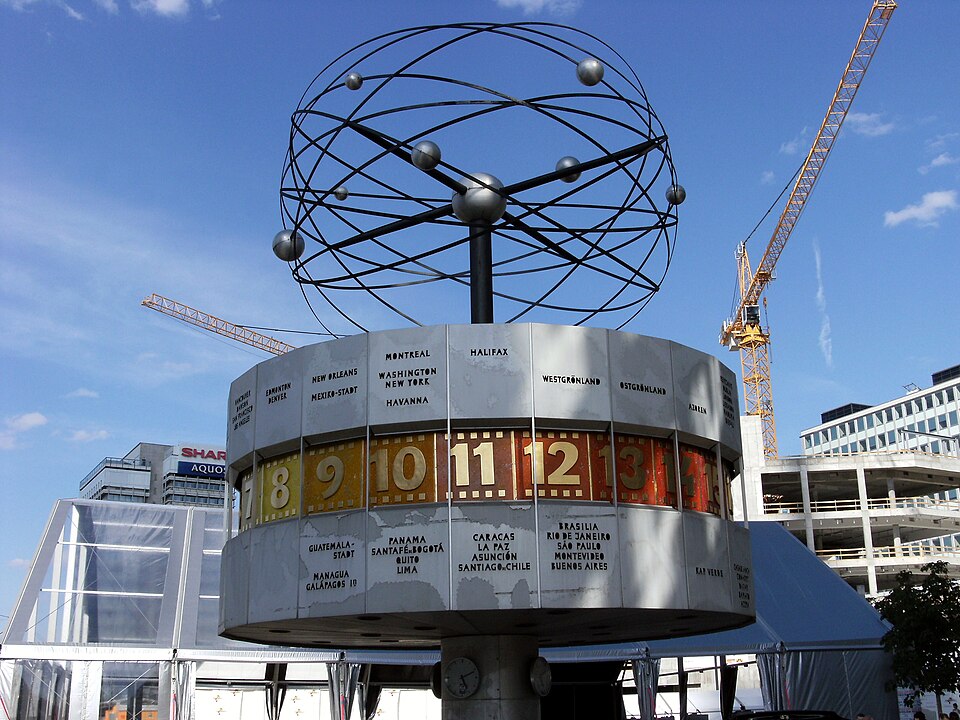
The World Clock operates as an outdoor public monument accessible at all hours without entry restrictions. Operator-confirmed hours are Not recorded pending review. The mechanism functions continuously, though visibility varies with natural lighting conditions. Evening illumination may enhance observation of the rotating display. Weather conditions affect visitor comfort given the exposed plaza location. Alexanderplatz experiences varying crowd density throughout the day, with peak pedestrian traffic during business hours and commercial activity periods. Seasonal considerations include reduced daylight hours in winter months.
Checked 2026-08-26
No admission fee applies to viewing the World Clock, as it constitutes a public space monument without controlled access. Operator-confirmed prices are Not recorded pending review. The surrounding Alexanderplatz area contains commercial establishments with independent pricing structures. Visitors incur no direct costs for observing or photographing the clock mechanism. Public transportation access to the location requires standard fare payment for Berlin transit services. Nearby attractions including the television tower maintain separate ticketing arrangements unrelated to the World Clock monument. World Clock also earns time in a berlin itinerary because Exact production identity is assigned through pois.city_place_id; the stored production name and coordinates were copied without approximation. Its value becomes clearer when the stop is compared with the surrounding streets and the other ranked places nearby.
Checked 2026-08-26
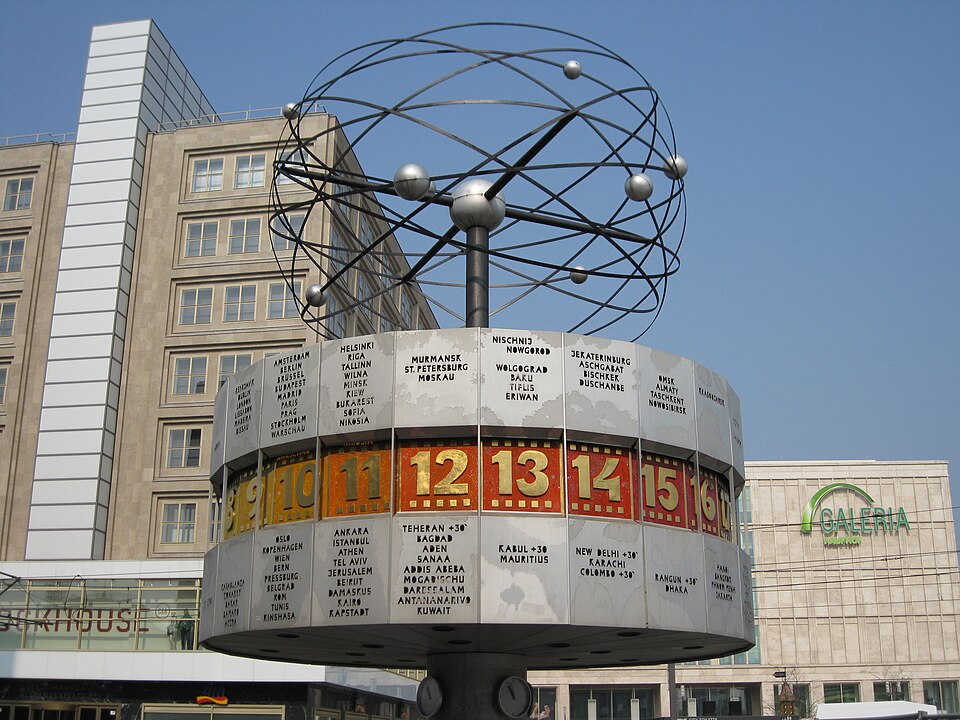
Alexanderplatz functions as a major transportation hub served by multiple Berlin transit options. The U-Bahn lines U2, U5, and U8 stop at Alexanderplatz station. Regional S-Bahn services including lines S3, S5, S7, and S9 connect to the same station complex. Numerous tram and bus routes serve stops surrounding the square. The area permits pedestrian and bicycle access with dedicated infrastructure. Central location within Mitte district enables walking connections to numerous attractions. Signage and maps throughout the station complex direct travelers toward plaza exits.
Checked 2026-08-26
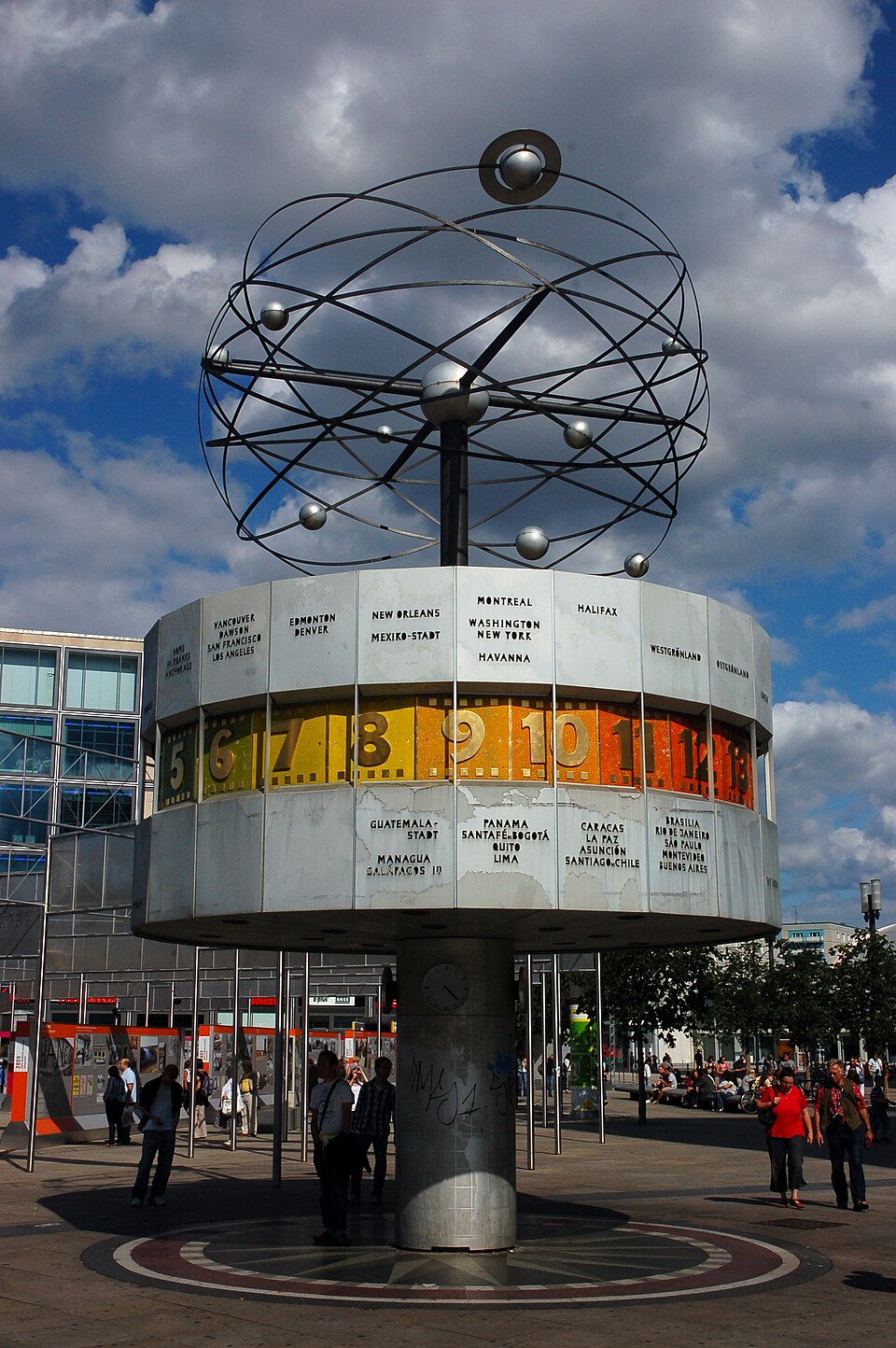
Alexanderplatz experiences elevated pedestrian traffic and requires awareness of surrounding movement. The plaza environment exposes visitors to weather conditions without shelter near the clock itself. Periodic maintenance may affect clock mechanism operation. The area attracts street-level commercial activity and entertainment performers. Visitors should exercise standard urban precautions regarding personal belongings in high-traffic public spaces. The surrounding construction and development activity occasionally modifies pedestrian routing. Nighttime visibility of the clock mechanism depends upon functional illumination systems. Surface conditions around the monument base merit attention during adverse weather.
Checked 2026-08-26
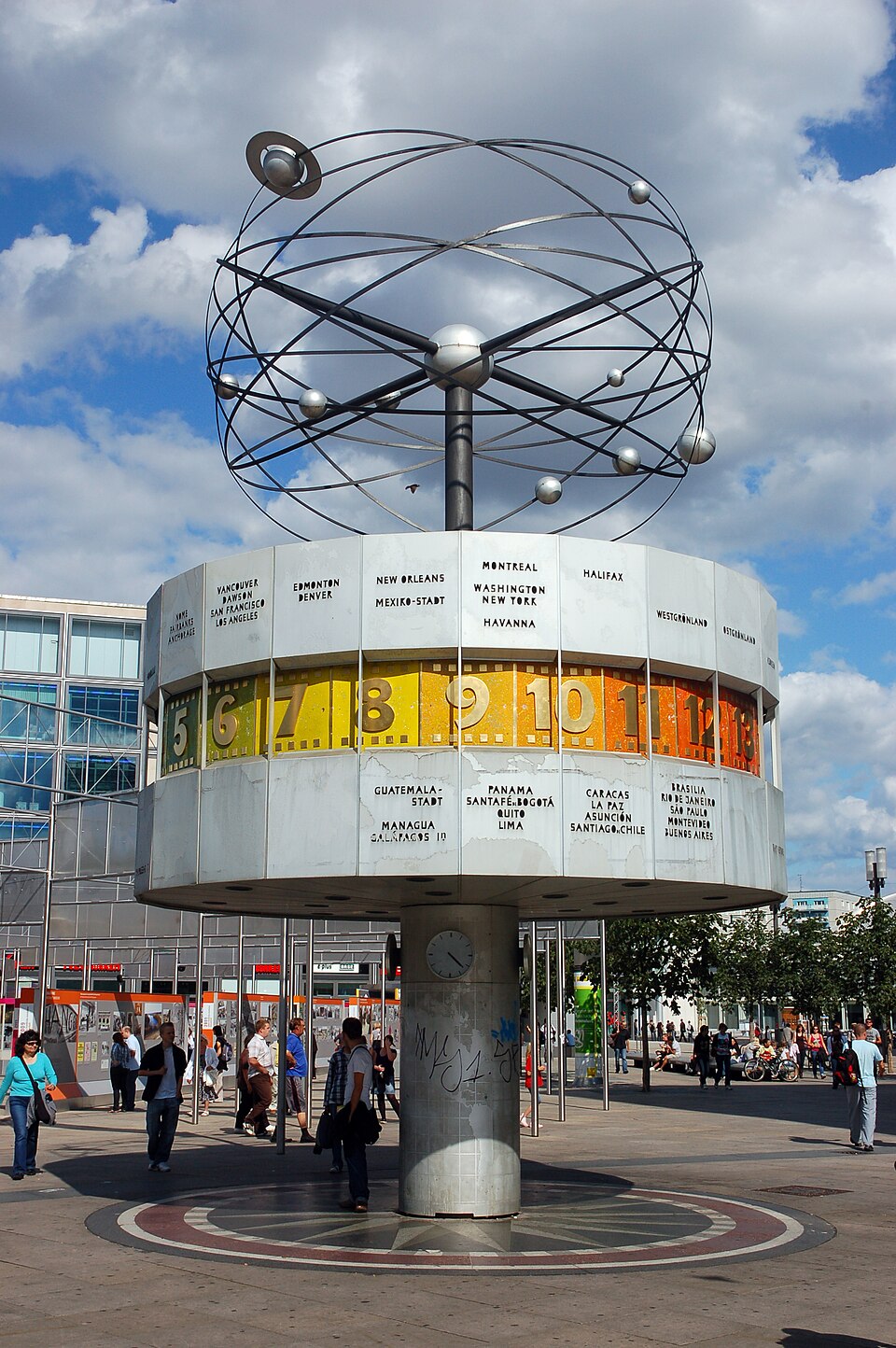
The World Clock permits unrestricted photography as an outdoor public monument. Optimal angles require positioning within the surrounding plaza area, with consideration for pedestrian traffic flow. The cylindrical structure presents challenges for comprehensive single-frame capture due to its rotational design and multiple informational faces. Lighting conditions vary significantly throughout daylight hours and artificial illumination periods. Background elements include Alexanderplatz architecture and the television tower. Tripod usage may attract attention in the busy plaza environment. Commercial photography or organized shoots may require permits from relevant municipal authorities.
Checked 2026-08-26
No. These are separate landmarks both located at Alexanderplatz. The television tower is a tall observation structure with entry fees, while the World Clock is a ground-level time monument without admission.
The mechanism is designed to display times across twenty-four world zones. Visitors may verify current accuracy through comparison with known time sources. Maintenance status affects precision.
No. The structure contains no interior visitor spaces. It is an external monument observed from the surrounding public plaza.
Lighting preferences vary. Daylight enables clear reading of city names and times. Evening illumination alters visual character. Crowd levels fluctuate throughout the day.
Urania references the muse of astronomy in classical tradition. Weltzeituhr translates directly as world time clock, describing its function displaying multiple international time zones.
The clock originated during the German Democratic Republic period. It reflects that era's design aesthetics and international outlook, though its primary function remains practical time display rather than commemoration.
Loading the interactive map…
The interactive map could not be loaded.
Last updated:
Source: OpenStreetMap contributors, Wikidata ·