The Brandenburg Gate is the last of Berlin's city gates still standing, and it closes the western end of the Unter den Linden boulevard on Pariser Platz. Frederick William II commissioned it as a dignified conclusion to that boulevard, and Carl Gotthard Langhans the Elder built it in sandstone between 1788 and 1791, working from the Propylaea at the entrance to the Athenian Acropolis. The result is 26 metres high, 65.5 metres long and 11 metres deep, carried on two rows of six Doric columns. Two years after it was finished, Johann Gottfried Schadow set the Quadriga on the roof: a two-wheeled chariot behind four horses abreast, reins held by Victoria, meant to show peace entering the city. The gate spent the Cold War inside the restricted strip behind the Wall, reachable from neither side, and on 22 December 1989 it was reopened in front of more than 100,000 people. That is why a monument built for a Prussian king is now read as a reunification symbol. After almost two years of restoration it was unveiled again on 3 October 2002, and the sandstone visitors see today dates from that work.
There is no interior to tour. The gate is a screen of twelve Doric columns in two rows, and the five gaps between them are passageways that people walk through, not rooms that people enter. The one exception is the south gate house, which holds a Berlin Tourist Info counter open daily from 9am to 6pm, where hotels, event tickets and city information are handled; that is the only staffed indoor space attached to the monument. What surrounds the gate is the substance of the visit. Pariser Platz, the square on its eastern side, was in ruins at the end of the Second World War and was only rebuilt from the 1990s, so almost every façade around it is thirty years old or less. The Max Liebermann Haus and the Haus Sommer sit to the left and right of the gate as a deliberately matched pair, in a style drawn from the Prussian court architect Friedrich August Stüler. The French and United States embassies and the Hotel Adlon complete the square, and the Reichstag, the Memorial to the Murdered Jews of Europe, Tiergarten and the Victory Column are all within a short walk.
Allow thirty minutes. Neither berlin.de nor visitBerlin publishes a suggested visit length for the Brandenburg Gate, so that figure is this guide's judgement rather than a number read off an official page, and it is built on what there actually is to do here. There is no ticket queue, no security check, no interior circuit and no cloakroom to slow anyone down. Thirty minutes covers walking the length of Pariser Platz, passing under the gate to the western side, looking up at the Quadriga long enough to see which way the horses face, and taking the photographs most people come for. Visitors who want to identify the buildings around the square, or who stop at the Tourist Info counter in the south gate house, should budget closer to an hour. Visitors in a hurry can do the essential version in ten minutes and lose nothing important. Because the gate is free and permanently accessible, it also works well as a fifteen-minute link between two longer stops rather than as a destination in its own right, and pairing it with the Reichstag or the Holocaust memorial is the usual way to spend an efficient morning here.
Berlin's own city portal lists the gate as accessible to visitors at any time, which removes the usual planning constraint: there is no opening hour to arrive for and no closing hour to be caught out by. That makes the timing question purely one of light and crowds. Early morning, before the coach groups reach Pariser Platz, is the quietest window of the day and puts the sun on the eastern face that the Quadriga looks out from. Late evening is the other good option, because the gate is floodlit and the square thins out. The middle of the day is consistently the busiest, and in high summer the square offers almost no shade. Two dates need active avoidance rather than planning. New Year's Eve fireworks are set off over the gate every year — berlin.de notes the damage they have done to the stonework — and the surrounding streets are taken over for it. Public events and state occasions on Pariser Platz can also fence off the square at short notice, so anyone travelling specifically for the gate should check what is scheduled that day rather than assume open access.
There is nothing to buy. Berlin's official city portal lists the admission fee for the Brandenburg Gate as free, and there is no ticket, no timed entry slot, no booking system and no queue. This holds at every hour, because the same page lists the monument as accessible to visitors at any time. Nobody at the gate is entitled to charge for approaching it, walking under it or photographing it. Two things sold nearby are easy to mistake for entry. Guided walking tours and sightseeing tours that begin at Pariser Platz are commercial products run by independent operators; they may be worth the money for the commentary, but none of them buys access that a visitor does not already have for nothing. The Berlin WelcomeCard, sold by the city's tourism organisation, is a public transport ticket bundled with attraction discounts — useful for reaching the gate and for the ticketed museums around it, and irrelevant to the gate itself. The Berlin Tourist Info counter in the south gate house sells tickets and books hotels, but it sells nothing for the monument above it.
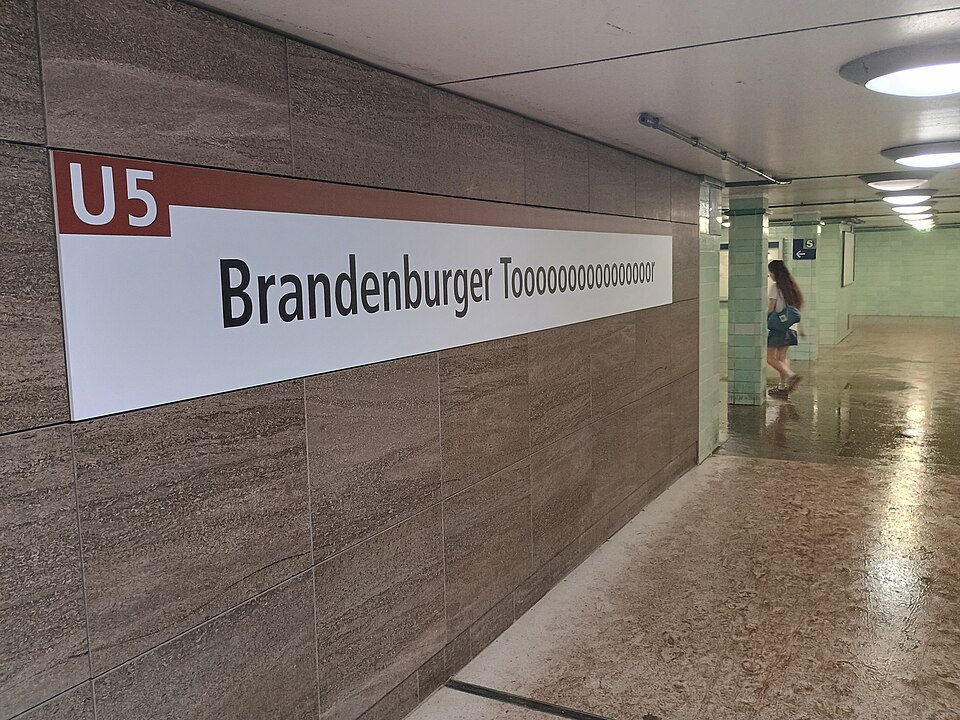
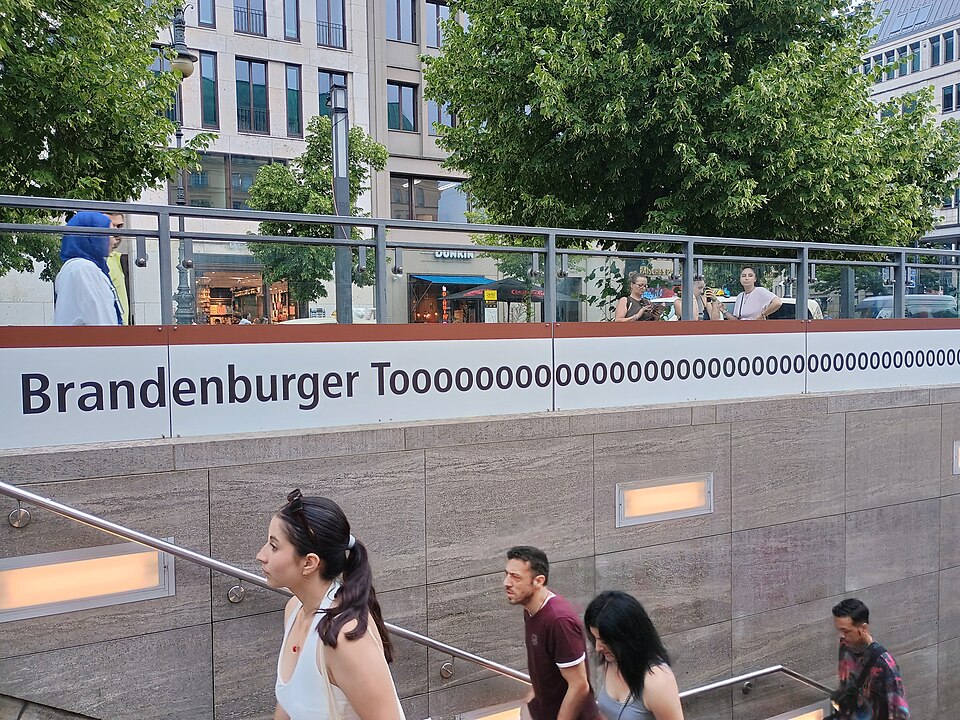
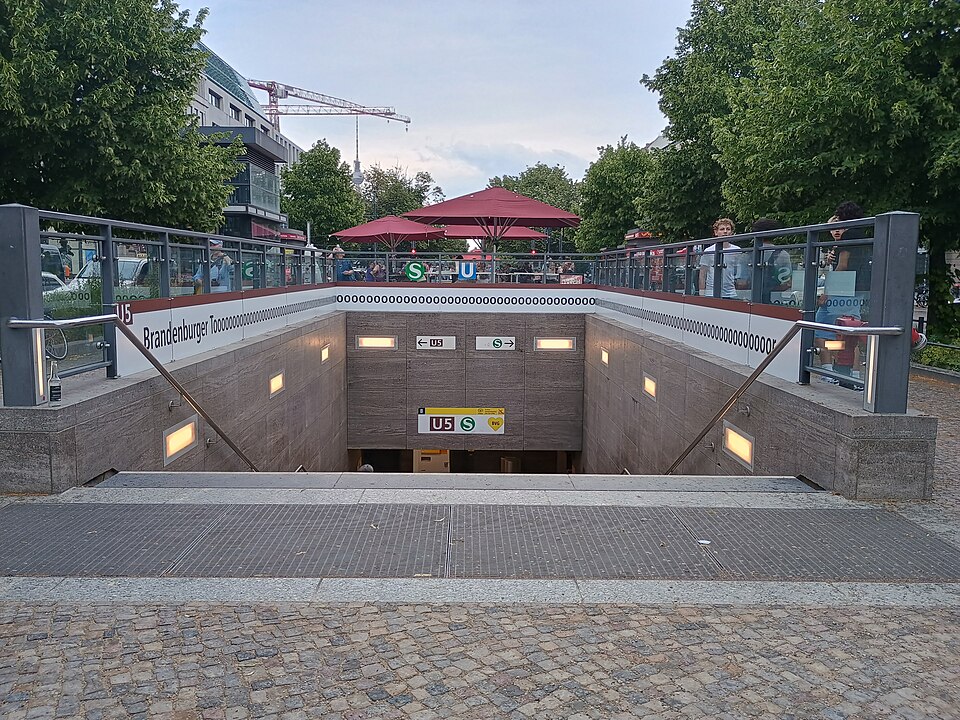
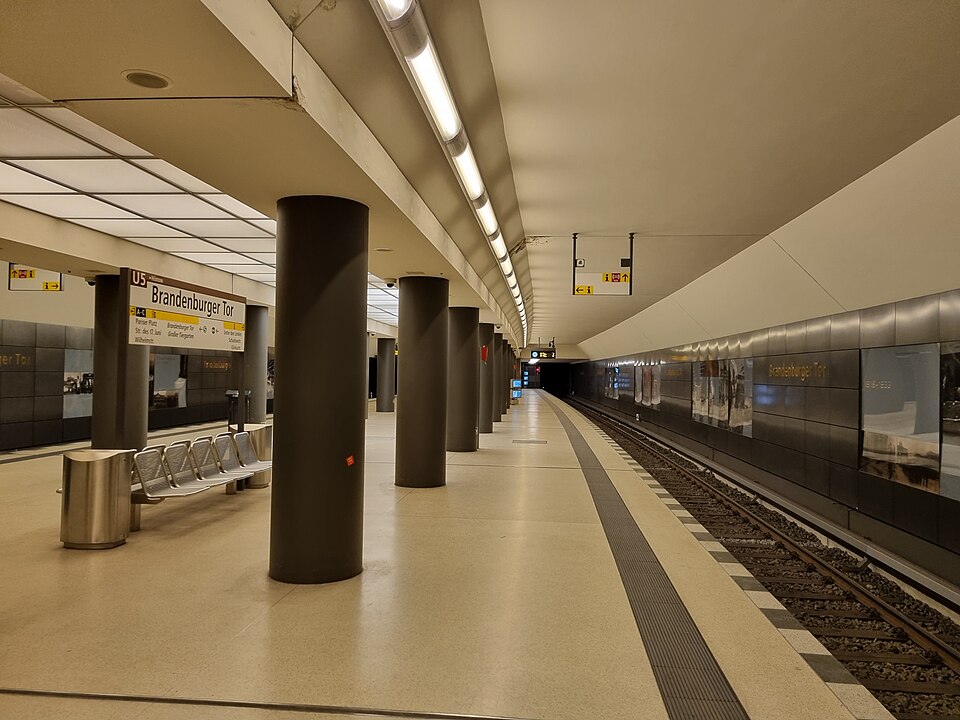
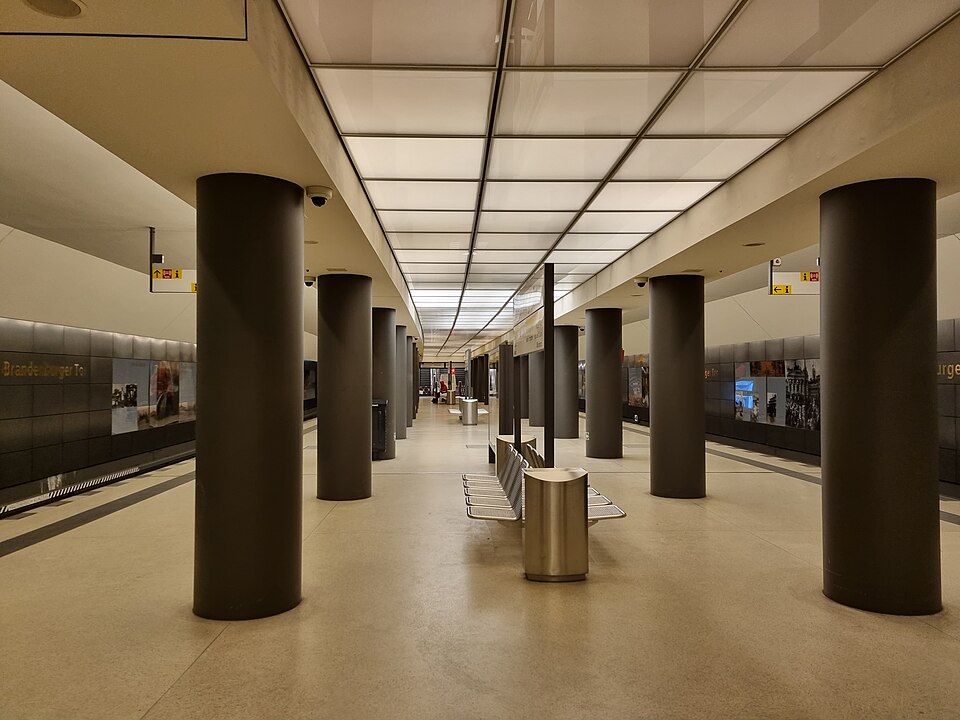
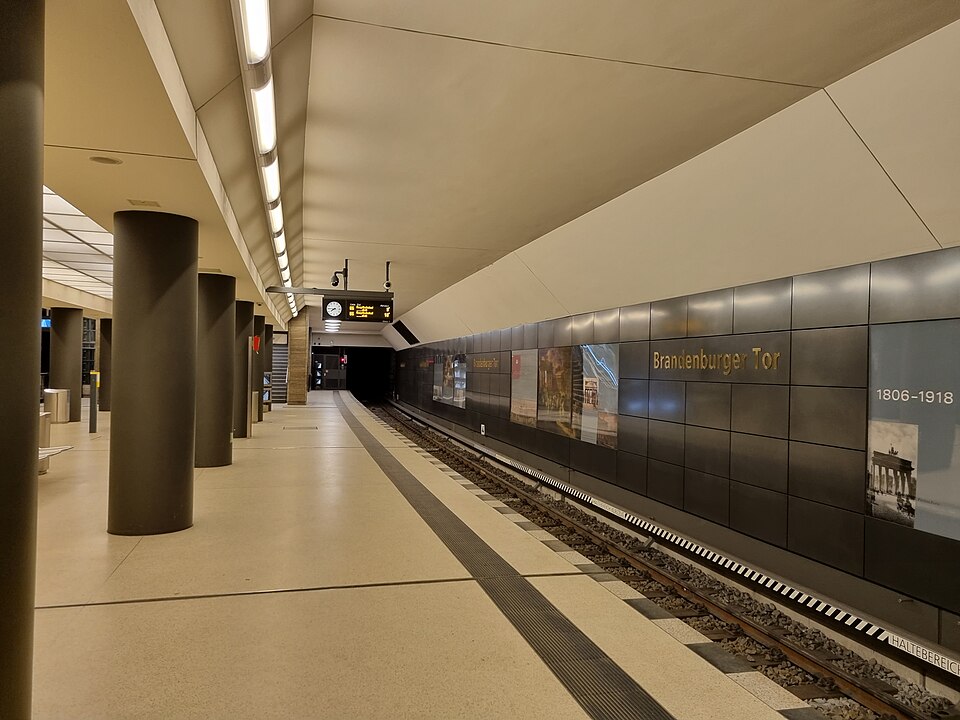
The address is Pariser Platz 1, 10117 Berlin, and no car is needed or wanted. The nearest station is S+U Brandenburger Tor, which berlin.de puts 200 metres away on the U5 underground line and 300 metres away on the S-Bahn, served by the S1, S2, S25 and S26. Buses are just as close: routes 100 and M41 stop at Reichstag/Bundestag, 200 metres off, routes 100 and the N5 night bus stop at S+U Brandenburger Tor itself, and route 300 stops at Behrenstraße/Wilhelmstraße, 400 metres away. Route 100 is worth singling out, because its ordinary fare buys a run past a large share of central Berlin's landmarks. On foot the gate is the obvious end point of Unter den Linden from the east and of the Straße des 17. Juni through Tiergarten from the west, and both approaches are level. Berlin.de records the site as barrier-free, and the square around it is flat paving with no steps between the street and the passageways. Anyone arriving by car should expect central Mitte parking prices and a walk in anyway.
The gate is an unstaffed monument on an open public square, and the practical consequences follow from that. There are no toilets, no cloakroom, no shelter and no water point at the gate itself; the Tourist Info counter in the south gate house is the only indoor space attached to it, and it shuts at 6pm. Wet or cold weather has nowhere to be waited out on Pariser Platz, so the visit becomes a short one whether or not that was the plan. Because access is free and permanent, the square carries a constant flow of people from mid-morning until late, and photographs of the gate without other visitors in them are effectively a dawn activity. Costumed figures and photo touts work the square, and anything they offer is a paid transaction rather than part of the site. Events are the real disruption: state occasions, concerts and the New Year's Eve fireworks close Pariser Platz off entirely, sometimes with fencing and screens up for days beforehand. Sandstone in a city centre needs periodic restoration, so scaffolding on one face is a possibility worth checking before making a special trip.
The gate has a clear front and back, and knowing which is which saves a wasted trip around it. The Quadriga faces east, towards Pariser Platz and the city centre, so the horses are seen head-on only from the Pariser Platz side; from the Tiergarten side visitors get the backs of the chariot and its driver. Pariser Platz is therefore the shot most people are after, and it takes morning light. The western face, looking down the Straße des 17. Juni, takes the afternoon and evening sun instead, and the long straight avenue there gives far more room to step back than the enclosed square does. At 26 metres tall and 65.5 metres wide the gate needs a wide lens or a long retreat to fit in one frame; a distance of roughly a hundred metres along either axis is about right. Nothing here is restricted — it is a public monument on a public square, with no ticket, no barrier and no photography rules to observe. Since the site is accessible at any hour, the floodlit night version is available too, and the crowds that ruin daytime frames are gone by then.
Checked 2026-08-26
Common questions
Do you need a ticket for the Brandenburg Gate?
No. Berlin's official city portal lists the admission fee as free, and there is no ticket office, no booking system and no timed entry. The gate stands on Pariser Platz, an open public square, and walking under it, standing beneath the Quadriga and photographing it all cost nothing at any hour. Guided tours that start here are separate commercial products and are not required for access.
What are the Brandenburg Gate's opening hours?
There are none in the usual sense. Berlin's official city portal records the gate as accessible for visitors at any time, so there is no opening hour, no closing hour, no closed day and no midday break to plan around. In practice that means an early-morning or late-evening visit is entirely possible, and the monument is floodlit after dark.
How long does a visit to the Brandenburg Gate take?
Allow about thirty minutes. No official source publishes a suggested visit length, so this is the guide's own estimate: it covers crossing Pariser Platz, walking through the gate to the western side, looking at the Quadriga and taking photographs. Add roughly half an hour again for identifying the buildings around the square or stopping at the Tourist Info counter in the south gate house.
How do you get to the Brandenburg Gate by public transport?
The station S+U Brandenburger Tor sits 200 metres away on the U5 underground line and 300 metres away on the S-Bahn, served by the S1, S2, S25 and S26. Bus 100 and the night bus N5 stop at the same station, bus 100 and M41 stop at Reichstag/Bundestag 200 metres off, and bus 300 stops at Behrenstraße/Wilhelmstraße, 400 metres away. Berlin.de records the site as barrier-free.
Can you go inside the Brandenburg Gate?
Not in the sense of touring it. The gate is a colonnade of twelve Doric columns with passageways between them rather than a building with rooms. The one space open to the public is the Berlin Tourist Info counter in the south gate house, which visitBerlin lists as open daily from 9am to 6pm and where city information, hotel bookings and event tickets are handled.
Is the Quadriga on top of the gate the original sculpture?
No. Johann Gottfried Schadow's original was placed in 1793 and taken down three times, including when Napoleon carried it to Paris in 1806; it came back eight years later. Bombing in the Second World War damaged both gate and sculpture so badly that the Quadriga was disposed of in 1956 during the reconstruction and replaced with a copy, which is what stands on the roof today.
Nothing non-essential is set before you choose, in regions where consent is required. If you decline, ads still appear but they are non-personalised, and analytics is switched off entirely.
_Berlin_World_Cup.jpg)
_Berlin_World_Cup.jpg)
_Berlin_World_Cup.jpg)
_1.jpg)
_2.jpg)
_3.jpg)