
.jpg)
.jpg)


.jpg)
2 min walk · Paris 1er Arrondissement
Fame Riding Pegasus
- Notable
- Art and culture venue
Language · 1 published
Historic monument · Paris 8e Arrondissement, Paris
Obélisque de Louxor

Read from the OpenStreetMap access tags; anything not listed has no tag recorded.
Set the group type to family in the planner and the day window contracts to about three quarters of a solo day.
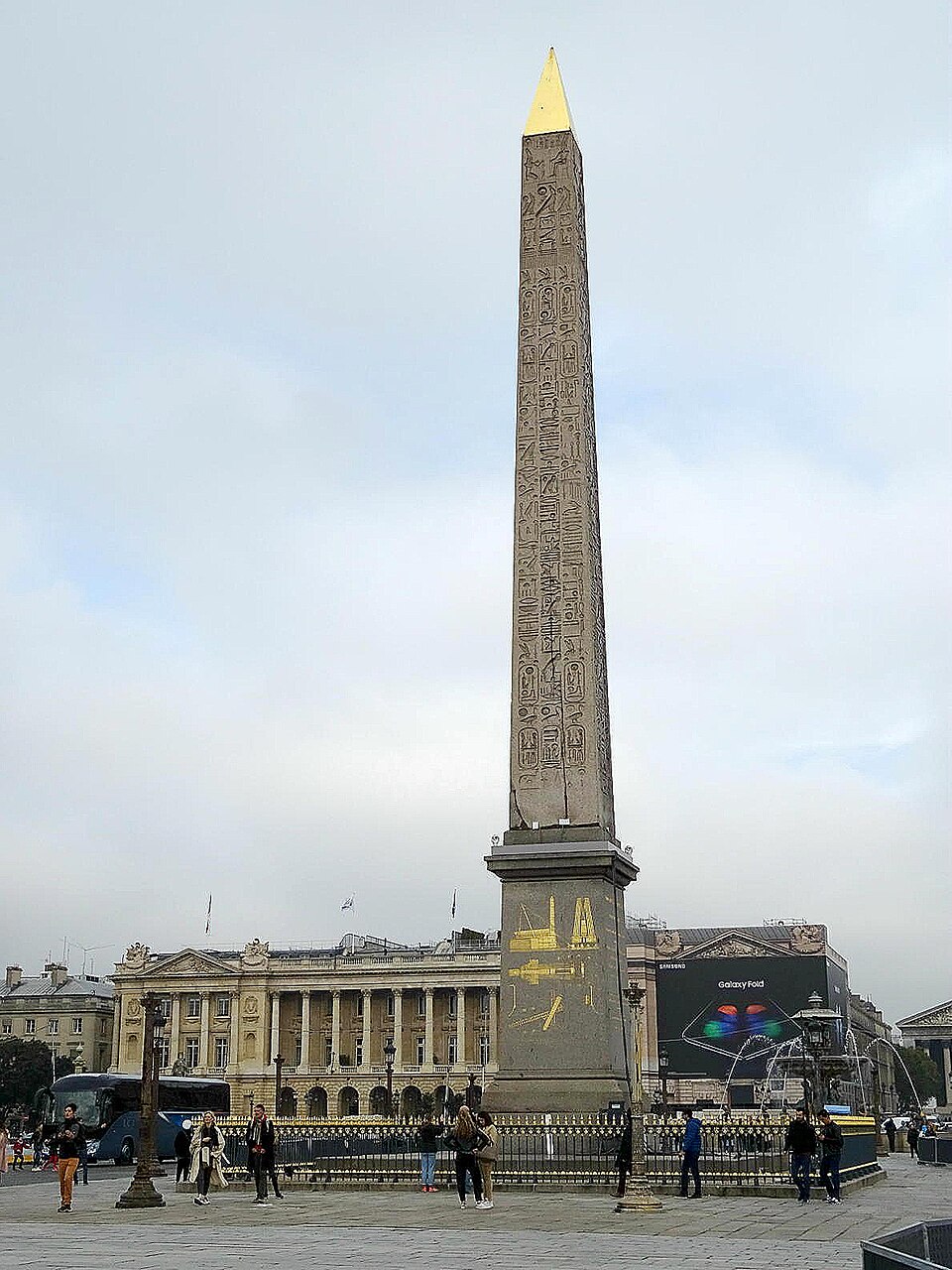
The Luxor Obelisk stands at the centre of Place de la Concorde, a 3,300-year-old pink granite obelisk that once stood at the entrance to Luxor Temple in Egypt, one of a matching pair carved in the reign of Ramesses II.
It was given to France by Muhammad Ali, the Ottoman viceroy of Egypt, in 1830, and shipped to Paris in a purpose-built vessel; the far more difficult task of erecting a 230-tonne stone column upright in a public square, without modern lifting equipment, took until 25 October 1836, when it was raised before a crowd of some 200,000 in the presence of King Louis-Philippe.
Its twin still stands at Luxor Temple in Egypt; France formally renounced any claim to it in 1981, so the pair will not be reunited in Paris.
Checked 2026-08-24 · Source
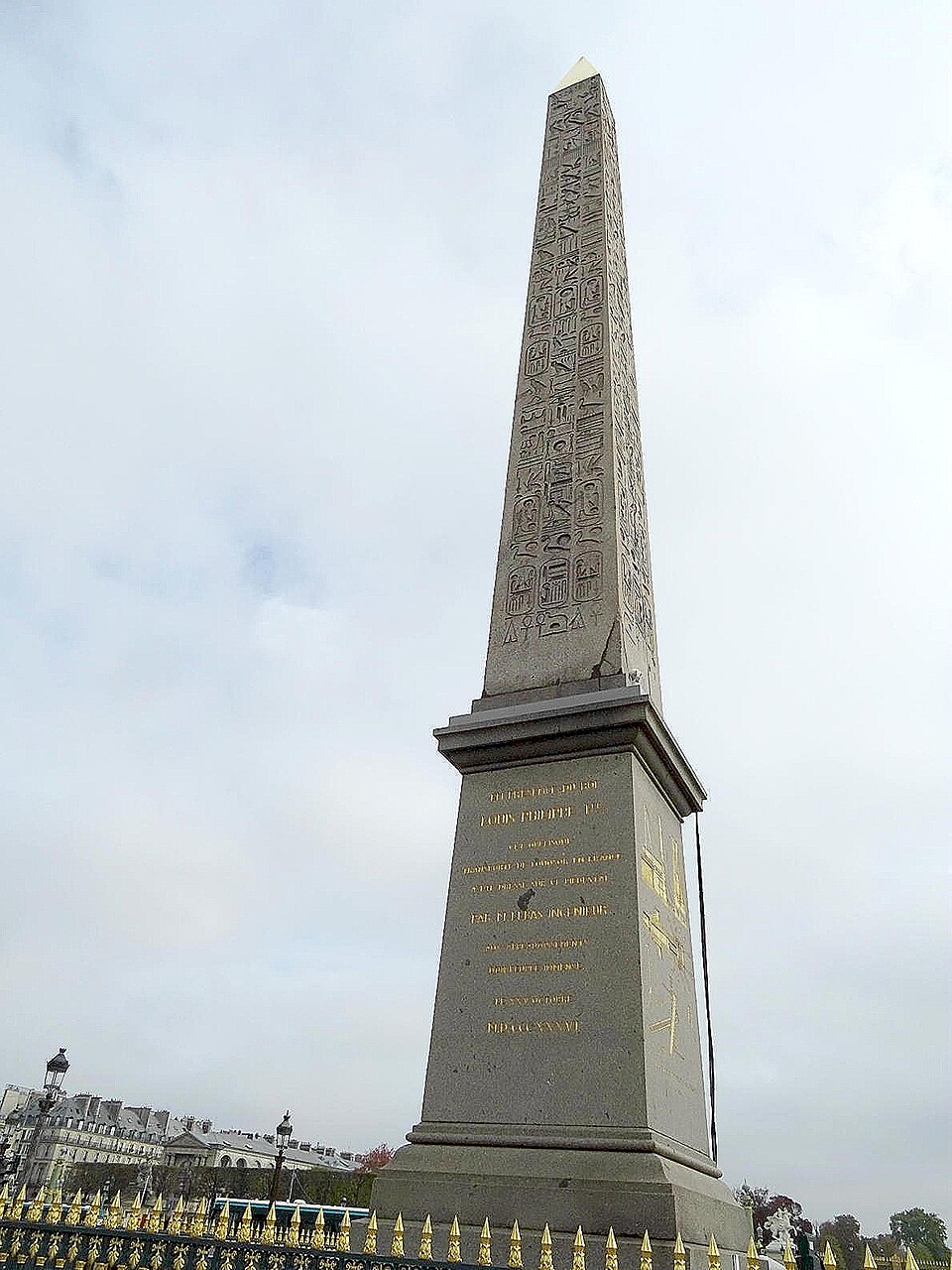
There is nothing to enter — the obelisk is a solid single block of granite, 22.5 metres tall, covered on all four faces with hieroglyphic inscriptions recounting the reign of Ramesses II.
Its gilded copper pyramidion cap, added in 1998, replaces the original tip, which is believed to have been removed or lost in antiquity; the pedestal it stands on carries diagrams, added when it was erected, illustrating the engineering machinery used to raise it in 1836.
The obelisk sits at the centre of a wider ensemble rather than alone: it is flanked by two monumental fountains added at the same time as its erection, and the square around it is ringed by eight statues personifying French cities, so the obelisk is the axis the whole square's design is organised around rather than an isolated object dropped into an otherwise unrelated space.
Checked 2026-08-24 · Source

Ten to fifteen minutes to see the obelisk and read the pedestal's inscriptions and diagrams up close. Most visitors take it in as part of a longer walk through Place de la Concorde toward the Champs-Elysees or the Tuileries rather than as a standalone stop.
Walking the full traffic island to see all four inscribed faces and the flanking fountains adds another ten minutes, since the pedestal's engineering diagrams are on the side facing away from the Champs-Elysees and are easy to miss on a quick pass.
Checked 2026-08-24 · Source

Any time — it is an open-air monument in the middle of a large traffic-bound square with no opening hours. Early morning or late evening give the clearest views without the square's heavy daytime traffic and crowds as a backdrop.
It is illuminated after dark, which makes an evening visit a genuinely different view from a daytime one rather than simply a darker version of it.
Checked 2026-08-24 · Source
Free. It stands in the open square with no ticket, gate or opening hours of any kind, and no charge applies at any time of day or night to view it from the surrounding traffic island or to photograph it up close.
Checked 2026-08-24 · Source
Metro line 1, 8 or 12 to Concorde surfaces at the edge of the square. The obelisk sits at the centre of a large traffic roundabout, so reaching it on foot means using the marked pedestrian crossings and signal timings around the square's perimeter rather than crossing the roadway directly.
It sits roughly midway along the axis from the Louvre to the Arc de Triomphe, so most visitors pass it while walking between the Tuileries and the Champs-Elysees rather than travelling to the square as a dedicated destination.
Checked 2026-08-24 · Source
Place de la Concorde carries heavy, fast traffic on all sides; cross only at the signalled pedestrian crossings, since the central island around the obelisk is reached across several lanes rather than by a single quiet step off a pavement.
The square is large and offers little shade, which matters more than it might seem on a hot day, since the walk from the nearest metro exit to the obelisk itself is longer than it looks on a map.
Souvenir sellers and unsolicited photographers work the traffic island around the obelisk in the same way they work other high-footfall Paris landmarks; a firm decline is normal, and no legitimate fee is charged for viewing or photographing the monument itself.
Checked 2026-08-24 · Source
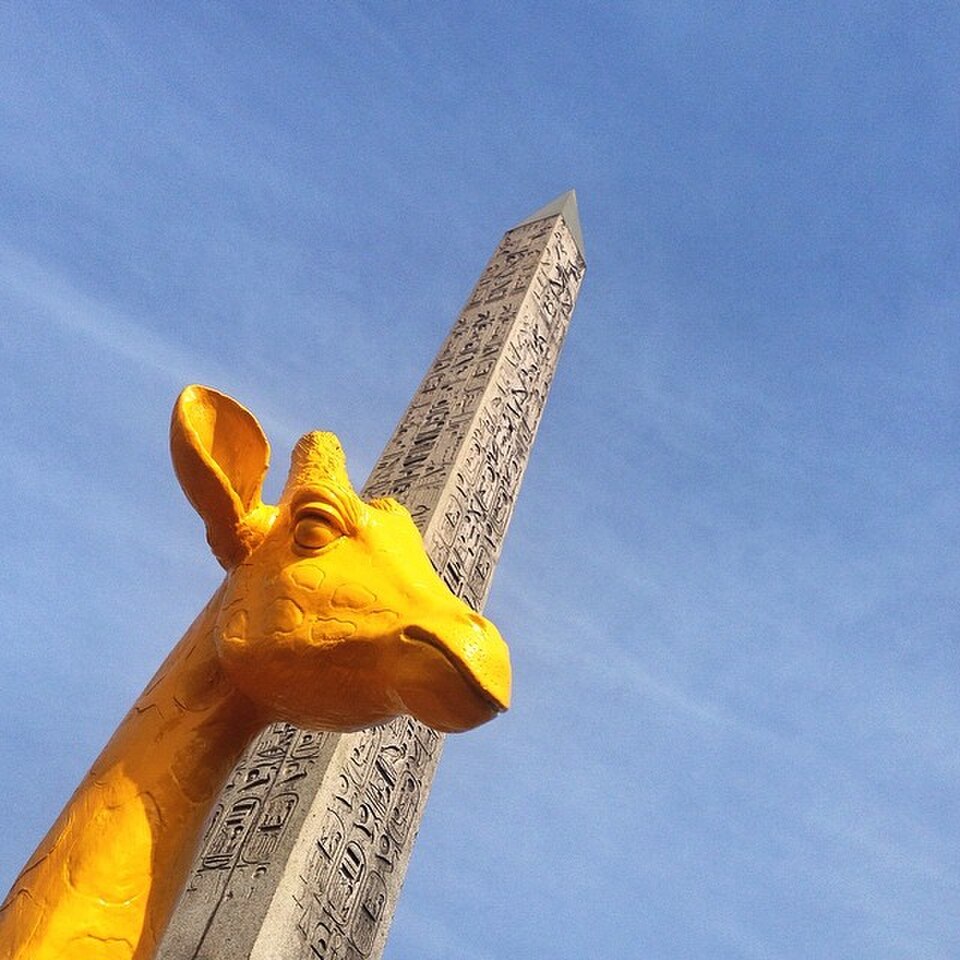
The obelisk aligned with the Champs-Elysees looking toward the Arc de Triomphe, or the reverse view toward the Tuileries and the Louvre, are the two classic compositions, both shot from the traffic island around the obelisk itself.
The hieroglyphs and the gilded pyramidion catch low sun well in the early morning or evening; at night the illuminated obelisk against the square's fountains and the Champs-Elysees lights makes a strong alternative shot.
Checked 2026-08-24 · Source
At the entrance to Luxor Temple in Egypt, carved during the reign of Ramesses II; it was one of a matching pair, and the other still stands at Luxor.
It was given to France by Muhammad Ali, the Ottoman viceroy of Egypt, in 1830, shipped to Paris, and raised in Place de la Concorde on 25 October 1836.
22.5 metres tall and roughly 230 tonnes, cut from a single block of pink granite.
No. France formally renounced any claim to the matching obelisk still standing at Luxor Temple in 1981.
No, it stands freely in the open square with no ticket or gate.
A gilded copper pyramidion added in 1998, replacing the original tip, which is believed lost or removed in antiquity.
Loading the interactive map…
The interactive map could not be loaded.
Last updated:
Source: OpenStreetMap contributors, Wikidata ·